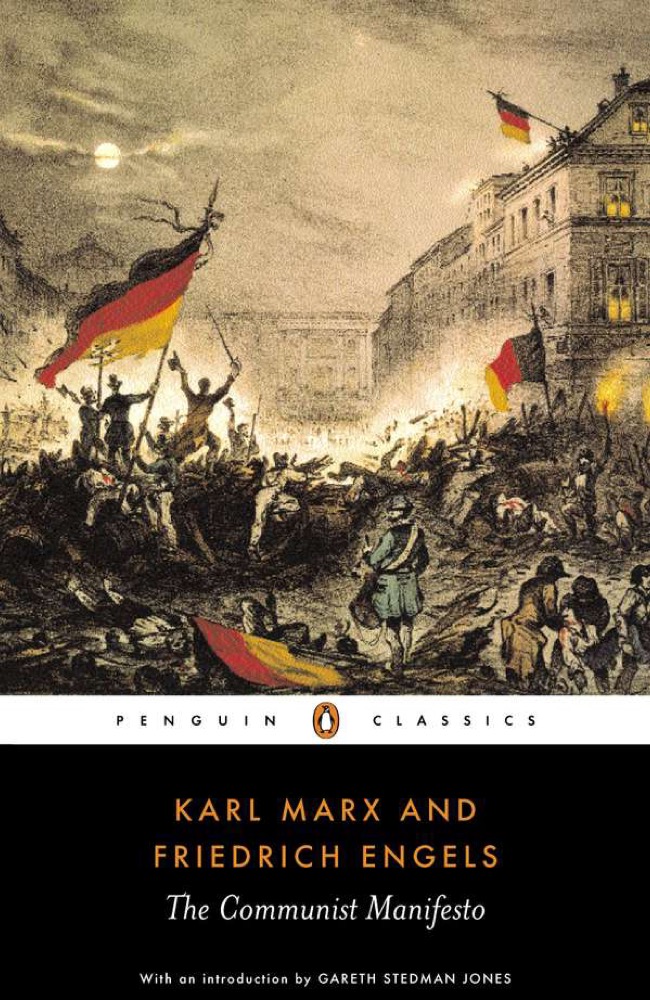
 The Communist Manifesto
Quotes from the Book
The ideas of the ruling class are in every epoch the ruling ideas, i.e. the class which is the ruling material force of society, is at the same time its ruling intellectual force. The class which has the means of material production at its disposal, has control at the same time over the means of mental production, so that thereby, generally speaking, the ideas of those who lack the means of mental production are subject to it. The ruling ideas are nothing more than the ideal expression of the dominant material relationships, the dominant material relationships grasped as ideas.
As individuals express their life, so they are.
For as soon as the distribution of labour comes into being, each man has a particular, exclusive sphere of activity, which is forced upon him and from which he cannot escape. He is a hunter, a fisherman, a herdsman, or a critical critic, and must remain so if he does not want to lose his means of livelihood; while in communist society, where nobody has one exclusive sphere of activity but each can become accomplished in any branch he wishes, society regulates the general production and thus makes it possible for me to do one thing today and another tomorrow, to hunt in the morning, fish in the afternoon, rear cattle in the evening, criticise after dinner, just as I have a mind, without ever becoming hunter, fisherman, herdsman or critic.
Philosophy and the study of the real world have the same relation to one another as onanism and sexual love.
Thus, in imagination, individuals seem freer under the dominance of the bourgeoisie than before, because their conditions of life seem accidental; in reality, of course, they are less free, because they are to a greater extent governed by material forces.
...to hunt in the morning, fish in the afternoon, rear cattle in the evening, [and] criticise after dinner...
Watch on YouTube
About Karl Marx
We have collected 168 quotes from 7 books by Karl Marx on BookQuoters.
More about the author →More by Karl Marx
The Communist Manifesto
 Capital
 The Eighteenth Brumaire of Louis Bonaparte
 Economic & Philosophic Manuscripts of 1844
Book details
- Author
- Karl Marx
- Genre
- Philosophy
- Goodreads rating
- 4.13 (6k ratings) →
Keep reading
 Politics
 What Kind of Creatures Are We?
 One-Dimensional Man: Studies in the Ideology of Advanced Industrial Society
The Communist Manifesto
One-Dimensional Man: Studies in the Ideology of Advanced Industrial Society
The Communist Manifesto
 Minima Moralia: Reflections on a Damaged Life
 Discourse on the Origin of Inequality
 The Protestant Ethic and the Spirit of Capitalism
 Socialism: Utopian and Scientific
 From Dawn to Decadence: 500 Years of Western Cultural Life, 1500 to the Present
 Liberalism: The Classical Tradition
 Elements of the Philosophy of Right
 Human Action: A Treatise on Economics
 Selections from the Prison Notebooks
Economic & Philosophic Manuscripts of 1844
Selections from the Prison Notebooks
Economic & Philosophic Manuscripts of 1844
 The Road to Serfdom
 Marx for Beginners
 On Liberty
 The Republic
 Socialism: An Economic and Sociological Analysis
 The World-Ending Fire: The Essential Wendell Berry
 The People of the Abyss
 The Right to Be Lazy
 Creation Lake
 Anti-Oedipus: Capitalism and Schizophrenia
 Erewhon
Capital
Erewhon
Capital
 The Discovery of India
 Dialectic of Enlightenment: Philosophical Fragments
 Life at the Bottom: The Worldview That Makes the Underclass
 Brave New World Revisited
 The Sane Society
 The World As I See It
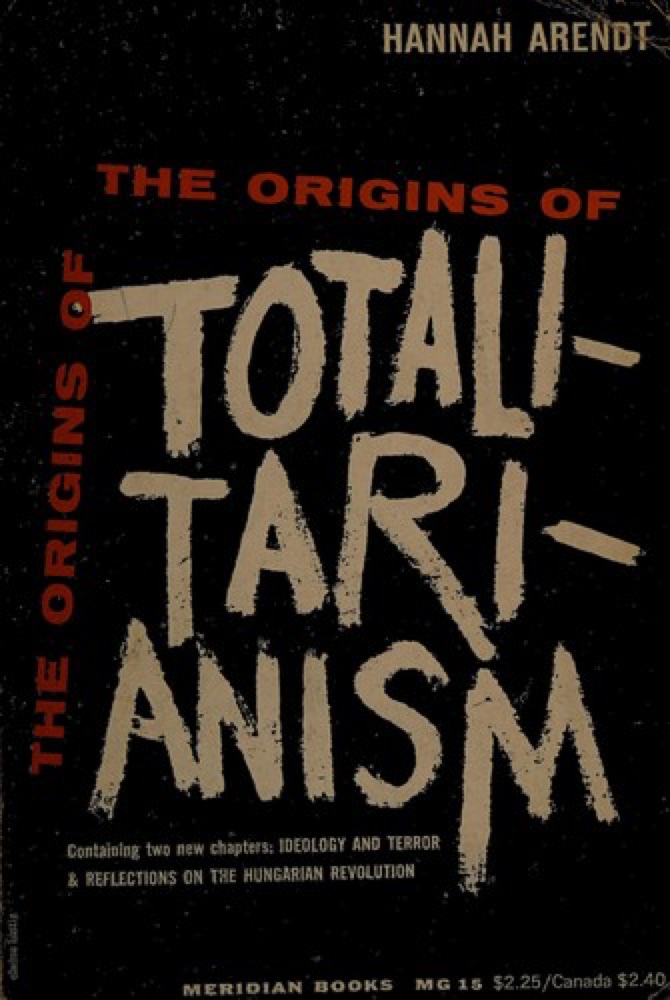 The Origins of Totalitarianism
 Ravelstein
 What's Wrong with the World
 The Way of All Flesh
 Coming Apart: The State of White America, 1960-2010
 Bobos in Paradise: The New Upper Class and How They Got There
 The Human Condition
 Capitalism, Socialism and Democracy
 The Iron Heel
 In Praise of Idleness and Other Essays
 Untimely Meditations
 The Culture of Narcissism: American Life in An Age of Diminishing Expectations
 Political Theology: Four Chapters on the Concept of Sovereignty
 De la Démocratie en Amérique, tome II
 The Society of the Spectacle
 Four Futures: Life After Capitalism
 Capitalism: The Unknown Ideal
 The Old Regime and the French Revolution
 One Man's Meat
 Games People Play
 Reflections on the Revolution in France
 The Utopia of Rules: On Technology, Stupidity, and the Secret Joys of Bureaucracy
 The Lives of Others
 The Fatal Conceit: The Errors of Socialism
 The Will to Power
 The Sociological Imagination
 Red Mars
 Small Is Beautiful: Economics as if People Mattered