
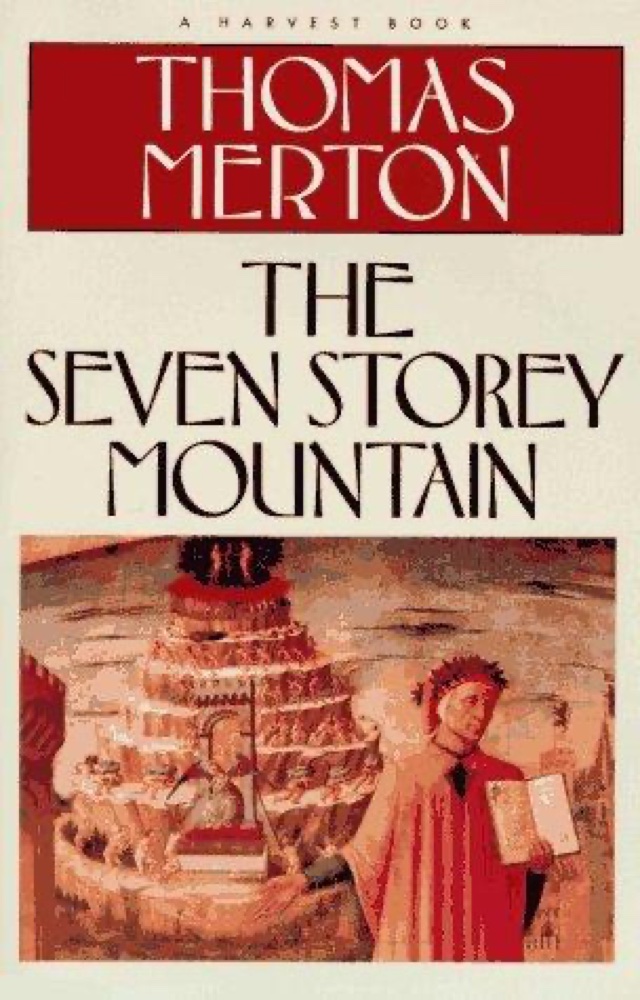
 The Seven Storey Mountain
Quotes from the Book
My Lord God, I have no idea where I am going. I do not see the road ahead of me. I cannot know for certain where it will end. Nor do I really know myself, and the fact that I think that I am following your will does not mean that I am actually doing so. But I believe that the desire to please you does in fact please you. And I hope I have that desire in all that I am doing. I hope that I will never do anything apart from that desire. And I know that if I do this you will lead me by the right road though I may know nothing about it. Therefore will I trust you always though I may seem to be lost and in the shadow of death. I will not fear, for you are ever with me, and you will never leave me to face my perils alone.
1.2k
If a man is to live, he must be all alive, body, soul, mind, heart, spirit.
313
If our life is poured out in useless words, we will never hear anything, never become anything, and in the end, because we have said everything before we had anything to say, we shall be left speechless at the moment of our greatest decision.
86
Ask me not where I live or what I like to eat . . . Ask me what I am living for and what I think is keeping me from living fully that.
63
Violence is not completely fatal until it ceases to disturb us.
48
The spiritual life is first of all a life. It is not merely something to be known and studied, it is to be lived.
35
Those who are not grateful soon begin to complain of everything.
33
A purely mental life may be destructive if it leads us to substitute thought for life and ideas for actions. The activity proper to man is purely mental because man is not just a disembodied mind. Our destiny is to live out what we think, because unless we live what we know, we do not even know it. It is only by making our knowledge part of ourselves, through action, that we enter into the reality that is signified by our concepts.
31
The only thing to seek in contemplative prayer is God; and we seek Him successfully when we realize that we cannot find Him unless He shows Himself to us, and yet at the same time that He would not have inspired us to seek Him unless we had already found Him.
29
Words stand between silence and silence: between the silence of things and the silence of our own being. Between the silence of the world and the silence of God. When we have really met and known the world in silence, words do not separate us from the world nor from other men, nor from God, nor from ourselves because we no longer trust entirely in language to contain reality.
26
When society is made up of men who know no interior solitude it can no longer be held together by love: and consequently it is held together by a violent and abusive authority. But when men are violently deprived of the solitude and freedom which are their due, then society in which they live becomes putrid, it festers with servility, resentment and hate.
24
There is no greater disaster in the spiritual life than to be immersed in unreality, for life is maintained and nourished in us by our vital relation with realities outside and above us.
19
As soon as you are really alone you are with God.
6
It is not speaking that breaks our silence, but the anxiety to be heard. The words of the proud man impose silence on all others, so that he alone may be heard. The humble man speaks only in order to be spoken to.
6
What is the use of praying if at the very moment of prayer, we have so little confidence in God that we are busy planning our own kind of answer to our prayer?
6
Laziness and cowardice are two of the greatest enemies of the spiritual life.
5
A man becomes a solitary at the moment when, no matter what may be his external surroundings, he is suddenly aware of his own inalienable solitude and sees that he will never be anything but solitary.
5
This, then, is our desert: to live facing despair, but not to consent. To trample it down under hope in the Cross. To wage war against despair unceasingly.
5
For true humility is, in a way, a very real despair: despair of myself, in order that I may hope entirely in You.
4
Christianity is not stoicism. The Cross does not sanctify us by destroying human feeling. Detachment is not insensibility. Too many ascetics fail to become great saints precisely because their rules and ascetic practices have merely deadened their humanity instead of setting it free to develop richly, in all its capacities, under the influence of grace.
4
Some men turn away from all this cheap emotion with a kind of heroic despair…But this too can be an error. For if our emotions really die in the desert, our humanity dies with them.
4
The whole of life is to spiritualize our activities by humility and faith, to silence our nature by charity.
3
The proud man loves his own illusion and self-sufficiency. The spiritually poor man loves his very insufficiency.
2
So the man who wanders into the desert to be himself must take care that he does not go mad and become the servant of the one who dwells there in a sterile paradise of emptiness and rage.
2
We are not meant to resolve all contradictions but to live with them and rise above them and see them in the light of exterior and objective values which make them trivial by comparison.
2
Life is not attained by reasoning and analysis but first of all by living.
2
Great though books may be, friends though they may be to us, they are no substitute for persons, they are only means of contact with great persons...
2
Our five sense are dulled by inordinate pleasure. Penance makes them keen, gives them back their natural vitality, and more. Penance clears the eye of conscience and of reason.
2
If we want to be spiritual, then, let us first of all live our lives. Let us not fear the responsibilities and the inevitable distractions of the work appointed for us by the will of God.
2
Watch on YouTube
About Thomas Merton
We have collected 146 quotes from 5 books by Thomas Merton on BookQuoters.
More about the author →More by Thomas Merton
About the book
Thoughtful and eloquent, as timely (or timeless) now as when it was originally published in 1956, Thoughts in Solitude addresses the pleasure of a solitary life, as well as the necessity for quiet reflection in an age when so little is private. Thomas Merton writes: "When society is made up of men who know no interior solitude it can no longer be held together by love: and consequently it is held together by a violent and abusive authority. But when men are violently deprived of the solitude and freedom which are their due, the society in which they live becomes putrid, it festers with servility, resentment and hate."Thoughts in Solitude stands alongside The Seven Storey Mountain as one of Merton's most enduring and popular works. Thomas Merton, a Trappist monk, is perhaps the foremost spiritual thinker of the twentieth century. His diaries, social commentary, and spiritual writings cont
Book details
- First published
- 1956
- Author
- Thomas Merton
- Genre
- Nonfiction
- Goodreads rating
- 4.03 (3k ratings)
Keep reading
 No Man Is an Island
 New Seeds of Contemplation
 Everything Belongs: The Gift of Contemplative Prayer
The Seven Storey Mountain
Everything Belongs: The Gift of Contemplative Prayer
The Seven Storey Mountain
 Man's Search for Meaning
 When Nietzsche Wept
 The Varieties of Religious Experience
 The Sickness Unto Death: A Christian Psychological Exposition for Upbuilding and Awakening
 Reaching Out: The Three Movements of the Spiritual Life
 The Imitation of Christ
 Interior Castle
 Autobiography of a Yogi
 Freedom from the Known
 The Problem of Pain
 The Journey Home
 Letters and Papers from Prison
 The Life You've Always Wanted: Spiritual Disciplines for Ordinary People
 The Gay Science
 The Intellectual Life: Its Spirit, Conditions, Methods
 The Weight of Glory
 The Essential Kierkegaard
 Celebration of Discipline: The Path to Spiritual Growth
 The Myth of Sisyphus
 Gravity and Grace
 Letters from a Stoic
 The Essential Writings of Ralph Waldo Emerson
 Twilight of the Idols
 The Deeply Formed Life: Five Transformative Values to Root Us in the Way of Jesus
 The Holy Longing: The Search for a Christian Spirituality
 The Story of My Experiments With Truth
 Searching for and Maintaining Peace: A Small Treatise on Peace of Heart
 Demons
 The Wounded Healer
 On the Suffering of the World
 Modern Man in Search of a Soul
 Emotionally Healthy Spirituality: Unleash A Revolution In Your Life in Christ
 The Perennial Philosophy
 Renovation of the Heart: Putting On the Character of Christ
 Complete Works of Swami Vivekananda, 9 Vols.
 A Joseph Campbell Companion: Reflections on the Art of Living
 Self-Reliance: An Excerpt from Collected Essays, First Series
 Self-Reliance and Other Essays
 A Separate Reality
 Untimely Meditations
 The Wisdom of Life
 The Ethics of Ambiguity
 Rediscover Catholicism
 Introduction to the Devout Life
 Let Your Life Speak: Listening for the Voice of Vocation
 The God Who Weeps: How Mormonism Makes Sense of Life
 The Fall
 Fear and Trembling
 The Wise Heart: A Guide to the Universal Teachings of Buddhist Psychology
 How to Stop Worrying and Start Living
 The Great Divorce
 Tattoos on the Heart: The Power of Boundless Compassion
 The Home and the World
 Studies in the Sermon on the Mount