
 The State of Affairs: Rethinking Infidelity
Quotes from the Book
The Profumo Affair in 1963 profoundly altered British society. It gave lie to the belief that those born into the ruling class were inherently superior and destined to lead.
401
The couples learn to distrust what’s said about them in the media and to turn inward toward each other in times of crisis. Dina Matos McGreevey, former wife of New Jersey Gov. Jim McGreevey wrote, “Yes, I’d once or twice heard the rumor that Jim was gay, but I dismissed it just as I dismissed many other stories, most of which I knew not to be true.
124
Eleanor was an orphan at the age of 10. She went to live with her maternal Grandma Hall, a bitter and biblically strict woman who nonetheless struggled to control her children. Eleanor had to endure some uncles who drank to excess and possibly abused her. For protection, her grandmother or an aunt installed three heavy locks on Eleanor’s bedroom door. A girlfriend who slept over asked Eleanor about the locks. She said they were “to keep my uncles out.
122
We were lovers, life companions, crusaders, side by side, for a vision of what the country could be,” Elizabeth Edwards wrote of her marriage to U.S. Sen. John Edwards. When she found out he was cheating on her, the crusading became “the glue” that kept them together.
120
As an emotional caretaker of her family, Jackie Kennedy was extraordinary. She defied the instructions of White House social advisers to make time for raising her children in as normal a way as possible. “If you bungle raising your children, I don’t think whatever else you do matters very much.” – Jackie Kennedy
117
In the 1960s, Valerie (Hobson) Profumo became the first show-business mother to talk publicly about Down’s syndrome. She was instrumental in founding Three Roses, England’s first charity to support families with Down’s children.
114
By all appearances, Hillary made a deal with herself over Bill’s philandering. She’s a private person who hates campaigning, so her marriage to a charismatic “people person” in Bill created a dynamic partnership.
112
Even a resignation, even a new baby and a magnanimous wife, hadn’t quelled Anthony Weiner’s sexting compulsion.
109
Perhaps this sort of marriage, at the top echelons of Washington and international society, was made from different rules. Fidelity, honesty – perhaps these were quaint ideas better suited to less ambitious people. When one had the heights of the free world practically in one’s grasp, maybe the bargain at the altar became more pragmatic.
107
Even some of Bill and Hillary’s harshest political critics admire their success as parents.
106
Eleanor stayed with Franklin after his repeated infidelities, and yet toward the end of her life, she regretted it, and advised her children to choose differently. ‘Never for a minute would I advocate that people who no longer love each other should live together because it does not bring the right atmosphere into a home,’ she wrote. She added that it was sad when a couple was unable to make a success of marriage, ‘but I feel it is equally unwise for people to bring up children in homes where love no longer exists.
104
When people grow up in a home where extramarital sex is condoned, they’re much less likely to regard it as a deal-breaker. Jacqueline Bouvier’s father, ‘Black Jack,’ confided in her about his female conquests, even going so far as to play a game with Jackie when he visited her at boarding school. She would point to a classmate’s mother, and Jack would respond, ‘Yes’ or ‘Not yet’ — answering the silent question, had he slept with that one?
103
There is some evidence that Huma Abedin knew that her husband continued his sexting compulsion, even after quitting Congress in disgrace. She blamed herself for bailing out of couples counseling, according to friends quoted in the New York Post.
102
Eleanor Roosevelt’s determination to rise above her personal pain gave the world one of its great leaders.
101
The political wife came forward and publicly vouched for her straying man. If she could continue to trust and believe in him, the public could too – or so the script went.
98
For each of these women, the fear of the unknown — of leaving a marriage and casting off alone — may have bound them to a marriage where there is insensitivity, neglect, or even outright abuse. People learn intimacy at home, and when those early standards are set too low, a wife may second-guess her judgment about when and whether she should leave.
96
It wasn’t always that way for the wives of powerful men. Prior to the 1960s, the press generally kept mum about the sex lives of politicians. When Eleanor Roosevelt discovered her husband’s affair by reading a love letter, she kept it to herself — and used it to gain the upper hand in her marriage, which had the additional benefit of setting her free to pursue writing and social activism.
96
Patriarchy’s influence often lives in the minds of women who were raised in a certain way and who aspire to a certain type of greatness — as one half of a powerful, leading couple. They act from behind the scenes, from behind a husband, because their goals and dreams, their stature in the world, is achieved most effectively through the influence of men — or so they believe. Without their husbands, they seem to doubt that they can fully express themselves. The motives of women in power political couples may be foreign to women in private life, but we should consider that the women who hold or aspire to great power have unique pressures and uncompromising standards. Does that compromise make sense when the couple can do so much good in the world, accomplish their political and policy goals, and build a platform and legacy for their children and grandchildren? Political women struggle with these questions.
96
The five Roosevelt children had 17 marriages among them. They struggled to find security in love.
96
The people at the center of these stories of power couples mostly choose to see their own motives as selfless. In Elizabeth Edwards’ autobiography Resilience, she wrote of her marriage to John, U.S. senator from North Carolina, ‘We were lovers, life companions, crusaders, side by side, for a vision of what the country could be.’ When she found out he was cheating on her, the crusading together became ‘the glue’ that kept them together. ‘I grabbed hold of it. I needed to,’ Edwards wrote. ‘Although I no longer knew what I could trust between the two of us, I knew I could trust in our work together.’ She wanted ‘an intact family fighting for causes more important than any one of us.
95
You know, in most any other marriage, this would have been a private issue between a husband and a wife, very private. Obviously, it’s not here.” – Wendy Vitter, wife of former U.S. Sen. David Vitter
95
To leave the marriage behind is to step out of the spotlight. It means fading into normalcy, returning to ordinary life, perhaps an impossible admission for women who have built their egos on being one member of a powerful team. To divorce might be to admit defeat for women who have come to see themselves as extraordinary and who circulate with other famous and history-making figures.
90
What we witness playing out in the relationships of our public figures we risk finding acceptable in our private lives. Feminists have connected women’s sexual subordination to their unequal status in society, and have strived to transform women’s expectations in their private lives. Private dignity at home equates to dignity in the workplace and the public sphere.
89
The Clintons’ partnership is infused with patriotic fervor. Early on, they referred to their life together as “the journey.” They intended to inspire the expansion of the country’s social consciousness.
89
By the end of the four-year term, Americans hold a bifurcated view of Mrs. Trump. Many Republicans, especially women, revere her as elegant, graceful, beautiful and wronged by the press. A pastor in Missouri held up Melania as a wifely model to which other women should aspire — or risk losing their men. At the same time some southern preachers referred to then-Senator and presidential candidate Kamala Harris as Jezebel, the Bible’s most nefarious woman and archetype of female cunning. There could be no surer sign that the life stories of prominent women affect the lives of private women than when pastors hold them up as positive or negative role models.
88
Being a leading power couple means not only submitting to media scrutiny but also commanding coverage. To leave the marriage behind is to step out of the spotlight. It means fading into normalcy, returning to ordinary life, perhaps an impossible admission for women who have built their egos on being one member of a leading couple.
87
The Trump marriage veered furthest away from my concept of the union — and surprised me most as a student of American politics. Donald and Melania seem to inhabit separate realms and to come together when necessary, when one could not move forward without the other. The presidency was one instance in which they were forced into a joint undertaking. If my choice of language sounds businesslike, that’s because that’s how I’ve come to view the Trumps. Having learned more about each partner’s history, I believe they are two highly ambitious individuals who benefit from their partnership. It’s a transaction: he gains a beautiful woman on his arm, a solid-seeming marriage, a son, and a savvy adviser. She gains wealth and international cachet.
86
Watch on YouTube
About Anne Michaud
We have collected 27 quotes from 1 book by Anne Michaud on BookQuoters.
More about the author →About the book
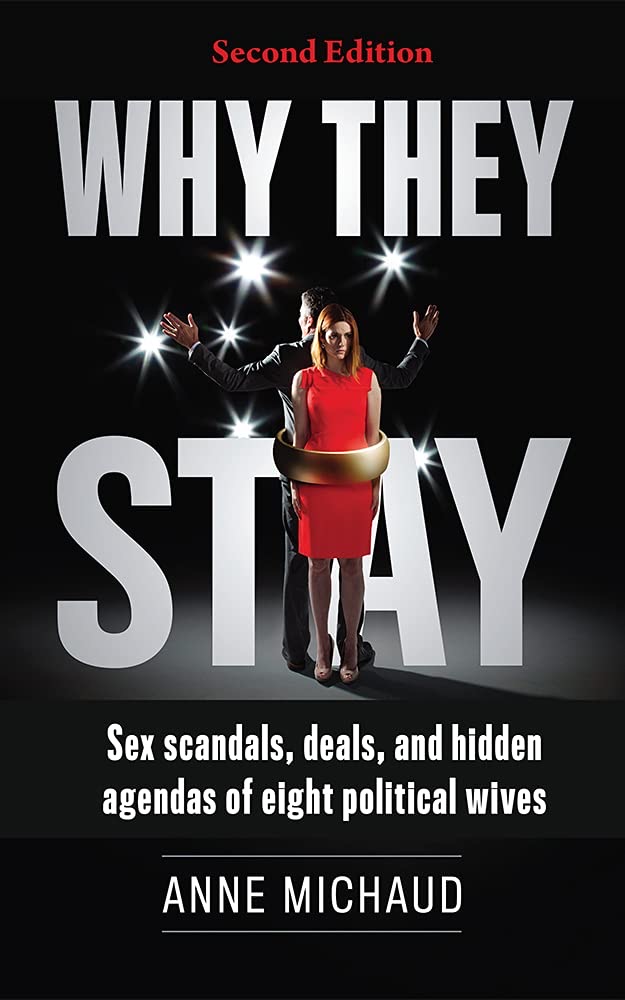
Why do good women stay with bad men?
What if political wives are just as calculating as their infamous husbands?
Did Slovenian model Melania Knauss enter her marriage to Donald Trump with her eyes open about his history of philandering? At one point in their courtship she called it off. What risks and rewards did she weigh when she finally agreed to be his wife?
Veteran political journalist Anne Michaud knows the hidden agendas political couples employ to gain and cling to power. Working as a reporter for The Wall Street Journal and awarded “Columnist of the Year” by the New York News Publishers Association, Anne has researched the spouses behind some of the most notorious politicians in the public eye.
She discovered a surprising pattern as old as the dynastic maneuverings of England’s medieval queens.
Today, women married to the “royalty” of our times – politicians – mak
Book details
- First published
- 2021
- Author
- Anne Michaud
- Genre
- Nonfiction
- Goodreads rating
- 4.29 (14k ratings)
Keep reading
The State of Affairs: Rethinking Infidelity
 The Autobiography of Eleanor Roosevelt
 Confessions on the 7:45
 Boundaries in Marriage: Understanding the Choices That Make or Break Loving Relationships
 What Happened
 Mislaid
 Yesteryear
 The Hemingses of Monticello: An American Family
 Of Women and Salt
 The Full Cupboard of Life
 No One Left To Lie To: The Values of the Worst Family
 The Invisible Bridge: The Fall of Nixon and the Rise of Reagan
 The Other Queen
 The Dialectic of Sex: The Case for Feminist Revolution
 My Own Words
 House of Trelawney
 The Husband's Secret
 One Fifth Avenue
 The Christie Affair
 Elizabeth Finch
 Off With Her Head: Three Thousand Years of Demonizing Women in Power
 Some Things I Never Thought I'd Do
 Real Marriage: The Truth About Sex, Friendship, & Life Together
 House of Glass
 The Love Affairs of Nathaniel P.
 Herland
 Committed: A Skeptic Makes Peace with Marriage
 My Life on the Road
 Hell and Other Destinations: A 21st-Century Memoir
 Outrageous Acts and Everyday Rebellions
 Ravelstein
 Mr. Peanut
 Jaded
Jaded
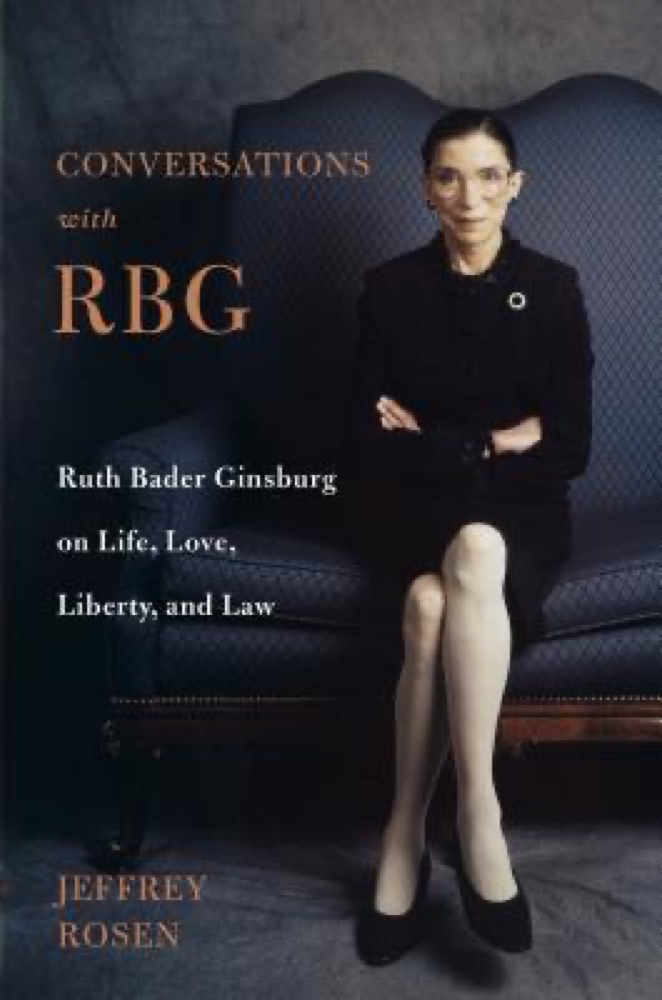 Conversations with RBG: Ruth Bader Ginsburg on Life, Love, Liberty, and Law
 Pretty Girls
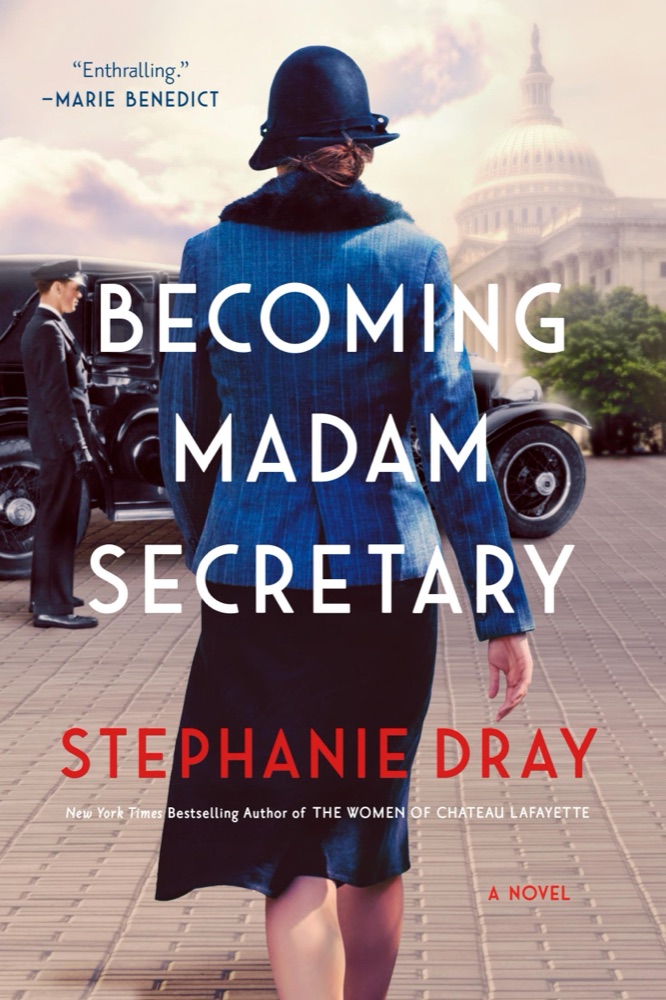 Becoming Madam Secretary
 The Group
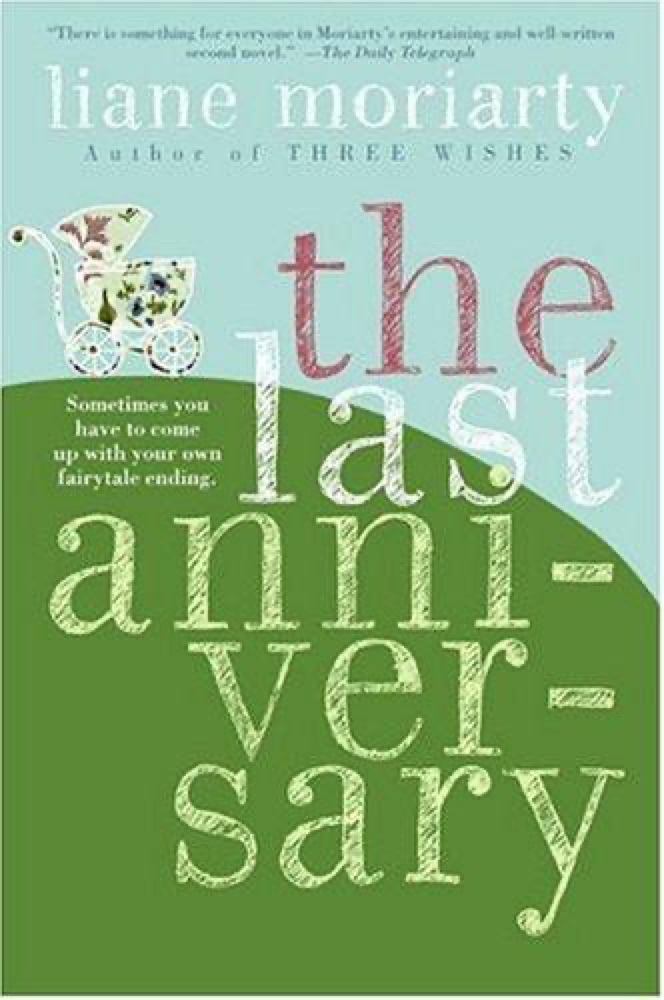 The Last Anniversary
 The Woman Who Walked in Sunshine
 2 States: The Story of My Marriage
 Appointment with Death
 Waking Up Married
 The Fraud
 Mrs. Miniver
 Birnam Wood
 Gone to Soldiers
 The Female Eunuch
 Isn't It Bromantic?
 A Certain Hunger
 Nine Perfect Strangers
 Notorious RBG: The Life and Times of Ruth Bader Ginsburg
 The American Heiress
 Catherine the Great: Portrait of a Woman
 Promises to Keep: On Life and Politics
 Foreverland: On the Divine Tedium of Marriage
 The Antelope in the Living Room: The Real Story of Two People Sharing One Life
 Awake
Awake
 A Promised Land
 Love
Love