
 The Autograph Man
Quotes from the Book
The strange thing about good people, Eliza had noticed, was the manner in which they saw that same quality everywhere and in everyone, when in truth it is vanishingly rare.
9
What possesses people? Unhappiness, always. Happiness is otherwise occupied. It has an object on which to focus. It has daisies, it has snowdrifts. Unhappiness opens up the void, which then requires filling.
7
Mrs Touchet had a theory. England was not a real place at all. England was an elaborate alibi. Nothing real happened in England. Only dinner parties and boarding schools and bankruptcies. Everything else, everything the English really did and really wanted, everything they desired and took and used and discarded – all of that they did elsewhere.
5
But it is the perverse business of mirrors never to inform women of their beauty in the present moment, preferring instead to operate on a system of cruel delay.
5
It is not the prisoner's right to open his cell that is in question, Mrs Touchet it is the gaoler's fraud in claiming to hold a man prisoner in the first place. The first is self-evident. The second, wholly criminal.
5
How easily it is to treat people well when things are going well for you! thought Mrs. Touchet. Aloud she said, 'Happy news.
5
Mrs Touchet allowed herself a private smile. As long as we profess to believe that two people may happily - or feasibly - invest all love and interest in the world solely in one another, till death do them part - well, then life, short as it is, will continue to be a human comedy, punctuated by tragedy. So she generally thought. Then there were those moments of grace, when she startled herself with the idea that if anybody truly understood what is signified by the word 'person', they would consider twelve lifetimes too brief a spell ion which to love a single soul.
5
The humiliations of girlhood. The separating of the beautiful from the plain and the ugly. The terror of maidenhood. The trials of marriage or childbirth – or their absence. The loss of that same beauty around which the whole system appears to revolve. The change of life. What strange lives women lead!
5
From such worn cloth and stolen truth are novels made.
3
We mistake each other. Our whole social arrangement a series of mistakes and compromises. Shorthand for a mystery too large to be seen. If they knew what I knew they would feel as I do! Yet even once one had glimpsed behind the veil which separates people, as she had – how hard it proves to keep the lives of others in mind! Everything conspired against it. Life itself.
2
Never again would he properly attend to the kinds of stories that were right in front of him. Stories like her own—or for that matter like Mr Bogle’s. Stories of human beings, struggling, suffering, deluding others and themselves, being cruel to each other or kind. Usually both.
2
God preserve me from novel-writing, thought Mrs Touchet. God preserve me from that tragic indulgence, that useless vanity, that blindness! In a cold dormitory, two hundred miles away, three heartbroken, motherless girls had hoped to be visited by their father. But William was busy at his desk, dreaming up Jack Sheppard.
2
Some people live for love, or for work, or for their children. Eliza Touchet had lived for an idea: freedom.
2
When she was young, she had wanted to know everyone, touch everyone, be everyone, go everywhere! Now she thought that if you truly loved – and were truly loved by! – two people in your lifetime you had every right to think yourself a Midas.
2
Was he really so good or did he only want to be seen to be good? Does it matter?
2
a joyous yellow archipelago of dandelion.
2
The world was sunk in madness. It covered everything, like weather.
2
Until this moment she hqd not guessed that her cousin hoped for a knighthood, and she could not, from this distance, discern how likely it was ... What really interested her was the presumption. Of recognition, of respect -- of attention itself. Why did he assume such things as his due? Was this what men assumed?
2
When young, she had never understood why old women dithered so. Why they led conversations down dead ends and almost always overstayed their welcome. She did not know then what it was to have no definition in the world, no role and no reason. To be no longer even decorative. All too easy to lose your footing, to misunderstand everything, get the wrong end of every stick.
2
I know this country well. Well enough to understand that justice takes time, and that the freedoms of a minority are rarely self-evident to the majority. What is perfectly selfevident to God is – unfortunately! – too often obscure or invisible to his flawed creations. The minds of men move peculiarly slowly.
2
Eliza had long understood her cousin to be beyond the reach of editorial intervention.
2
But such dry and inconvenient facts were of no consequence here, in this ocean of feeling.
1
How could she have lived so long and thought so hard and yet have understood so little! What was this intolerable feeling? Love? She had been avoiding it for so long she had forgotten how painful it truly is.
1
And heads have always turned for women, too, in tribute to their beauty. Being so tall and narrow and punishing of aspect, Mrs Touchet had been largely excluded from that arena of influence in her youth. Now she was old. The exclusion was total.
1
The pain had not gone though it had settled: it was the foundations of the house of herself
1
Cities were in her bones. Her fellow passengers could complain of smuts and smells, of the incredible chaos of carriages and wagons, but Eliza enjoyed her glimpses of a Mayfair wedding, a woman hitting another woman with a broom on the Charing Cross Road and a band of Ethiopian minstrels outside Westminster.
1
It was as if even the little misunderstandings were placed in their path deliberately, to better illustrate the workings of grace.
1
The only force comparable to an Ainsworth enthusiasm was the speed with which it passed.
1
A life is a long business, Mrs Touchet. What should I tell you of my life?" She almost reached a hand across the table. "Tell me everything.
Eliza listened along with them, but felt that she alone truly heard the man, pierced as she was by a new awareness, a subterranean insight. A person is a bottomless thing! She might rush the stage to proclaim it: A person is a bottomless thing! The people saw only the battered hat, the rigid fingers, the sparse tufts of hair, the dark skin, so unlike their own. They heard only the quiet voice, speaking lilting words in a certain arrangement. And mistook all of this for a person. Kindly, simple, old ‘Black Bogle’. They could not know what he had seen, nor where he had been. But perhaps, reflected Mrs Touchet, this is always the case. We mistake each other. Our whole social arrangement a series of mistakes and compromises. Shorthand for a mystery too large to be seen. If they knew what I knew they would feel as I do! Yet even once one had glimpsed behind the veil which separates people, as she had – how hard it proves to keep the lives of others in mind! Everything conspires against it. Life itself.
Watch on YouTube
About Zadie Smith
We have collected 129 quotes from 5 books by Zadie Smith on BookQuoters.
More about the author →More by Zadie Smith

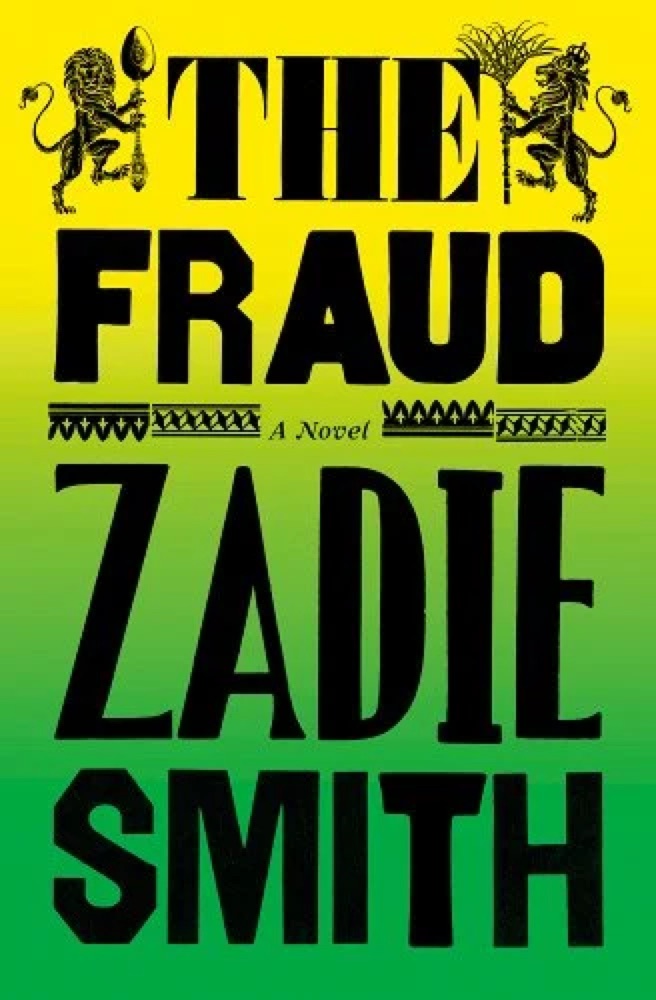
About the book
Alternate cover edition of ISBN 9780525558965.
From acclaimed and bestselling novelist Zadie Smith, a kaleidoscopic work of historical fiction set against the legal trial that divided Victorian England, about who gets to tell their story—and who gets to be believed.
It is 1873. Mrs. Eliza Touchet is the Scottish housekeeper—and cousin by marriage—of a once-famous novelist, now in decline, William Ainsworth, with whom she has lived for thirty years.
Mrs. Touchet is a woman of many interests: literature, justice, abolitionism, class, her cousin, his wives, this life and the next. But she is also sceptical. She suspects her cousin of having no talent; his successful friend, Mr. Charles Dickens, of being a bully and a moralist; and England of being a land of facades, in which nothing is quite what it seems.
Andrew Bogle, meanwhile, grew up enslaved on the Hope Plantation, Jamaica
Book details
- First published
- 2023
- Author
- Zadie Smith
- Genre
- Historical
- Goodreads rating
- 3.25 (36k ratings)
The buzz
- The New York TimesReview in The New York Timesprofessional review (via Book Marks)
- The Washington PostReview in The Washington Postprofessional review (via Book Marks)
- The Wall Street JournalReview in The Wall Street Journalprofessional review (via Book Marks)
- The GuardianReview in The Guardianprofessional review (via Book Marks)
- The AtlanticReview in The Atlanticprofessional review (via Book Marks)
- Los Angeles TimesReview in Los Angeles Timesprofessional review (via Book Marks)
Keep reading
 Tess of the D'Urbervilles
 The Children Act
 Too Much Happiness: Stories
 NW
NW
 All Passion Spent
 The Uncommon Appeal of Clouds
 The Novel Habits of Happiness
 The Years
 The Christie Affair
 Green Dolphin Street
 The Life of Charlotte Brontë
 The Paying Guests
 The Children's Book
 Longbourn
 Lady Jayne Disappears
 Lady Audley's Secret
 The Jewel in the Crown
 The House of Mirth
 Desperate Remedies
 What Is Not Yours Is Not Yours
 The French Lieutenant's Woman
 A Reliable Wife
 The Weight of Ink
 House of Trelawney
 No Name
 Gingerbread
 A Slow Fire Burning
 The Clockmaker's Daughter
 Birds of America
 The Marriage Plot
 Armadale
 Bleak House
 The Post-Birthday World
 The Moonstone
 The Jane Austen Book Club
 Atonement
 Jeremy Poldark
 Appointment with Death
 Old Babes in the Wood: Stories
 The Scarlet Letter
 The Story of the Lost Child
 The Husband's Secret
 Lord Arthur Savile's Crime and Other Stories
 Homecoming
 The Hollow of Fear
 Shrines of Gaiety
 Case Histories
 The Art of Theft
 After Leaving Mr. Mackenzie
 Lone Women
 Fool Me Twice
 The Good Soldier
 The Muse
 Mrs. Dalloway
 When We Lost Our Heads
 Monday or Tuesday
 Ship of Fools
 A Desperate Fortune
 Journey to Munich
 A Widow for One Year