

 Paper Aeroplanes
Quotes from the Book
Whether someone is useful only matters if you value people by their use.
21
I look at the sky and the dust that separates us from the stars that will be my home. I breathe in the night air, the rotten night air, and I miss, I miss, I miss.
11
I'm not making sense, and I'm so tired of having to make sense. I've even more tired of talking about how OK or not OK I am. I'm not. I've failed. That's it. People should stop going on about it.
5
I’m not signing up for any end of the world that my sister can’t be part of.
3
I'm getting so sick of talking. It's like holding the wrong kind of magnets together: I can try and try, but it takes brute force, and the second I relax, the magnets simply slide past each other.
2
I know you're worried. I'm sorry. I'm just...very..." I can't think of the right word. How do I explain that mind is too slow and too jumbled all at once. That I'm out of gas? That I've failed, and the only way to keep from falling apart is to accept that? Or that maybe I've already fallen apart, and I don't know if I can sweep the pieces back together? I settle on three words. "I am tired.
2
Does it hurt you or something? Can I ask you that?" "Eye contact? No. Maybe it hurts for some people, but not for me. It's..." I've tried for years to put it into words. All the things I want to compare it to—music that's too loud, flavor that's too strong, images that flash too quickly—are different for other people, too, so it never feels quite right {...} "I can do it for, like, half a second. Anything longer is just too much. Too intense. It scrambles my brain." It's intimate, I think, but don't say aloud. "Right," he says slowly. "Like a shock," I say, trying again. "Like a jolt that goes through me the second I make eye contact, or someone touches me when I don't expect it... like those things are suddenly so present, so loud and intrusive. It's so overwhelming I can't think right.
2
Of course, when Iris was gone, Mom barely seemed to care until the final hours before evacuation. Maybe it'll be the same for me: Denise will be fine. Oh, she'll be back. It makes me want to laugh when I realize how wrong I am. Of course it won't be the same. I'm not Iris. It'll be: Denise? Denise is gone? Oh, god, no. How long for? She can't be out there by herself. She might've gotten lost. She's—then, confidentially, with that look of hers—she's autistic. What if she...
1
I like cats. I always planned that, once I got my own apartment, I'd visit the animal shelter first thing. Not for a cute kitten, but for a cat people don't adopt as often, you know? Like a black one or—" "Actually, it's the disabled ones that are hard to place," I correct her [...] "People don't see them as worth the trouble when there are healthy cats to take. It's especially difficult for cats with both physical and behavioral issues.
1
This is the second time my future vanishes: it’s January 29, 2035, and I give up.
1
Every engineer, doctor, and farmer on this ship has relatives on the waiting list, too, and those relatives won’t be drug addicts. Mom’s right: no one would pick her from a waiting list. No one would’ve picked me, either. Usefulness or death can’t be her only options. If being picked from the waiting list isn’t feasible, then the one choice left is to smuggle her in. The back of my mind keeps whispering about the risk, about She’d only be a drain, but I shut it up. There’s a difference between leaving Mom and leaving Mom to die. “I’m glad you agree,” Iris says. “I know it’s not easy.” That’s what I hate. She’s right. It’s not. I still don’t want to break the rules, even if it’s to help Mom. But people on TV never abandon their family; they risk their own lives. That’s what you’re supposed to do. On TV, people just never feel this twisted about it. “Four this afternoon,” I say. “Let’s talk.
1
Ten minutes after loading up her plate, when Iris is sipping pale apple juice, she asks Els across the table, “I’m told I should make myself useful. What are my options?” Els spears a strawberry. “What can you do?” “I organize.” “Like your sister.” “I organize people, events,” Iris says. “Denise organizes information.” I absorb that. I never thought of myself as organizing anything. I think of myself as listening, coping, avoiding. The words feel good, rolled over in my mind: Denise organizes information.
1
For a moment, I'm tempted. Work was fine first, wasn't it? I enjoyed it, and she's right, the stress will never again be as bad as it's been— But school was like that, too. Starting each year thinking it'd be different, and within a month I'd be skipping class and fighting tears in the girls' bathroom.
Maybe closeness lets you see something for what it really is, and see the damage it does.
I don't think you're even hearing me." Her laugh turns into a sob. I'm listening. I just don't know what to say, or how. Words crawl in the back of my mind but won't take enough shape to reach my tongue.
I want to grab her and say, See? You see? This is it, this is what I have to see every damn day, this is what nobody else sees, and at the same time, I just want to turn and run. I've learned how to act like Denise in front of people. I've never learned how to act like my mother's daughter.
People seem OK?" "People are getting by," Helen corrects, "because we all know what happens if we panic.
But you were unhappy. The different between you then and you now... I wish you'd told someone." Unhappy doesn't cover it. I dreaded school so much, I couldn't sleep at night and couldn't get up in the morning; I'd park my bike near the bike garage exit just so I could be the first to leave after classes. "It got harder after a while," is all I say.
Again, I hold my tongue. People tell me this a lot. Mom is so sweet, and so caring. Mom is so eager to help. Mom is such fun at parties. Aside from Iris, Matthijs is the first one to call her a mess, though.
You'd have to ask Leyla if you want to know more. She's a psychologist. One of a dozen on board. We don't just want our passengers to survive—we want them to be OK. We're dealing with a lot of trauma. So if you ever need to talk..." "I'll pass." "Bad experiences?" "Sort of." "What happened?" I shrug. "It took a long time to diagnose me." "From what I understand, autistic girls often don't run into trouble until a later age." I bark out a laugh. Oh, I ran into trouble, all right. I barely said a word between the ages of four and six. I hit three of my preschool and grade school teachers. In a class photo taken when I was seven, my face is covered in scratches from when I latched onto a particularly bad stim. Therapists and teachers labelled me as bipolar, as psychotic, as having oppositional defiant disorder, as intellectually disabled, and as just straight-up difficult, the same way Els did. One said all I needed was structure and a gluten-free diet. When I was nine, a therapist suggested I might be autistic, at which point I had already started to learn what set me off and how to mimic people; within two years, I was coping well enough to almost-but-not-quite blend in with my classmates. It's funny when people like Els have no idea anything is off about me, given that my parents spend half my childhood worrying I'd end up institutionalized. At the time, I thought the diagnosis was delayed because I was bad at being autistic, just like I was bad at everything else; it took me years to realize that since I wasn't only Black, but a Black girl, it's like the DSM shrank to a handful of options, and many psychologists were loath to even consider them.
It's hard for my autism to be a secret, given the way my mom tells people left and right. It's not that I need it to be one; I just want to tell people myself.
It's odd, the way I find myself defending Mom to outsiders even though I long ago gave up on her in my head. It's guilt, I think. It's guilt because I've given up on her, and I can't possibly explain to them why I had to.
I should ask how they are. If I can rattle off rehearsed condolences, I should be able to offer support, right? I should. Yet, my tongue is as empty as when I faced a red-eyed Mirjam in the bathroom or an Iris stressed out from her festivals. Sometimes I wanted to ask if I could hug her, the same way Iris always did with me—"Can I?"—but self-consciousness would stop me at the last second. It's just not my role. I'd be playing normal like a child playing dress-up.
The last time Els and I spoke, she'd reprimanded me over shouting at Michelle. Now she's all kindness. What changed her mind? My being autistic, or my almost dying?
I've always liked buffets. They let me choose exactly what I want and how much.
I jerk my shoulder back. "Stop trying to touch me." "I only want—" "I'm autistic. Stop it." The words fly out. Immediately, I wish I could take them back. I don't want to be like Mom, pushing my limits into everyone's faces and demanding sympathy. I don't want them to be like Mom, either, telling me it's OK or how sorry they are for me. "Oh." Els takes a backward step into her office. "Damn. Of course you are. I should've seen that." I stare at the ground. "I'm sorry," I try one more time. "I never thought about it. I just thought you were..." Mulish. Antisocial. Disrespectful. Difficult is what she's thinking, just like a dozen teachers and psychologists before her. Just another maladjusted Black girl from the Bijlmer.
People always get like this, sooner or later. They start pushing and pushing, and I don't get what they're pushing me toward, or they promise me something, then do the opposite, and I no longer know what to do. Either way, someone gets hurt. Most of the time, it's me.
Mom smiles at this. A normal smile, like any other mother might smile at any other daughter. For a fleeting moment, I think this might be it—this is where she feels a rush of affection while looking at me and decides she's flaked out for long enough [...] She'll think ahead. She'll be a mother again. And all it took was the end of the world.
Denise is autistic." Mom lingers on the last word. As though she revels in this. The explaining, the confiding.
Watch on YouTube
About Corinne Duyvis
We have collected 29 quotes from 1 book by Corinne Duyvis on BookQuoters.
More about the author →About the book
January 29, 2035.
That’s the day the comet is scheduled to hit—the big one. Denise and her mother and sister, Iris, have been assigned to a temporary shelter near their hometown of Amsterdam to wait out the blast, but Iris is nowhere to be found, and at the rate Denise’s drug-addicted mother is going, they’ll never reach the shelter in time.
Then a last-minute encounter leads them to something better than a temporary shelter: a generation ship that’s scheduled to leave Earth behind and colonize new worlds after the comet hits. But each passenger must have a practical skill to contribute. Denise is autistic and fears that she’ll never be allowed to stay. Can she obtain a spot before the ship takes flight? What about her mother and sister?
When the future of the human race is at stake, whose lives matter most?
Book details
- First published
- 2016
- Author
- Corinne Duyvis
- Genre
- Science Fiction
- Goodreads rating
- 3.89 (4k ratings)
Keep reading
Paper Aeroplanes
 Bang
Bang
 Cassandra in Reverse
 Finding Audrey
 A Pho Love Story
 I Don't Want To Be Crazy
 More, Now, Again: A Memoir of Addiction
 Bettyville: A Memoir
 I'm Glad My Mom Died
 Tell Me Three Things
 It's Not Like It's a Secret
 When It Happens
 Permanent Record
 Left Neglected
 Where'd You Go, Bernadette
 All Fall Down
 Still Life with Tornado
 Nice Try, Jane Sinner
 Piecing Me Together
 Seasparrow
 Sloppy Firsts
 How to Say Goodbye in Robot
 Open Book
 Backlash
 Tweet Cute
 The Love of My Afterlife
 Clothes, Clothes, Clothes. Music, Music, Music. Boys, Boys, Boys
 Tweak: Growing Up On Methamphetamines
 A Kind of Spark
 When You Reach Me
 How To Talk To A Widower
 Belong to Me
 What Is the What
 Am I Normal Yet?
 Death Valley
 Em and The Big Hoom
 The Nobleman's Guide to Scandal and Shipwrecks
 Hold Still
 I Wish You All the Best
 When You Were Here
 How to Save a Life
 I'll Have What She's Having
 A Corner of the Universe
 The Return
 Riding the Bus with My Sister: A True Life Journey
 The Fortunes of Indigo Skye
 A Little Wanting Song
 Lost and Found Sisters
 This is Not a Test
 Awake
Awake
 Lock Every Door
 House Rules
 All My Puny Sorrows
 Go Ask Alice
 Looking for Alibrandi
 Eleanor Oliphant Is Completely Fine
 Fall for Anything
 Crenshaw
 Runaway
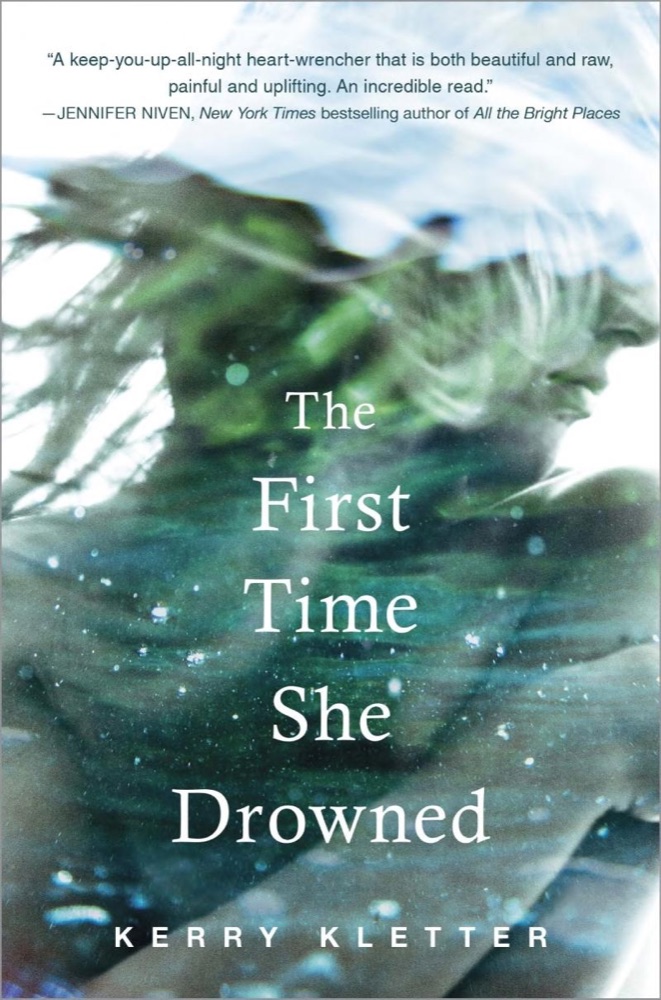 The First Time She Drowned