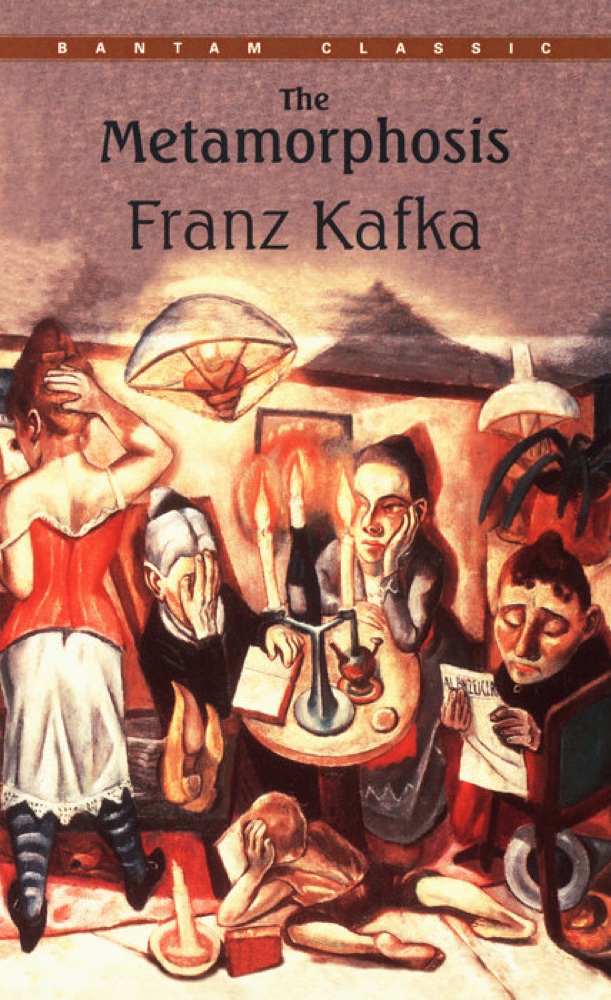
 The Metamorphosis
Quotes from the Book
There is a destination but no way there; what we refer to as way is hesitation.
63
Leopards break into the temple and drink all the sacrificial vessels dry; it keeps happening; in the end, it can be calculated in advance and is incorporated into the ritual.
55
The Expulsion from Paradise is eternal in its principal aspect: this makes it irrevocable, and our living in this world inevitable, but the eternal nature of the process has the effect that not only could we remain forever in Paradise, but that we are currently there, whether we know it or not.
29
The crows assert that a single crow could destroy the heavens. This is certainly true, but it proves nothing against the heavens, because heaven means precisely: the impossibility of crows.
26
You can withdraw from the sufferings of the world — that possibility is open to you and accords with your nature — but perhaps that withdrawal is the only suffering you might be able to avoid.
20
In the struggle between yourself and the world, second the world. (Im Kampf zwischen Dir und der Welt, sekundiere der Welt)
13
In the struggle between yourself and the world, hold the world’s coat.
11
Why then do you fear love in particular more than earthly existence in general?” Kafka replied as if from an astral distance: “You write: ‘Why be more afraid of love than of other things in life?’ And just before that: ‘I experienced the intermittently divine for the first time, and more frequently than elsewhere, in love.’ If you conjoin these two sentences, it’s as if you had said: ‘Why not fear every bush in the same way that you fear the burning bush?
8
There are two cardinal sins from which all others spring: impatience and laziness. Because of impatience we were driven out of Paradise, because of laziness we cannot return. Perhaps, however, there is only one cardinal sin: impatience. Because of impatience we were driven out, because of impatience we cannot return.
7
We are instructed to do the negative; the positive is already within us.
7
A cage went in search of a bird.
5
For Kafka, paradise wasn’t a place where people lived in the past and of which a memory has survived, but rather a perennial, hidden presence. In every moment, an immense, encompassing obstacle prevents us from seeing it. That obstacle is nothing other than the expulsion from paradise—a process Kafka called “eternal in its principal aspect.
5
48 Belief in progress doesn’t mean belief in progress that has already occurred. That would not require belief.
4
There are two cardinal human sins from which all others derive: impatience and indolence.
3
The true path is along a rope, not a rope suspended way up in the air, but rather only just over the ground. It seems more like a tripwire than a tightrope.
3
He has the feeling that merely by being alive he is blocking his own way. From this sense of hindrance, in turn, he deduces the proof that he is alive.
3
Es perfectamente imaginable que el esplendor de la vida está dispuesto, siempre en toda plenitud, alrededor de cada uno, pero cubierto de un velo, en las profundidades, invisible muy lejos. Sin embargo está ahí, no hostil, no a disgusto, no sordo, viene si uno lo llama con la palabra correcta, por su nombre correcto, Es la esencia de la magia, que no crea, sino llama.
3
Evil is an emanation of human consciousness at certain transitional points. It is not really the physical world that is illusion, but the Evil of it, which to our eyes constitutes, admittedly, the physical world.
2
We don’t all share one body, but we do share growth, and that leads us through all pain, whether in this form or that.
1
Language can be used only very obliquely of things outside the physical world, not even metaphorically, since all it knows to do—according to the nature of the physical world—is to treat of ownership and its relations.
1
The relationship to one's fellow man is the relationship of prayer, the relationship to oneself is the relationship of striving; it is from prayer that one draws the strength for one's striving.
1
The dogs are still playing in the yard, but the quarry will not escape them, never mind how fast it is running through the forest already.
1
Only here is suffering really suffering. Not in the way that those who suffer here are to be ennobled in some other world for their suffering, but that what passes for suffering in this world is, in another world, without any change and merely without its contrariety, bliss.
1
Watch on YouTube
About Franz Kafka
We have collected 289 quotes from 15 books by Franz Kafka on BookQuoters.
More about the author →More by Franz Kafka
All books by Franz Kafka →

About the book
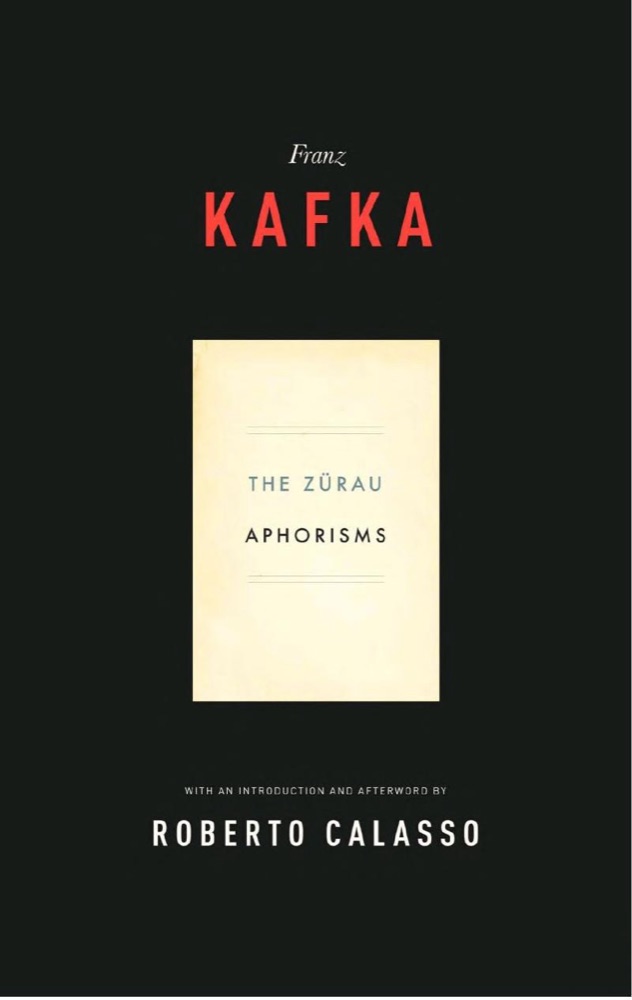
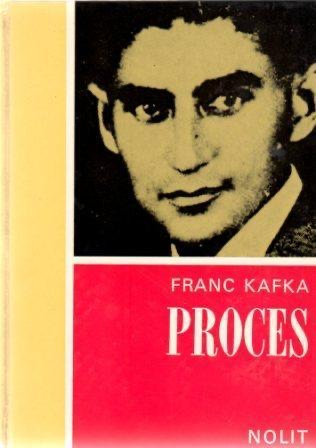
The essential philosophical writings of one of the twentieth century’s most influential writers are now gathered into a single volume with an introduction and afterword by the celebrated writer and publisher Roberto Calasso.
Illness set him free to write a series of philosophical some narratives, some single images, some parables. These “aphorisms” appeared, sometimes with a few words changed, in other writings–some of them as posthumous fragments published only after Kafka’s death in 1924. While working on K ., his major book on Kafka, in the Bodleian Library, Roberto Calasso realized that the Zürau aphorisms, each written on a separate slip of very thin paper, numbered but unbound, represented something unique in Kafka’s opus–a work whose form he had created simultaneously with its content.
The notebooks, freshly translated and laid out as Kafka had intended, are a distillation o
Book details
- First published
- 1931
- Author
- Franz Kafka
- Genre
- Philosophy
- Goodreads rating
- 3.66 (5k ratings)
Keep reading
 The Philosopher and the Wolf
 The World as Will and Representation, Vol 1
 The Gay Science
 Correction
 Blue Octavo Notebooks
 Perelandra
 The Empusium
 In Search of Lost Time
 When Nietzsche Wept
 The First Circle
 The Blue Flower
 Demons
 Anthills of the Savannah
 The Myth of Sisyphus
 The Screwtape Letters
 The Schopenhauer Cure
 Random Acts Of Heroic Love
 The Fall
 Primeval and Other Times
 Eifelheim
 Untimely Meditations
 The Crossing
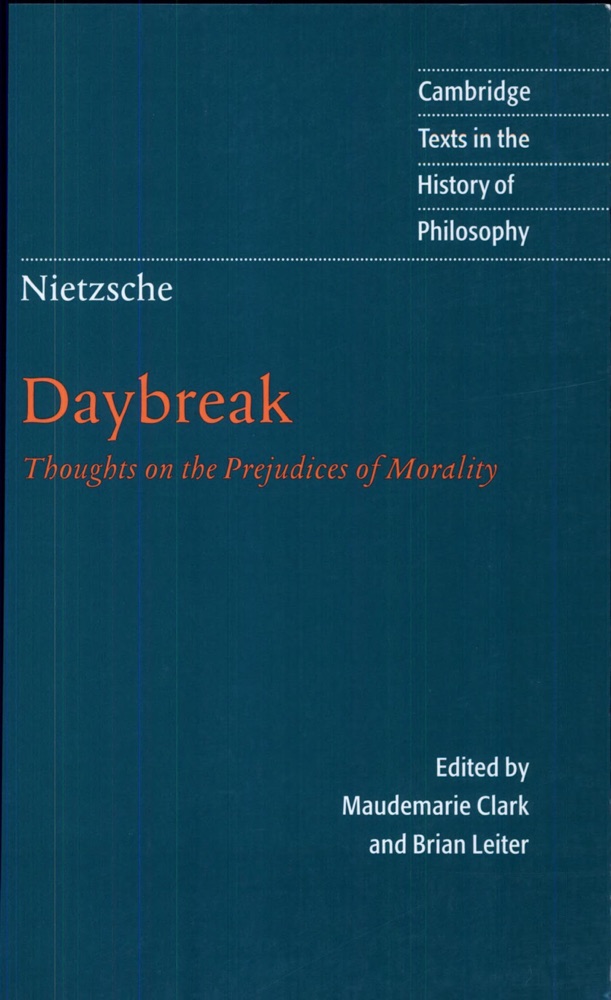 Daybreak: Thoughts on the Prejudices of Morality
 The Oath of the Vayuputras
 Sacred Journey of the Peaceful Warrior
 Daniel Deronda
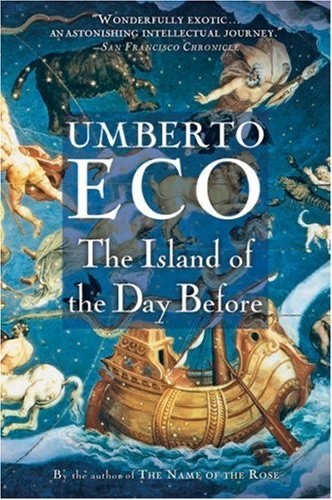 The Island of the Day Before
 The Man in the High Castle
 Island
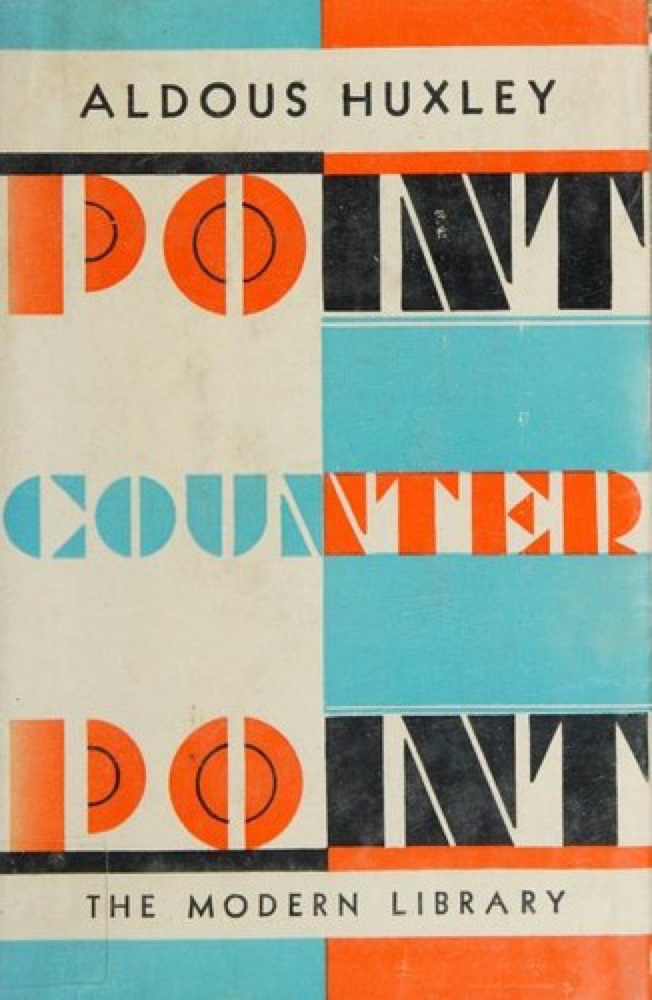 Point Counter Point
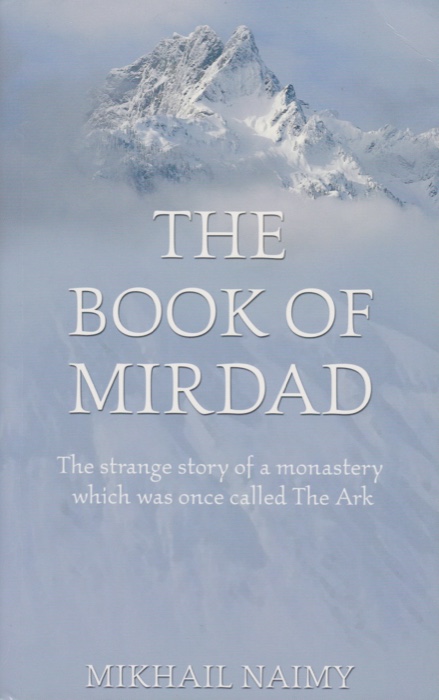 The Book of Mirdad: The Strange Story of a Monastery Which Was Once Called the Ark
 The Star Diaries
 Sexing the Cherry
 The Perennial Philosophy
 The Morning Star
 The Everlasting Man
 Laurus
 The Fall
 The Left Hand of Darkness
 The High Mountains of Portugal
 Hippie
 The Darkness That Comes Before
 The Ethics of Ambiguity
 The Book That Broke the World
 Man and His Symbols
 The Dispossessed
 The Story of My Experiments With Truth
 The Sickness Unto Death: A Christian Psychological Exposition for Upbuilding and Awakening
 The Elementary Particles
 The Magic Mountain
 East of Eden
 The Snowman
 Zeno's Conscience
 Shōgun
 The Road Less Travelled
 If You Meet the Buddha on the Road, Kill Him! The Pilgrimage of Psychotherapy Patients
 On the Suffering of the World
 The Lathe of Heaven
 Running with the Demon
 The Double