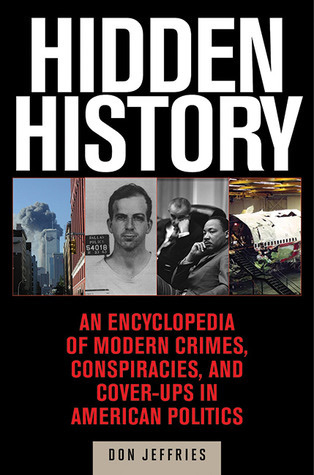
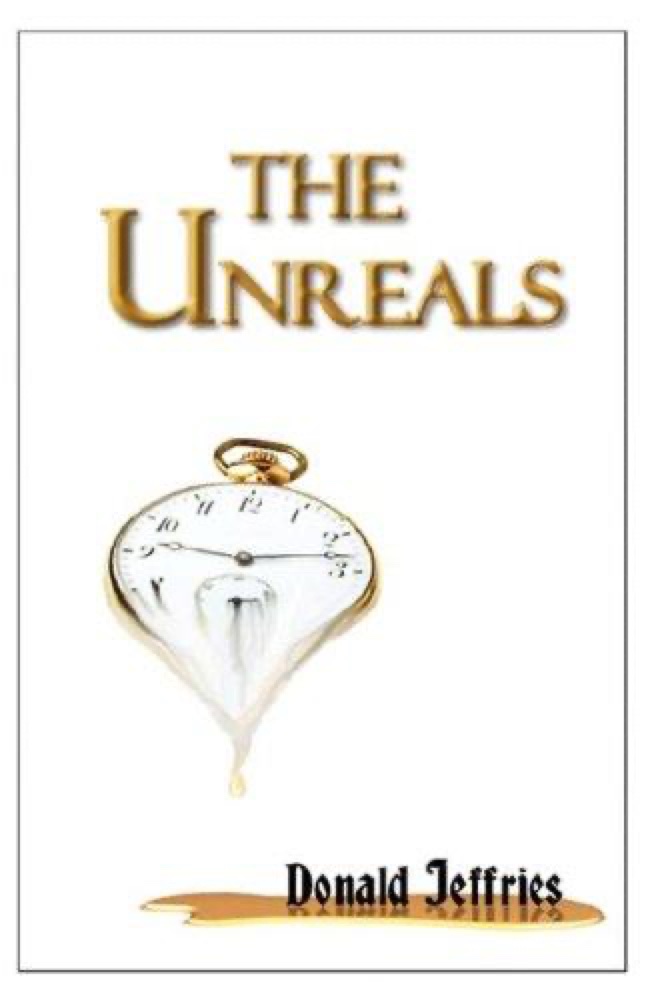
 The Unreals
Quotes from the Book
I can remember when believing in conspiracies wasn’t cool. Now, in the second decade of the twenty-first century, more people are starting to sense that things may not be as they appear to be. The truth in Lord Acton’s classic axiom that “Power corrupts, and absolute power corrupts absolutely” becomes more self-evident every day. Politicians from the only two parties we have to choose from break promises, are unresponsive to the will of the people, and opt for war, austerity measures, and state control over and over again. Gary Allen, author of the book None Dare Call It Conspiracy, defined things perfectly when he wrote, “It must be remembered that the first job of any conspiracy, whether it be in politics, crime or within a business office, is to convince everyone else that no conspiracy exists.
Before the assassination of President John F. Kennedy, the very word conspiracy was seldom used by most Americans. The JFK assassination was the seminal national event in the lives of the Baby Boomer generation. We’ve heard all the clichés about the loss of our innocence, and the beginning of public distrust in our government’s leaders, being born with the events of November 22, 1963, but there’s a good deal of truth in that. President Kennedy tapped into our innate idealism and inspired a great many people, especially the young, like no president ever had before. John F. Kennedy was vastly different from most of our elected presidents. He was the first president to refuse a salary. He never attended a Bilderberg meeting. He was the first Catholic to sit in the Oval Office, and he almost certainly wasn’t related to numerous other presidents and/or the royal family of England, as is often the case. He was a genuine war hero, having tugged an injured man more than three miles using only a life preserver’s strap between his teeth, after the Japanese had destroyed the boat he commanded, PT-109. This selfless act seems even more courageous when one takes into account Kennedy’s recurring health problems and chronic bad back. He was an intellectual and an accomplished author who wrote many of his memorable speeches. He would never have been invited to dance naked with other powerful men and worship a giant owl, as so many of our leaders do every summer at Bohemian Grove in California.
The JFK assassination itself has been dissected to pieces by obsessed researchers like me. Suffice to say that a few days of intense study of the available record will convince any honest person, beyond any reasonable doubt, that Lee Harvey Oswald was not responsible for the crime. The coverup was so clear and obvious in nature, and so shabbily constructed, that the conclusion is inescapable that the conspirators who killed him wanted the kind of controversy that soon exploded, shortly after the first wave of private citizens began to look at the data.
Questions surround nearly every aspect of the assassination. The chain of possession regarding each piece of evidence was tainted beyond repair. The presidential limousine, which represented the literal crime scene, was taken over by officials immediately after JFK’s body was carried into Parkland Hospital and tampered with. The Secret Service apparently cleaned up the limousine, washing away crucial evidence in the process. Obviously, whatever bullet fragments or other material that was purportedly found there became immediately suspect because of this. On November 26, the windshield on the presidential limo was replaced. The supposed murder weapon—a cheap, Italian Mannlicher-Carcano rifle with a defective scope, allegedly ordered by Oswald through a post office box registered to his purported alias, Alex Hidell—is similarly troublesome. The two Dallas officers who discovered the rifle on the sixth floor of the Texas School Book Depository building, Seymour Weitzman and Eugene Boone, both swore in separate affidavits that the weapon was a German Mauser. As was to become all too common in this case, they would later each claim to be “mistaken” in a curiously identical manner. In fact, as late as midnight on November 22, Dallas District Attorney Henry Wade would refer to the rifle as a Mauser when speaking to the press. Local WFAA television reported the weapon found as both a German Mauser and an Argentine Mauser. NBC, meanwhile, described the weapon as a British Enfield. In an honest court, the Carcano would not even have been permitted into the record, because no reliable chain of possession for it existed. Legally speaking, the rifle found on the sixth floor was a German Mauser, and no one claimed Oswald owned a weapon of that kind.
The legitimacy of Oswald’s alleged alias, Alex Hidell, is tainted beyond repair by the nature of the Selective Service card supposedly found on him after his arrest in the Texas Theater. This card bore a photograph of Lee Harvey Oswald but the name of Alex Hidell. The problem is real Selective Service cards never had photos on them, so the card would have been worthless as a means of identification. It was perfect, however, for instantly associating Oswald with the Hidell alias. Oswald apparently only used this alias twice— once to order the unreliable rifle later dubiously tied to the assassination, and once to order the revolver allegedly used to kill Officer Tippit. The authorities claimed Oswald utilized a P.O. Box, under Hidell’s name, for just this purpose. Critics quickly pointed out how senseless this would have been, as anyone could have purchased better, cheaper weapons on virtually every street corner in 1963 Dallas, with no convenient trail left behind.
As we know, Clay Shaw was acquitted, and the establishment celebrated another victory over the truth. In my view, Ferrie, Banister, Shaw, and Jack Ruby would have been the conspirators Oswald worked with personally, on the ground level, while far more powerful forces manipulated everything behind the scenes. I share Jim Garrison’s theory that Oswald was some kind of intelligence operative who was assigned to infiltrate what he was told was a plot to kill the president, shortly before the actual assassination. At least that’s where I think the evidence logically leads.
On November 26, 1963, President Johnson had signed National Security Action Memorandum, 273, which was in diametrical opposition to JFK’s NSAM 263. While Kennedy’s body was still warm in his grave when LBJ’s signature changed future US direction in Vietnam, NSAM 273 had, incredibly enough, actually been drafted on November 21, 1963, while Kennedy was still alive. The memo was written by National Security Advisor McGeorge Bundy (more on him later). Why would such a memo have been created, when it contradicted JFK’s policy and certainly would not have been signed by him? LBJ let it be known early on that he wanted to “win” in Vietnam, and had no intention of following Kennedy’s plans to withdraw completely by 1965.
There are two schools of thought about Chappaquiddick: liberals generally tend to ignore the subject and resent any mention of it, and conservatives believe that Teddy was directly responsible for the death of Mary Jo Kopechne and lied about it, and the “liberal” media helped to cover up his crime. The facts suggest a third alternative: Chappaquiddick represented the political assassination of Edward Kennedy, orchestrated by the same forces responsible for the deaths of John and Robert Kennedy.
Despite an unimpressive first term in office, which featured huge tax cuts for the wealthiest Americans and tax increases for everyone else, Reagan was reelected in 1984 in an unprecedented landslide, winning forty-nine of the fifty states against hapless Democrat Walter Mondale. While he has become the patron saint of all Republicans, especially those who revel in wearing the “conservative” mantle, Reagan’s record is far, far removed from his rhetoric. Despite this, the collective delusion of his supporters is best exemplified by noted Republican speechwriter Peggy Noonan’s claims, regarding his 1980 campaign promises, that they were “Done, done, done, done, done, done and done. Every bit of it.
The trial of hapless Timothy McVeigh shared many things in common with the “trials” of other scapegoats from the past. Like Bruno Richard Hauptmann, James Earl Ray, and Sirhan Sirhan, McVeigh received inept legal representation. Stephen Jones presented almost no defense, resting after only three and a half days and just twenty-five witnesses. Even establishment talking head attorney Alan Dershowitz would criticize the incompetent defense McVeigh received.
There is no question that, if John F. Kennedy Jr. had lived, he would have been a formidable political candidate. But his premature death prevented us from ever knowing if he indeed would have publicly confronted the deaths of his father and uncle, and other related issues.
George W. Bush’s legacy will always be defined by the events of September 11, 2001, which provided him with something of a delayed mandate. Without 9/11, there would have been no unconstitutional Patriot Act, no Homeland Security Department, no decade-long occupation of Iraq and Afghanistan, and no open-ended “war on terror.” As such, it is important to look closely at exactly what really happened on 9/11/2001.
In a June 25, 2010, Washington Post article, the CIA acknowledged officially discussing the creation of a video of a fake Saddam Hussein having sex with a teenage boy in order to discredit him in the eyes of the Iraqi people. Evidently, the Agency did create a video of a fake Osama Bin Laden drinking liquor around a campfire with his cronies, bragging about their conquests of young boys. The article quoted an anonymous former CIA officer “chuckling” at the memory, and declaring that the actors used in the video were drawn from “some of us darker-skinned employees.” These ridiculous clandestine ideas brought to mind the childish efforts to assassinate Fidel Castro forty years earlier.
Whether important policy decisions are made at Bohemian Grove or not, it is at the very least disturbing to know that our leaders are gathering together to worship a massive owl, dress in robes, and recite occult incantations.
Our society has come to adopt many of the draconian measures Orwell tried to warn us about. Cameras monitor citizens from nearly every street corner in the United Kingdom, and there are a steadily growing number of them mounted on traffic lights in America. The fact that Orwell’s 1984 remains a part of the required reading curriculum in many high schools across the country is laughably ironic. What is truly sad is how many readers acknowledge the brilliant foresight of Orwell yet fail to grasp how closely present-day America (and England) resemble Winston Smith’s Oceania.
We stand today on the brink of economic destruction. The housing market remains stagnant. Unemployment is obviously far higher than the officially reported figures of 6 to 7 percent, which factor in only those filing for unemployment benefits. As I was completing this book, there were alarming reports disseminated by the media that a hundred million Americans of working age were without jobs. This amounts to a staggering true unemployment rate of 36.3 percent. While some of those are willfully unemployed, such as stay-at-home parents, retirees, and high school students, there is no question that the real rate must still be at least somewhere in the HIDDEN HISTORY 4 25-percent range. Student loan debt is quickly surpassing credit card debt in volume. The cost of living continues to surge, while the vast majority of American workers receive little or no yearly wage increase. Our industry has practically left our shores, leaving us incapable of manufacturing anything of substance. Although the US population increased by 10 percent during the first decade of the twenty-first century, 5,500,000 manufacturing jobs were lost during the same time period. The sad reality is America doesn’t make much of anything anymore. The income disparity has grown to such an extent that the richest four hundred citizens presently possess more aggregate wealth than the bottom fifty percent of all Americans combined. If present trends continue, the United States is rapidly on the way to Third World nation status.
Who is responsible for the incredible mess the present-day generation of Americans find themselves in? In this book, I hope to show exactly how this happened. A series of deadly, inexplicable decisions by our elected leaders and corporate executives have paved the way to the crisis we must deal with now. Corruption has grown entrenched, like an inoperable disease, in nearly every organ of the establishment. We must heed the words of one of America’s greatest statesmen, Thomas Jefferson: “Single acts of tyranny may be ascribed to the accidental opinion of a day. But a series of oppressions, begun at a distinguished period, and pursued unalterably through every change of ministers [administrations], too plainly proves a deliberate systematic plan of reducing us to slavery.” The American people have been dealing with just such a “series of oppressions” now for well over a century, and there can be little doubt that it is the result of a “deliberate systematic plan.” The best word to describe it is conspiracy.
The record is replete with witnesses reporting that they were intimidated by various authorities. Could all of them, unconnected and unknown to each other, be having the same fantasies? And if the threats were real, the obvious question is: why would any law enforcement officer at any level, or any anonymous phone caller, for that matter, threaten someone if the assassination was the result of a random act by a lone nut that was no longer alive? But this is akin to asking why any information about the murder of John F. Kennedy was ever withheld, let alone still withheld after fifty years, on the grounds of “national security” if Lee Harvey Oswald was a minimum-wage loser, with no conspirators, who was out to impress his estranged wife.
Aldous Huxley is known today primarily as the author of the novel Brave New World. He was one of the first prominent Americans to publicly endorse the use of psychedelic drugs. Controversial political theorist Lyndon Larourche called Huxley “the high priest for Britain’s opium war,” and claimed he played a conspicuous role in laying the groundwork for the Sixties counterculture. Huxley’s grandfather was Thomas H. Huxley, founder of the Rhodes Roundtable and a longtime collaborator with establishment British historian Arnold Toynbee. Toynbee headed the Research Division of British Intelligence during World War II, and was a briefing officer to Winston Churchill. Aldous Huxley was tutored at Oxford by novelist H. G. Wells, a well-known advocate of world government. Expounding in his “Open Conspiracy: Blue Prints for a World Revolution,” Wells wrote, “The Open Conspiracy will appear first, I believe, as a conscious organization of intelligent and quite possibly in some cases, wealthy men, as a movement having distinct social and political aims. . . . In all sorts of ways they will be influencing and controlling the apparatus of the ostensible government.” Wells introduced Huxley to the notorious Satanist, Aleister Crowley.
With the birth of the Internet, Clinton’s critics began chronicling his scandals—which were entirely ignored by the reliable mainstream press— and even came up with a colorful term to describe the untidy truth that an inordinate number of those connected to Bill or his wife, Hilary Rodham Clinton, had met unnatural deaths—the Clinton Body Count.
Obama’s election to the presidency in 2008 was treated more like a coronation, if not an intense religious ritual, by the establishment press and a fawning, glassy-eyed majority of Americans. Anyone who questioned anything at all about Obama was deemed to be a “hater” or, even worse, a racist.
The Council on Foreign Relations is like an establishment country club—a veritable Who’s Who of American policy-making. The mainstream press has historically given scant coverage to exactly what it is that the CFR does. The “Foreign Relations” part of the name would seem to indicate a group devoted to the study of foreign policy objectives. Indeed, on the rare occasions that the CFR is mentioned in the mainstream media, it is inevitably referred to as “an influential foreign policy think tank”—makes it even more curious that so many celebrated figures decidedly lacking in “foreign policy” experience are or have been members.
When I was a child, I enjoyed thinking about the future, and especially loved to imagine flying around in one of those cool bubble cars I’d seen on The Jetsons cartoons. Here we are, fifty years later, and we have the same gas- and oil-guzzling motor vehicles, the same basic planes, the same trains, the same utility companies to monitor and charge for our electricity, gas, and water usage. Jimmy Carter talked a lot about new sources of energy back in the 1970s. So did some of the hippies. And yet, decades later, there has been little progression on this front.
Watch on YouTube
About Donald Jeffries
We have collected 39 quotes from 2 books by Donald Jeffries on BookQuoters.
More about the author →More by Donald Jeffries
The Unreals
Book details
- Author
- Donald Jeffries
- Genre
- Nonfiction
- Goodreads rating
- 3.99 (372 ratings) →
Keep reading
 The Invisible Bridge: The Fall of Nixon and the Rise of Reagan
 Conspirators' Hierarchy: The Story of the Committee of 300
 The Threat: How the FBI Protects America in the Age of Terror and Trump
 Enemies: A History of the FBI
 Nixonland: The Rise of a President and the Fracturing of America
 Radio Free Albemuth
 Imperial Ambitions: Conversations on the Post-9/11 World
 The Best and the Brightest
 The Untold History of The United States
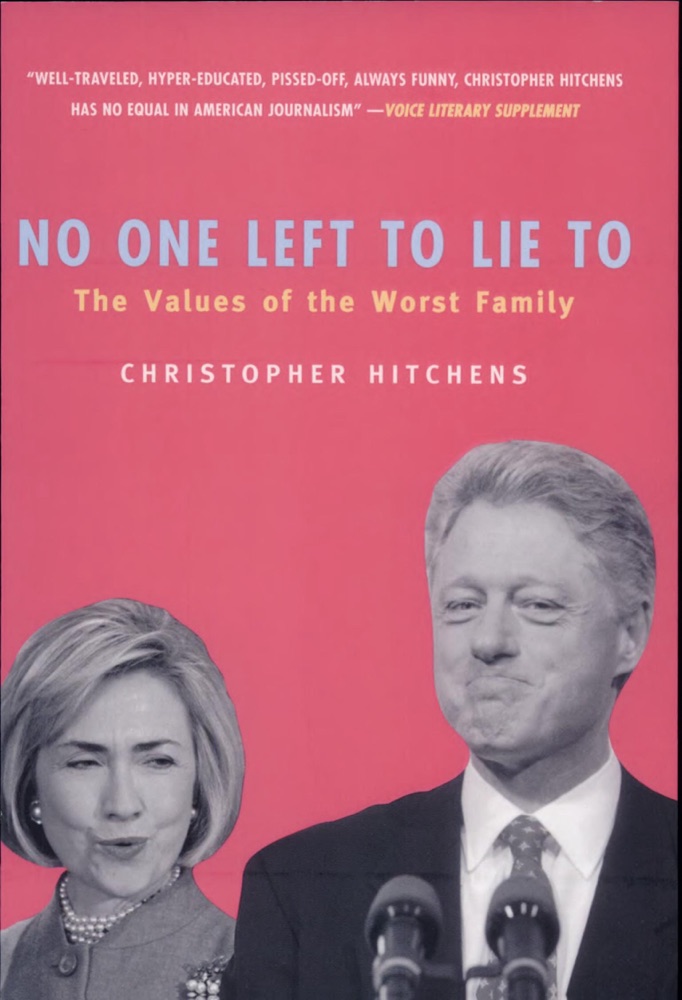 No One Left To Lie To: The Values of the Worst Family
 Behold a Pale Horse
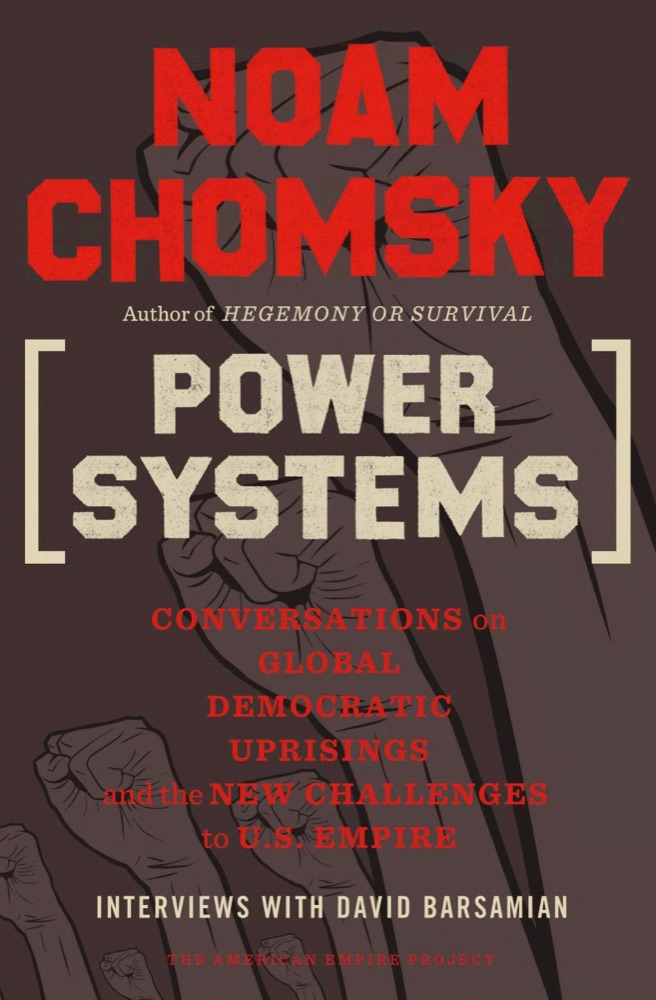 Power Systems: Conversations on Global Democratic Uprisings and the New Challenges to U.S. Empire
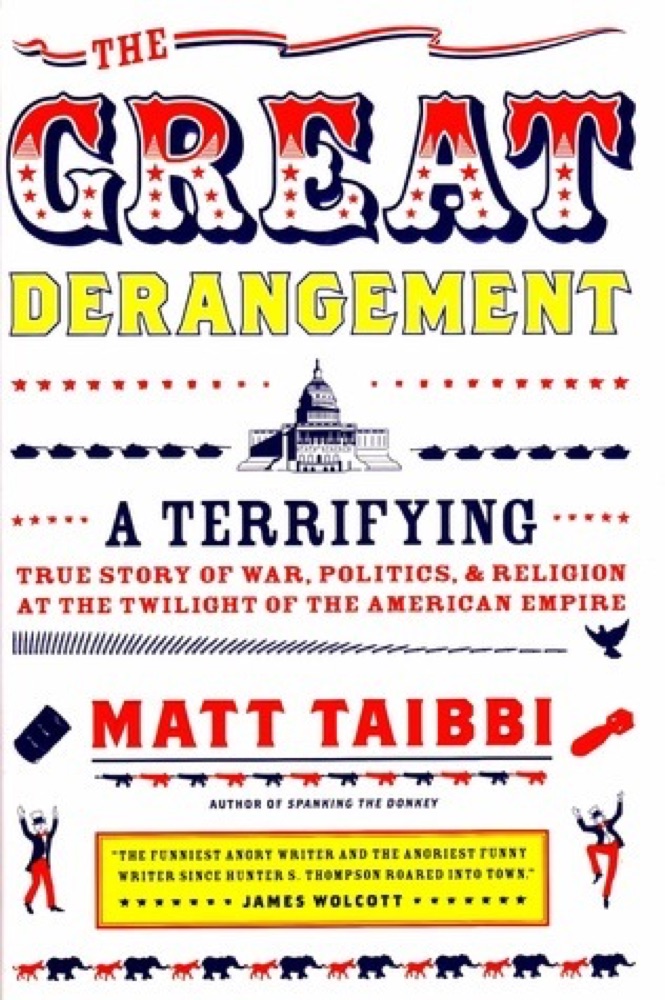 The Great Derangement: A Terrifying True Story of War, Politics, and Religion at the Twilight of the American Empire
 On Tyranny: Twenty Lessons from the Twentieth Century
 Dark Alliance: The CIA, the Contras, and the Crack Cocaine Explosion
 Unthinkable: Trauma, Truth, and the Trials of American Democracy
 Before the Storm: Barry Goldwater and the Unmaking of the American Consensus
 A People's History of the United States
 Dead Fall
 Myth America: Historians Take On the Biggest Legends and Lies About Our Past
 Drift
Drift
 The Trial of Henry Kissinger
 Understanding Power: The Indispensable Chomsky
 History Decoded: The 10 Greatest Conspiracies of All Time
 Burr
Burr
 Truman
 Trumpocracy: The Corruption of the American Republic
 Assassination Vacation
 Fascism: A Warning
 Executive Orders
 Witness
 American Tabloid
 Evil Geniuses: The Unmaking of America
 America: The Farewell Tour
 Killing Kennedy: The End of Camelot
 The Jakarta Method: Washington's Anticommunist Crusade and the Mass Murder Program that Shaped Our World
 America (The Book): A Citizen's Guide to Democracy Inaction
 Arguably: Selected Essays
 The World As It Is: Inside the Obama White House
 Permanent Record
 The Great Shark Hunt: Strange Tales from a Strange Time
 These Truths: A History of the United States
 Glenn Beck's Common Sense: The Case Against an Out-of-Control Government, Inspired by Thomas Paine
 They Called Us Enemy
 No Name in the Street
 The Mask of Dimitrios
 Assata: An Autobiography
 Profiles in Courage
 Griftopia: Bubble Machines, Vampire Squids, and the Long Con That Is Breaking America
 Gnomon
 Deer Hunting with Jesus: Dispatches from America's Class War
 Twilight of the Elites: America After Meritocracy
 What Unites Us: Reflections on Patriotism
 A Higher Loyalty: Truth, Lies, and Leadership
 Doppelganger: A Trip into the Mirror World
 Promises to Keep: On Life and Politics
 Liberal Fascism: The Secret History of the American Left from Mussolini to the Politics of Meaning
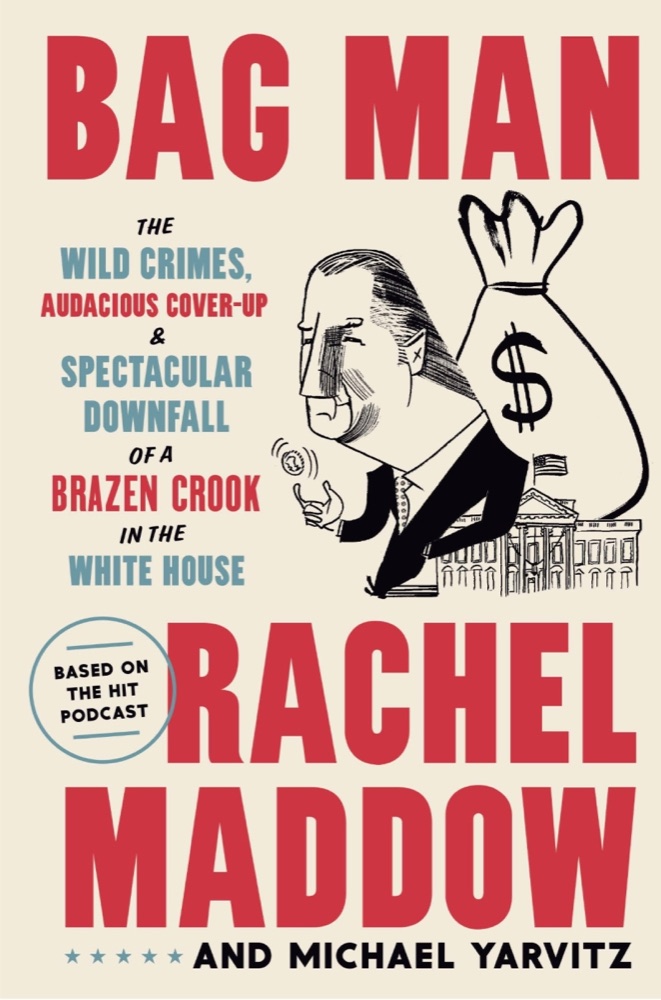 Bag Man: The Wild Crimes, Audacious Cover-up, and Spectacular Downfall of a Brazen Crook in the White House
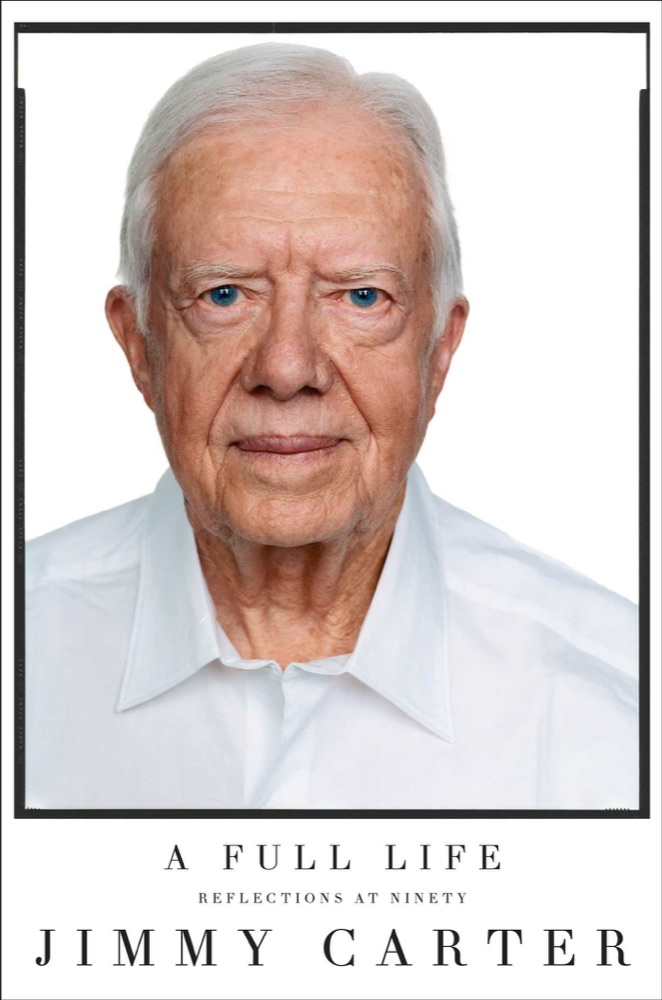 A Full Life: Reflections at Ninety
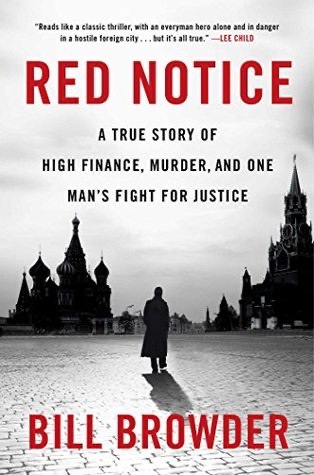 Red Notice: A True Story of High Finance, Murder, and One Man's Fight for Justice