 Selected Poems
Quotes from the Book
Ithaka As you set out for Ithaka hope the voyage is a long one, full of adventure, full of discovery. Laistrygonians and Cyclops, angry Poseidon—don’t be afraid of them: you’ll never find things like that on your way as long as you keep your thoughts raised high, as long as a rare excitement stirs your spirit and your body. Laistrygonians and Cyclops, wild Poseidon—you won’t encounter them unless you bring them along inside your soul, unless your soul sets them up in front of you. Hope the voyage is a long one. May there be many a summer morning when, with what pleasure, what joy, you come into harbors seen for the first time; may you stop at Phoenician trading stations to buy fine things, mother of pearl and coral, amber and ebony, sensual perfume of every kind— as many sensual perfumes as you can; and may you visit many Egyptian cities to gather stores of knowledge from their scholars. Keep Ithaka always in your mind. Arriving there is what you are destined for. But do not hurry the journey at all. Better if it lasts for years, so you are old by the time you reach the island, wealthy with all you have gained on the way, not expecting Ithaka to make you rich. Ithaka gave you the marvelous journey. Without her you would not have set out. She has nothing left to give you now. And if you find her poor, Ithaka won’t have fooled you. Wise as you will have become, so full of experience, you will have understood by then what these Ithakas mean.
161
Days to come stand in front of us like a row of lighted candles— golden, warm, and vivid candles. Days gone by fall behind us, a gloomy line of snuffed-out candles; the nearest are smoking still, cold, melted, and bent. I don’t want to look at them: their shape saddens me, and it saddens me to remember their original light. I look ahead at my lighted candles. I don’t want to turn for fear of seeing, terrified, how quickly that dark line gets longer, how quickly the snuffed-out candles proliferate.
40
Distinguishing Marks Every land has its distinguishing mark. Particular to Thessaly are horsemanship and horses; what marks a Spartan is war's season; Media has its tables with their dishes; hair marks the Celts, the Assyrians have beards. But the marks that distinguish Athens are Mankind and the Word.
11
Before Jerusalem Now they've come before Jerusalem. Passions, avarice, and ambition, as well as their chivalrous pride have swiftly slipped from their souls. Now they've come before Jerusalem. In their ecstasy and their devoutness they've forgotten their quarrels with the Greeks; they've forgotten their hatred of the Turks. Now they've come before Jerusalem. And the Crusaders, so daring and invincible, so vehement in their every march and onslaught, are fearful and nervous and are unable to go further; they tremble like small children, and like small children weep, all weep, as they behold the walls of Jerusalem.
6
The City" You said, “I will go to another land, I will go to another sea. Another city will be found, a better one than this. Every effort of mine is a condemnation of fate; and my heart is — like a corpse — buried. How long will my mind remain in this wasteland. Wherever I turn my eyes, wherever I may look I see black ruins of my life here, where I spent so many years destroying and wasting.” You will find no new lands, you will find no other seas. The city will follow you. You will roam the same streets. And you will age in the same neighborhoods; and you will grow gray in these same houses. Always you will arrive in this city. Do not hope for any other — There is no ship for you, there is no road. As you have destroyed your life here in this little corner, you have ruined it in the entire world.
5
Return" Return often and take me, beloved sensation, return and take me -- when the memory of the body awakens, and an old desire runs again through the blood; when the lips and the skin remember, and the hands feel as if they touch again. Return often and take me at night, when the lips and the skin remember...
4
SETI SE, TELO... Telo, seti se ne samo koliko si bilo voljeno, ne jedino kreveta na kojima si ležalo, nego i onih želja, koja su zbog tebe iskrile u onim jasnim očima i drhtale u glasu – a neka ih je slučajna prepreka osujetila. Sada, kad je sve to već u prošlosti, izgleda skoro kao da si se onim željama i predavalo – kako su iskrile, seti se, u očima što su te gledale: kako su drhtale u glasu zbog tebe, seti se, telo.
3
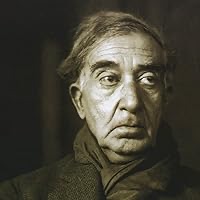
What matters to Cavafy, and what so often gives his work both its profound sympathy and its rich irony, is the understanding, which as he knew so well comes too late to too many, that however fervently we may act in the dramas of our lives—emperors, lovers, magicians, scholars, pagans, Christians, catamites, stylites, artists, saints, poets—only time reveals whether the play is a tragedy or a comedy.
2
And now in a faint the miserable Lares, burrow in the depth of the shrine, one tumbles and stumbles upon the other, one little god falls over the other for they understand what sort of clamor this is, they are already feeling the footsteps of the Furies.
2
Aunque sea con engaños, que me ilusione ahora: pero que no sienta el vacío de mi vida. (Septiembre de 1903)
2
Katharevousa savored, then, of official culture, the classical past, and high art. (To Forster, it “has tried to revive the classical tradition, and only succeeds in being dull.”)
1
Below the House Yesterday while strolling through a neighborhood on the edge of town, I passed below the house I used to go in when I was very young. There Eros had taken possession of my body with his exquisite force. And yesterday as I passed along that ancient street, suddenly everything was made beautiful by desire’s spell: the shops, the pavements, the stones, and walls, and balconies, and windows; there was nothing ugly that remained there.
1
What he timidly imagined in his school days, is opened up, revealed to him. And he makes the rounds, stays out all night, gets swept up in things. And as is (for our art) only right, pleasure rejoices in his fresh, hot blood, an outlaw sensual abandon overcomes his body; and his youthful limbs give in to it.
1
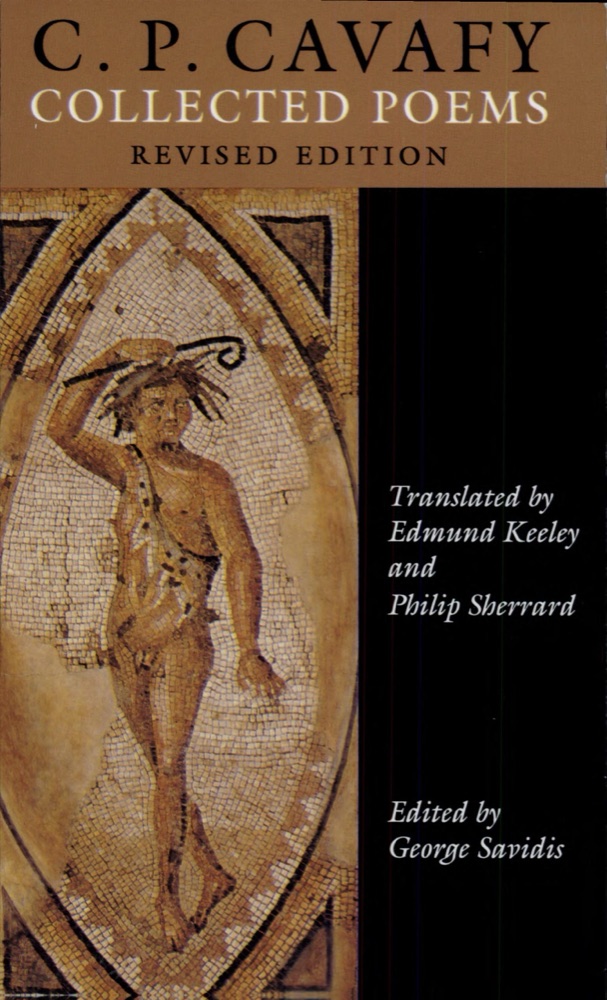
On hearing about powerful love, respond, be moved like an aesthete. Only, fortunate as you’ve been, remember how much your imagination created for you. This first, and then the rest—the lesser loves— that you experienced and enjoyed in your life: the more real and tangible. Of loves like these you were not deprived — C.P. Cavafy, “Hearing of Love,” Collected Poems. Translated by Edmund Keeley & Philip Sherrard. Edited by George Savidis. Revised Edition. (Princeton University Press 1992)
1
Desires" Like beautiful bodies of the dead who had not grown old and they shut them, with tears, in a magnificent mausoleum, with roses at the head and jasmine at the feet — that is how desires look that have passed without fulfillment; without one of them having achieved a night of sensual delight, or a moonlit morn.
1
Voices" Ideal and dearly beloved voices of those who are dead, or of those who are lost to us like the dead. Sometimes they speak to us in our dreams; sometimes in thought the mind hears them. And for a moment with their echo other echoes return from the first poetry of our lives — like music that extinguishes the far-off night.
1
VLADAR IZ ZAPADNE LIBIJE Uglavnom se svideo u Aleksandriji, za tih deset dana svoga boravka, Menelajev sin Arispomen, vladar iz zapadne Libije. Kao ime, i odeća mu, uljudno, helenska. Rado je prihvatio počasti, ali ih nije tražio: bio je skroman. Kupovao je helenske knjige, mahom iz istorije i filosofije. Iznad svega, bio je škrt na rečima. Mora da je dubokih misli, govorilo se, a prirodno je što takvi ne pričaju suviše. Nije bio dubokih misli, niti čega drugog. Sasvim običan, smešan čovek. Uzeo je helensko ime, odevao se poput Helena, a naučio je, manje-više, i da se ponaša kao Heleni. U duši je strepeo da slučajno ne pokvari povoljan utisak ako govori helenski sa strašnim varvarizmima, a Aleksandrinci bi ga otkrili, već po svom običaju, nesrećnici. Stoga se ograničio na malo reči, pazeći sa strahom na padeže i na izgovor; i nisu ga malo mučili ti razgovori koji su se gomilali u njemu.
1
Keep Ithaka always in your mind. Arriving there is what you are destined for. But do not hurry the journey at all.
As you set out for Ithaka hope your road is a long one.
Watch on YouTube
About Constantinos P. Cavafy
We have collected 19 quotes from 1 book by Constantinos P. Cavafy on BookQuoters.
More about the author →About the book
C. P. Cavafy (1863 - 1933) lived in relative obscurity in Alexandria, and a collected edition of his poems was not published until after his death. Now, however, he is regarded as the most important figure in twentieth-century Greek poetry, and his poems are considered among the most powerful in modern European literature.
Here is an extensively revised edition of the acclaimed translations of Edmund Keeley and Philip Sherrard, which capture Cavafy's mixture of formal and idiomatic use of language and preserve the immediacy of his frank treatment of homosexual themes, his brilliant re-creation of history, and his astute political ironies. The resetting of the entire edition has permitted the translators to review each poem and to make alterations where appropriate. George Savidis has revised the notes according to his latest edition of the Greek text.
About the first edition: The b
Book details
- First published
- 1935
- Author
- Constantinos P. Cavafy
- Genre
- Literature
- Goodreads rating
- 4.42 (6k ratings)
Keep reading
Selected Poems
 Tell Them of Battles, Kings, and Elephants
 Oblomov
 Plainwater: Essays and Poetry
 The Collected Poems of W.B. Yeats
 Arch of Triumph
 The Complete Poems and Plays, 1909-1950
 Sword & Citadel
 The Complete Stories and Poems
 Poems New and Collected
 The Aleph and Other Stories
 Ulysses
 Les Fleurs du Mal
 Brideshead Revisited: The Sacred and Profane Memories of Captain Charles Ryder
 Childe Harold's Pilgrimage
 The Devil in the Flesh
 Phantastes
 The Collected Poems
 Travels with Herodotus
 The Etched City
 The Memoirs of Cleopatra
 The Castle of Crossed Destinies
 Illuminations
 And Our Faces, My Heart, Brief as Photos
 Selected Stories of Anton Chekhov
 Collected Poems
 Selected Poems
 The Complete Poems
 Identity
 Wind, Sand and Stars
 Selected Stories
 A Shropshire Lad
 The Colossus of Maroussi
 The Last Man
 The Iliad
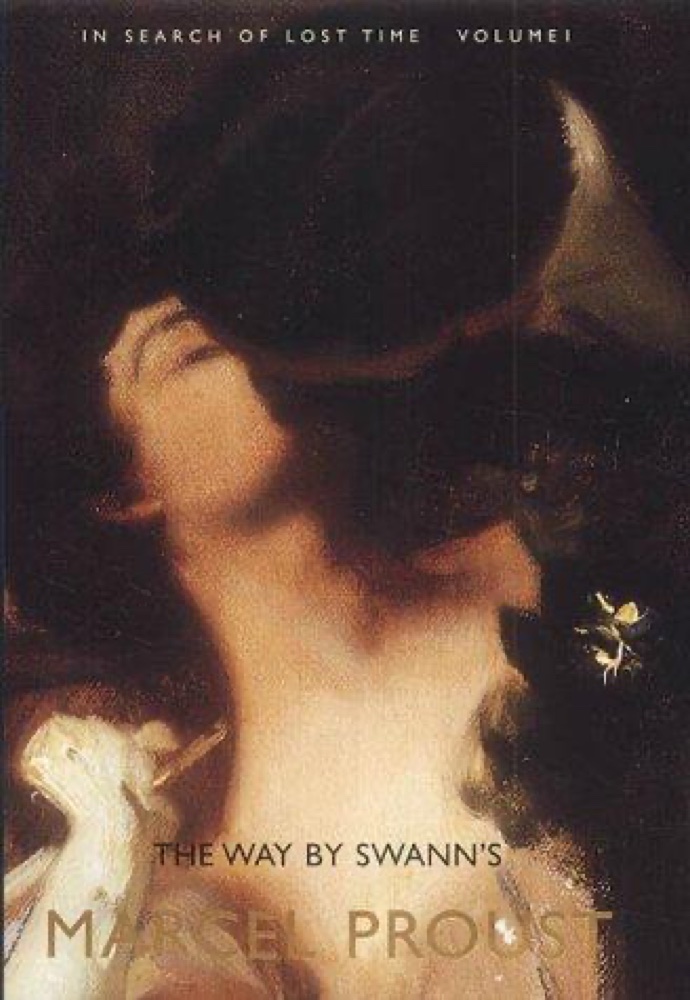 In Search of Lost Time
 A Soldier of the Great War
 The Tunnel
 Narcissus and Goldmund
 Selected Poems
 The Seagull
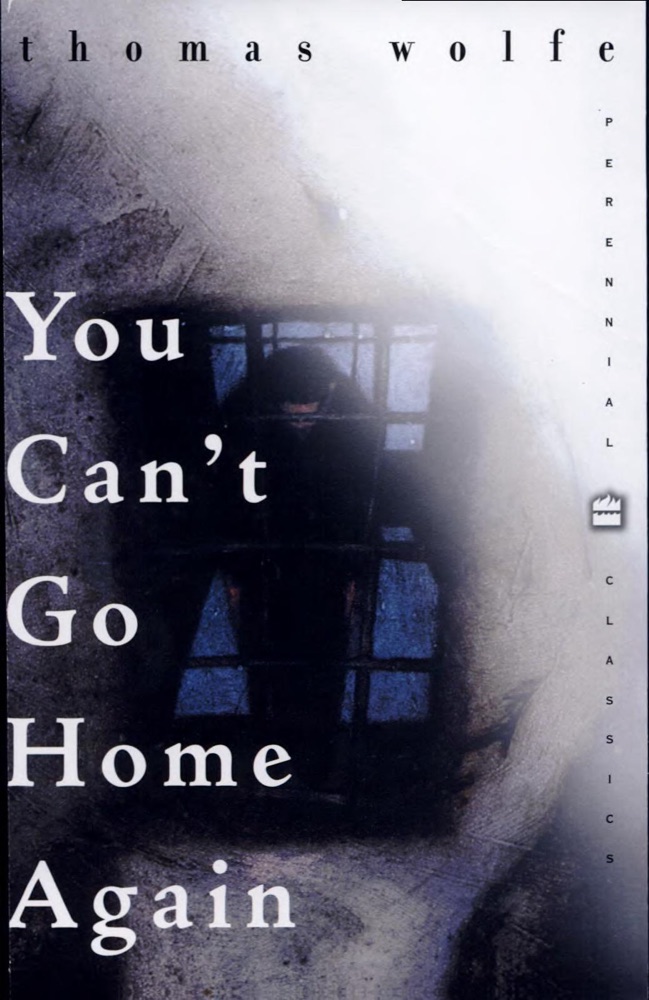 You Can't Go Home Again
 The Songlines
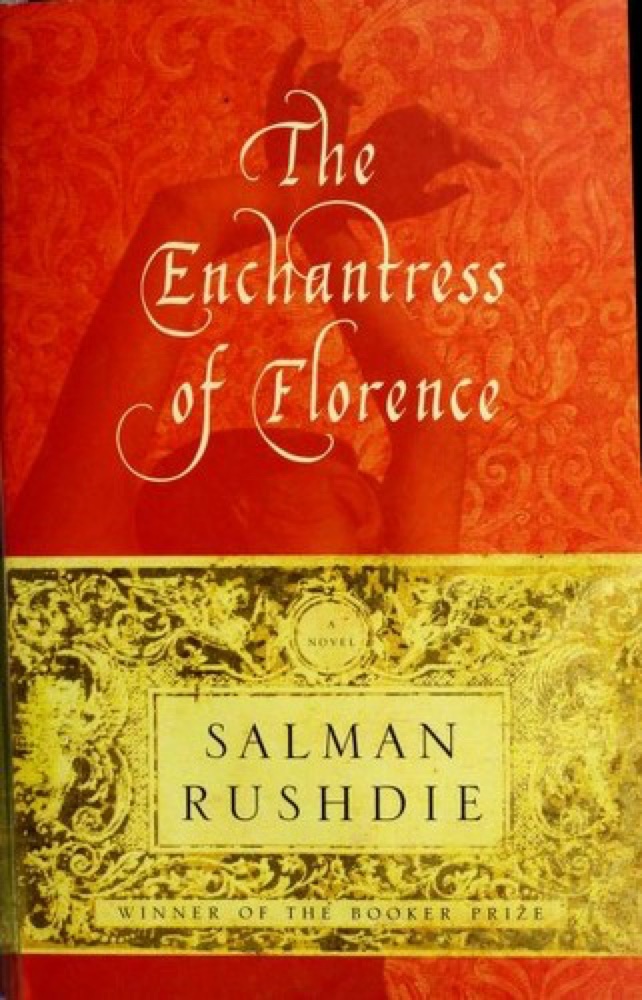 The Enchantress of Florence
 The King Must Die
 The Book of Mirdad: The Strange Story of a Monastery Which Was Once Called the Ark
 Divisadero
 Sonnets to Orpheus
 Glorious Exploits
 House of Chains
 Spoon River Anthology
 The Divine Comedy
 Complete Poems
 The Bronzed Beasts
 Sexus
Sexus
 Duino Elegies
 Memories, Dreams, Reflections
 The Passion of Cleopatra
 Fugitive Pieces