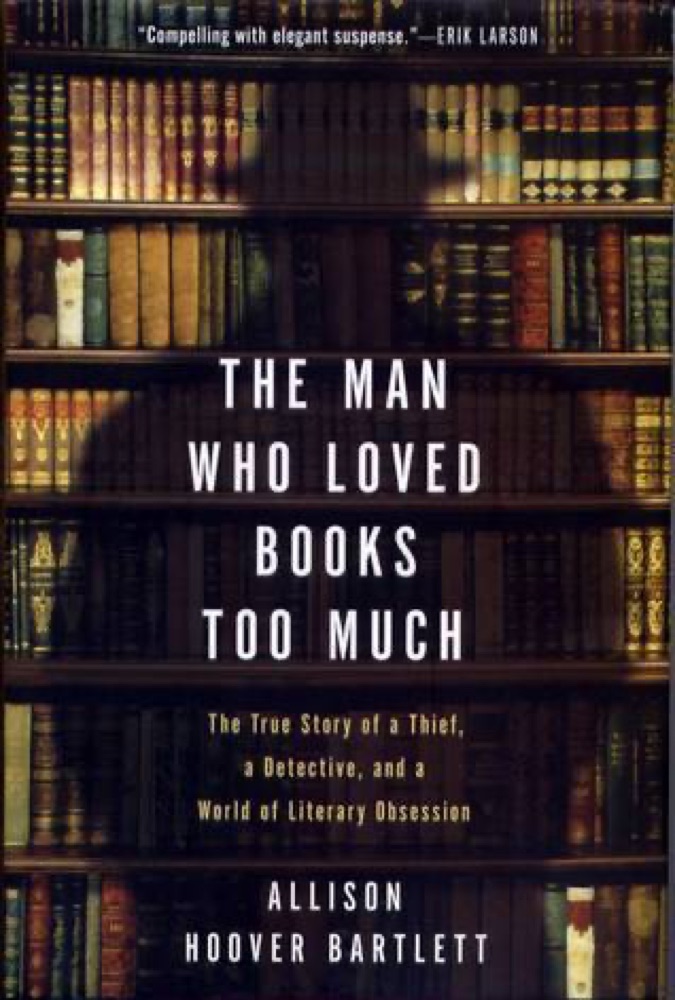

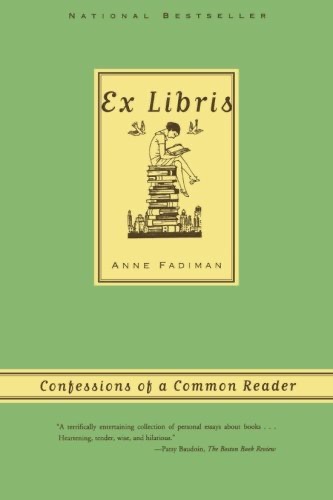
 Ex Libris: Confessions of a Common Reader
Quotes from the Book
A book is much more than a delivery vehicle for its contents.
18
The difference between a person who appreciates books, even loves them, and a collector is not only degrees of affection, I realized. For the former, the bookshelf is a kind of memoir; there are my childhood books, my college books, my favorite novels, my inexplicable choices. Many matchmaking and social networking websites offer a place for members to list what they're reading for just this reason: books can reveal a lot about a person. This is particularly true of the collector, for whom the bookshelf is a reflection not just of what he has read but profoundly of who he is: 'Ownership is the most intimate relationship that one can have to objects. Not that they can come alive in him; it is he who comes alive in them,' wrote cultural critic Walter Benjamin.
17
After all, much of the fondness avid readers, and certainly collectors, have for their books is related to the books' physical bodies. As much as they are vessels for stories (and poetry, reference information, etc.), books are historical artifacts and repositories for memories-we like to recall who gave books to us, where we were when we read them, how old we were, and so on.
5
I valued that half-dream state of being lost in a book so much that I limited the number of pages I let myself read each day in order to put off the inevitable end, my banishment from that world
4
On a spring day in 1988…a Massachusetts man who collected books about local history was rummaging through a bin in a New Hampshire antiques barn when something caught his eye. Beneath texts on fertilizers and farm machines lay a slim, worn pamphlet with tea-colored paper covers, titled Tamerlane and Other Poems, by an unnamed author identified simply as “a Bostonian.” He was fairly certain he had found something exceptional, paid the $15 price, and headed home, where Tamerlane would spend only one night. The next day, he contacted Sotheby’s, and they confirmed his suspicion that he had just made one of the most exciting book discoveries in years. The pamphlet was a copy of Edgar Allan Poe’s first text, written when he was only fourteen years old, a find that fortune-seeking collectors have imagined happening upon probably more than they’d like to admit. The humble-looking, forty-page pamphlet was published in 1827 by Calvin F.S. Thomas, a relatively unknown Boston printer who specialized in apothecary labels, and its original price was about twelve cents. But this copy, looking good for its 161 years, most of which were probably spent languishing in one dusty attic box after another, would soon be auctioned for a staggering $198,000.
3
It had a crisp paper jacket, unlike the paper-covered library books I was used to, and the way the pages parted, I could tell I was the first to open it ... I valued that half-dream state of being lost in a book so much that I limited the number of pages I let myself read each day in order to put off the inevitable end, my banishment from that world. I still do this.
3
Physical artifacts carry memory and meaning, and this is as true of important historical texts as it is of cherished childhood books.
2
There was a pair of books, one by Hemingway, another by Thomas Wolfe. Each had written a long inscription to the other. A knowledgeable dealer had to inform the unfortunate owner who had just paid a pretty penny for them that the inscriptions were not authentic, and that the value was not what he had hoped. Later, another dealer discovered that they were spectacular forgeries: Wolfe had written Hemingway’s inscription, and Hemingway, Wolfe’s.
2
There were no such formations when I arrived, but a steady stream of book-hungry people marching through the doors, eager to be among the first to see and touch the objects of their desire.
1
I realized that the man I thought was stealing books so that others would consider him a cultured gentleman, the man who was building a phony image, a counterfeit identity, was in fact working diligently to become that gentleman. He was studying philosophy, researching authors, reading literature, even writing his own essays and plays. Through these efforts, he was attempting to create his ideal self. Another way of begetting this self, I came to understand, was by telling his story through me.
1
The fearsome urge to destroy or suppress books is an acknowledgment of their power, and not only that of august scientific, political, and philosophical texts but that of small, quiet books of poetry and fiction as well, which nonetheless hold great capacity to change us.
old books were the backdrop of the good life, the wealthy life, one rich with country estates and long vacations in foreign countries. It’s a seductive fantasy that if you acquire the books, you might just end up with the life itself, or at least make other people think you have it.
It wasn’t merely a love of books that compelled him, but also what owning them would say about him. It’s a normal ambition—that our choice of music or cars or shoes reflects well on us—taken to the extreme.
I started dreaming of building a gigantic library, where I will sit at a nice desk. I’ll read or write. I’ll have a globe of the world next to the desk,
When the books, like those at the New York fair, have pasts—secret, scandalous, or sweet—the attraction is that much more robust. That they also hold history, poetry, science, and stories on their pages can seem almost secondary.
They also must have been roaming the aisles hoping to be surprised, because that’s any treasure hunter’s dream—in this case, to stumble upon a book whose scarcity or beauty or history or provenance is even more seductive than the story printed between its covers.
This book’s body is inextricably linked to her experience of reading it. I hope that she continues to hold on to it, because as long as she does, its wavy, expanded pages will remind her of the hot day she read it with her feet in the water—and of the fourteen-year-old she was at the time. A book is much more than a delivery vehicle for its contents, and from my perspective, this fair was a concentrated celebration of that fact.
It’s a personal record of one chapter of my life, just as other chapters have other books I associate with them.
The late American collector Robert H. Taylor said that a rare book is “a book I want badly and can’t find.” On the occasions that people answer seriously, they all agree that “rare” is a highly subjective moniker. The earliest use of the term has been traced to an English book-sale catalog in November 1692. But it wasn’t until the early eighteenth century that scholars attempted to define what makes a book rare, with bibliophile J. E. Berger making Monty Python-esque distinctions between “rarus” and “rarior” and “rarissiumus.” A book’s degree of rarity remains subjective, and the only qualities of “rare” that collectors and dealers seem to agree on is some combination of scarcity, importance, “and condition. Taste and trends play roles as well, however. When a movie adaptation is released, whether Pride and Prejudice or Nancy Drew, first editions of the book often become temporarily hot property among collectors. While Dickens will almost certainly be a perennial choice, Dr. Seuss’s star has risen as the children who were raised on his books have become adults with the means to form their own collections.
This book belongs to none but me For there's my name inside to see. To steal this book, if you should try. It's by the throat that you'll hang high. And ravens then will gather 'bout To find your eyes and pull them out. And when you're screaming "Oh, Oh, Oh!" Remember, you deserved this woe. ---Warning written by medieval German scribe
When I walk down the street and almost everyone I pass is sequestered in his own iPod or cell phone universe, I can't help thinking that our connection to books is still, after all these centuries, as important as it is intangible.
Watch on YouTube
About Allison Hoover Bartlett
We have collected 21 quotes from 1 book by Allison Hoover Bartlett on BookQuoters.
More about the author →About the book
Set within the world of rare-book collecting: the true story of an infamous book thief, his victims, and the man determined to catch him.
Rare-book theft is even more widespread than fine-art theft. Most thieves, of course, steal for profit. John Charles Gilkey steals purely for the love of books. In an attempt to understand him better, journalist Allison Hoover Bartlett plunged herself into the world of book lust and discovered just how dangerous it can be.
John Gilkey is an obsessed, unrepentant book thief who has stolen hundreds of thousands of dollars worth of rare books from book fairs, stores, and libraries around the country. Ken Sanders is the self-appointed "bibliodick" (book dealer with a penchant for detective work) driven to catch him. Bartlett befriended both outlandish characters and found herself caught in the middle of efforts to recover hidden treasure. A cat-and-m
Book details
- First published
- 2009
- Author
- Allison Hoover Bartlett
- Genre
- Nonfiction
- Goodreads rating
- 3.45 (14k ratings)
Keep reading
Ex Libris: Confessions of a Common Reader
 The Yellow-Lighted Bookshop: A Memoir, a History
 The City of Dreaming Books
 Packing My Library: An Elegy and Ten Digressions
 The Haunted Bookshop
 The Year of Reading Dangerously
 The Library at Night
 The Last Bookaneer
 The Bookshop Book
 I'd Rather Be Reading: The Delights and Dilemmas of the Reading Life
 The Door-to-Door Bookstore
 Once Upon a Tome: The Misadventures of a Rare Bookseller
 Sixpence House: Lost in a Town of Books
 The Diary of a Bookseller
 The Secret Lives of Booksellers and Librarians: True Stories of the Magic of Reading
 How Reading Changed My Life
 Why We Read: On Bookworms, Libraries, and Just One More Page Before Lights Out
 Inkheart
 Leave Me Alone, I'm Reading: Finding and Losing Myself in Books
 Howards End Is on the Landing: A Year of Reading from Home
 The Bookshop: A History of the American Bookstore
 A History of Reading
 The Lost Library: A Kid-Friendly Mystery
 The Uncommon Reader
 The Cat Who Saved Books
 The Secret, Book & Scone Society
 The Archive of the Forgotten
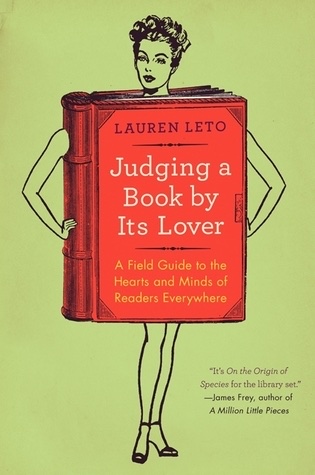 Judging a Book by Its Lover: A Field Guide to the Hearts and Minds of Readers Everywhere
 My Reading Life
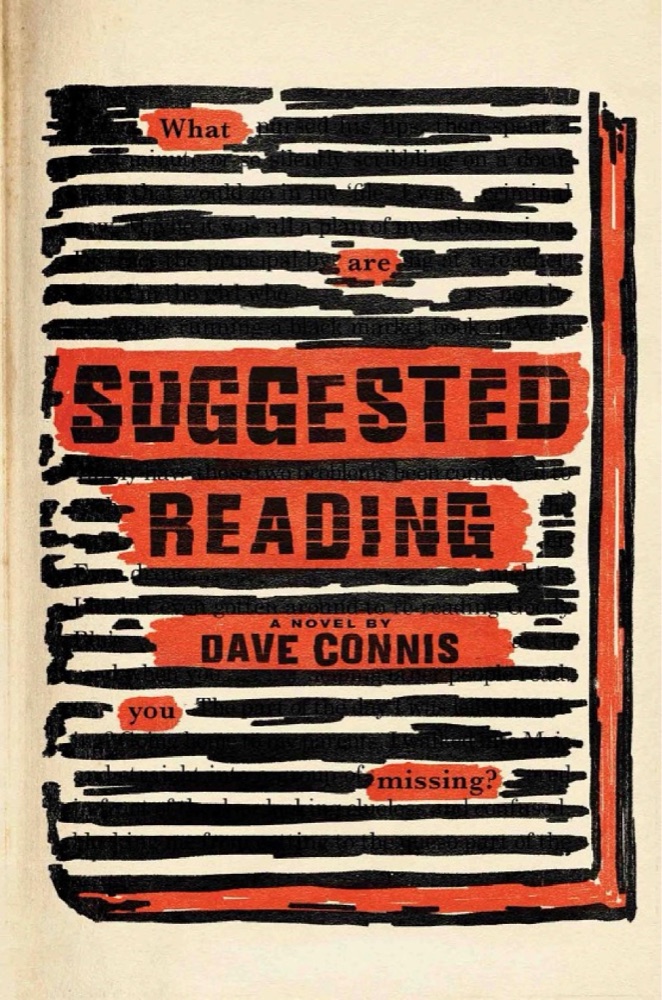 Suggested Reading
 The Storied Life of A.J. Fikry
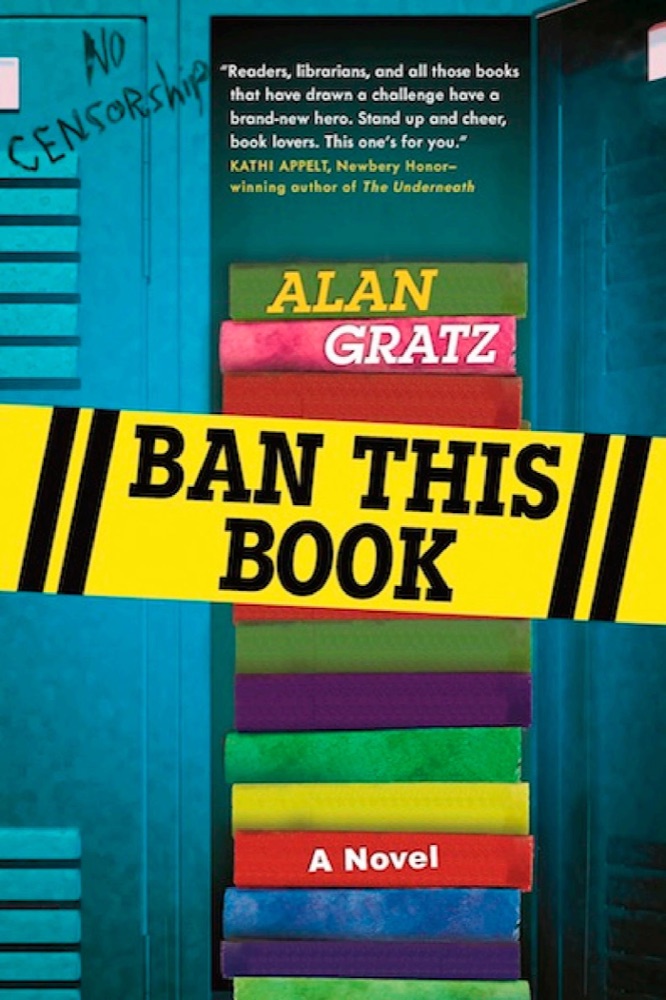 Ban This Book
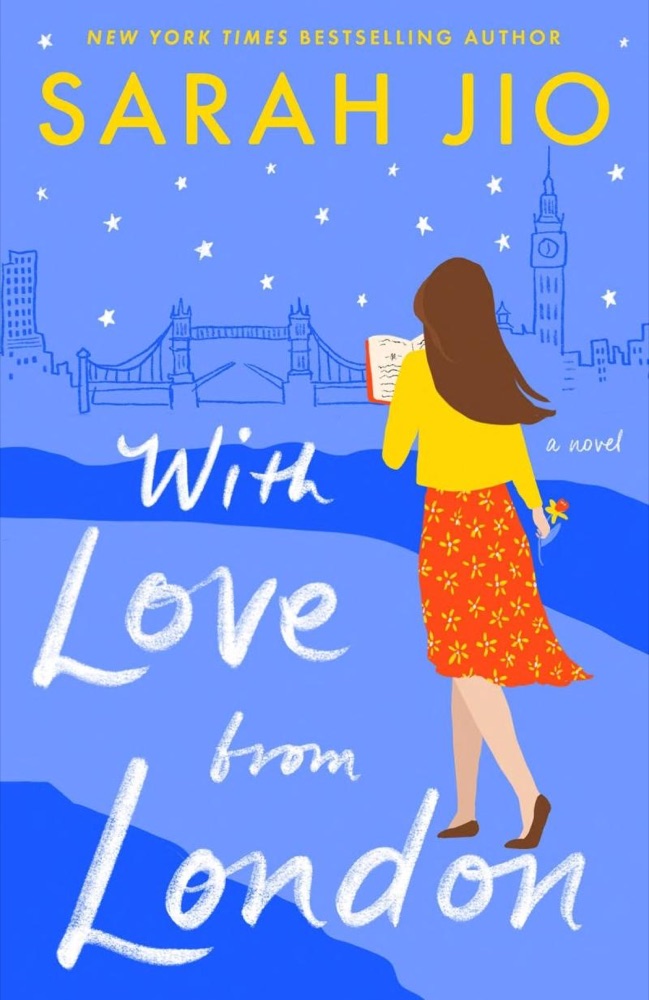 With Love from London
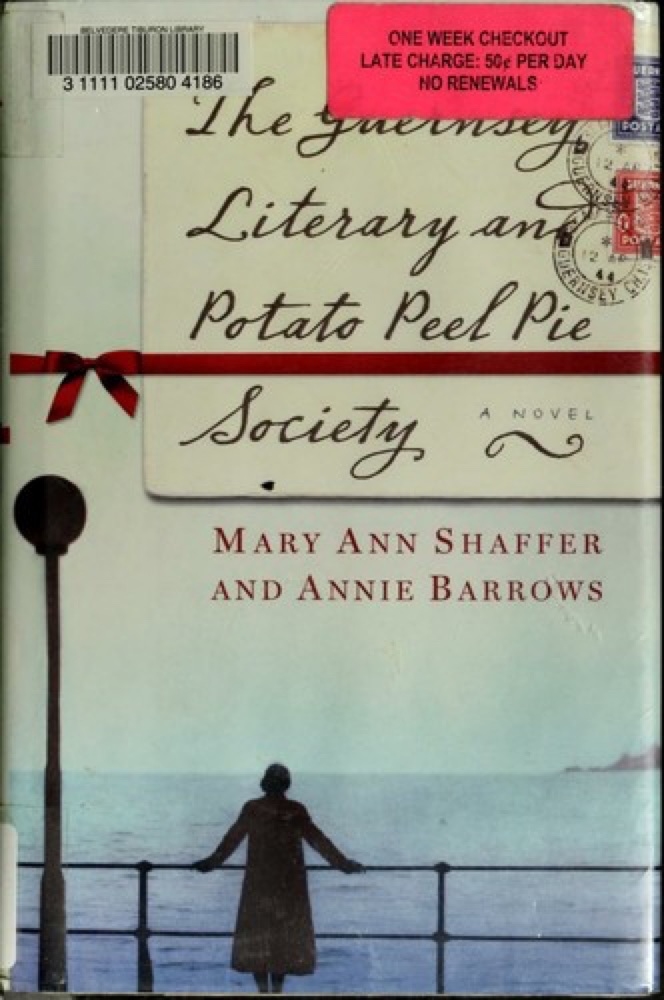 The Guernsey Literary and Potato Peel Pie Society
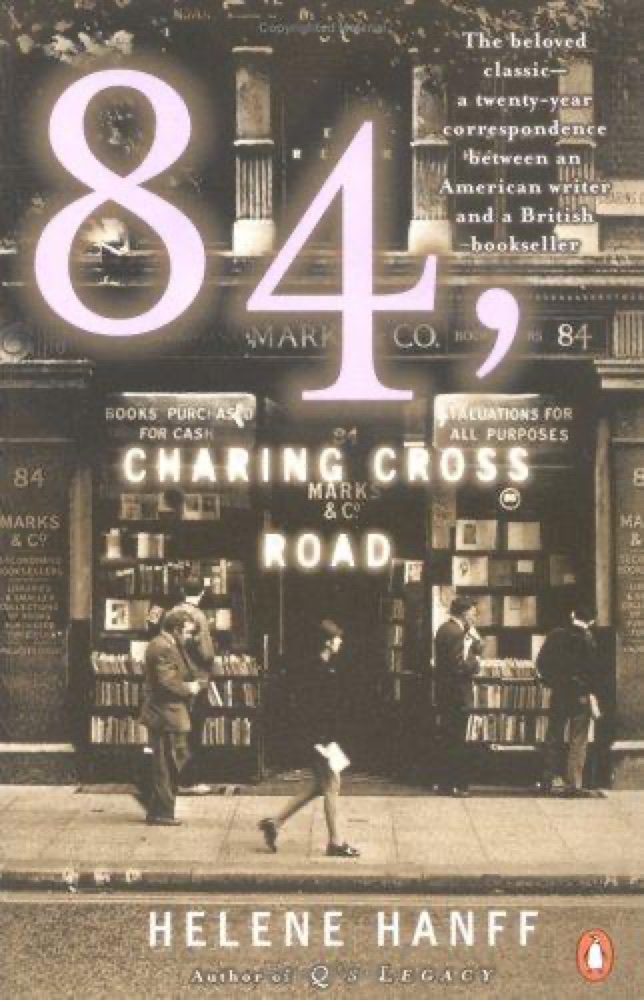 84, Charing Cross Road
 How to Talk About Books You Haven't Read
 The Book That Wouldn’t Burn
 Education of a Wandering Man: A Memoir
 If on a Winter's Night a Traveler
 Every Day I Read: 53 Ways to Get Closer to Books
 The Reader
 Mr. Penumbra's 24-Hour Bookstore
 A Novel Bookstore
 Books for Living
 Checkout 19
 The Club Dumas
 Illuminations: Essays and Reflections
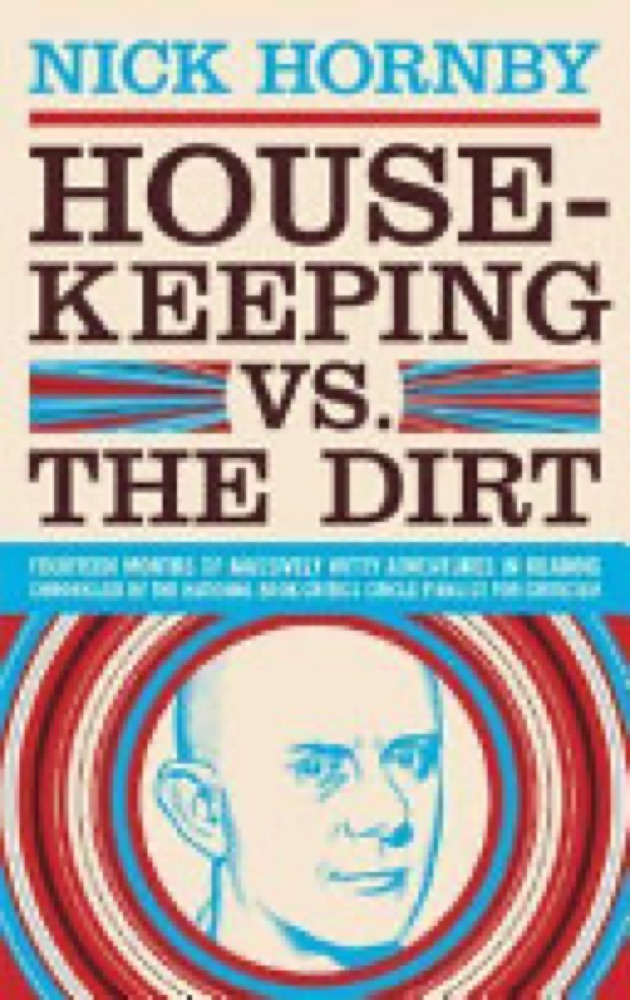 Housekeeping vs. the Dirt
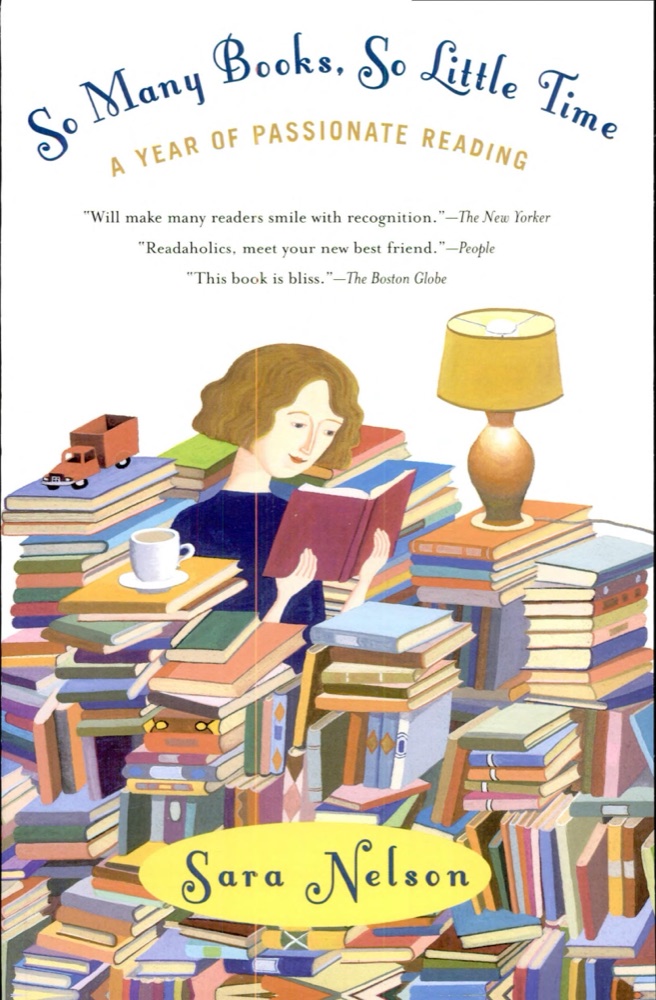 So Many Books, So Little Time: A Year of Passionate Reading
 The Last Librarian
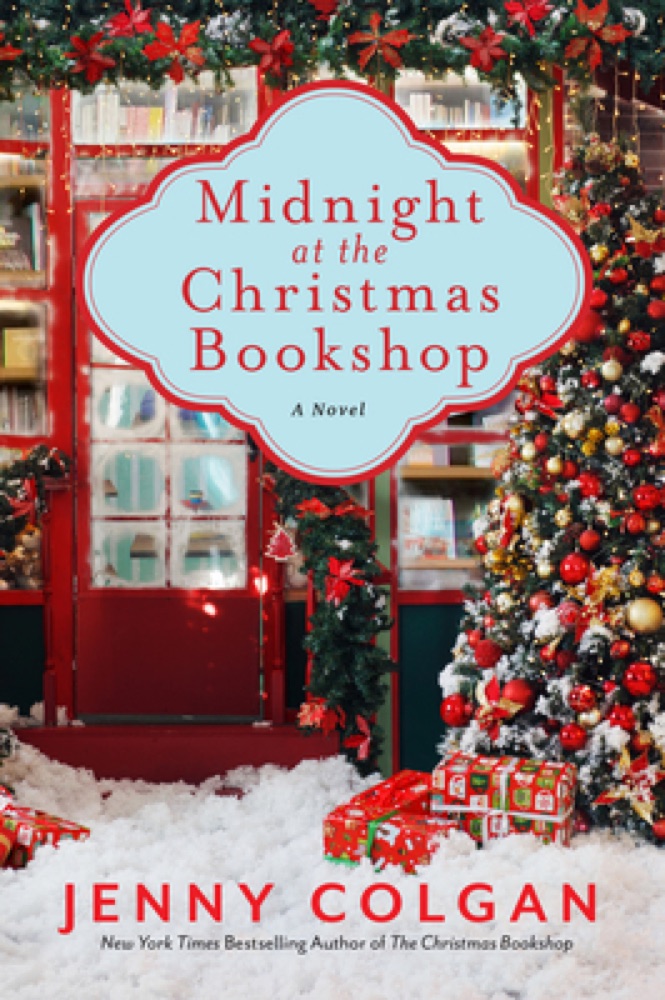 Midnight at the Christmas Bookshop
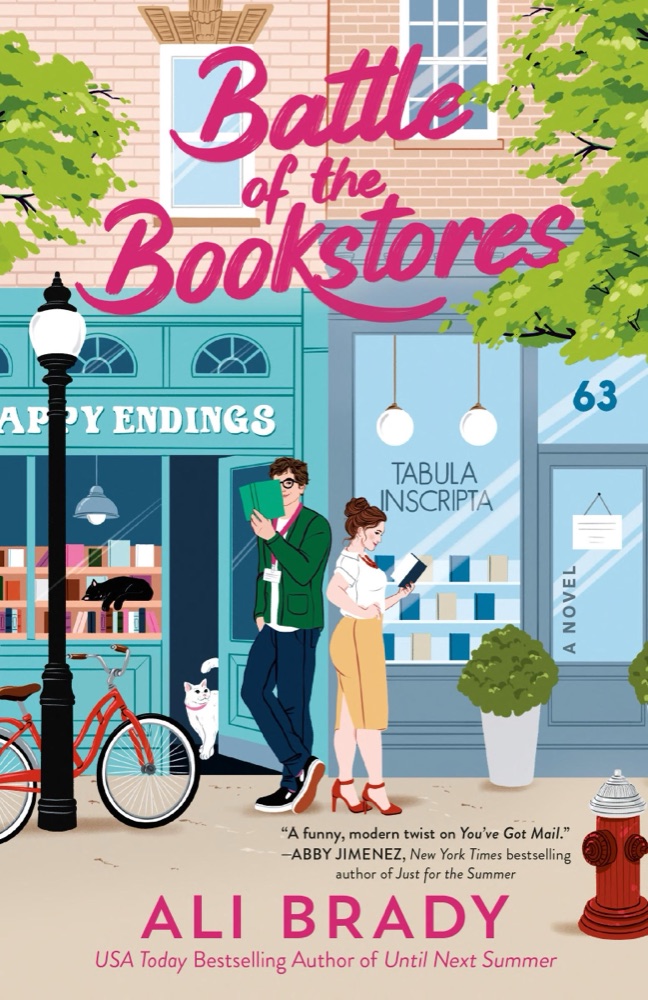 Battle of the Bookstores
 Lectures on Literature
 The Book of Lost Names
 How Should One Read a Book?
 Parnassus on Wheels
 Among Others
 Miss Morgan's Book Brigade
 My Life in Middlemarch
 Running the Books: The Adventures of an Accidental Prison Librarian