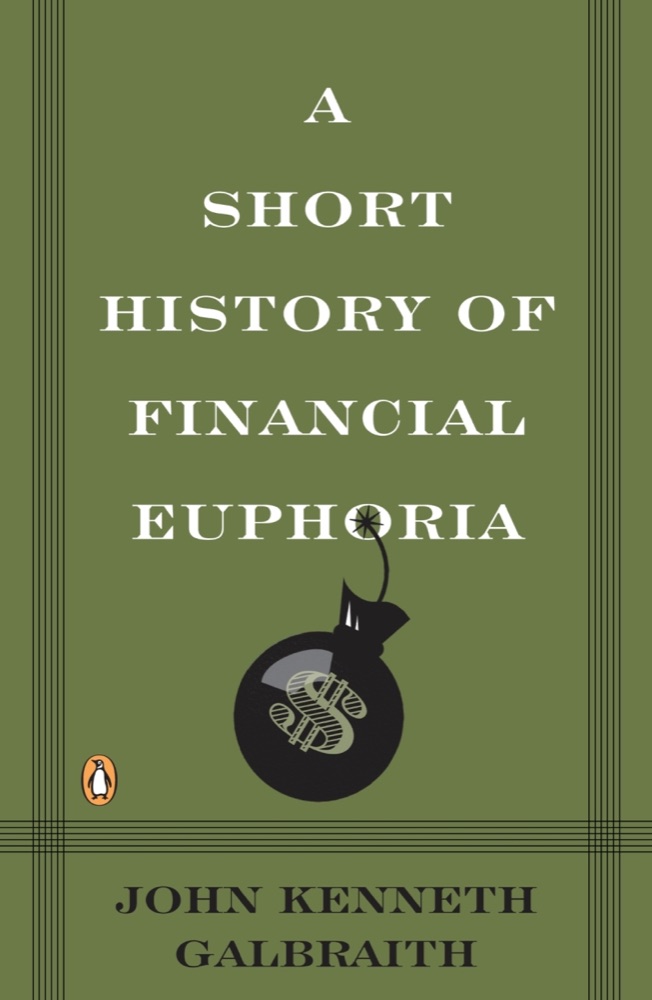
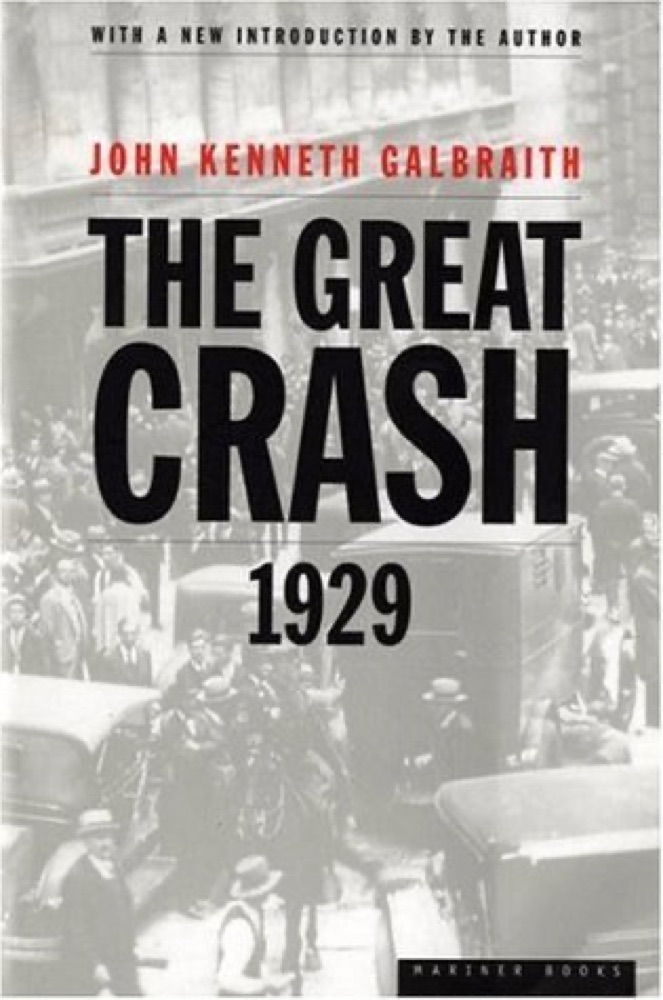
 The Great Crash 1929
Quotes from the Book
The world of finance hails the invention of the wheel over and over again, often in a slightly more unstable version. All financial innovation involves in one form or another, the creation of debt secured in greater or lesser adequacy by real assets.
3
The second factor contributing to speculative euphoria and programmed collapse is the specious association of money and intelligence.
2
Fools, as it has long been said, are indeed separated, soon or eventually, from their money. So, alas, are those who, responding to a general mood of optimism, are captured by a sense of their own financial acumen. Thus it has been for centuries; thus in the long future it will also be.
2
All crisis have involved debt that, in one fashion or another, has become dangerously out of scale in relation to the underlying means of payment.
2
There is the possibility, even the likelihood, of self-approving and extravagantly error-prone behavior on the part of those closely associated with money.
1
Anyone taken as an individual is tolerably sensible and reasonable - as a member of a crowd, he at once becomes a blockhead. - Friedrich Von Schiller, as quoted by Bernard Baruch
1
This was because of a special American commitment to the seeming magic of money creation and its presumptively wondrous economic effects. T
1
I have sufficiently urged that all suggestions as to financial innovation be regarded with extreme skepticism. Such seeming innovation is merely some variant on an old design, new only in the brief and defective memory of the financial world.
1
Speculation, it has been noted, comes when popular imagination settles on something seemingly new in the field of commerce or finance.
1
The rule will often be here reiterated: financial genius is before the fall. I
1
Speculation buys up, in a very practical way, the intelligence of those involved.
1
the speculative episode always ends not with a whimper but with a bang.
1
That speculation and its aftermath are recurrent and inherent, unfortunate characteristics of markets extending over the centuries, went mostly unmentioned. So also in the other studies. That of the SEC, weighing in at under five pounds, was devoted entirely to market performance and “strategies” during the crash. There was no mention of the circumstances that induced it. The report said, in sum, that program trading had substituted a computer-based technological intelligence for the human version, and the technology could spill out sell orders in a sudden and unprecedented way.
The 1987 market bust caught a younger generation of speculators of the Reagan years. Above, Wall Streeters take in the bad news.
The pyramid in Germany was eventually some six stories high, and only a fraction of the original investment found its way into the securities it was meant to buy. The rest went into all those commissions. One would have difficulty imagining a fiscally more improbable enterprise for the investor. IOS was forbidden by the Securities and Exchange Commission to sell securities in the United States and in later times to American citizens wherever they lived. Thus its offshore designation. It was extruded from Brazil, normally considered a financially tolerant venue. It had recurrent problems with the Swiss and, in the end, was forced to move many of its operations to a closely adjacent site in France. Nonetheless, IOS extracted some billions of dollars from bemused investors, not excluding the salesmen of the firm itself, who were extensively captured by their own sales oratory. James Roosevelt, a son of F.D.R., formerly a distinguished member of Congress and an ambassador to the United Nations; Sir Eric Wyndham White, a highly regarded international civil servant and longtime secretary-general of GATT (the General Agreement on Tariffs and Trade); and Dr. Erich Mende, a former vice-chancellor of the German Federal Republic, all lent their names in evident good faith to the enterprise. They and thousands of others responded happily to the compelling Cornfeld appeal, “Do you sincerely want to be rich?
These values, in turn, were reflected in yet greater magnitude to the holdings of the Trading Corporation. Unrecognized only was the way in which this process would work in reverse—the fixed obligations commanding diminishing market values and revenues of the stocks. Diminution there was. The shares of the Goldman Sachs Trading Corporation were issued at $104 and rose to $222.50 a few months later; in the late spring of 1932, they stood at $1.75.
Charles Ponzi was already a convicted forger and larcenist when he began a new career selling swamp-land in Florida to unduly eager investors. There were other compelling forces. Choice “beachfront” lots could, by a flexible approach to mensuration, be 10 or 15 miles from the water. The noted Charles Ponzi of Boston, whose name is durably associated with investment operations that paid handsome dividends to earlier investors from the money coming in from later ones, had turned now to the real estate business. He developed a subdivision said to be “near Jacksonville”; it was approximately 65 miles away. The momentum continued; such was the pressure on the serving railroads that they were forced to embargo
J. P. Morgan was credited with ending the crash of 1907 by, along with other remedial action, asking the clergy of New York City to preach sermons of encouragement.
Once again, in the aftermath there was the predictable escapism. This, by now, was an American tradition. The problem was not, it was said, the earlier euphoria but something amiss with money. The alleged reason for the earlier collapses, also involving money, had been the unduly heavy hand of the two Banks of the United States; now the cause was said to be a little-noticed plan of a short time earlier to retire the Civil War greenbacks and move to a gold standard. Nothing, given the history and the fascination with paper, could appeal more reliably to the American mind. Born forthwith were two great political movements, that of the Greenback Party and that of the advocates of the free coinage of silver. And soon to come was the resonant voice of William Jennings Bryan and its warning as to the American crucifixion on the cross of gold.
Not all the colonies, it should be said, succumbed; Pennsylvania, New York, New Jersey, Delaware, and Maryland exercised admirable restraint. And there is indication that the paper money, sustaining, as it did, prices and trade, contributed to general economic well-being where it was so used. This was certainly the view of Benjamin Franklin, who could have been influenced by being in business himself as a printer of the notes. Eventually, in 1751, the Parliament in London forbade the paper issues in New England and, a little later, elsewhere in the colonies. There was sharp anger over this action; paper and its associated leverage remained strongly in the minds of the American colonists as an economic good. Nor should the use of paper be wholly condemned, although many historians have done so. Washington’s soldiers were paid in Continental notes; by these the Revolution was financed. Tax receipts were then negligible, as was the machinery for tax collection. The cost of the war was thus borne by those who, receiving the so-called Continentals, found their buying power quickly and irrevocably diminishing. Thus was American independence purchased, and it is not clear that it could have been bought in any other way. The stage was now set for recurrent speculative episodes in the new republic.
The landed and aristocratic classes, though contemptuous of those “in trade” or otherwise concerned with money-making, were also able to surmount their pride and come aboard—money often has that effect. The scenes in the Rue Quincampoix were now repeated in the streets and alleys of the City; the stock of the company, which had been at around £128 in January 1720, went to £330 in March, £550 in May, £890 in June, and to around £1,000 later in the summer. Not before in the kingdom, and perhaps not even in Paris or Holland, had so many so suddenly become so rich. As ever, the sight of some becoming so effortlessly affluent brought the rush to participate that further powered the upward thrust.
I can measure the motions of bodies,” Sir Isaac Newton once observed, “but I cannot measure human folly.” Nor could he do so as regards his own. He was to lose £20,000, now a million dollars and much more, in the speculative orgy that was to come.
And there were also some terrible accidents. Charles Mackay, in Extraordinary Popular Delusions and the Madness of Crowds, his classic book on speculation (and other departures from reason), tells gleefully a story first told in Blainville’s Travels, that of a young sailor who, for bringing word of a shipment of goods from the Levant, was rewarded by a merchant with a fine red herring for his breakfast. Presently the merchant, who was much involved in the tulip speculation, found missing a bulb of a Semper Augustus worth some 3,000 florins, an unimaginable $25,000 to $50,000 today. When he sought out the sailor to question him, the latter was discovered contentedly finishing the onion, as he had supposed it to be, along with the fish.
Speculators may do no harm as bubbles on a steady stream of enterprise. But the position is serious when enterprise becomes the bubble on a whirlpool of speculation. —JOHN MAYNARD KEYNES, The General Theory of Employment Interest and Money
In all speculative episodes there is always an element of pride in discovering what is seemingly new and greatly rewarding in the way of financial instrument or investment opportunity. The individual or institution that does so is thought to be wonderfully ahead of the mob.
The basic situation is wonderfully clear. In all free-enterprise (once called capitalist) attitudes there is a strong tendency to believe that the more money, either as income or assets, of which an individual is possessed or with which he is associated, the deeper and more compelling his economic and social perception, the more astute and penetrating his mental processes.
But as the previous chapter indicates, the chances are not great, for built into the speculative episode is the euphoria, the mass escape from reality, that excludes any serious contemplation of the true nature of what is taking place.
To summarize: The euphoric episode is protected and sustained by the will of those who are involved, in order to justify the circumstances that are making them rich. And it is equally protected by the will to ignore, exorcise, or condemn those who express doubts.
It was a lesson to all to keep quiet and give tacit support to those indulging their euphoric vision.
Watch on YouTube
About John Kenneth Galbraith
We have collected 53 quotes from 2 books by John Kenneth Galbraith on BookQuoters.
More about the author →More by John Kenneth Galbraith
The Great Crash 1929
About the book
The world-renowned economist offers "dourly irreverent analyses of financial debacle from the tulip craze of the seventeenth century to the recent plague of junk bonds." — The Atlantic .
With incomparable wisdom, skill, and wit, world-renowned economist John Kenneth Galbraith traces the history of the major speculative episodes in our economy over the last three centuries. Exposing the ways in which normally sane people display reckless behavior in pursuit of profit, Galbraith asserts that our "notoriously short" financial memory is what creates the conditions for market collapse. By recognizing these signs and understanding what causes them we can guard against future recessions and have a better hold on our country's (and our own) financial destiny.
Book details
- First published
- 1990
- Author
- John Kenneth Galbraith
- Genre
- Nonfiction
- Goodreads rating
- 4.06 (2k ratings)
Keep reading
The Great Crash 1929
 The Creature from Jekyll Island: A Second Look at the Federal Reserve
 The Big Short: Inside the Doomsday Machine
 The Ascent of Money: A Financial History of the World
 Too Big to Fail: The Inside Story of How Wall Street and Washington Fought to Save the Financial System from Crisis — and Themselves
 The Snowball: Warren Buffett and the Business of Life
 Liar's Poker
 The Intelligent Investor
 Flash Boys: A Wall Street Revolt
 Berkshire Hathaway Letters to Shareholders
 Currency Wars: The Making of the Next Global Crisis
 Security Analysis: The Classic 1940 Edition
 The Little Book of Behavioral Investing: How not to be your own worst enemy
 The Most Important Thing: Uncommon Sense for the Thoughtful Investor
 Common Stocks and Uncommon Profits and Other Writings
 Talking to My Daughter About the Economy: or, How Capitalism Works—and How It Fails
 The Price of Tomorrow: Why Deflation is the Key to an Abundant Future
 Reminiscences of a Stock Operator
 Debt: The First 5,000 Years
 Fooled by Randomness: The Hidden Role of Chance in Life and in the Markets
 Principles for Dealing with the Changing World Order: Why Nations Succeed and Fail
 What I Learned Losing a Million Dollars
 The Prize: The Epic Quest for Oil, Money, and Power
 Griftopia: Bubble Machines, Vampire Squids, and the Long Con That Is Breaking America
 Confidence Men: Wall Street, Washington, and the Education of a President
 The Essays of Warren Buffett: Lessons for Corporate America
 The General Theory of Employment, Interest, and Money
 Economics in One Lesson
 The Bitcoin Standard: The Decentralized Alternative to Central Banking
 Bitcoin Billionaires: A True Story of Genius, Betrayal, and Redemption
 Freakonomics: A Rogue Economist Explores the Hidden Side of Everything
 A Conspiracy of Paper
 The Financier
 Human Action: A Treatise on Economics
 First As Tragedy, Then As Farce
 New York 2140
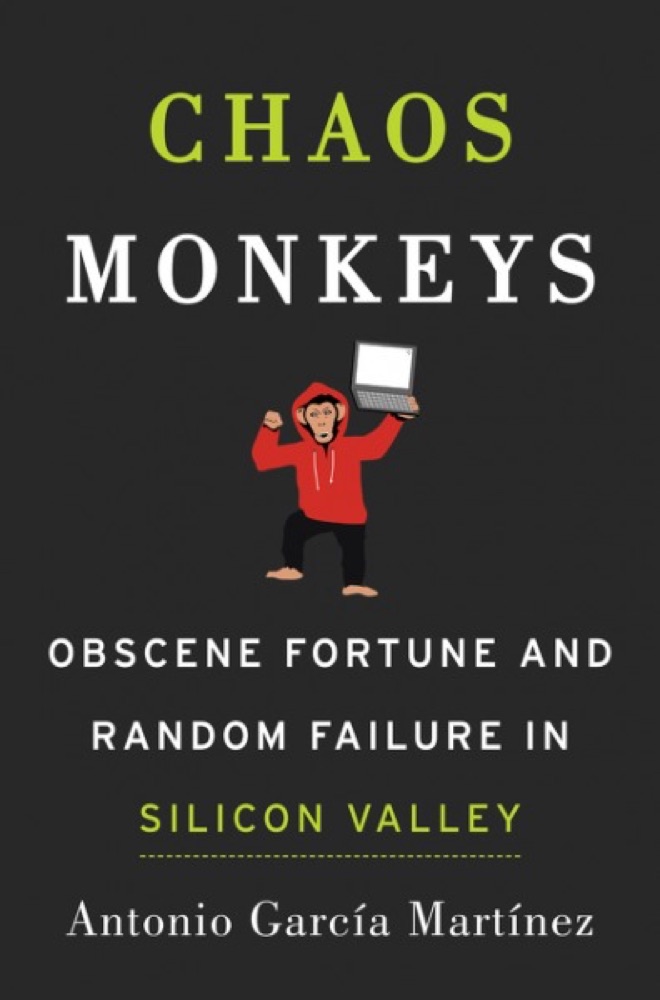 Chaos Monkeys: Obscene Fortune and Random Failure in Silicon Valley
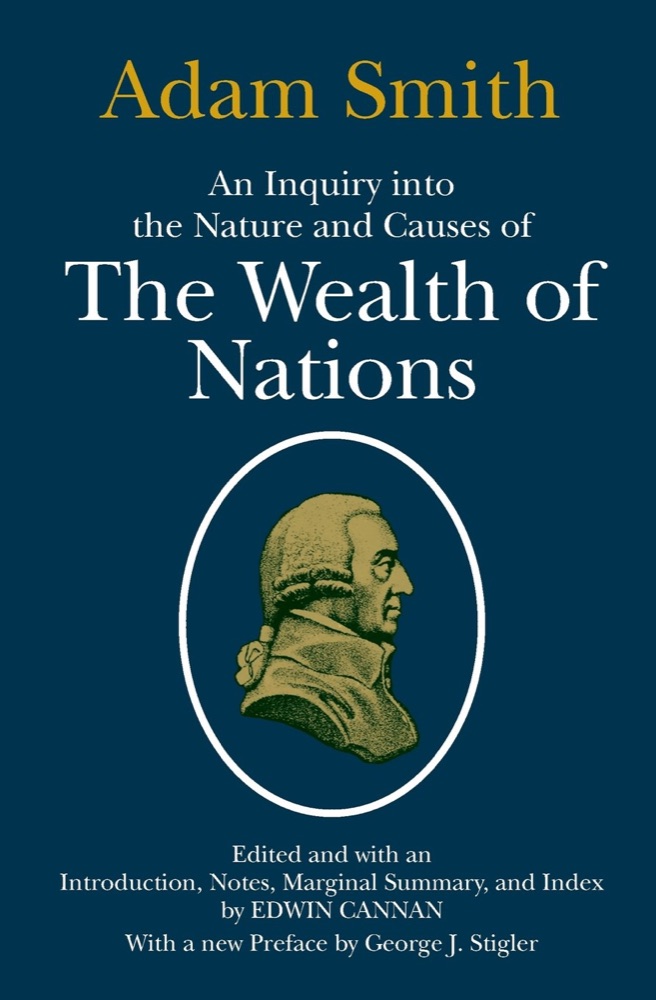 An Inquiry into the Nature and Causes of the Wealth of Nations
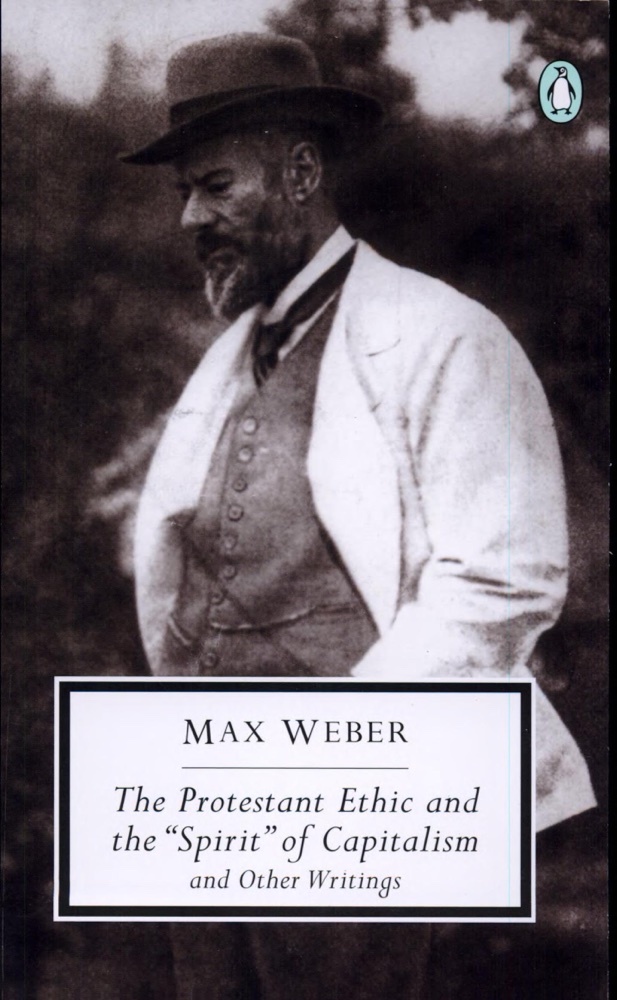 The Protestant Ethic and the Spirit of Capitalism
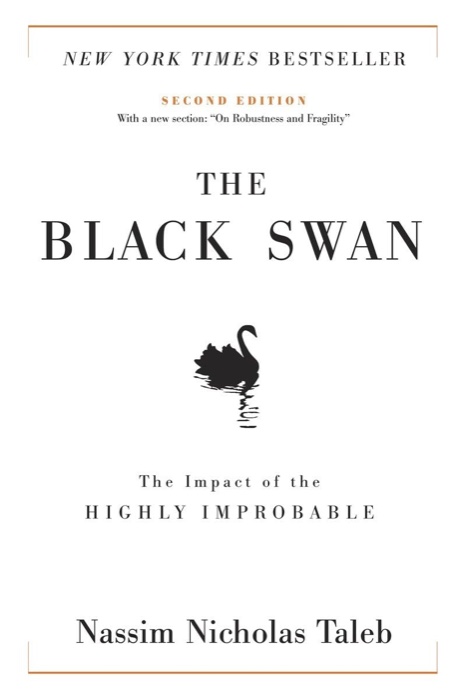 The Black Swan: The Impact of the Highly Improbable
 Rich Dad's Guide to Investing: What the Rich Invest in That the Poor and Middle Class Do Not!
 American Colossus: The Triumph of Capitalism, 1865-1900
 The Rational Optimist: How Prosperity Evolves
 The Smartest Guys in the Room: The Amazing Rise and Scandalous Fall of Enron
 Who Owns the Future?
 Same as Ever: A Guide to What Never Changes
 The Paris Vendetta
 Small Is Beautiful: Economics as if People Mattered
 The Shock Doctrine: The Rise of Disaster Capitalism
 The Mandibles: A Family, 2029–2047
 Quicksilver
 Unscripted: Life, Liberty, and the Pursuit of Entrepreneurship
 Capital in the Twenty-First Century
 SuperFreakonomics: Global Cooling, Patriotic Prostitutes And Why Suicide Bombers Should Buy Life Insurance
 Fall; or, Dodge in Hell
 Poor Economics: A Radical Rethinking of the Way to Fight Global Poverty
 Naked Economics: Undressing the Dismal Science
 The Shockwave Rider
 The Mark and the Void