
 Othello
Quotes from the Book
From women's eyes this doctrine I derive: They sparkle still the right Promethean fire; They are the books, the arts, the academes, That show, contain and nourish all the world.
107
Love is a familiar. Love is a devil. There is no evil angel but love.
60
Beauty is bought by judgement of the eye.
28
Love is familiar. Love is a devil. There is no evil angel but Love." -
20
A jest's prosperity lies in the ear Of him that hears it, never in the tongue Of him that makes it.
18
But love, first learnèd in a lady's eyes, Lives not alone immurèd in the brain, But, with the motion of all elements, Courses as swift as thought in every power, And gives to every power a double power, Above their functions and their offices. It adds a precious seeing to the eye; A lover's eyes will gaze an eagle blind; A lover's ears will hear the lowest sound, When the suspicious head of theft is stopped: Love's feeling is more soft and sensible Than are the tender horns of cockled snails: Love's tongue proves dainty Baccus gross in taste. For valour, is not love a Hercules, Still climbing trees in the Hesperides? Subtle as Sphinx; as sweet and musical As bright Apollo's lute, strung with his hair; And when Love speaks, the voice of all the gods Makes heaven drowsy with the harmony. Never durst poet touch a pen to write Until his ink were tempered with Love's sighs.
15
He hath not eat paper, as it were; he hath not drunk ink; his intellect is not replenished; he is only an animal, only sensible in the duller parts. (Shakespeare, Love's Labor's Lost, IV)
12
When icicles hang by the wall, And Dick the shepherd blows his nail, And Tom bears logs into the hall, And milk comes frozen home in pail, When blood is nipp'd, and ways be foul, Then nightly sings the staring owl, To-whit! To-who!—a merry note, While greasy Joan doth keel the pot. When all aloud the wind doe blow, And coughing drowns the parson's saw, And birds sit brooding in the snow, And Marian's nose looks red and raw, When roasted crabs hiss in the bowl, Then nightly sings the staring owl, To-whit! To-who!—a merry note, While greasy Joan doth keel the pot.
11
Never durst a poet touch a pen to write Until his ink was tempered with love's sighs.
7
Come on then, I will swear to study so To know the thing I am forbid to know - Berowne
7
They have been at a great feast of languages, and stolen the scraps.
7
To move wild laughter in the throat of death?— It cannot be, it is impossible. Mirth cannot move a soul in agony. Why, that’s the way to choke a gibing spirit, Whose influence is begot of that loose grace Which shallow laughing hearers give to fools. A jest’s prosperity lies in the ear Of him that hears it, never in the tongue Of him that makes it. Then if sickly ears, Deafed with the clamours of their own dear groans, Will hear your idle scorns, continue then, And I will have you and that fault withal. But if they will not, throw away that spirit, And I shall find you empty of that fault, Right joyful of your reformation
7
What time o' day? ROSALINE: The hour that fools should ask.
6
O, they have lived long on the alms-basket of words. I marvel thy master hath not eaten thee for a word; for thou art not so long by the head as honorificabilitudinitatibus: thou art easier swallowed than a flap-dragon.
6
This wimpled, whining, purblind, wayward boy, this Senior Junior, giant dwarf...Cupid.
6
I praise God for you, sir: your reasons at dinner have been sharp and sententious; pleasant without scurrility, witty without affection, audacious without impudency, learned without opinion, and strange without heresy.
5
An I had but one penny in the world, thou shouldst have it to buy gingerbread.
4
What is the end of study? let me know. Why, that to know, which else we should not know. Things hid and barr'd, you mean, from common sense? Ay, that is study's godlike recompense. Come on, then; I will swear to study so, To know the thing I am forbid to know: As thus,--to study where I well may dine, When I to feast expressly am forbid; Or study where to meet some mistress fine, When mistresses from common sense are hid; Or, having sworn too hard a keeping oath, Study to break it and not break my troth. If study's gain be thus and this be so, Study knows that which yet it doth not know: -- ACT I, SCENE 1, Loves Labour's Lost
4
Yet swear not, lest ye be forsworn again.
4
Let us once lose our oaths to find ourselves, Or else we lose ourselves to keep our oaths
4
Welcome the sour cup of prosperity! Affliction may one day smile again, and till then, Sit thee down, sorrow!
4
Rebuke me not for that, which you provoke :
3
Why, all delights are vain, but that most vain Which, with pain purchased, doth inherit pain; As painfully to pore upon a book To seek the light of truth while truth the while Doth falsely blind the eyesight of his look. Light, seeking light, doth light of light beguile; So ere you find where light in darkness lies Your light grows dark by losing of your eyes. Study me how to please the eye indeed By fixing it upon a fairer eye, Who dazzling so, that eye shall be his heed, And give him light that it was blinded by. Study is like the heavens’ glorious sun, That will not be deep searched with saucy looks. Small have continual plodders ever won Save base authority from others’ books. These earthly godfathers of heaven’s lights, That give a name to every fixed star, Have no more profit of their shining nights Than those that walk and wot not what they are. Too much to know is to know naught but fame, And every godfather can give a name. a
3
Adieu, valour: rust, rapier: be still, drum, for your manager is in love: yea, he loveth. Assist me, some extemporal god of rhyme, for I am sure I shall turn sonnet. Devise, wit: write, pen, for I am for whole volumes in folio.
3
Sir, he hath not fed of the dainties that are bred in a book; He hath not eat paper, as it were; he hath not drunk ink; his intellect is not replenished; he is only an animal, only sensible in the duller parts... (Act IV, Scene II)
3
Love is a devil: there is no evil angel but love.
2
You, that way: we, this way.
2
Taffeta phrases, silken terms precise, three-piled hyperboles, spruce affection, figures pedantical--these summer flies have blown me full of maggot ostentation.
2
So study evermore is overshot. While it doth study to have what it would, It doth forget to do the thing it should; And when it hath the thing it hunteth most, ’Tis won as towns with fire—so won, so lost.
2
Watch on YouTube
About William Shakespeare
We have collected 956 quotes from 39 books by William Shakespeare on BookQuoters.
More about the author →More by William Shakespeare
All books by William Shakespeare →
About the book
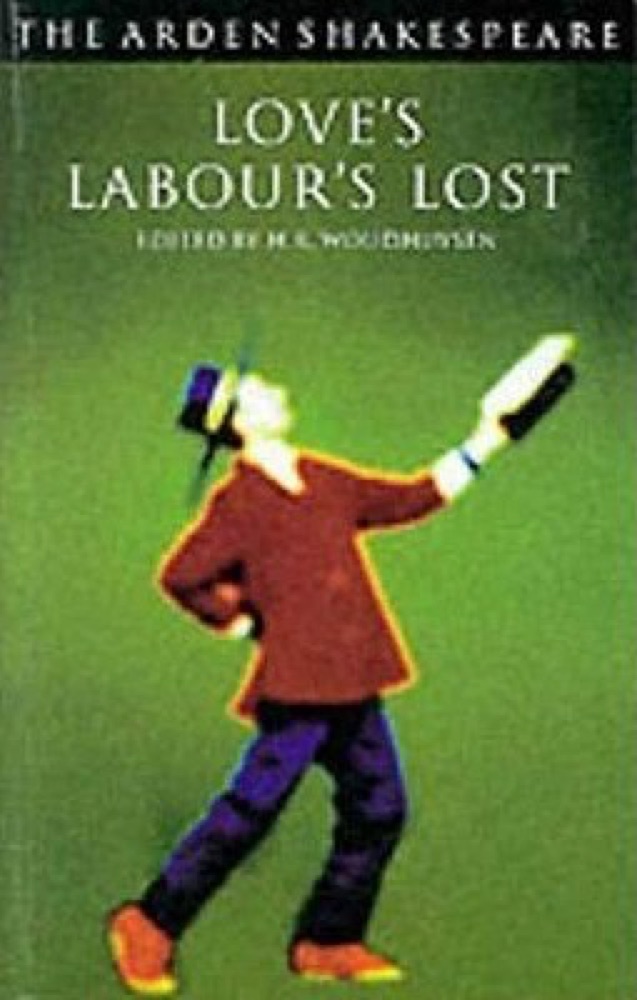
In this charming comedy of manners, one of Shakespeare's earliest efforts in the genre, a well-intentioned king vows to forego all fleshly delights, setting the stage for romantic hijinks. Ferdinand, the king of Navarre, insists that his court join him in a pledge to undertake a strict regimen of study and celibacy. The grudging compliance of three noblemen is sorely tested — as is the king's own resolve — with the arrival of a French princess and a trio of comedy attendants.
Book details
- First published
- 1598
- Author
- William Shakespeare
- Genre
- Classics
- Goodreads rating
- 3.52 (16k ratings)
Keep reading
 Twelfth Night
 The Complete Works
 The Two Gentlemen of Verona
 Don Juan
 The Canterbury Tales
 The Spanish Tragedy
 The Complete English Poems
 Faust
Faust
 The Letters of Abélard and Héloïse
 Will in the World: How Shakespeare Became Shakespeare
 Complete Poems
 Don Quixote
 Our Mutual Friend
 The History of Tom Jones, a Foundling
 The Professor
 Shirley
 The Book of Mirdad: The Strange Story of a Monastery Which Was Once Called the Ark
 The Infernal Devices: Clockwork Angel
 Spoon River Anthology
 The Satyricon
 The Pickwick Papers
 The Faerie Queene
 The Duchess of Malfi
 The Monk
 Complete Works of Oscar Wilde
 Cyrano de Bergerac
 Purgatorio
 Descent into Hell
 Nicholas Nickleby
 Armadale
 Les Misérables
 Confessions
 Checkmate
 Bring Up the Bodies
 Gargantua and Pantagruel
 The Complete Poems
 Either/Or: A Fragment of Life
 Daniel Deronda
 Phaedrus
 Art and Lies
 Keep the Aspidistra Flying
 The Picture of Dorian Gray
 The Complete Poems of Emily Dickinson
 The Invention of Love
 De Profundis
 She
She
 Arcadia
 Ulysses
 Twenty Years After
 A Defence of Poetry
 Essays
 Childe Harold's Pilgrimage
 Eldest
 The Gay Science
 Songs of Innocence and of Experience
 The Dante Club
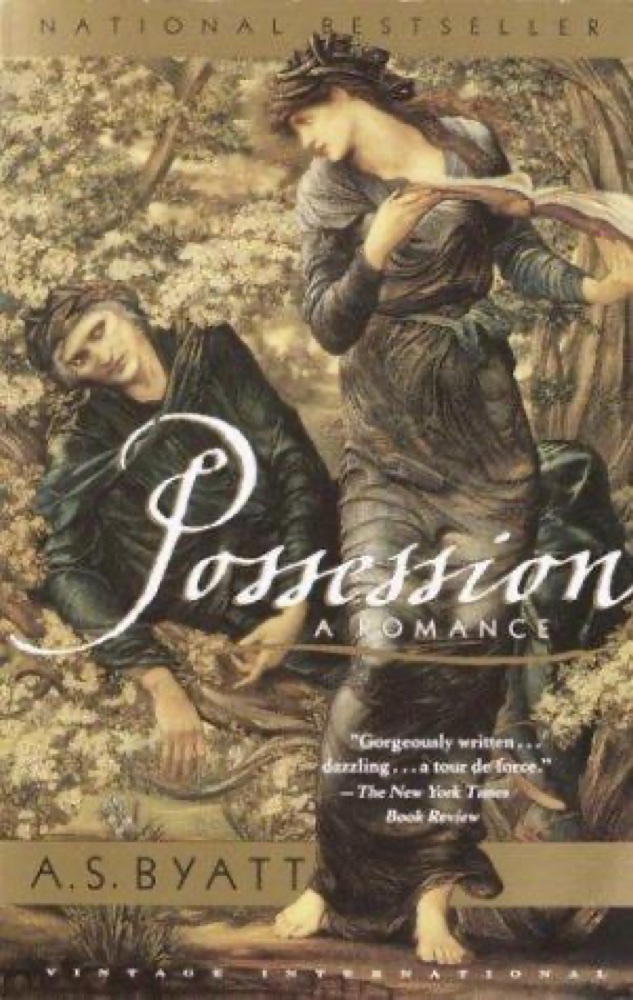 Possession
 No Exit and Three Other Plays
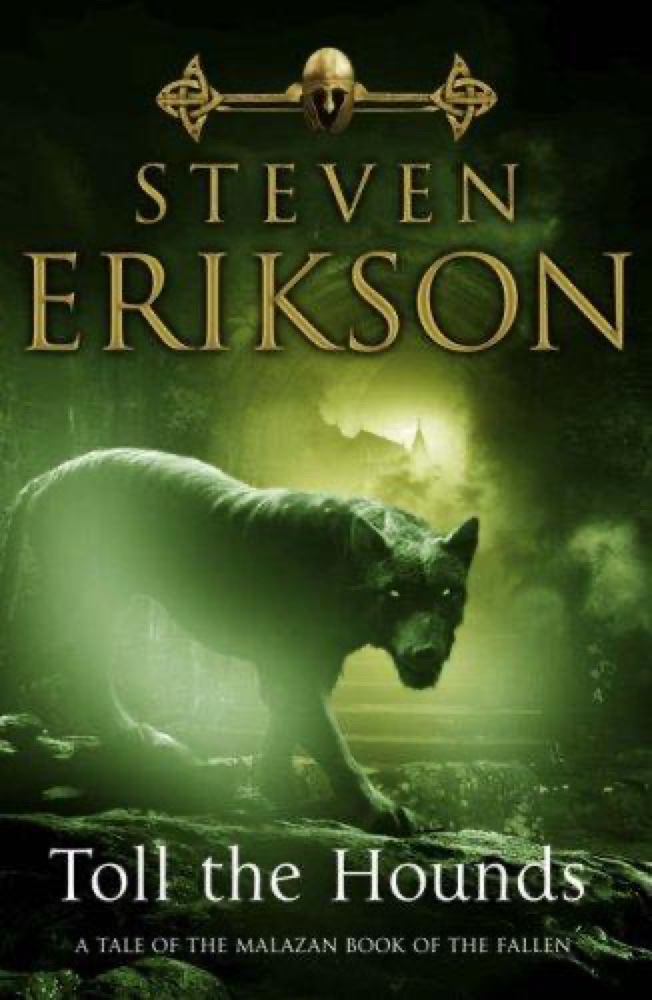 Toll the Hounds
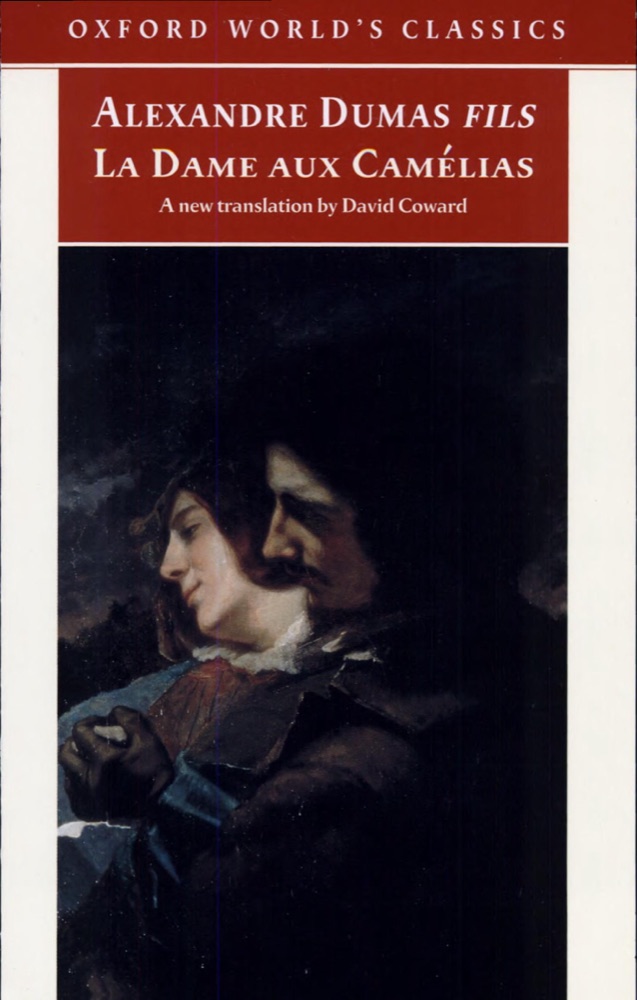 La dame aux camélias