
 Family Driven Faith: Doing What It Takes to Raise Sons and Daughters Who Walk with God
Quotes from the Book
I have heard a mantra lately that rings hollow in my ears: “There can be no reconciliation without justice.” When I hear that, I want to scream, “YES! AND THE DEATH OF CHRIST IS THAT JUSTICE!” All other justice is proximate and insufficient. It is because of Christ’s work on the cross that that we can heed the apostle’s admonition: “Let all bitterness and wrath and anger and clamor and slander be put away from you, along with all malice. Be kind to one another, tenderhearted, forgiving one another, as God in Christ forgave you” (Ephesians 4:31–32). Who am I to tell a white brother that he cannot be reconciled to me until he has drudged up all of the racial sins of his and his ancestors’ past and made proper restitution? Christ has atoned for sin!
5
I believe the current concept of social justice is incompatible with biblical Christianity.
3
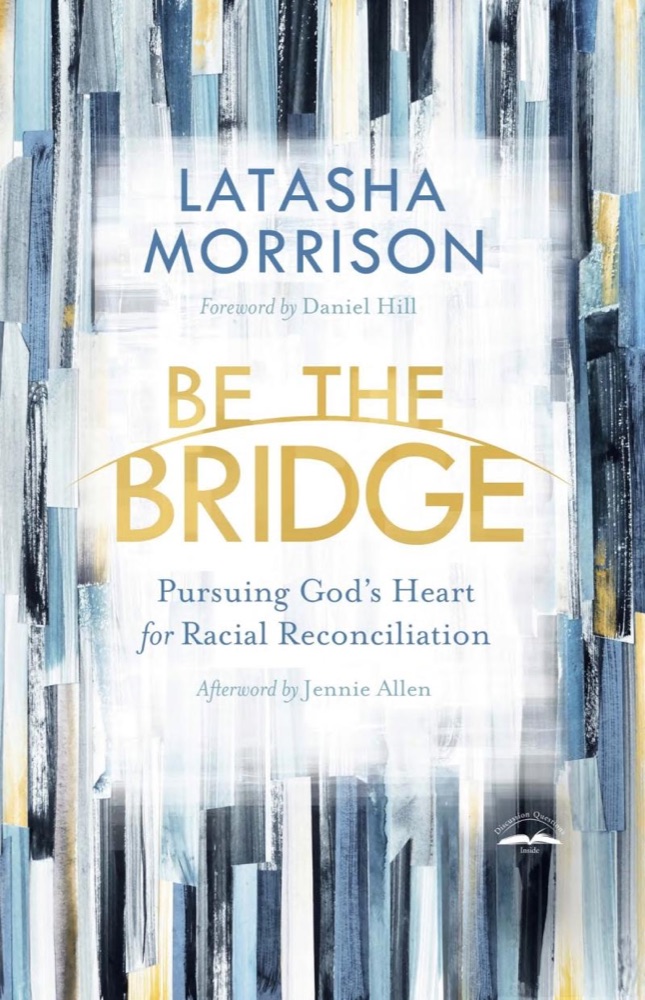
The most popular antiracist curriculum among conservative evangelicals is Latasha Morrison’s Be the Bridge: Pursuing God’s Heart for Racial Reconciliation. In the accompanying curriculum, Whiteness 101: Foundational Principles Every White Bridge Builder Needs to Understand, Morrison defines racism as “a system of advantage based on race, involving cultural messages, misuse of power, and institutional bias, in addition to the racist beliefs and actions of individuals.” It is important to note that this redefinition of racism, among other things, changes the location and therefore the nature of the sin. We are no longer dealing with the hearts of men; we are addressing institutions and structures. “For as long as America exists with its current institutions,” writes DiAngelo, “it will also need to be in group therapy where our turn begins with: ‘Hi. I’m America, and I’m racist.’
3
The facts about Black Lives Matter are not in dispute. The organization is Marxist, revolutionary, feminist, misandrist, pro-LGBTQIA+, pro-abortion, and anti-family, with roots in the occult. It is unacceptable for Christians to partner with, celebrate, identify with, or promote this organization. And that includes being bullied or pressured into using the phrase “black lives matter.
2
All Scripture is breathed out by God and profitable for teaching, for reproof, for correction, and for training in righteousness, that the man of God may be complete, equipped for every good work” (2 Timothy 3:16–17). In no area does God require me to walk in a level of righteousness for which the Scriptures do not equip me—including any and all aspects of justice.
2
At the heart of the “woke” movement lies the idea that the sin of racism is no longer to be understood as an individual sin.
1
There can be no reconciliation without justice.” When I hear that, I want to scream, “YES! AND THE DEATH OF CHRIST IS THAT JUSTICE!” All other justice is proximate and insufficient.
1
Pastors, I beg you to consider what I have written here. I believe the Church—your church—is under attack. As shepherds, we must defend the sheep. We must repel the wolves. And yes, the wolves are many. However, this one is within the gates and has the worst of intentions. He desires to use your genuine love for the brethren as leverage. Don’t let him! Recognize the difference between the voice of the Good Shepherd who calls you to love all the sheep and the voice of the enemy that tells you some of them are guilty, blind, ignorant oppressors and that others are oppressed—all based on their melanin. Reject cries that take principles and stories of individual restitution (Numbers 5:7; Luke 19) and eisegetically twist them into calls for multi-generational reparations. Reject the cries of those who twist the repentance of Daniel and Ezra 1) on behalf of theocratic Israel and 2) for sin that took place during their lifetime, in an effort to promote multi-generational, ethnic guilt that rests upon all white people by virtue of their whiteness.
1
There are two competing worldviews in this current cultural moment. One is the Critical Social Justice view—which assumes that the world is divided between the oppressors and the oppressed (white, heterosexual males are generally viewed as “the oppressor”).3 The other is what I will refer to in these pages as the biblical justice view in order to avoid what I accuse the social-justice crowd of doing, which is immediately casting its opponents as being opposed to justice.
1
I can and do look injustice in the eye and call it what it is. It is my duty as a herald of God’s Word. In this case, however, the injustice I see is the false witness-bearing, Marxist ideology-promoting, Gospel-perverting ideology of Critical Race Theory and its offshoots.
Current cries about “over-policing” of black communities and the need to “defund the police” are inconsistent with the facts on the ground.
Whenever you hear this mantra, I hope you remember Proverbs 18:17: “The one who states his case first seems right, until the other comes and examines him.
I am happy to save every single child I can. I am not a social justice warrior, but I believe God meant it when He said, “Learn to do good; seek justice, correct oppression; bring justice to the fatherless, plead the widow’s cause” (Isaiah 1:17). But I don’t believe He called me to use the government as a proxy. God calls His people to be His hands and feet in this regard. Believing this transformed my life and that of my family to the tune of adopting seven newborns in nine years as an expression of our pro-life commitment.
This, by the way, is why CSJ proponents tend to downplay the sufficiency of Scripture: to them, racism is not a heart issue or personal sin; it is a 'systemic' problem. Therefore, reform is the solution, not repentance.
Where the battle rages the loyalty of the soldier is proved; and to be steady on all the battle-field besides is mere flight and disgrace to him if he flinches at that one point. —Elizabeth Rundle Charles
I do not mean that we must accept the world’s faulty, emasculated, unbiblical version of love—the version that sees any disagreement or confrontation as inherently unloving. No, we must love each other with a tenacious, biblical, Christlike love.
I am a debater; I always have been. But in the current climate, debate is becoming a lost art—partly because of a general decline in the study of logic and rhetoric, but mostly because of the general feminization of culture and its consequent disdain for open verbal combat. Gone are the days of Luther and Erasmus slugging it out over the question of original sin. Today both men would be accused of being petty (for daring to split hairs over such theological minutia), mean-spirited (for daring to speak so forcefully in favor of their own position and against the other’s), and downright un-Christlike (for throwing around the word “heresy”). I have often said, “The Eleventh Commandment is, ‘Thou shalt be nice”… and we don’t believe the other ten.” One of the negative results of this is no longer being able to deal with ideas without attacking the people who hold them. Disagreements quickly deteriorate into arguments and worse. Consequently, taking a position on an issue carries the automatic assumption that one is utterly opposed not only to the opposing view, but to all who hold it. Therefore, we don’t debate ideas at all, but go straight for personal attacks and character assassination. And this debate is no different. To the anti–Critical Social Justice camp, those on the side of CSJ are all Cultural Marxists. Conversely, to the social justice camp, those who oppose their cause are all racists (even fellow black people like me who, according to their definition of racism, can’t be racists… but I digress). The result is a standstill—a demilitarized zone that exists, not because hostilities have ceased, but because we all tacitly believe there is no solution. Meanwhile, well-meaning Christian laypeople find themselves at a loss. Which side do they choose? There are “big names” on both sides, so who’s right?
But the Dallas Statement didn’t warrant a drop of ink. Did these groups fail to address the statement because it was correct? If so, why didn’t they join us in signing it? Was it because, as more than one of the leaders of the aforementioned ministries stated, “The group lacked any names with gravitas,”3 therefore implying the statement was insignificant?
We are right to pursue justice, peace, and unity (Micah 6:8; Romans 12:18; John 17:20–21). That is not the fault line. The fault lies in believing that such a vision can be attained by affiliating with, using the terminology of, or doing anything other than opposing in the most forceful terms the ideology that lies at the root of the social justice movement.
Paul Washer put it well when he noted, “Five years ago, I was amazed as I saw the young, restless, and Reformed crowd at conferences talking about their latest encounters with Spurgeon, Calvin, Kuyper, and Machen… now they’re all talking about Christian Smith, Jemar Tisby, and Robin DiAngelo.” Granted, most of the men mentioned above believe firmly in the sufficiency of Scripture and have done so for decades. I am not talking about the liberal, openly social gospel/liberation theology wing of the CSJ movement. (At least not in this chapter.) In fact, many of the men to whom I am referring here have been on the front line of the battle against liberalism, mysticism, and pragmatism for many years. That is why the allusion to an unofficial new canon is so disturbing.
Our problem is a lack of clarity and charity in our debate over the place, priority, practice, and definition of justice.
In the social sciences, “critical” is “geared toward identifying and exposing problems in order to facilitate revolutionary political change.”7 In other words, it implies revolution. It is not interested in reform. Hence, we do not “reform” the police; we “defund” the police or abolish them. “It is more interested in problematizing—that is, finding ways in which the system is imperfect and making noise about them, reasonably or not—than it is in any other identifiable activity, especially building something constructive.
It is both ironic and sad that CSJ’s attack on the Gospel is so clear that an atheist can see it, yet many churches, denominations, seminaries, leading ministries, and ministers have fallen prey to this movement.
In other words, Critical Theory is not just an analytical tool, as some have suggested; it is a philosophy, a worldview.
After the Marxist revolution failed to topple capitalism in the early twentieth century, many Marxists went back to the drawing board, modifying and adapting Marx’s ideas. Perhaps the most famous was a group associated with the Institute for Social Research in Frankfurt, Germany, which applied Marxism to a radical interdisciplinary social theory. The group included Max Horkheimer, T.W. Adorno, Erich Fromm, Herbert Marcuse, Georg Lukács, and Walter Benjamin and came to be known as the Frankfurt School. These men developed Critical Theory as an expansion of Conflict Theory and applied it more broadly, including other social sciences and philosophy. Their main goal was to address structural issues causing inequity. They worked from the assumption that current social reality was broken, and they needed to identify the people and institutions that could make changes and provide practical goals for social transformation.
Watch on YouTube
About Voddie T. Baucham Jr.
We have collected 53 quotes from 3 books by Voddie T. Baucham Jr. on BookQuoters.
More about the author →More by Voddie T. Baucham Jr.
Family Driven Faith: Doing What It Takes to Raise Sons and Daughters Who Walk with God
 What He Must Be …If He Wants to Marry My Daughter
About the book
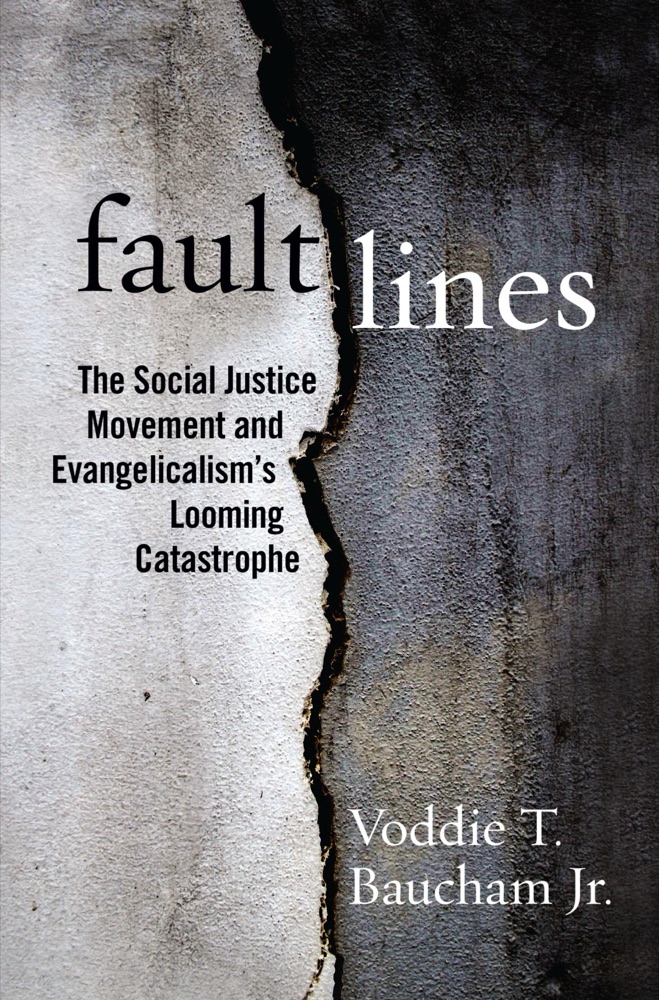
The Ground Is Moving The death of George Floyd at the hands of police in the summer of 2020 shocked the nation. As riots rocked American cities, Christians affirmed from the pulpit and in social media that “black lives matter” and that racial justice “is a gospel issue.” But what if there is more to the social justice movement than those Christians understand? Even What if they’ve been duped into preaching ideas that actually oppose the Kingdom of God? In this powerful book, Voddie Baucham, a preacher, professor, and cultural apologist, explains the sinister worldview behind the social justice movement and Critical Race Theory—revealing how it already has infiltrated some seminaries, leading to internal denominational conflict, canceled careers, and lost livelihoods. Like a fault line, it threatens American culture in general—and the evangelical church in particular. Whether you’re a lay
Book details
- First published
- 2021
- Author
- Voddie T. Baucham Jr.
- Genre
- Nonfiction
- Goodreads rating
- 4.43 (7k ratings)
Keep reading
 Compassion (&) Conviction: The AND Campaign's Guide to Faithful Civic Engagement
 A Theology of Liberation
 Where Do We Go from Here: Chaos or Community?
 Tactics: A Game Plan for Discussing Your Christian Convictions
 Toxic Empathy: How Progressives Exploit Christian Compassion
 Resident Aliens: Life in the Christian Colony
 Total Truth: Liberating Christianity from its Cultural Captivity
 Jesus and the Disinherited
 The Irresistible Revolution: Living as an Ordinary Radical
 Letter from the Birmingham Jail
 A Generous Orthodoxy
 Ethics
 Generous Justice: How God's Grace Makes Us Just
 Be the Bridge: Pursuing God's Heart for Racial Reconciliation
 Jesus for President: Politics for Ordinary Radicals
 The Prodigal God: Recovering the Heart of the Christian Faith
 Shameless: A Case for Not Feeling Bad About Feeling Good
 The Gospel in a Pluralist Society
 Why We Can't Wait
 Building a Bridge: How the Catholic Church and the LGBT Community Can Enter into a Relationship of Respect, Compassion, and Sensitivity
 Sinners in the Hands of a Loving God: The Scandalous Truth of the Very Good News
 The Reason for God: Belief in an Age of Skepticism
 The Madness of Crowds: Gender, Race and Identity
 What Is the Bible?: How an Ancient Library of Poems, Letters, and Stories Can Transform the Way You Think and Feel About Everything
 The Crucible of Doubt: Reflections On the Quest for Faith
 Christless Christianity: The Alternative Gospel of the American Church
 Islam and the Future of Tolerance: A Dialogue
 Jesus Feminist: An Invitation to Revisit the Bible's View of Women
 I'm Still Here: Black Dignity in a World Made for Whiteness
 Letters and Papers from Prison
 What is the Mission of the Church?: Making sense of social justice, Shalom and the Great Commission
 Simply Christian
 The Explicit Gospel
 Misreading Scripture with Western Eyes: Removing Cultural Blinders to Better Understand the Bible
 The Cross of Christ
 Amazing Grace: A Vocabulary of Faith
 A Year of Biblical Womanhood
 Studies in the Sermon on the Mount
 The Rage Against God: How Atheism Led Me to Faith
 Separation of Church and Hate: A Sane Person's Guide to Taking Back the Bible from Fundamentalists, Fascists, and Flock-Fleecing Frauds
 Across That Bridge: A Vision for Change and the Future of America
 United: Thoughts on Finding Common Ground and Advancing the Common Good
 Inspired: Slaying Giants, Walking on Water, and Loving the Bible Again
 The Benedict Option: A Strategy for Christians in a Post-Christian Nation
 The Cross and the Lynching Tree
 The Case for Faith: A Journalist Investigates the Toughest Objections to Christianity
 The Challenge of Jesus: Rediscovering Who Jesus Was & Is
 What We Talk about When We Talk about God
 Pastrix: The Cranky, Beautiful Faith of a Sinner & Saint
 Instruments in the Redeemer's Hands: People in Need of Change Helping People in Need of Change
 The Prophetic Imagination
 The Secret Thoughts of an Unlikely Convert: An English Professor's Journey Into Christian Faith
 Live Not by Lies: A Manual for Christian Dissidents
 Evil and the Justice of God
 unChristian: What a New Generation Really Thinks about Christianity... and Why It Matters
 Jesus > Religion: Why He Is So Much Better Than Trying Harder, Doing More, and Being Good Enough
 Velvet Elvis: Repainting the Christian Faith
 Holy Envy: Finding God in the Faith of Others
 Of Mess and Moxie: Wrangling Delight Out of This Wild and Glorious Life
 Adopted for Life: The Priority of Adoption for Christian Families & Churches