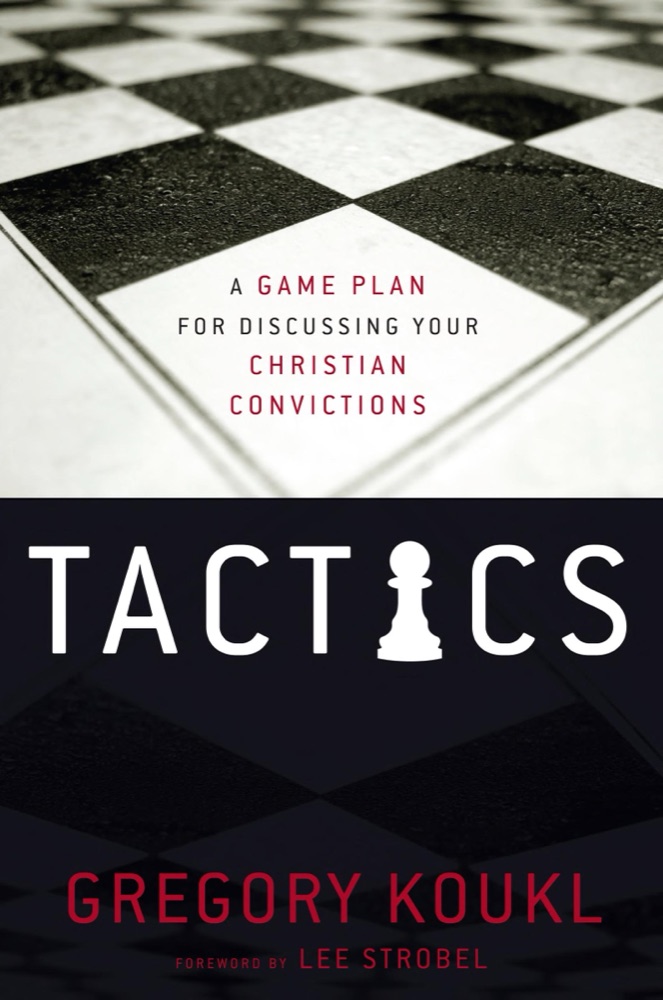
 Tactics: A Game Plan for Discussing Your Christian Convictions
Quotes from the Book
Christianity is not just about going to church. It's a way of seeing and understanding the world around us that should affect everything we do. In other words, Christianity is both a lifestyle and a worldview.
1
All incivility is, at its root, preceded by dehumanization. Incivility is toxic because it stems from a lapse in the recognition of human dignity: recognition of the dignity of others or recognition of one's own dignity.
1
In politics, civility shows itself in respect for disagreement and in granting others the right to express it. Civility shows itself when we acknowledge the best in our political opponents' line of thinking and the best in our political opponents themselves. Civility is mercy and forgiveness. It is a form of public grace.
1
Love for others should compel us to advocate for justice on their behalf just as we would do for ourselves. When we're confronted with a societal problem we must consider the best solution out of love, compassion, and justice.
1
The colorblind ideology that says “I don’t see race” should not be embraced by Christians. When we choose to look past race, we also choose to avert our eyes from the many ways that even well-meaning people and institutions engage in practices that reproduce and reinforce negative outcomes such as segregation, disadvantages for minorities in the job market, and the portrayal of whiteness as superior in public communications and entertainment. The simple fact is that if we can’t see and discuss the issue of race, we cannot solve the problems that racism causes.
1
In many cases our perspective has been so thoroughly shaped - or even discipled - by worldly ideologies that we mistake our flawed ideological positions for Christian positions.
1
participation in the political process or lack thereof—and the principles we employ—greatly affect our neighbors. Politics can be a matter of freedom or imprisonment, free speech or censorship, housing or homelessness, life or death. Politics is an essential aspect of modern life. It is how we govern ourselves, and it plays a major role in how we organize ourselves as a society. Political actions have started wars and defined certain people as property, but they’ve also fed the hungry and provided care for the sick. Christians must be faithful and thoughtful in how we choose to wield our influence and political power.
1
Slander is when we move from arguing about effects to arguing about intent, which is a way to undermine the standing of those we are arguing with in the public square.
If we want to see more civility, we ourselves must be even more emphatic about our support for sound democratic processes and a fair, impartial government. Injustice does not justify incivility, but it is reasonable for incivility to spring forth from injustice. People who are proponents of civility but quietists on everything else are, in fact, a great threat to civility. They are silent on voter disenfranchisement, but quick to urge the disenfranchised to be civil in how they express their disagreement. They are silent on the inequities and injustices in our criminal justice system, but are more than happy to retweet videos of protesters blocking highways or cursing at pedestrians. We can hardly encourage civility if we undermine a healthy civic life.
But Christians must never assume the best of ourselves. Ours must always be the prayer of Psalm 139:23: “Search me, God.
In actual fact the deep racial divides in our nation present one of the greatest opportunities for the American church. Racism is in the church, but it is not unique to the church. It’s the gospel that is unique to the church—the truth that the divine power of Almighty God reaches even across the deepest of cultural divides (Romans 1:16).
This kind of rhetoric can be important and meaningful if it is used to hold an elected leader accountable. However, if we as Christians are listening to politicians in order to be flattered or to personally identify with a politician, then we will be easily manipulated.
We shouldn’t let speakers get a reaction out of us by simply using cheap buzzwords that mean virtually nothing. Speakers insult our intelligence when they use vague terms and expect us to be easily pleased or enraged. Neither our approval nor our indignation should be so easily accessible.
In a section of Orwell’s essay labeled “Meaningless Words,” he explains how in politics words “are often used in a consciously dishonest way. That is, the person who uses them has his own private definition, but allows the hearer to think he means something quite different.”11 Orwell lists words such as patriotic, freedom, equality, and progressive as being particularly prone to deceptive use.
As Shakespeare wrote in Hamlet, “brevity is the soul of wit”—but it’s not always the keeper of substance or intellectual honesty.
Orwell believed the English language was in decline, partially because of “political causes.” In his estimation language was suffering because “political speech and writing are largely a defence of the indefensible. . . . Politics itself is a mass of lies, evasion, folly [and] hatred.
The Ephesians 4:14 reference to “the cunning and craftiness of people in their deceitful scheming” sounds like a perfect description of the tactics used in political discourse today.
The civic space is full of hidden agendas and corrupt activity; it’s no place to timidly accept the assertions of others. It’s intellectually lazy to agree with the same political party on every single issue. That’s a clear indication that we’ve been indoctrinated, which should never be an option for Christians.
Our partners often try to convince us that our opponents are so evil—and the moment is so urgent—that to question the group’s tactics or refuse to endorse its strategies is to do a great disservice to the cause. This is “ends justify the means” thinking that we as Christians cannot accept. Under no circumstances should Christians blindly follow our partners or overlook immorality and bad tactics or strategies for the sake of the movement.
Be certain that you’re not more eager to invoke God’s moral order for others than you are for yourself.
Christians can choose a political party, but we can’t choose between love and truth. We can’t fully embrace movements that dismiss justice or undermine moral order.
There is no single Christian policy or political plan. To act like there is one, or to wish that there was one, would be to make the old mistake of thinking that the kingdom of God is like human kingdoms. The goal is not to have all Christians share the same exact politics but to have all Christians think Christianly about politics. Thinking about politics from a biblical framework doesn’t mean we’ll always agree, but it does exclude some policies and forms of advocacy that are counter to our beliefs.
Political leaders often talk as if their side is for all that is good and true, and the other side is for death and destruction. But civic decisions become too easy when we as Christians pretend politics is simply a battle between angels and demons. The implication is that we don’t have to parse the details of their proposals or weigh the alternatives, we just need to know what position the “right side” is taking. This makes for a simple and powerful narrative, but in a broken world, neither side is completely good. There weren’t any perfect groups of people in the Bible (Romans 3:23), and there is only one perfect human, Jesus Christ (Isaiah 53:9). That fact still stands today. That isn’t to say that both sides of any given issue are equal or that one side can’t be clearly wrong, but a quick look at the record of any party or tribe will dispel all misconceptions about their infallibility. Indeed, sometimes political opponents are plainly misguided or even ill intended, and we as Christians would be remiss not to correct them. However, we must be able to disagree and work against those with opposing beliefs without dehumanizing them. When we label other groups evil, stupid, or irredeemable—or deny their pain—we strip them of their human dignity and make ourselves and others less likely to show them concern and compassion.
Some Christians are more willing to defend their ideological tribe than the Christian faith. It’s imperative that Christians are deliberate about avoiding partisan and ideological indoctrination. We also compromise our faith when we look to political tribes for validation simply because we want to belong. Our partisan and ideological affiliations should never become religious in nature.
Our purpose in civic engagement is not to make our own names great but to make known the greatness of the One who sends us. Our great desire is to be agents of the will of God in the earth, distribution centers for the love of God toward his creation.
For Professor John Inazu, humility does not reflect a lack of conviction, but rather reflects "the limits of translation, and the difficulty of proving our deeply held values to one another... Humility also recognizes that our human faculties are inherently limited - our ability to think, reason and reflect is less than perfect, a limitation that leaves open the possibility that we are wrong.
We must confront racism with humility and grace, with a posture of self-examination, not self-defense, remembering that God demands something of all of us (Exodus 20), even if we've been the victim. As Christians we ought to have a much clearer view of our own depravity and need for mercy. That awareness of sin in our lives and in our own cultures must drive us to a posture of humility, first toward God and then by extension to our fellow humans (Ephesians 5:21). Furthermore, being aware of the profound mercy and forgiveness of God, we should find grace to confront our personal and cultural issues knowing that we serve a God of love who intends to cleanse us from sin rather than to destroy us because of it (1 John 1:9).
As Christians, we have to be careful about how we label people. When we portray others in a demeaning light, we sin against them and reveal our own lack of wisdom (Proverbs 11:12). Discrediting a group might help us win an argument, but if it belittles our neighbor, it's wrong.
At certain times and on certain issues Christian principles compel us to defy both political conservatism and political progressivism. When it comes to political ideology, to be conservative or progressive at all times and on every issue is not only to be intellectually lazy and easily manipulated, but also it's unfaithful.
Indeed, we should be careful to ensure that we do not invoke moral order only in regard to issues that don't affect us directly. Christians should be sure that they first apply any standard to themselves and those ideas most personal to them before thinking about how that standard affects others (Matthew 7:5).
Watch on YouTube
About Justin Giboney
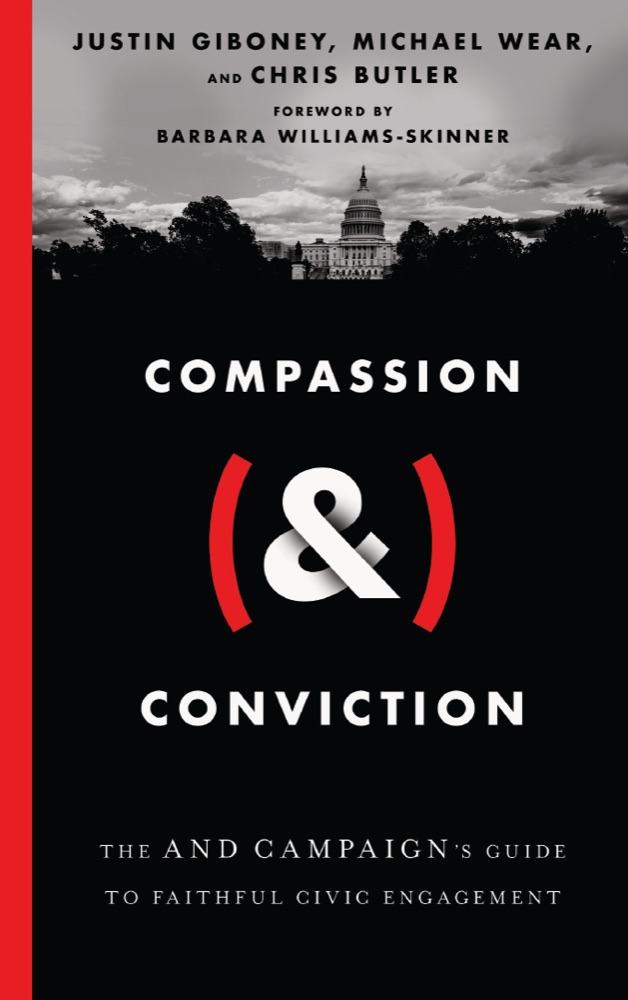
About the book
Have you ever felt too progressive for conservatives, but too conservative for progressives?
Too often, political questions are framed in impossible ways for the faithful Christian: we're forced to choose between social justice and biblical values, between supporting women and opposing abortion. As a result, it's easy for Christians to grow disillusioned with civic engagement or fall back into tribal extremes. This state of affairs has damaged Christian public witness and divided the church.
The authors of this book represent the AND Campaign, which exists to educate and organize Christians for faithful civic and cultural engagement. They insist that not only are we called to love our neighbors through the political process but also that doing so requires us to transcend the binary way the debates are usually framed. In simple, understandable language, they lay out the biblical cas
Book details
- First published
- 2020
- Author
- Justin Giboney
- Genre
- Nonfiction
- Goodreads rating
- 4.31 (2k ratings)
Keep reading
Tactics: A Game Plan for Discussing Your Christian Convictions
 Resident Aliens: Life in the Christian Colony
 Toxic Empathy: How Progressives Exploit Christian Compassion
 Jesus for President: Politics for Ordinary Radicals
 Fault Lines: The Social Justice Movement and Evangelicalism's Looming Catastrophe
 Ethics
 unChristian: What a New Generation Really Thinks about Christianity... and Why It Matters
 The Reason for God: Belief in an Age of Skepticism
 Total Truth: Liberating Christianity from its Cultural Captivity
 A Generous Orthodoxy
 Shameless: A Case for Not Feeling Bad About Feeling Good
 The Prodigal God: Recovering the Heart of the Christian Faith
 Live Not by Lies: A Manual for Christian Dissidents
 The Irresistible Revolution: Living as an Ordinary Radical
 The Benedict Option: A Strategy for Christians in a Post-Christian Nation
 Letters and Papers from Prison
 Christless Christianity: The Alternative Gospel of the American Church
 Misreading Scripture with Western Eyes: Removing Cultural Blinders to Better Understand the Bible
 Amazing Grace: A Vocabulary of Faith
 Building a Bridge: How the Catholic Church and the LGBT Community Can Enter into a Relationship of Respect, Compassion, and Sensitivity
 Separation of Church and Hate: A Sane Person's Guide to Taking Back the Bible from Fundamentalists, Fascists, and Flock-Fleecing Frauds
 Simply Christian
 The Secret Thoughts of an Unlikely Convert: An English Professor's Journey Into Christian Faith
 The Gospel in a Pluralist Society
 Life Together: The Classic Exploration of Christian Community
 Studies in the Sermon on the Mount
 The Crucible of Doubt: Reflections On the Quest for Faith
 Discipline: The Glad Surrender
 Letter to a Christian Nation
 Jesus and the Disinherited
 What Is the Bible?: How an Ancient Library of Poems, Letters, and Stories Can Transform the Way You Think and Feel About Everything
 Holy Envy: Finding God in the Faith of Others
 Instruments in the Redeemer's Hands: People in Need of Change Helping People in Need of Change
 A Theology of Liberation
 The Spirit of the Disciplines: Understanding How God Changes Lives
 Jesus Over Everything: Uncomplicating the Daily Struggle to Put Jesus First
 What We Talk about When We Talk about God
 Jesus > Religion: Why He Is So Much Better Than Trying Harder, Doing More, and Being Good Enough
 The Explicit Gospel
 The Holy Longing: The Search for a Christian Spirituality
 A Year of Biblical Womanhood
 The Peacemaker: A Biblical Guide to Resolving Personal Conflict
 Velvet Elvis: Repainting the Christian Faith
 Generous Justice: How God's Grace Makes Us Just
 Jesus Among Other Gods: The Absolute Claims of the Christian Message
 Be the Bridge: Pursuing God's Heart for Racial Reconciliation
 Across That Bridge: A Vision for Change and the Future of America
 Christ Plays in Ten Thousand Places: A Conversation in Spiritual Theology
 The Cross of Christ
 The Kingdom of God Is Within You
 The Divine Conspiracy: Rediscovering Our Hidden Life in God
 Rediscover Catholicism
 A Long Obedience in the Same Direction: Discipleship in an Instant Society
 Searching for God Knows What
 United: Thoughts on Finding Common Ground and Advancing the Common Good
 One Nation: What We Can All Do to Save America's Future
 Out of Sorts: Making Peace with an Evolving Faith
 Adopted for Life: The Priority of Adoption for Christian Families & Churches
 Evangelism & the Sovereignty of God