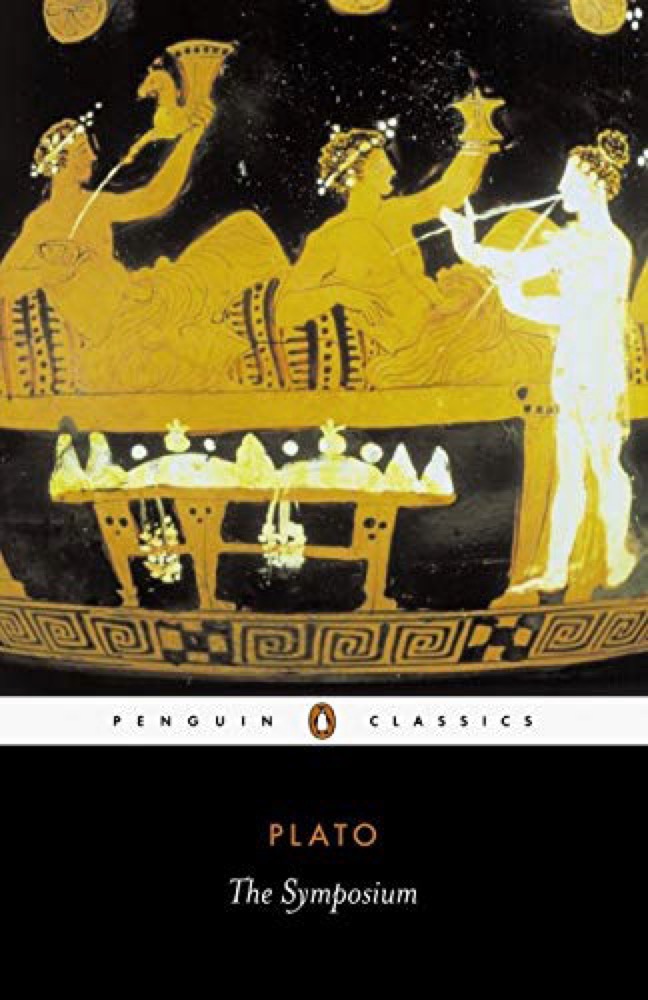
 The Symposium
Quotes from the Book
I prefer nothing, unless it is true.
27
As it is, the lover of inquiry must follow his beloved wherever it may lead him.
25
The point which I should first wish to understand is whether the pious or holy is beloved by the gods because it is holy, or holy because it is beloved of the gods.
16
I really do not know, Socrates, how to express what I mean. For somehow or other our arguments, on whatever ground we rest them, seem to turn round and walk away from us.
13
... because it is correct to make a priority of young people, taking care that they turn out as well as possible...
13
Does not every man love that which he deems noble and just and good, and hate the opposite of them?people regard the same things, some as just and others as unjust,--about these they dispute; and so there arise wars and fightings among them.
8
Where reverence is, there is fear; for he who has a feeling of reverence and shame about the commission of any action, fears and is afraid of an ill reputation.
4
SOCRATES: They have differences of opinion, as you say, about good and evil, just and unjust, honourable and dishonourable: there would have been no quarrels among them, if there had been no such differences--would there now?
4
My meaning is, that any state of action or passion implies previous action or passion. It does not become because it is becoming, but it is in a state of becoming because it becomes; neither does it suffer because it is in a state of suffering, but it is in a state of suffering because it suffers.
3
I am amused, Socrates, at your making a distinction between one who is a relation and one who is not a relation; for surely the pollution is the same in either case,
2
He thinks that you are a neologian, and he is going to have you up before the court for this.
2
Now tell me best of friends" lmaoooo
2
For the one (what is dear to the gods) is of the sort to be loved because it is loved; the other (the holy), because it is of the sort to be loved, therefore is loved.
2
That in any city, and particularly in the city of Athens, it is easier to do men harm than to do them good;
2
The chief difference between us and them (the ancient Greeks) is, that they were slowly learning what we are in process of forgetting.
2
...[T]he right way is to give one's attention first to the highest good of the young, just as you expect a good gardener to give his attention first to the young plants, and after that to the others. - Socrates
2
Consider this: Is the pious being loved by the gods because it is pious, or is it pious because it is being loved by the gods?
1
Whenever you do something holy, you're improving one of the gods?
1
that any state of action or passion implies previous action or passion. It does not become because it is becoming, but it is in a state of becoming because it becomes; neither does it suffer because it is in a state of suffering, but it is in a state of suffering because it suffers.
1
what they love pious or holy; and what some of them love and others hate is both or neither. Shall this be our definition of piety and impiety?
1
In the course of the argument Socrates remarks that the controversial nature of morals and religion arises out of the difficulty of verifying them.
1
Watch on YouTube
About Plato
We have collected 265 quotes from 14 books by Plato on BookQuoters.
More about the author →
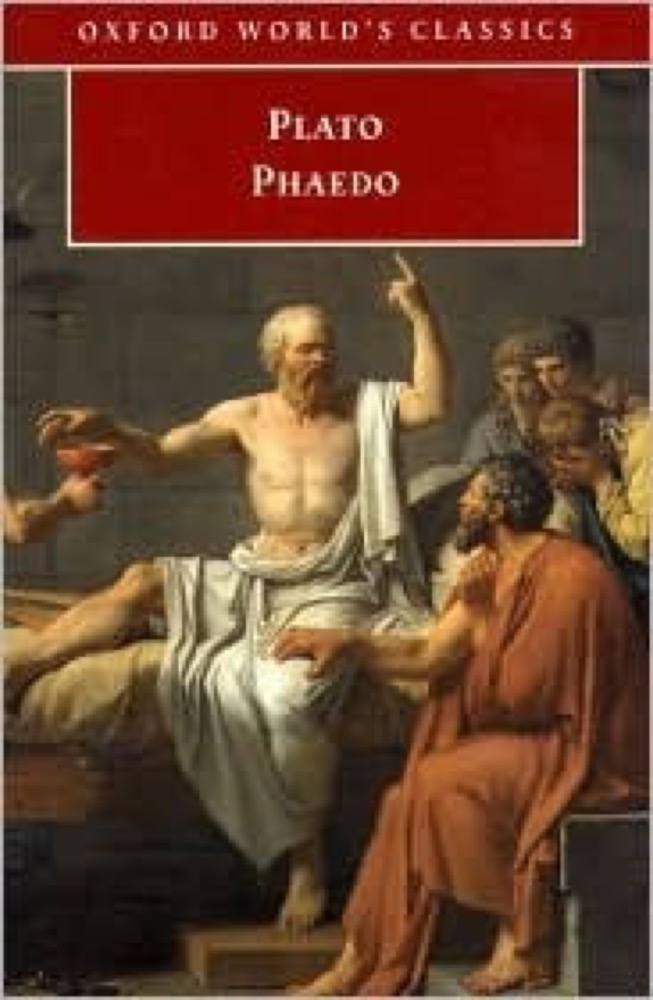
About the book
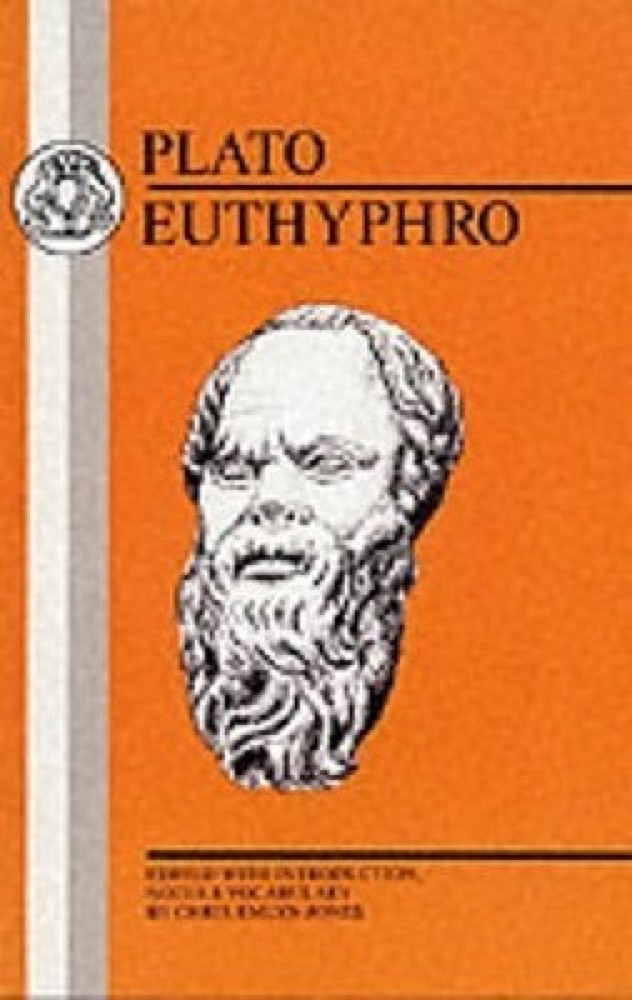
Awaiting his trial on charges of impiety and heresy, Socrates encounters Euthyphro, a self-proclaimed authority on matters of piety and the will of the gods. Socrates, desiring instruction in these matters, converses with Euthyphro, but as usual, the man who professes to know nothing fares better than the man who claims to be an expert.
One of Plato’s well-known Socratic Dialogues, Euthyphro probes the nature of piety, and notably poses the so-called Euthyphro Dilemma: Do the gods love a thing because it is holy, or is a thing holy because it is loved by the gods?
Book details
- First published
- 1998
- Author
- Plato
- Genre
- Philosophy
- Goodreads rating
- 3.95 (11k ratings)
Keep reading
 Gorgias
 Complete Works
 City of God
The Symposium
City of God
The Symposium
 Ethics
 Daybreak: Thoughts on the Prejudices of Morality
 Philosophical Dictionary
 On Christian Doctrine
 The Story of My Experiments With Truth
 Twilight of the Idols
 The Gay Science
 Reflections on the Psalms
 Ben-Hur: A Tale of the Christ
 Heretics
 The World's Last Night: And Other Essays
 Summa Theologica
 Works of Love
 Self-Reliance and Other Essays
 An Enquiry Concerning the Principles of Morals
 The Greek Way
 Scion of Ikshvaku
 The Immortals of Meluha
 Orthodoxy
 The Varieties of Religious Experience
 Persian Letters
 The Bondage of the Will
 The Spinoza Problem
 Children of God
 Julian
 The Intellectual Life: Its Spirit, Conditions, Methods
 A Canticle for Leibowitz
 The Imitation of Christ
 Breaking the Spell: Religion as a Natural Phenomenon
 The Analects
 The Ego and Its Own
 Fear and Trembling
 The Gods Will Have Blood
 The Book of Mirdad: The Strange Story of a Monastery Which Was Once Called the Ark
 The Perennial Philosophy
 The Problem of Pain
 The Consolation of Philosophy
 After Virtue
 Lord of Light
 The Left Hand of Darkness
 The Bacchae
 The Age of Reason
 Sophie's World
 Origin
 The Curse of Chalion
 Emile or On Education
 The Invention of Love
 The Way of Perfection
 An Enquiry Concerning Human Understanding
 The Nicomachean Ethics
 Xenocide
 The Mind of the Maker: Dorothy L. Sayers' Witty Classic on the Trinity, Christianity, and Human Creativity
 The Seven Storey Mountain
 The Dream of Scipio
 The Everlasting Man