
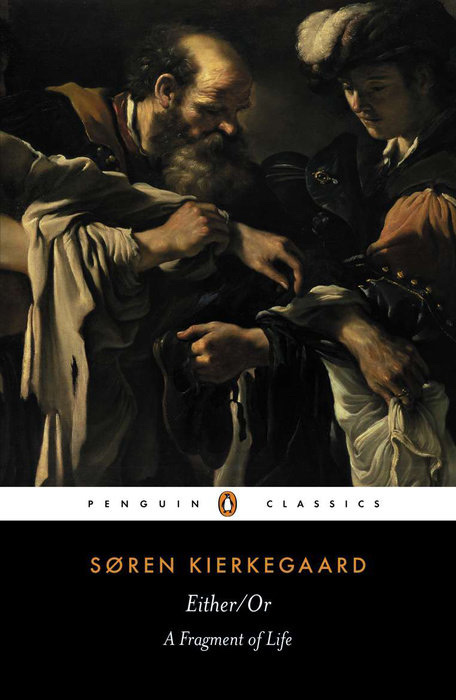
 Either/Or: A Fragment of Life
Quotes from the Book
If anyone on the verge of action should judge himself according to the outcome, he would never begin.
If there were no eternal consciousness in a man, if at the bottom of everything there were only a wild ferment, a power that twisting in dark passions produced everything great or inconsequential; if an unfathomable, insatiable emptiness lay hid beneath everything, what would life be but despair?
...why bother remembering a past that cannot be made into a present?
I am convinced that God is love, this thought has for me a primitive lyrical validity. When it is present to me, I am unspeakably blissful, when it is absent, I long for it more vehemently than does the lover for his object.
For he who loves God without faith reflects on himself, while the person who loves God in faith reflects on God.
If anyone on the verge of action should judge himself according to the outcome, he would never begin. Even though the result may gladden the whole world, that cannot help the hero; for he knows the result only when the whole thing is over, and that is not how he became a hero, but by virtue of the fact that he began.
When you were called, did you answer or did you not? Perhaps softly and in a whisper?
No, not one shall be forgotten who was great in the world. But each was great in his own way, and each in proportion to the greatness of that which he loved.
Then faith's paradox is this: that the single individual is higher than the universal, that the single individual determines his relation to the universal through his relation to God, not his relation to God through his relation through the universal... Unless this is how it is, faith has no place in existence; and faith is then a temptation.
Faith is a marvel, and yet no human being is excluded from it; for that in which all human life is united is passion, and faith is a passion.
For it is not what happens to me that makes me great, but it is what I do.
He who loved himself became great in himself, and he who loved others became great through his devotion, but he who loved God became greater than all.
Theology sits rouged at the window and courts philosophy's favor, offering to sell her charms to it.
Faith is namely this paradox that the single individual is higher than the universal
Only the lower natures forget themselves and become something new. Thus the butterfly has entirely forgotten that it was a caterpillar, perhaps it may in turn so entirely forget it was a butterfly that is becomes a fish.
Great Shakespeare!, you who can say everything, everything, everything exactly as it is – and yet why was this torment one you never gave voice to? Was it perhaps that you kept it to yourself, like the beloved whose name one still cannot bear the world to mention? For a poet buys this power of words to utter all the grim secrets of others at the cost of a little secret he himself cannot utter.
People unable to bear the martyrdom [...] unintelligently jump off the path, and choose instead, conveniently enough, the world’s admiration of their proficiency. The true knight of faith is a witness, never a teacher, and in this lies the deep humanity in him which is more worth than this foolish concern for others’ weal and woe which is honoured under the name of sympathy, but which is really nothing but vanity.
...for our times are not satisfied with faith and not even with the miracle of changing water into wine - they 'go right on,' changing wine into water.
The slaves of paltriness, the frogs in life’s swamp, will naturally cry out, “Such a love is foolishness. The rich brewer’s widow is a match fully as good and respectable.” Let them croak.
The ethical expression for what Abraham did is that he meant to murder Isaac; the religious expression is that he meant to sacrifice Isaac—but precisely in this contradiction is the anxiety that can make a person sleepless, and yet without this anxiety Abraham is not who he is.
For the universal will constantly torture him and say, 'You ought to have talked. Where will you find the certainty that it was not after all a hidden pride which governed your resolution?
I am courteous enough to assume that everyone in this so aesthetically voluptuous age, so potent and aroused that conception occurs as easily as with the partridge which, Aristotle says, needs only to hear the voice of the cock or its flight overhead - to assume that at the mere sound of the word 'concealment' everyone can easily shake a dozen romances and comedies from his sleeve.
Fools and young men prate about everything being possible for a man. That, however, is a great error. Spiritually speaking, everything is possible, but in the world of the finite there is much which is not possible.
Watch on YouTube
About Søren Kierkegaard
We have collected 136 quotes from 6 books by Søren Kierkegaard on BookQuoters.
More about the author →More by Søren Kierkegaard
Either/Or: A Fragment of Life
 The Sickness Unto Death: A Christian Psychological Exposition for Upbuilding and Awakening
 The Essential Kierkegaard
 The Seducer’s Diary
Book details
- Author
- Søren Kierkegaard
- Genre
- Classics
- Goodreads rating
- 4.00 (33k ratings) →
Keep reading
 Children of God
 Demons
 East of Eden
 A Severe Mercy: A Story of Faith, Tragedy and Triumph
 Beyond Good and Evil
 The Story of My Experiments With Truth
 Ben-Hur: A Tale of the Christ
 The Idiot
 The Seven Storey Mountain
 Perelandra
 The Once and Future King
 The Consolation of Philosophy
 Forge of Darkness
 Confessor
The Sickness Unto Death: A Christian Psychological Exposition for Upbuilding and Awakening
Confessor
The Sickness Unto Death: A Christian Psychological Exposition for Upbuilding and Awakening
 The Man Without Qualities
 Crime and Punishment
 The Fountainhead
 Daniel Deronda
 Uncle Tom's Cabin
 Shōgun
 Twilight of the Idols
 Cuckold
 A Soldier of the Great War
 Shadow of the Almighty: The Life and Testament of Jim Elliot
 The Great Divorce
 The Fall
 The Gay Science
 The Proposal
 Embers
 The Screwtape Letters
 Demian
 The Secret Scripture
 The Varieties of Religious Experience
 The Count of Monte Cristo
 The Power and the Glory
 The Darkness That Comes Before
 Gilead
 The Complete Essays
 The Claw of the Conciliator
 When Nietzsche Wept
 Julian
 A Voice in the Wind
 A Canticle for Leibowitz
 The Brothers Karamazov
 The Sparrow
 The Joke
 The Grace of Kings
 Manalive
 The Thousandfold Thought
 The Magic Mountain
 The Imitation of Christ
 The Home and the World
 Sacred Hunger
 The Blithedale Romance
 Faust
Faust
 The Wolf Gift
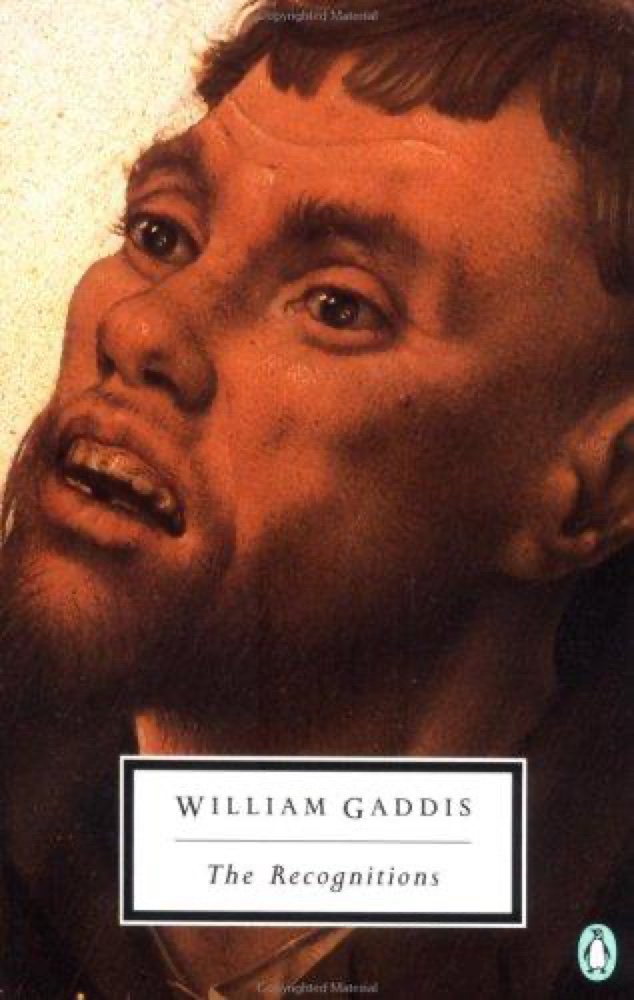 The Recognitions
 Angel Time
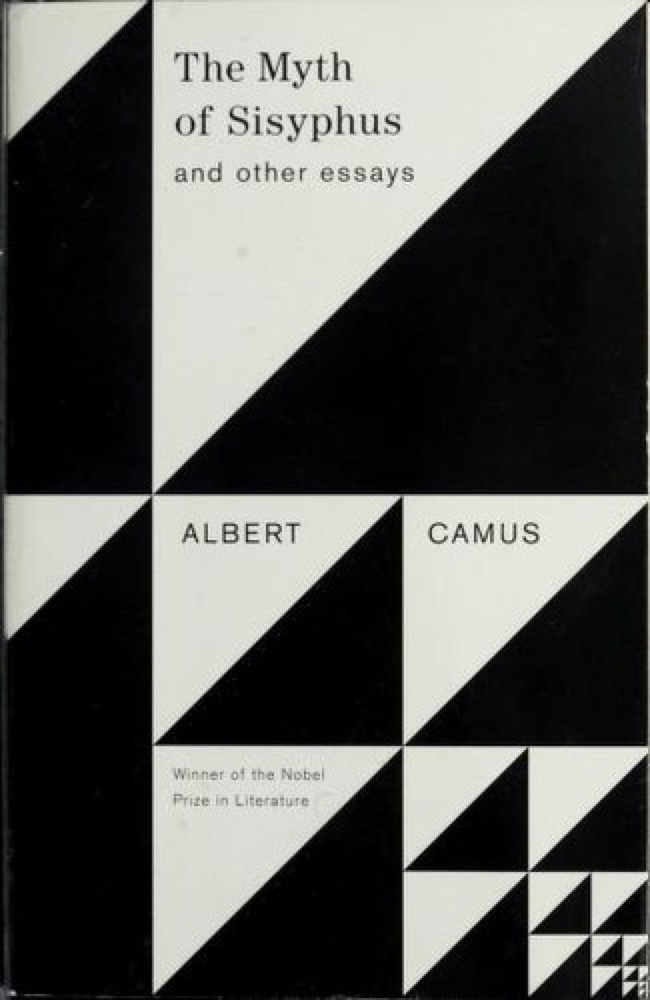 The Myth of Sisyphus and Other Essays