 Discourse on Method and Meditations on First Philosophy
Quotes from the Book
And thus, the actions of life often not allowing any delay, it is a truth very certain that, when it is not in our power to determine the most true opinions we ought to follow the most probable.
217
Divide each difficulty into as many parts as is feasible and necessary to resolve it.
115
At last I will devote myself sincerely and without reservation to the general demolition of my opinions.
74
It is not enough to have a good mind. The main thing is to use it well.
54
My third maxim was to endeavor always to conquer myself rather than fortune, and change my desires rather than the order of the world, and in general, accustom myself to the persuasion that, except our own thoughts, there is nothing absolutely in our power; so that when we have done our best in things external to us, all wherein we fail of success is to be held, as regards us, absolutely impossible: and this single principle seemed to me sufficient to prevent me from desiring for the future anything which I could not obtain, and thus render me contented
31
Nothing is more fairly distributed than common sense: no one thinks he needs more of it than he already has.
29
For to be possessed of a vigorous mind is not enough; the prime requisite is rightly to apply it. The greatest minds, as they are capable of the highest excellence, are open likewise to the greatest aberrations; and those who travel very slowly may yet make far greater progress, provided they keep always to the straight road, than those who, while they run, forsake it.
27
I knew that the languages which one learns there are necessary to understand the works of the ancients; and that the delicacy of fiction enlivens the mind; that famous deeds of history ennoble it and, if read with understanding, aid in maturing one's judgment; that the reading of all the great books is like conversing with the best people of earlier times; it is even studied conversation in which the authors show us only the best of their thoughts; that eloquence has incomparable powers and beauties; that poetry has enchanting delicacy and sweetness; that mathematics has very subtle processes which can serve as much to satisfy the inquiring mind as to aid all the arts and diminish man's labor; that treatises on morals contain very useful teachings and exhortations to virtue; that theology teaches us how to go to heaven; that philosophy teaches us to talk with appearance of truth about things, and to make ourselves admired by the less learned; that law, medicine, and the other sciences bring honors and wealth to those who pursue them; and finally, that it is desirable to have examined all of them, even to the most superstitious and false in order to recognize their real worth and avoid being deceived thereby
25
Each problem that I solved became a rule, which served afterwards to solve other problems.
21
Common sense is the best distributed commodity in the world, for every man is convinced that he is well supplied with it.
19
...reading good books is like engaging in conversation with the most cultivated minds of past centuries who had composed them, or rather, taking part in a well-conducted dialogue in which such minds reveal to us only the best of their thoughts
18
Of all things, good sense is the most fairly distributed: everyone thinks he is so well supplied with it that even those who are the hardest to satisfy in every other respect never desire more of it than they already have.
16
Good sense is, of all things among men, the most equally distributed; for every one thinks himself so abundantly provided with it, that those even who are the most difficult to satisfy in everything else, do not usually desire a larger measure of this quality than they already possess.
16
My third maxim was to try always to master myself rather than fortune and change my desires rather than changing how things stand in the world.
15
I had become aware, as early as my college days, that no opinion, however absurd and incredible can be imagined, that has not been held by one of the philosophers.
14
. . .it is not my design to teach the method that everyone must follow in order to use his reason properly, but only to show the way in which I have tried to use my own.
13
although we very clearly see the sun, we ought not therefore to determine that it is only of the size which our sense of sight presents; and we may very distinctly imagine the head of a lion joined to the body of a goat, without being therefore shut up to the conclusion that a chimaera exists; for it is not a dictate of reason that what we thus see or imagine is in reality existent; but it plainly tells us that all our ideas or notions contain in them some truth.
12
The first was never to accept anything for true which I did not clearly know to be such; that is to say, carefully to avoid precipitancy and prejudice, and to comprise nothing more in my judgment than what was presented to my mind so clearly and distinctly as to exclude all ground of doubt.
10
The last rule was to make enumerations so complete, and reviews so comprehensive, that I should be certain of omitting nothing.
9
Those who reason most powerfully and are the most successful at ordering their thoughts so as to make them clear and intelligible will always be best able to persuade others of what they say, even if they speak in the thickest of dialects
8
those who move but very slowly, may advance much farther, if they always follow the right way; then those who run and straggle from it.
8
It is useful to know something of the manners of different nations, that we may be enabled to form a more correct judgment regarding our own, and be prevented from thinking that everything contrary to our customs is ridiculous and irrational, a conclusion usually come to by those whose experience has been limited to their own country.
8
thence concluded that I was a substance whose whole essence or nature consists only in thinking, and which, that it may exist, has need of no place, nor is dependent on any material thing; so that “ I,” that is to say, the mind by which I am what I am, is wholly distinct from the body, and is even more easily known than the latter, and is such, that although the latter were not, it would still continue to be all that it is.
7
...all that is necessary to right action is right judgment, and to the best action the most correct judgment
7
And I have always had an especially great desire to learn to distinguish the true from the false, in order to see my way clearly in my actions, and to go forward with confidence in this life. It is true that, so long as I merely considered the customs of other men, I found hardly anything there about which to be confident, and that I noticed there was about as much diversity as I had previously found among the opinions of philosophers. Thus the greatest profit I derived from this was that, on seeing many things that, although they seem to us very extravagant and ridiculous, do not cease to be commonly accepted and approved among other great peoples, I learned not to believe anything too firmly of which I had been persuaded only by example and custom; and thus I little by little freed myself from many errors that can darken our natural light and render us less able to listen to reason. But after I had spent some years thus studying in the book of the world and in trying to gain some experience, I resolved one day to study within myself too and to spend all the powers of my mind in choosing the paths that I should follow.
6
I resolv’d to faign, that all those things which ever entred into my Minde, were no more true, then the illusions of my dreams.
6
so that there resulted a chaos as disordered as the poets ever feigned,
6
it appears to me that I have discovered many truths more useful and more important than all I had before learned, or even had expected to learn.
6
Finally, if there be still persons who are not sufficiently persuaded of the existence of God and of the soul, by the reasons I have adduced, I am desirous that they should know that all the other propositions, of the truth of which they deem themselves perhaps more assured, as that we have a body, and that there exist stars and an earth, and such like, are less certain;
6
But this could not be the case with-the idea of a nature more perfect than myself; for to receive it from nothing was a thing manifestly impossible; and, because it is not less repugnant that the more perfect should be an effect of, and dependence on the less perfect, than that something should proceed from nothing, it was equally impossible that I could hold it from myself:
6
Watch on YouTube
About René Descartes
We have collected 69 quotes from 3 books by René Descartes on BookQuoters.
More about the author →More by René Descartes
Discourse on Method and Meditations on First Philosophy
 Meditations on First Philosophy
About the book
By far the most widely used translation in North American college classrooms, Donald A. Cress's translation from the French of the Adam and Tannery critical edition is prized for its accuracy, elegance, and economy. The translation featured in the Third Edition has been thoroughly revised from the 1979 First Edition and includes page references to the critical edition for ease of comparison.
Book details
- First published
- 1637
- Author
- René Descartes
- Genre
- Philosophy
- Goodreads rating
- 3.72 (26k ratings)
Keep reading
Discourse on Method and Meditations on First Philosophy
 An Enquiry Concerning Human Understanding
 The Complete Essays
 An Essay Concerning Human Understanding
 Twilight of the Idols
 The Autobiography of Benjamin Franklin
 A Treatise of Human Nature
 Philosophical Dictionary
 The Education of Henry Adams
 Meetings With Remarkable Men
 The Intellectual Life: Its Spirit, Conditions, Methods
 Critique of Pure Reason
 Self-Reliance: An Excerpt from Collected Essays, First Series
 Emile or On Education
 The Republic
 Children of Dune
 The Rhetoric & The Poetics of Aristotle
 Self-Reliance and Other Essays
 The World As I See It
 The Essays of Ralph Waldo Emerson
 Pensées
 A History of Western Philosophy
 The Art of Always Being Right
 Ethics
 On Liberty
 Daybreak: Thoughts on the Prejudices of Morality
 The Wisdom of Life
 The Will to Power
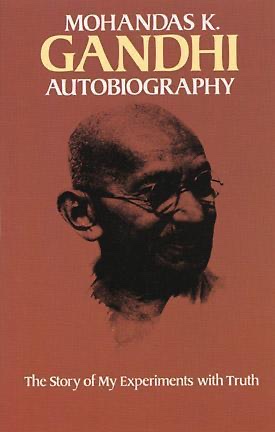 The Story of My Experiments With Truth
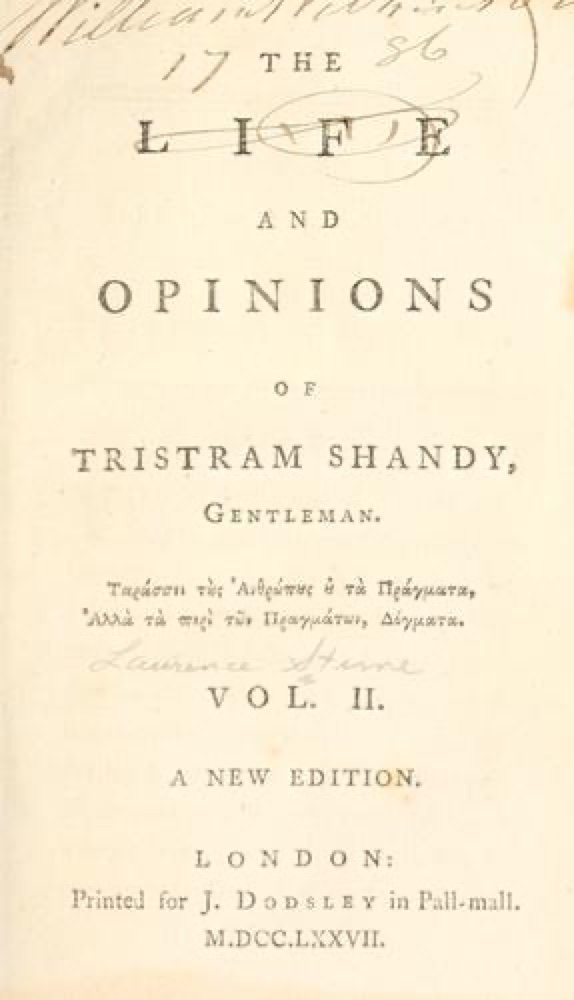 The Life and Opinions of Tristram Shandy, Gentleman
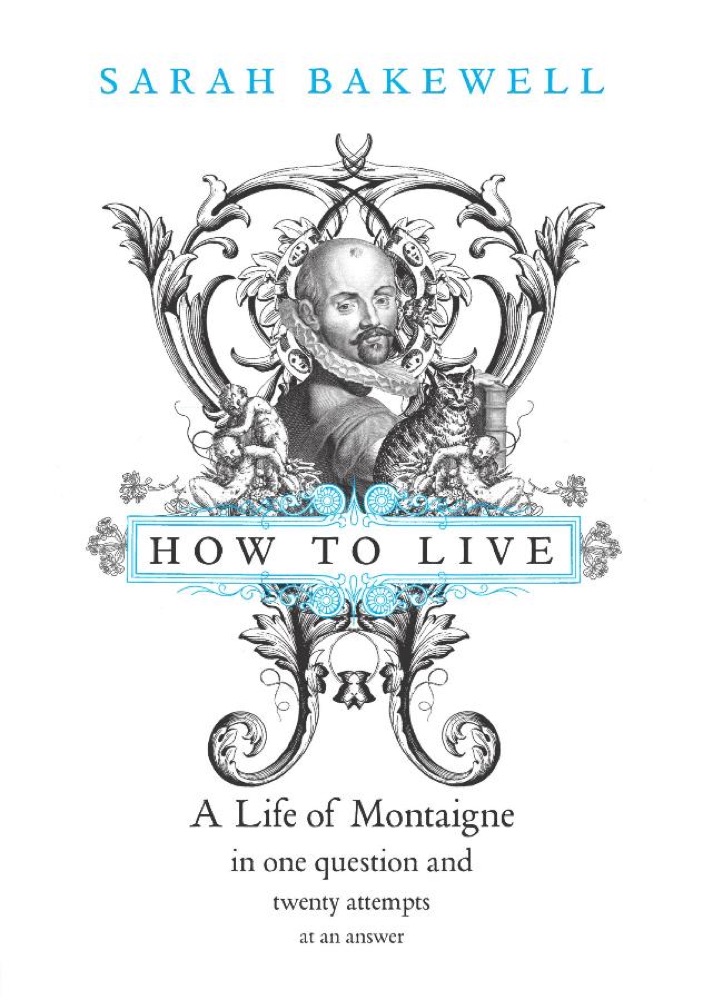 How to Live: A Life of Montaigne in One Question and Twenty Attempts at an Answer
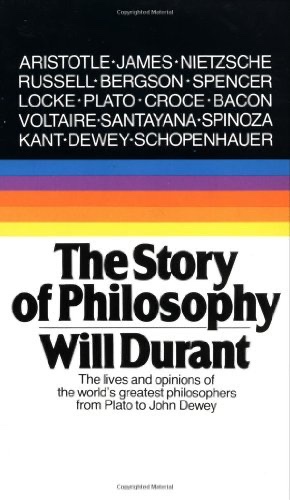 The Story of Philosophy: The Lives and Opinions of the World's Greatest Philosophers
 Elements of the Philosophy of Right
 The Spinoza Problem
 How to Use Your Enemies
 Groundwork of the Metaphysics of Morals
 On Certainty
 The World as Will and Representation, Vol 1
 The Common Reader
 The Way of All Flesh
 Complete Works
 Think: A Compelling Introduction to Philosophy
 Gorgias
 Letters to a Young Contrarian
 Discourses and Selected Writings
 The Nicomachean Ethics
 David Copperfield
 In the Light of What We Know
 The Ides of March
 Daniel Deronda
 The Schopenhauer Cure
 The Memoirs of Sherlock Holmes
 The Art of Happiness
 Erewhon
 The Swerve: How the World Became Modern
 Essays
 Discourse on the Origin of Inequality
 The Autobiography of Charles Darwin, 1809–82
 The Game of Life and How to Play It
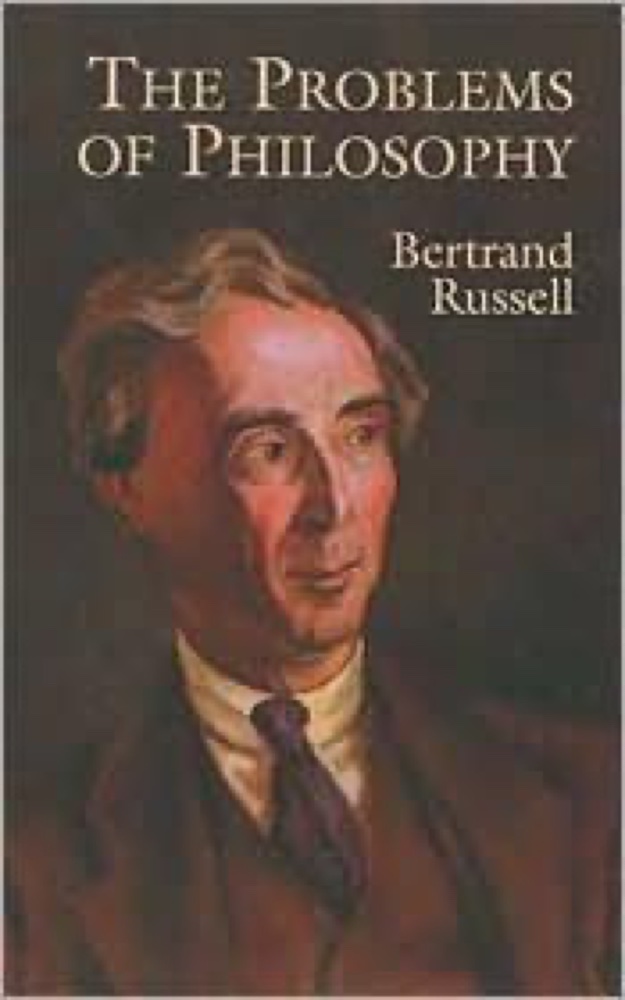 The Problems of Philosophy