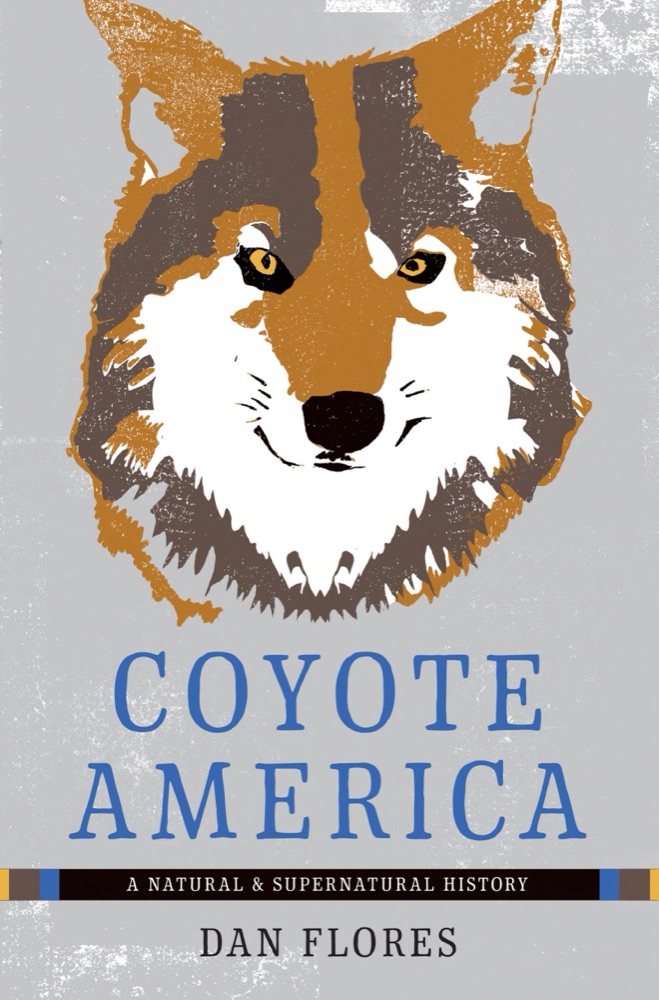
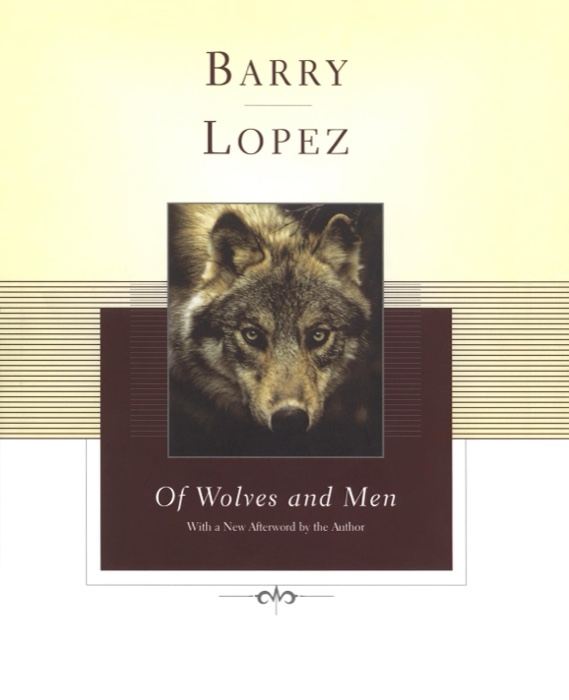
 Of Wolves and Men
Quotes from the Book
If one’s argument for civilization holds that wild predators should never roam in broad daylight through the boroughs of America’s largest, loudest, most radically urban metropolis, then, truly, the end of civilization had arrived on paw prints in the snow.
4
Coyote power: surviving by one’s own intelligence and wits when others cannot; embracing existence in a mad, dancing, laughing, sympathetic expression of pure joy at evading the grimmest of fates; exulting in sheer aliveness; recognizing our shortcomings with rueful chagrin.
3
In our twenty-first century world, the terms "genocide" and "ethnic cleansing" sit uneasily in the mind, associated with some of our darkest and most disturbing thoughts about human nature. They conjure Darfur, Serbia, Cambodia, and Pol Pot, and, most vividly of all for many of us, the horrors in Europe before and during World War II. "Species cleansing," on the other hand, is not a term that falls readily to hand, although we have engaged in it without much remorse for at least 10,000 years and probably more. Be it North American mammoths, driven to annihilation ten millennia ago by bands of a near-professional hunting culture known as Clovis ... to passenger pigeons and ivory-billed woodpeckers ... in twentieth century America, humans are ancient veterans of the art of species cleansing, ...
3
Face-to-face, the vast prairie sweeps belie your instincts about such country. Their sublimity, I think, arises from their unfathomable boundaries and their self-confident grandness of scale, combined with an echoless, calm monotony of sensory affect.
1
Coyote power: surviving by one's intelligence and wits when others cannot; embracing existence in a mad, dancing, laughing, sympathetic expression of pure joy at evading the grimmest of fates; exulting in sheer aliveness; recognizing our shortcomings with rueful chagrin. These are the values Old Man America has embodied for thousands of years.
1
Coyotes, it turns out, are also a kind of wolf. They shared a common ancestor with gray wolves down to about 3.2 million years ago, when coyote and gray wolf ancestors began to separate, first geographically, then, as distance increased, genetically.
1
[Curtis Carley, first field coordinator for the Red Wolf Recovery Program] decided early in the project that there was only one possible way of saving red wolves from genetic swamping by coyotes. Biologists were going to have to capture every red wolf remaining in the wild for placement in a captive breeding program. In effect, preserving the red wolf's purity required first bringing about its extinction in the wild and turning its former range over to coyotes and hybrids until biologists could produce enough "pure" animals, then finding a suitable protected preserve for releasing a captive-bred population into the wild again. How difficult was that? After establishing a certified breeding program for red wolves at Point Defiance Zoo in Tacoma, Washington, in 1974 and 1975, the Red Wolf Recovery team decided to examine as breeding candidates some fifty red wolves held in almost twenty zoos across the country. Using the morphology-howl criteria they had established, out of those fifty they identified but a single red wolf, a female in the Oklahoma City Zoo. They were convinced all the rest, plus their pups, were actually either coyotes or hybrids, and in the latter case the team insisted they be destroyed. When some of the shocked zoo personnel refused such a draconian order, in the name of purity Curtis Carley carried out the death sentences himself.
1
as perfect in my memory as a circle.
1
The Stephen Pinkers of the modern world have made us understand that the human senses of fairness, equity, and empathy, the fundaments of the moral code, do not in fact spring from organized religion or advanced culture but have roots in our very evolution as a social species. We are beings with brains that are endlessly taking stock of favors and slights, reciprocity and advantage. Morality did not emerge from religious teachings. Rather, religious teachings encoded a morality that sprang from human social evolution.
Meanwhile, the Internet is abuzz for a few days in 2012 with another story (it turns out to be true) from the Pacific side of the country. A California couple, cruising along at freeway speeds in the early morning on the Utah-Nevada border, drive through a pack of coyotes crossing I-80. Six hundred miles and ten hours later, unpacking the car in their driveway near Nevada City, they discover a full-grown coyote snagged like a bug in the grill of the car. Their flying coyote ornament is fully alert, with one cut on a paw and another on its muzzle. After hitchhiking from Utah to the West Coast, it is otherwise unhurt.
Coyotes may also attack cats for the same reason they attack small dogs: they perceive domestic cats and dogs as intraguild predators operating in their territories. When coyotes attack dogs or cats, they most often don't intend to eat them; they're simply ridding their territories of roaming predators.
The prime directive (in living safely with coyotes) is straightforward and delivered with an exclamation mark: For chrissake, do not feed coyotes and accustom them to associating food with humans! To avoid the most common human conflict with coyotes, don't let your cats or small dogs outside at night.
Aldo (Leopold) had argued ... for a revolutionary principle in human affairs: a recognition that other species in this world possess an innate right to existence.
The ecological niche breakthrough was critical for understanding wild coyotes and appreciating predators generally. In nature a "niche," is analagous to an occupation in human culture.
But the most old-fashioned research topic of all - an idea Western culture had known since the time of Aristotle as "the balance of nature," the presence of a dynamic equilibrium in the natural world - began to push ecological sicence in the direction of understanding the role of predators. The Biological Survey's policies (the federal predator control agency) assumed the European fold position: predators were entirely disposable, and the banishment of wolves and cougards and coyotes from America would create a civilized paradise for deer and elk and ranchers and sheepmen.
In our twenty-first-century world, the terms "genocide" and "ethnic cleansing" sit uneasily in the mind, associated with some of our darkest and most disturbing thoughts about human nature. They conjure Darfur, Servia, Cambodia and Pol Pot, and most vividly of all for many of us, the horrors in Europe before and during World War II. "Spicies cleansing," on the other hand, is not a term that falls readily to hand, although we have engaged in it without much remorse for at least 10,000 years and probably more.
We often express horror at animals that pursue and kill other animals, but such a response demonstrates a misunderstanding of our own evolutionary history. We have been a wildly successful speciesin part because of our predatory skills.
From the time the bison slaughter commenced in the 1820s, it took little more than half a century to clear the Great Plains of that ancient population of animals, which during spans of good weather must have approached 25 to 30 million animals. One effect of that species cleansing was to open up the great grasslands to domesticated animals.
Altogether, we kill about 500,000 of them (coyotes) a year in the United States.
In Denver coyotes had become an urban presence by the 1970s. Chicago, in the 1990's was next, and by roughly 200 almost every city in the united States and Canada, no matter how small and picturesque or sprawling and ear splitting, possessed a thriving population of coyotes as full-time residents.
A coyote's primary prey happens to be our close fellow travelers, the mice and rats that flourish around and among us in profusion.
then went on to add the ultimate insult for the age (and a patriotic reason for shooting them anyway): the coyote, the writer avowed, was the “ORIGINAL BOLSHEVIK.
But what, no moral code in these stories? No promise of eternal life, no salvation from death, knowledge of which forms the ancient and oppressive burden of our self awareness? Coyote stories offer up none of these things. They do proffer a firm nod to the “religion” of the wild coyote. Old Man America teaches delight in being alive in a world of wondrous possibilities.
As Chuck Jones described his antihero’s appeal years later, “Humiliation and indifference—these are conditions everyone of us finds unbearable—this is why the Coyote when falling is more concerned with the audience’s opinion of him than he is with the inevitable result of too much gravity.” Wile
We successfully eradicated the bright green and yellow Carolina parakeet, our only native parrot and one of America’s most beautiful birds (look at Audubon’s painting of them sometime) because, as with coyotes, agriculturalists thought they were pests whose lives weren’t worth the space the creatures were taking up. During this unique and
As with coyotes, as with most mammals, as with us. Epigenetics determine who we are; that mysterious interplay between our hardwired genetic selves and the experiences we have, which turn off some genes and dial up the gain on others, shapes the beings we become.
American policymakers have always needed enemies, and with wolves gone, the coyote stepped unsuspectingly into the glare
Watch on YouTube
About Dan Flores
About the book
The New York Times best-selling account of how coyotes--long the target of an extermination policy--spread to every corner of the United States
Finalist for the PEN/E.O. Wilson Literary Science Writing Award
"A masterly synthesis of scientific research and personal observation." - Wall Street Journal
Legends don't come close to capturing the incredible story of the coyote. In the face of centuries of campaigns of annihilation employing gases, helicopters, and engineered epidemics, coyotes didn't just survive, they thrived, expanding across the continent from Alaska to New York. In the war between humans and coyotes, coyotes have won, hands-down. Coyote America is the illuminating five-million-year biography of this extraordinary animal, from its origins to its apotheosis. It is one of the great epics of our time.
Book details
- First published
- 2016
- Author
- Dan Flores
- Genre
- Nonfiction
- Goodreads rating
- 4.08 (8k ratings)
The buzz
- The Wall Street JournalReview in The Wall Street Journalprofessional review (via Book Marks)
- SeattletimesReview in Seattletimesprofessional review (via Book Marks)
- CsmonitorReview in Csmonitorprofessional review (via Book Marks)
Keep reading
Of Wolves and Men
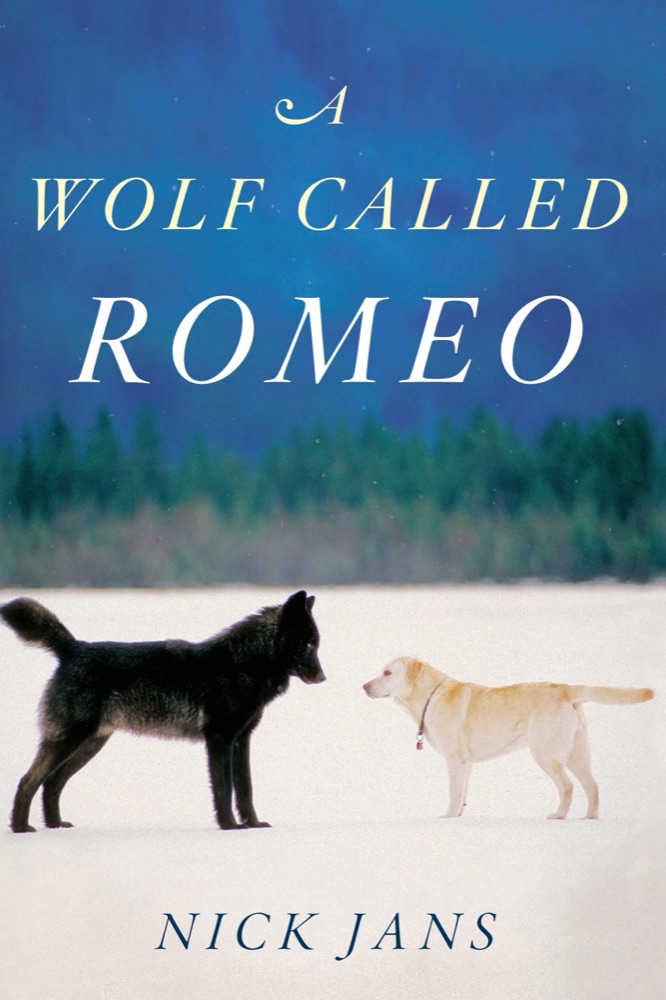 A Wolf Called Romeo
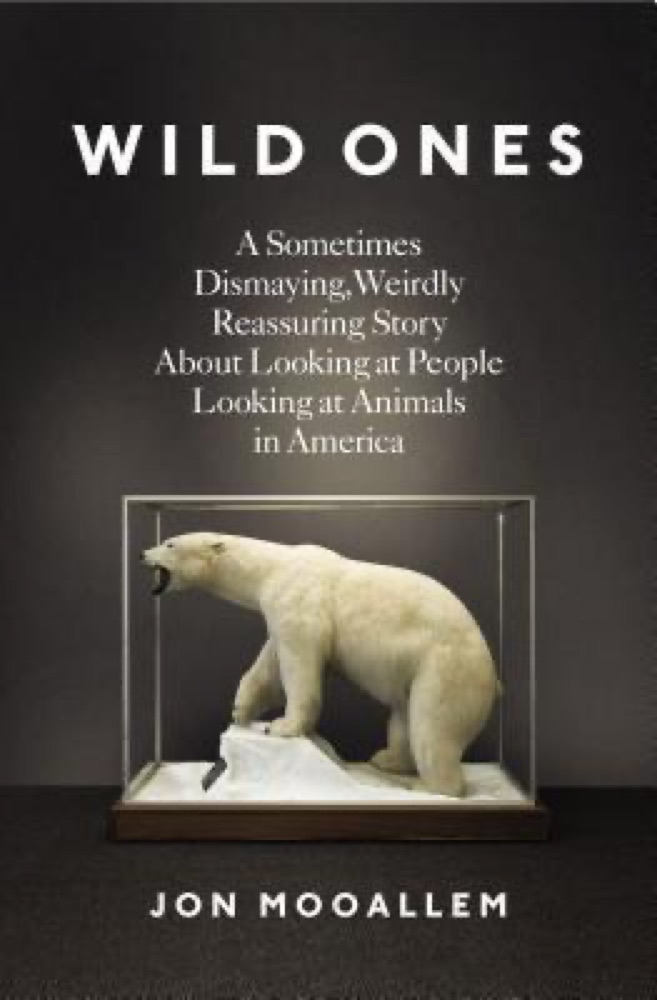 Wild Ones: A Sometimes Dismaying, Weirdly Reassuring Story About Looking at People Looking at Animals in America
 Shadows of Forgotten Ancestors
 Fuzz: When Nature Breaks the Law
 Vanishing Treasures: A Bestiary of Extraordinary Endangered Creatures
 Never Cry Wolf
 Beyond Words: What Animals Think and Feel
 The Third Chimpanzee: The Evolution and Future of the Human Animal
 Devolution: A Firsthand Account of the Rainier Sasquatch Massacre
 Martin Marten
 The Log from the Sea of Cortez
 The Genius of Birds
 The Unexpected Truth About Animals: A Menagerie of the Misunderstood
 Turtle Island
 A Short History of Progress
 Inside of a Dog: What Dogs See, Smell, and Know
 Elephant Whisperer
 The Tiger: A True Story of Vengeance and Survival
 Undeniable: Evolution and the Science of Creation
 Billions & Billions: Thoughts on Life and Death at the Brink of the Millennium
 Why We Run: A Natural History
 The Fresco
 Maelstrom
 The Inconvenient Indian: A Curious Account of Native People in North America
 Arctic Dreams
 Endgame, Vol. 1: The Problem of Civilization
 The Plague Dogs
 The World Without Us
 Merle's Door: Lessons from a Freethinking Dog
 Feral: Rewilding the Land, the Sea and Human Life
 Savage Run
 Semiosis
 1491: New Revelations of the Americas Before Columbus
 Silent Spring
 Guns, Germs, and Steel: The Fates of Human Societies
 Voyage of the Beagle
 The Sheep Look Up
 The Great Influenza: The Story of the Deadliest Pandemic in History
 Last Chance to See
 The Western Lands
 Creation Lake
 Cannibalism: A Perfectly Natural History
 Are We Smart Enough to Know How Smart Animals Are?
 Echopraxia
 Ripple
 Animal Liberation
 The Lost World
 The Social Conquest of Earth
 The Forest Unseen: A Year’s Watch in Nature
 Wanderers
 Fifteen Dogs
 Falter: Has the Human Game Begun to Play Itself Out?
 Animals Make Us Human: Creating the Best Life for Animals
 The Sixth Extinction: An Unnatural History
 Wesley the Owl: The Remarkable Love Story of an Owl and His Girl
 Watership Down
 The Last Days of the Dinosaurs: An Asteroid, Extinction, and the Beginning of Our World
 Four Fish: The Future of the Last Wild Food
 Some We Love, Some We Hate, Some We Eat: Why It's So Hard to Think Straight About Animals