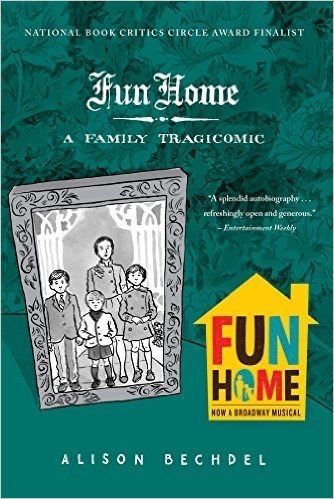
 Fun Home: A Family Tragicomic
Quotes from the Book
In this pause, I suddenly saw something very clearly. Whatever it was I wanted from my mother was simply not there to be had. It was not her fault. And it was therefore not my fault that I was unable to elicit it.
40
In a narcissistic cathexis, you invest more energy into your ideas about another person than in the actual, objective, external person. So the man who falls in love with beauty is quite different from the man who loves a girl and feels she is beautiful and can see what is beautiful about her.
39
It's our very capacity for self-consciousness that makes us self-destructive!
22
If it weren't for the unconventionality of my desires, my mind might never have been forced to reckon with my body.
22
The writer's business is to find the shape in unruly life and to serve her story. Not, you may note, to serve her family, or to serve the truth, but to serve the story.
19
I am not ultimately interested in writing fiction. I can't make things up. Or rather, I can only make things up about things that have already happened.
11
Your unconscious wants to express the pain you feel about your own lost innocence. But your ego wants to keep it repressed. To the compromise is anxiety.
7
In one way, what I saw in those mirrors was the self trapped inside the self, forever. But in another way, the self in the mirror was opening out, in an infinite unfurling. I am the one whose drive is being thwarted. And I am the one who is thwarting it.
6
On our second date, she kissed me in a bar. I invited her home. We just caught the F train, which seemed like a good omen.
6
There was a certain thing I did not get from my mother. There is a lack, a gap, a void. "How's that?" But in it's place, she has given me something else. Something, I would argue, that is far more valuable. "I think I can get up now." She has given me the way out.
5
Alice Miller writes that the child who suppresses his own feelings in order to accomodate a parent has been, in a sense, abandoned. 'Later, when these feelings of being deserted begin to emerge in the analysis of the adult, they are accompanied by such intensity of pain and despair that it is quite clear that these people could not have survived so much pain. That would only have been possible in an empathic, attentive environment, and this they lacked. [as quoted by Alice Miller]' She also says that the mother who requires accommodation from her child is just trying to get what her own mother refused her.
5
I have never read Sylvia Plath. My mother has never read Virginia Woolf. In general, we have stayed out of one another's way like this.
5
Psychoanalytic insight, Miller seems to suggest, is itself a pathological symptom.
5
Language gets very confusing as it approaches this place where outside and inside touch.
4
Every one' of the psychoanalytic trainees she [Alice Miller] has supervised has the same history: An insecure parent who did not appear to be insecure, but who depended on the child behaving in a particular way. And an 'amazing ability' on the part of the child to perceive this and take on the assigned role. "This role secured 'love' for the child-that is, his parents' narcissistic cathexis. He could sense he was needed and this, he felt, guaranteed him a measure of existential...[as quoted by Alice Miller]
4
I guess I felt like I'd failed her [by throwing up]. She had so many demands on her...The one thing she needed from me was that I not need anything from her [Bechdel's mother].
3
Maybe the mother manages to be a mirror only part of the time. In such 'tantalizing' cases, some babies learn to withdraw their own needs when the mother's are evident.
3
I put the odds on a psychic deathmatch between Attila the Hun and Virginia Woolf at fifty-fifty.
3
I don't think your family was a very safe place to be a little girl.
2
Here's the vital core of Winnicott's theory: The subject must destroy the object. And the object must survive this destruction. If the object doesn't survive, it will remain internal, a projection of the subject's self. If the object survives destruction, the subject can see it as separate.
2
Your anxiety attach in the church sounds like a compromise formation. A what? Your unconscious wants to express the pain you feel about your own lost innocense. But your ego wants to keep it repressed. So the compromise is anxiety.
2
I remember feeling very angry at Betty Friedan." AB: What? Why? "Well... she hated housework and wanted women to be independent, but then she's hire other women to do her housework.
2
You can't live and write at the same time.
2
In his 1964 talk on feminism, Winnicott says something he's been saying all along. "...We find that the trouble is not so much that everyone was inside and then born, but that at the very beginning everyone was dependent on a woman." Winnicott sees this dependence as the root of misogyny--though he never uses that word. Perhaps, like Woolf with "feminism," he felt plain language was more persuasive. "The awkward fact remains, for men and women, that each was once dependent on a woman, and somehow a hatred of this has to be turned into a kind of gratitude if full maturity of the personality is to be reached.
2
The idea that our unconscious possesses such sure aim excited me. I became more attuned to my own erroneously carried out actions.
2
At thirteen, I was so paralyzed with self-consciousness that sometimes I'd get home from school and realize I hadn't spoken out loud all day. Later, I would blame my social awkwardness on my homosexuality. But now I speculate that being a lesbian actually saved me... If it weren't for the unconventionality of my desires, my mind might never have been forced to reckon with my body.
1
I'm sure these things are true. But the way she says them feels like an implied criticism. As if she's comparing her own selflessness to my self-absorption. But of course that's just evidence of my self-absorption. My mother is probably not thinking anything like this. In fact, my desire to think that she's thinking of me at all is a bit pathetic.
1
This is one of my difficulties now... my fear that Mom will find this memoir about her "angry." Another difficulty is the fact that the story of my mother and me is unfolding even as I write it.
1
But, Jocelyn, if I really were all those things [good, kind, talented, hard working, open to change, and adorable]... ...I would die.' I wasn't sure what I meant by this, but it suddenly struck me as the truth. 'Because you'd rather die than feel anger at your mother for not giving you what you needed?
1
Whatever was going on between my parents, I suppose that my fantasy of self-sufficiency, my heavy investment in my own mind, is also a kind of narcissistic cathexis.
1
Watch on YouTube
About Alison Bechdel
We have collected 64 quotes from 3 books by Alison Bechdel on BookQuoters.
More about the author →More by Alison Bechdel
Fun Home: A Family Tragicomic
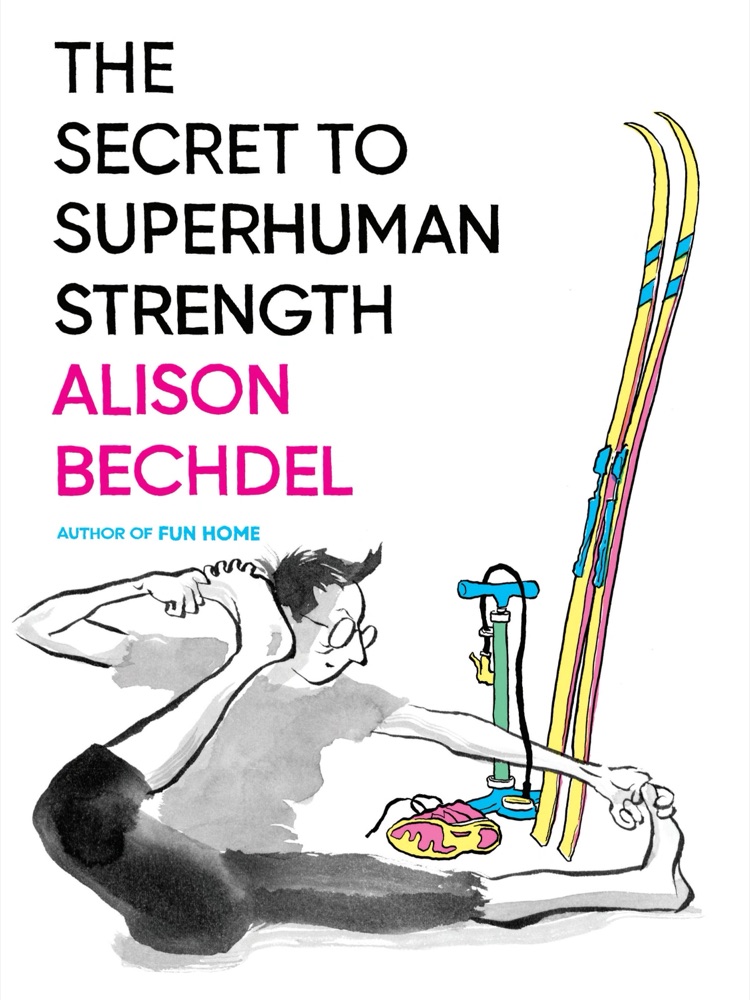 The Secret to Superhuman Strength
About the book
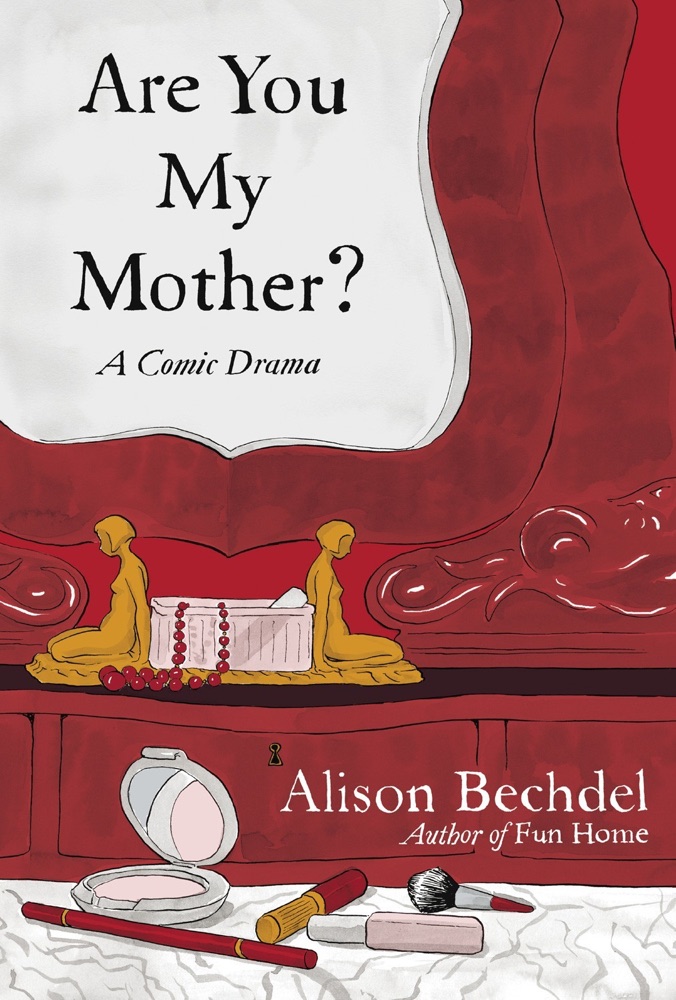
A graphic memoir of Alison Bechdel becoming the artist her mother wanted to be.Alison Bechdel’s Fun Home was a pop culture and literary phenomenon. Now, a second thrilling tale of filial sleuthery, this time about her mother: voracious reader, music lover, passionate amateur actor. Also a woman, unhappily married to a closeted gay man, whose artistic aspirations simmered under the surface of Bechdel's childhood . . . and who stopped touching or kissing her daughter good night, forever, when she was seven. Poignantly, hilariously, Bechdel embarks on a quest for answers concerning the mother-daughter gulf. It's a richly layered search that leads readers from the fascinating life and work of the iconic twentieth-century psychoanalyst Donald Winnicott, to one explosively illuminating Dr. Seuss illustration, to Bechdel’s own (serially monogamous) adult love life. And, finally, back to Mother—
Book details
- First published
- 2012
- Author
- Alison Bechdel
- Genre
- Biography
- Goodreads rating
- 3.71 (36k ratings)
Keep reading
 Things I Don't Want to Know
 Hot Milk
 Milk Fed
 The Lost Daughter
 The Rules Do Not Apply
 Good Morning, Destroyer of Men's Souls: A Memoir of Women, Addiction, and Love
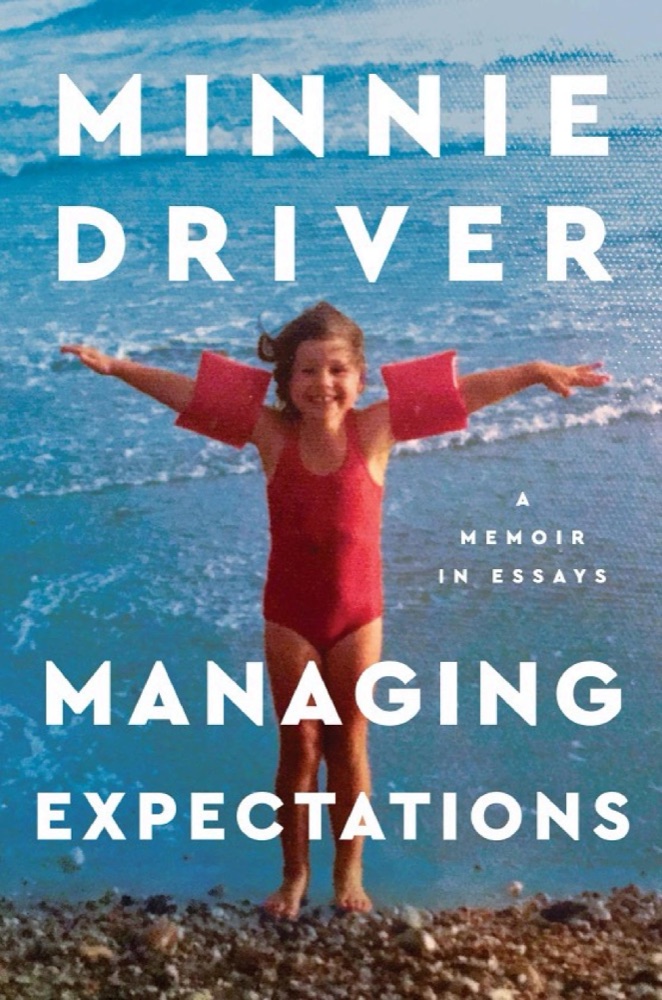 Managing Expectations: A Memoir in Essays – A Poignant Collection of Personal Stories on Acting, Failure, and Motherhood's Joy
 The Folded Clock: A Diary
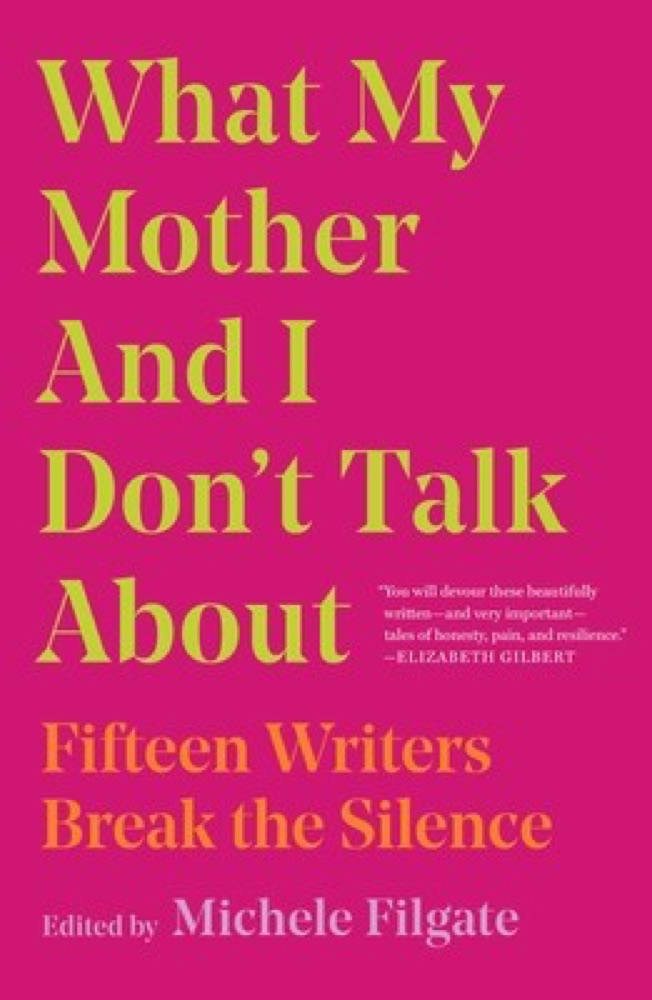 What My Mother and I Don't Talk About: Fifteen Writers Break the Silence
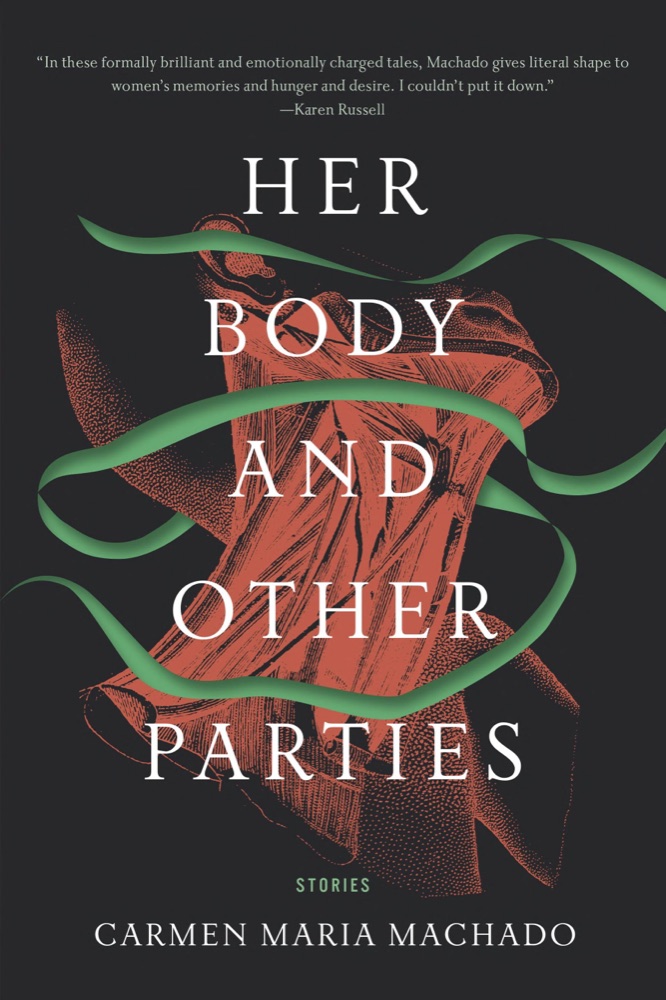 Her Body and Other Parties
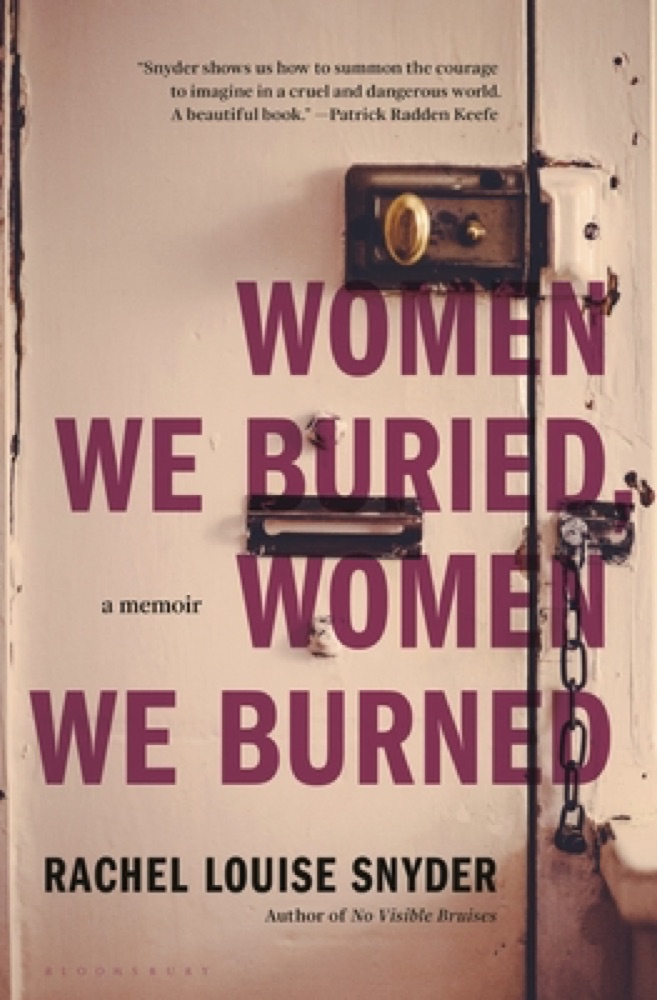 Women We Buried, Women We Burned: A Memoir
 Somebody's Daughter
 Bluebeard's Egg
 Em and The Big Hoom
 The Reader
 Aftermath: On Marriage and Separation
 The Cost of Living: A Working Autobiography
 The House of My Mother: A Daughter's Quest for Freedom
 The Argonauts
 The Golden Notebook
 To Throw Away Unopened
 Wild Game: My Mother, Her Lover, and Me
 Glitter and Glue
 Parade
 Erasure
 Joan Is Okay
 Committed: On Meaning and Madwomen
 All Fours
Fun Home: A Family Tragicomic
All Fours
Fun Home: A Family Tragicomic
 In the Dream House
 Those Who Leave and Those Who Stay
 The Chronology of Water
 Sybil: The Classic True Story of a Woman Possessed by Sixteen Personalities
 Burnt Sugar
 Anthropology of an American Girl
 Devotion
 Too Much Happiness: Stories
 Moments of Being: A Collection of Autobiographical Writing
![What Was She Thinking? [Notes on a Scandal]](/i/book/g/08/what-was-she-thinking-notes-on-a-scandal.jpg) What Was She Thinking? [Notes on a Scandal]
What Was She Thinking? [Notes on a Scandal]
 I Love Dick
 Notes To Self
 Banyan Moon
 The Crane Wife: A Memoir in Essays
 A Small Indiscretion
 The Collected Stories of Lydia Davis
 I'm Supposed to Protect You from All This
 They're Going to Love You
 Giving Up the Ghost
 The Marvelous Misadventures of Ingrid Winter
 Anita de Monte Laughs Last
 The Idiot
 Mother Mary Comes to Me
 Outline
 Old Babes in the Wood: Stories
 Heart Berries
 Girl with Curious Hair
 Fear of Flying
 Lit
Lit
 What Is Not Yours Is Not Yours