 Min kamp 2
Quotes from the Book
In fact I had no such interest, but I knew it was wrong to do things just because other people did. Other people couldn't be the reason why you did anything.
17
It had never occurred to me to think of aesthetics and ethics as opposites. I thought ethics were aesthetic. “Ethics” meant the golden rule, which was basically an aesthetic rule. That’s why it was called “golden,” like the golden ratio.
17
Moreover, my policy at the time was that, when confronted by two courses of action, one should always choose the less conservative and more generous. I thought this was tantamount to a moral obligation for anyone who had any advantages at all, and especially for anyone who wanted to be a writer.
15
Misty frozen rain was whirling around as I left the building and walked back to the shuttle stop. The shuttle was somewhat less overcrowded than usual. I didn't get a seat but I had enough room to take out my Walkman, and occasionally I could see between people's heads out the window, and this made me cheerful. It was weird what was enough to make you feel good or bad, even though your basic life circumstances were the same.
13
but at the end of class, I still felt slightly annoyed towards Ivan, the way you feel towards someone in real life after they say something mean to you in a dream. Instead of taking the stairs with him as usual, I took the elevator.
13
It’s hard to be sincere without sounding pretentious,” she said. “I mean, what are you supposed to do if you really happen to feel like you’ve swallowed the universe? Not say so?
12
Europe was so small. It seemed weird that people took it so seriously.
12
It can be really exasperating to look back at your past. What’s the matter with you? I want to ask her, my younger self, shaking her shoulder. If I did that, she would probably cry. Maybe I would cry, too. It would be like one of those Marguerite Duras books I tried to read in Svetlana’s aunt’s apartment. Elle pleure. Il pleure. Ils pleurent, tous les deux.
12
Dracula visited the Wolf Department at the Zoological Gardens. "These wolves seem upset at something," he observed. The next morning the cage was all twisted out of shape and the gray wolf Berserker was missing. Dracula had temporarily inherited its body. Dracula had a totally difference experience at the zoo from that of other people.
12
It seems to me that your sense of other people’s awfulness might be compensating for your own sense of inferiority and fear of rejection. You rationalize the rejection of your peers by telling yourself it comes from other people’s deficiencies rather than your own. They can’t understand your philosophy or your ideas.
11
For a while now, I have been conscious of a tension in my relationship with you,” Svetlana said. “And I think that’s the reason. It’s because we both make up narratives about our own lives. I think that’s why we decided not to live together next year. Although obviously it’s also why we’re so attracted to each other.” “Everyone makes up narratives about their own lives.” “But not to the same extent. Think about my roommates. Fern, for example. I don’t mean that she doesn’t have an inner life, or that she doesn’t think about the past or make plans for the future. But she doesn’t compulsively rehash everything that happens to her in the form of a story. She’s in my story – I’m not in hers. That makes her and me unequal, but it also gives our relationship a kind of stability, and safeness. We each have our different roles. It’s like an unspoken contract. With you, there’s more instability and tension, because I know you’re making up a story, too, and in our story, I’m just a character.” “I don’t know,” I said. “I still think everyone experiences their own life as a narrative. If you didn’t have some kind of ongoing story in mind, how would you know who you were when you woke up in the morning?” “That’s a weak definition of narrative. That’s saying that narrative is just memory plus causality. But, for us, the narrative has aesthetics, too.” “But I don’t think that’s because of our personalities,” I said. Isn’t it more about how much money our parents have? You and I can afford to pursue some narrative just because it’s interesting. You could go to Belgrade to come to terms with your life before the war, and I could go to Hungary to learn about Ivan. But Fern has to work over the summer.” “...Fern is just an example. Valerie’s parents are engineers, she doesn’t have to work, but she’s still more like Fern than she is like us” “I don’t know,” I said. “I guess it feels elitist to look at it that way.” “Don’t you think you pretending not to be elitist is disingenuous?” Svetlana said. “If you really think about who you are, and what you value?
10
I told him my theory. Most people, the minute they met you, were sizing you up for some competition for resources.
10
But to me it seemed that one had always been midway the journey of our life, and would be maybe right up until the moment of death. •
10
Ivan, Ivan. He got up in the morning, put on some clothes he got from somewhere, drank his orange juice, and went out into the world of chalkboards and motorcycles. He could be really arrogant sometimes. His jeans were always too short, and he thought clowns had something complicated to teach us about human fallibility. And still no waking moment went by that I didn’t think of him — he was in the background of everything I thought. My own perceptions were no longer enough to constitute the physical world for me. Every sound, every syllable that reached me, I wanted to filter through his consciousness.
9
He asked if I had liked the book in English. I wondered whether to lie. "No," I said. "Maybe I should read it again." "Uh-huh," Ivan said. "So that's how it works for you?" "How what works?" "You read a book and don't like it, and then you read it again?
9
Svetlana said that I thought of myself as a robot who could act only negatively. She said I had cynical ideas about language. “You think language is an end in itself. You don’t believe it stands for anything. No, it’s not that you don’t believe—it’s that you don’t care. For you, language itself is a self-sufficient system.” “But it is a self-sufficient system.” “Do you see what you’re saying? This is how you get yourself involved with the devil incarnate. Ivan sensed this attitude in you. He’s cynical in the same way you are only more so, because of math. It’s like you said: math is a language that started out so abstract, more abstract than words, and then suddenly it turned out to be the most real, the most physical thing there was. With math they built the atomic bomb. Suddenly this abstract language is leaving third-degree burns on your skin. Now there’s this special language that can control everything, and manipulate everything, and if you’re the elite who speaks it—you can control everything. “Ivan wanted to try an experiment, a game. It would never have worked with someone different, on someone like me. But you, you’re so disconnected from truth, you were so ready to jump into a reality the two of you made up, just through language. Naturally, it made him want to see how far he could go. You went further and further—and then something went wrong. It couldn’t continue in the same way. It had to develop into something else—into sex, or something else. But for some reason, it didn’t. The experiment didn’t work. But by now you’re so, so far from all the landmarks. You’re just drifting in space.
9
Nothing extraordinary was happening anymore, or would ever happen again. I was just there with my relatives, living pointless, shapeless days that weren't bringing me any closer to anything. It seemed to me that this state of affairs was a relief to my mother. From her perspective, I thought, the past weeks had been a perilous, temporary adventure, something to be endured, and now things were back to normal. It was painful to feel at such a cross-purposes with her. Almost everything that was interesting or meaningful in my story was, in her story, a pointless hazard or annoyance. This was even more true with my aunts. They didn't take anything I did seriously; it was all some trivial, mildly annoying side activity that I insisted on for some reason, having nothing to do with real life. I couldn't challenge or contradict this view, even to myself, because I really didn't know how to anything real. I didn't know how to move to a new city, or have sex, or have a real job, or make someone fall in love with me, or do any kind of study that wasn't just a self-improvement project. For the first time in my life, I couldn't think of anything I particularly wanted to study or to do. I still had the old idea of being a writer, but that was being, not doing. It didn't say what you were supposed to do.
9
[it was not a] circle—just a concrete platform with a pay phone and a sign that read EUCLID CIRCLE. I thought Euclid would have been mad. “That’s so typical of your attitude,” Svetlana said. “You always think everyone is angry. Try to have some perspective. It’s over two thousand years after his death, he’s in Boston for the first time, they’ve named something after him—why should his first reaction be to get pissed off?
9
There was a poem with that mood by Pasternak: “Don’t sleep, don’t sleep, artist.” It sounded better in Russian, because the word for “artist” had three syllables, it was an amphibrach, like “spaghetti,” or “appendix.” Don’t sleep, don’t sleep, gorilla, I thought as I went down the elevator to the subway platform.
9
It was weird what was enough to make you feel good or bad, even though your basic life circumstances were the same.
9
The eternal pauper in the great marketplace of ideas and of the world, I had nothing to teach anyone. I didn’t have anything anyone wanted.
8
How did you separate where someone was from, from who they were?
8
In the rearview mirror I saw Ivan half running behind the car, and I felt despair and envy. Of course he couldn't love me, not when I lived through so many layers, when I was spooked by Montmartre, and wore a seat belt in order to steer a car out of a ditch.
8
For dinner she made a soup called “boy-catching soup” and a cake called “mother-in-law cake.” These two dishes seemed to sum up a whole worldview of entrapment and placation.
8
knew I thought differently in Turkish and in English—not because thought and language were the same, but because different languages forced you to think about different things. Turkish,
8
For the first time in my life, I couldn't think of anything I particularly wanted to study or to do. I still had the old idea of being a writer, but that was being, not doing. It didn't say what you were supposed to do.
7
Anna Karenina was about how there were two kinds of men: men who liked women (Vronsky, Oblonsky) and men who didn’t really like women (Levin). Vronsky made Anna feel good about herself, at first, because he loved women so much, but he didn’t love her in particular enough, so she had to kill herself. Levin, by contrast, was awkward, boring, and kind of a pain, seemingly more interested in agriculture than in Kitty, but in fact he was a more reliable partner, because in the bottom of his heart he didn’t really like women. So Anna made the wrong choice and Kitty made the right choice.
7
I tried to hang out with my peer group, Defne, Murat and Yudum, but was unable to assimilate myself to their mode of being. They seemed always to be waiting for something, for the removal of some obstacle-- for a business to open, for the sun to move, or for someone to come back from going to get something. Whenever they actually did anything, like go in the water, eat lunch, or walk somewhere, they did it in an abstracted, halfhearted way, as if to show that this was just a side diversion from the main business of waiting. All they talked about was when the thing they were waiting for was going to happen, But whenever that thing did happen, nothing seemed to change. The sense of provisionality was the same, it just gradually found a new object.
7
There is no suffering if you don’t want anything.
7
Lighting a match felt exciting and a little bit dangerous, and when the flame came into contact with the paper, it made a sound like the needle coming down on a record player—like the music was about to start.
7
Did you know?
- The novel's title is a reference to Fyodor Dostoevsky's novel The Idiot.
- It is semi-autobiographical, drawing on Batuman's own experience as a Harvard undergraduate in the mid-1990s.
- Much of the relationship between Selin and Ivan unfolds over email, then a brand-new technology.
- Batuman published a sequel, Either/Or, in 2022, continuing Selin's story.
- It was a finalist for the 2018 Pulitzer Prize for Fiction.
About Elif Batuman
Elif Batuman is a Turkish American writer who has been a staff writer at The New Yorker since 2010. She is also the author of the essay collection The Possessed (2010), and The Idiot was her first novel.
More about the author →About the book
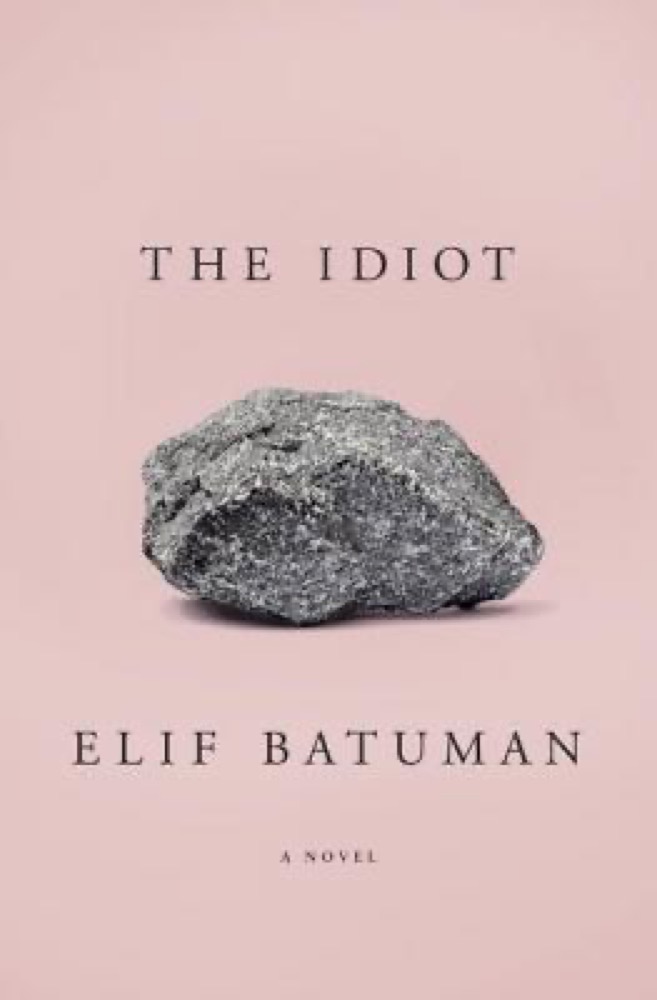
The Idiot is Elif Batuman's debut novel, a coming-of-age story set in 1995 that follows Selin Karadag, the daughter of Turkish immigrants, through her freshman year at Harvard. Selin signs up for classes in subjects she has never heard of, befriends a worldly classmate named Svetlana, and begins an oblique email correspondence with Ivan, an older Hungarian mathematics student. Over the following summer she travels to Paris and then to a remote village in Hungary to teach English, a decision driven partly by her unresolved feelings for Ivan.
Largely plotless by design, the book is preoccupied with language, meaning, and the gap between what words say and what they mean. Its title nods to Dostoevsky's novel of the same name, and Batuman has noted that both concern naive protagonists pursuing unfortunate romantic relationships. Through Selin's deadpan, observational narration the novel explores the disorientation of early adulthood, the awkwardness of intellectual and romantic ambition, and the transition from an analog world of letters to the new medium of email.
Published by Penguin Press in 2017, the semi-autobiographical novel was a finalist for the 2018 Pulitzer Prize for Fiction and was shortlisted for the Women's Prize for Fiction. Critics praised its wit and precise observation while some found its protagonist deliberately distant; NPR described it as capturing the humiliating but vibrant confusion of late adolescence. Batuman, a longtime staff writer at The New Yorker, later continued Selin's story in a 2022 sequel, Either/Or.
Key characters
- Selin KaradagThe protagonist, a Turkish American Harvard freshman studying linguistics
- IvanAn older Hungarian mathematics student Selin corresponds with and is drawn to
- SvetlanaSelin's worldly college friend who travels with her to Paris
Book details
- First published
- 2017
- Length
- 423 pages
- Reading time
- 8 hours
- Author
- Elif Batuman
- Genre
- Fiction
- Goodreads rating
- 3.64 (112k ratings) →
- First line
- “I didn't know what email was until I got to college.”
Critical reception
- Finalist for the 2018 Pulitzer Prize for Fiction.
- Shortlisted for the Women's Prize for Fiction.
- NPR described the novel as encapsulating the humiliating but vibrant confusion of late adolescence.
- Some critics, including The New York Times, praised its observations while finding the protagonist deliberately distant.
Series & reading order
- 1 The Idiot
- 2 Either/Or
If you liked this, read…
- 1Either/OrBatuman's own sequel continuing Selin's college years
- 2Normal PeopleAnother cerebral coming-of-age story about miscommunication in young love
- 3Conversations with FriendsShares the wry, intellectual voice and emotional restraint of a literary debut
Keep reading
Min kamp 2
 Conversations with Friends
 Purity
 Too Much Happiness: Stories
 Milkman
 Anthropology of an American Girl
 Selected Stories of Anton Chekhov
 The Story of the Lost Child
 The Go-Between
 Selected Stories
 The Story of a New Name
 The Golden Notebook
 The Buddha of Suburbia
 Outline
 The Rachel Incident
 The Dud Avocado
 Those Who Leave and Those Who Stay
 The Folded Clock: A Diary
 Almond
 The Wind-Up Bird Chronicle
 Prep
Prep
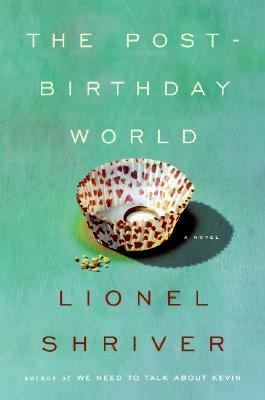 The Post-Birthday World
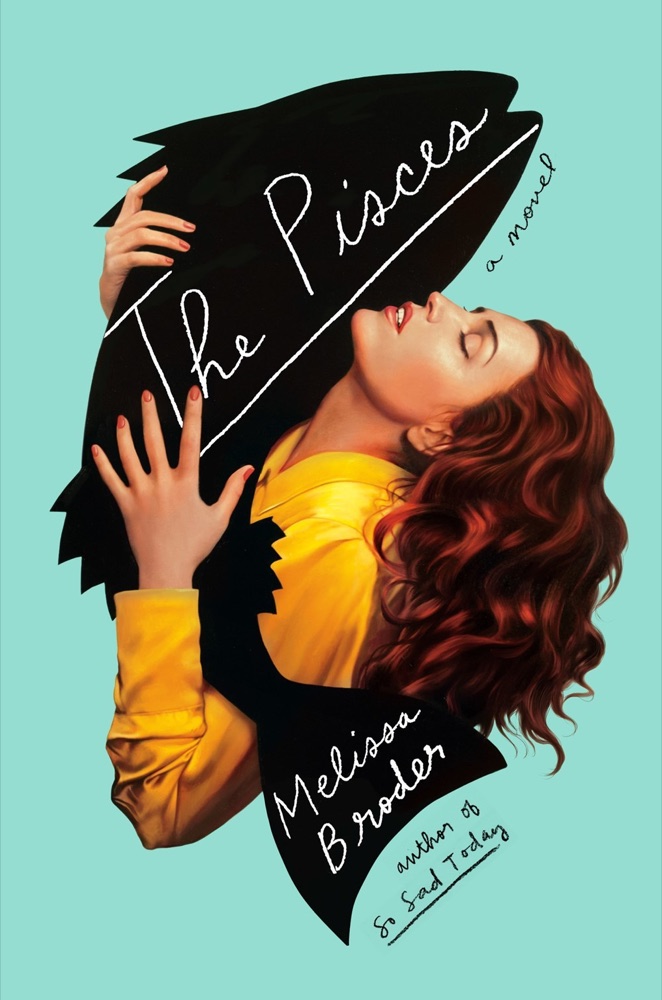 The Pisces
 The First Bad Man
 One Hundred Names
 Erasure
 The Mandarins
 Tell No One
 Stories of Your Life and Others
 Anita de Monte Laughs Last
 Jailbird
 Dream Count
 The Beginning of Everything
 Where Things Come Back
 Milk Fed
 Anagrams
 Homesick for Another World
 East of the West: A Country in Stories
 The Book of My Lives
 What I Loved
 Giovanni's Room
 NW
NW
 Singin' and Swingin' and Gettin' Merry Like Christmas
 Swimming in the Dark
 Hemlock & Silver
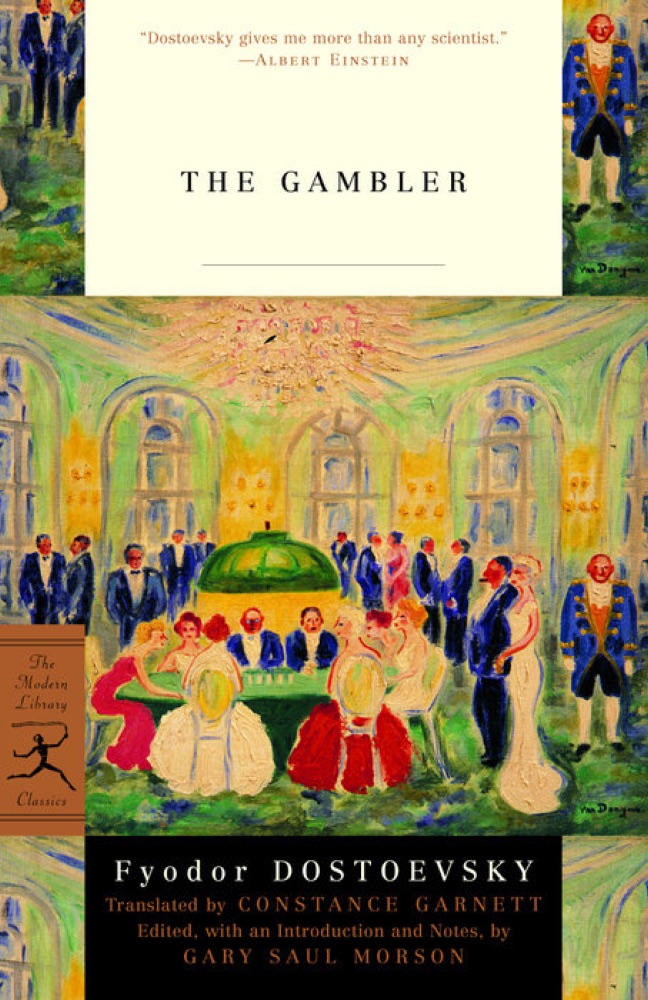 The Gambler
 Family Life
 All the Lovers in the Night
 A Small Indiscretion
 Speedboat
 The Muse
 The Manticore
 Underdog
 The Reader
 Fifth Business
 Em and The Big Hoom
 Parade
 The Swan Thieves
 The Discomfort Zone: A Personal History
 Joan Is Okay