
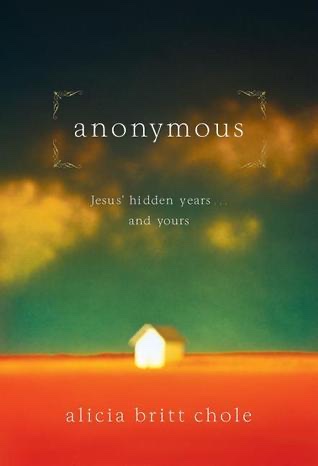
 Anonymous: Jesus hidden years and yours
Quotes from the Book
Christian spirituality, the contemplative life, is not about us. It is about God. The great weakness of American spirituality is that it is all about us: fulfilling our potential, getting the blessings of God, expanding our influence, finding our gifts, getting a handle on principles by which we can get an edge over the competition. The more there is of us, the less there is of God. —EUGENE PETERSON
4
We are not necessarily doubting that God will do the best for us; we are wondering how painful the best will turn out to be.” —C. S. Lewis (1898–1963)3
3
Lent is a much-needed mentor in an age obsessed with visible, measurable, manageable, and tweetable increase, for it invites us to walk with Jesus and His disciples through darker seasons that we would rather avoid: grief, conflict, misunderstanding, betrayal, restriction, rejection, and pain. Then Easter leads us in celebration of salvation as the stunningly satisfying fruit of Jesus’ sacred decrease.
2
The purpose of Lent is not to force on us a few formal obligations, but to ‘soften’ our heart so that it may open itself to the realities of the spirit, to experience the hidden ‘thirst and hunger’ for communion with God.
2
When He calls us to fast strength—when He drafts us into decrease—God’s purposes are clear: Remember how the LORD your God led you all the way in the wilderness these forty years, to humble you and to test you in order to know what was in your heart, whether or not you would keep his commands. He humbled you, causing you to hunger and then feeding you with manna, which neither you nor your ancestors had known, to teach you that man does not live on bread alone but on every word that comes from the mouth of the LORD. (Deuteronomy 8:2
2
Holy gets angry. So does this mean we need to buy ropes and start making whips? No. But perhaps we need to stop hiding safely behind hashtag campaigns and instead show up and speak out.
1
There must have been a problem, we offer. God must have something even better around the corner, we propose. Must He? Here, then is my Lenten plea for the day: let the mourning mourn. Grant those who grieve the dignity to ask questions. Bestow upon the bewildered permission to not edit their honesty. Crucifixion is, after all, serious work.
1
Deserts unclutter the soul. The hot desert sun vaporizes all manner of luxuries. Then the cold, shelterless nights expose the essential guts of life. I needed to eat, to sleep, to be protected, and to not be alone. Lent had come half a year early. God asked me to fast mental and physical strength. He invited me into holy weakness. I found Jesus there.
1
Regret empties anticipation, flattens dreams, and suffocates hope, because regret is a form of self-punishment. Whereas hindsight helps us learn from the past, regret beats us up with the past. So for one entire day (or go for forty), I invite you to fast regret. Do not feed it. Do not give it space. Let it go: God’s mercies are “new every morning” (Lamentations 3:23). And meditate on Jesus’ glorious promise from Revelation 21:5: “I am making everything new!
1
Jesus lived a truly uncluttered life and died a focused, eternally fruitful death. How I long to follow His example.
1
The question asked is not, ‘What should be happening in my life?’ but ‘What is happening in my life?’ The present moment, the present set of circumstances, the present relationships in our lives—this is where God lives. This is where God meets us and gives us life.” — ALICE FRYLING
God needs nothing, asks nothing, and demands nothing, like the stars. It is life with God which demands these things. . . . You do not have to sit outside in the dark. If, however, you want to look at the stars, you will find that the darkness is necessary. But the stars neither require nor demand it.” — ANNIE DILLARD1
the disciples’ illusions of what Jesus could and should do with His power were shattered by the reality of what Jesus actually did with His power, and their personal illusions of commitment-unto-death were shattered by the reality of fear-inspired self-protection.
We all guard against sins of commission and we are vigilant toward sins of omission. But achievements—even in small doses—can make us vulnerable to sins of addition: adding niceties and luxuries to our list of basic needs, adding imaginations onto the strong back of vision, adding self-satisfaction to the purity of peace.
To endure the cross is not tragedy; it is the suffering which is the fruit of an exclusive allegiance to Jesus Christ.
more of a sojourn. A sojourn is a “temporary stay at a place.”4 And a “stay” is about presence, not productivity.
The problem is a broad and complicated one. There is, first, the very problematic of penance and asceticism for modern men and women—a problem which, unlike the Protestant rejection of penance, comes from modern psychology, and the quest for meaning and sincerity in an increasingly dehumanized technological world. Modern Christians reject penance and asceticism because they often lead to the distortion or destruction of more important human values. Hard things are not necessarily good things. . . . And anyway, what is the value of self-inflicted pain for modern men and women whose whole drive is to eliminate pain, to develop in freedom the autonomous self?6 Perhaps in our day, a rediscovery of Lent may help marry the modern celebration of grace with the mystery of sacrificial love treasured by the ancients. Today’s Reading: John 20:24–31 [Your Notes]
In our daily lives, we may prefer self-reliance. But perhaps utter dependence is the truer friend of our souls.
Some things just have to be believed to be seen.” —PHILIP YANCEY
Without any supplementary body support, the victim would die from muscular spasms and asphyxia in a very short time, certainly within two or three hours. . . . In order to prolong the agony, Roman executioners devised two instruments that would keep the victim alive on the cross for extended periods of time. One, known as a sedile, was a small seat attached to the front of the cross, about halfway down. This device provided some support for the victim’s body. . . . Both Erenaeus and Justin Martyr describe the cross of Jesus as having five extremities rather than four; the fifth was probably the sedile. To increase the victim’s suffering, the sedile was pointed, thus inflicting horrible pain.
Though in our day we are more than a little obsessed with exact times and sequences, ancient writers were often less linear in worldview and, consequently, actual events were sometimes listed in an order consistent with a theme as opposed to chronologically. Such is the case in the Gospels when Matthew and Mark placed this emotionally charged exchange before Jesus’ flogging and John positioned this exchange after the flogging.
I am not moved, my God, to love you By the heaven you have promised me. Neither does hell, so feared, move me To keep me from offending you. You move me, Lord, and I am moved seeing you Scoffed at and nailed on a cross. I am moved seeing your body so wounded. Your injuries and your death move me. It is your love that moves me, and in such a way that even though there were no heaven, I would love you, and even though there were no hell I would fear you. You do not have to give me anything so that I love you, For even if I didn’t hope for what I hope, As I love you now, so would I love you. —ANONYMOUS SPANISH POET, OFTEN ATTRIBUTED TO JOHN OF THE CROSS (1542
On the cross, leadership dies. On the cross, success dies. On the cross, skills die, and excellence dies. All of my strengths—nailed to the cross. All of my weaknesses—nailed to the cross. All of my yearnings for bigger and better, for anything other than Christ himself—nailed to that same cross.
No matter how we rationalize, God will sometimes seem unfair from the perspective of a person trapped in time. . . . Not until history has run its course will we understand how ‘all things work together for good.’ Faith means believing in advance what will only make sense in reverse.” — PHILIP YANCEY
key invitation of our spiritual journeys is to be emotionally honest about our uncertainties. Questions such as the one asked by John are signs of a living, growing, active faith, not evidence of a dying one.
Yet somehow Jesus’ actions were not matching John’s expectations. And that distance between what John thought Jesus would do and what Jesus actually did was straining John’s certainty of who Jesus was.
From John’s perspective, the true value of people seeing him was that people would then be positioned to see through him and gaze at Jesus. By
What might be the fruit of fasting stinginess? What would happen if our churches fasted spectatorship? What might occur if our families fasted accumulation? What could change if our offices fasted revisionism? What might erupt if a new generation fasted escapism? Such fasts could trigger a spiritual revolution.
Watch on YouTube
About Alicia Britt Chole
We have collected 42 quotes from 2 books by Alicia Britt Chole on BookQuoters.
More about the author →More by Alicia Britt Chole
Anonymous: Jesus hidden years and yours
About the book
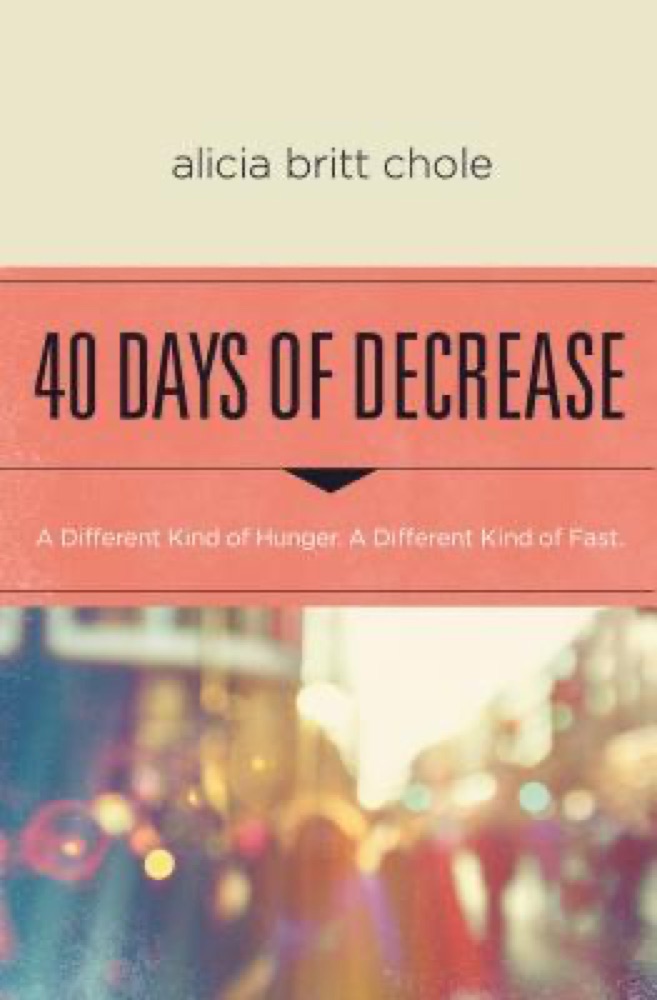
What if you fasted regret? What if your friends fasted comparison? What if your generation fasted escapism? What if your community fasted spectatorship? Trigger a spiritual revolution with this daily devotional for Lent. Decrease life's unnecessary details and increase your relationship with the Lord so you can live in awe of Christ's resurrection! 40 Days of Decrease is a guide for those hungering for a fresh Lenten/Easter experience. Dr. Alicia Britt Chole guides you through a study of Jesus’ uncommon and uncomfortable call to abandon the world’s illusions, embrace His kingdom’s realities, and journey cross-ward and beyond. Containing readings, refection questions, daily fasts, ancient quotes, and more, each day offers a meaningful consideration of Jesus’ journey and then invites you into a daily fast of heart-clutter—the stuff that sticks to your soul and weighs you down. You can begi
Book details
- First published
- 2016
- Author
- Alicia Britt Chole
- Genre
- Nonfiction
- Goodreads rating
- 4.40 (2k ratings)
Keep reading
 Prayer in the Night: For Those Who Work or Watch or Weep
 7: An Experimental Mutiny Against Excess
 The Divine Conspiracy: Rediscovering Our Hidden Life in God
 The Life You've Always Wanted: Spiritual Disciplines for Ordinary People
 Encounters with Jesus: Unexpected Answers to Life's Biggest Questions
 Practicing the Way: Be with Jesus, Become Like Him, Do As He Did
 Discipline: The Glad Surrender
 King's Cross: The Story of the World in the Life of Jesus
 A Long Obedience in the Same Direction: Discipleship in an Instant Society
 Jesus Over Everything: Uncomplicating the Daily Struggle to Put Jesus First
 Radical: Taking Back Your Faith from the American Dream
 Gentle and Lowly: The Heart of Christ for Sinners and Sufferers
 Studies in the Sermon on the Mount
 The Explicit Gospel
 Moving Mountains: Praying with Passion, Confidence, and Authority
 Seeking Allah, Finding Jesus: A Devout Muslim Encounters Christianity
 Grace for the Moment: Inspirational Thoughts for Each Day of the Year, Volume 1
 He Chose the Nails: What God Did to Win Your Heart
 Letters to Malcolm: Chiefly on Prayer
 Having a Mary Heart in a Martha World: Finding Intimacy with God in the Busyness of Life
 The Great Omission: Reclaiming Jesus's Essential Teachings on Discipleship
 The Furious Longing of God
 Out of Sorts: Making Peace with an Evolving Faith
 Tattoos on the Heart: The Power of Boundless Compassion
 Wild Goose Chase: Reclaim the Adventure of Pursuing God
 A Hunger for God
 The Cross of Christ
 The Grand Weaver: How God Shapes Us through the Events in Our Lives
 The Case for Faith: A Journalist Investigates the Toughest Objections to Christianity
 The Bible Jesus Read
 The Message Remix
 Celebration of Discipline: The Path to Spiritual Growth
 The Reason for God: Belief in an Age of Skepticism
Anonymous: Jesus hidden years and yours
The Reason for God: Belief in an Age of Skepticism
Anonymous: Jesus hidden years and yours
 The Crucible of Doubt: Reflections On the Quest for Faith
 It's Not Supposed to Be This Way: Finding Unexpected Strength When Disappointments Leave You Shattered
 All In: You Are One Decision Away From a Totally Different Life
 Amazing Grace: A Vocabulary of Faith
 Waking the Dead: The Glory of a Heart Fully Alive
 The Name of God is Mercy
 The Spirit of the Disciplines: Understanding How God Changes Lives
 Praying Like Monks, Living Like Fools: An Invitation to the Wonder and Mystery of Prayer
 My Utmost for His Highest
 The Normal Christian Life
 The Ragamuffin Gospel
 Pastrix: The Cranky, Beautiful Faith of a Sinner & Saint
 How People Change
 Hope for the Troubled Heart: Finding God in the Midst of Pain
 Liturgy of the Ordinary: Sacred Practices in Everyday Life
 Anything: The Prayer That Unlocked My God and My Soul
 Just Like Jesus: Learning to Have a Heart Like His
 Life Together: The Classic Exploration of Christian Community
 The Secret Thoughts of an Unlikely Convert: An English Professor's Journey Into Christian Faith
 What We Talk about When We Talk about God
 Wholehearted Faith
 The Jesus I Never Knew
 Love Wins Low Price CD: Love Wins Low Price CD
 Leaving Church: A Memoir of Faith
 When Strivings Cease: Replacing the Gospel of Self-Improvement with the Gospel of Life-Transforming Grace
 Jesus > Religion: Why He Is So Much Better Than Trying Harder, Doing More, and Being Good Enough