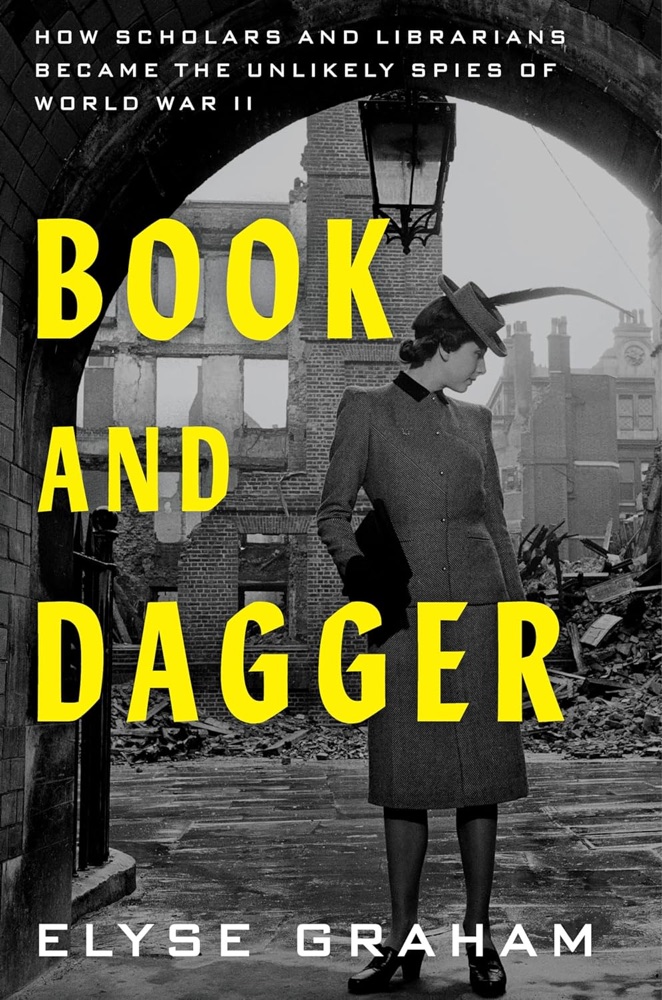
 Book and Dagger: How Scholars and Librarians Became the Unlikely Spies of World War II
Quotes from the Book
For all the harmless innocence conjured by the word "library", the Friedmans knew the truth: a library, properly maintained, could save the world - or burn it down.
16
It's not quite true that history is written by the winners. It's written by the best publicists on the winning team.
10
Truth was truth and anything else was fuckery.
8
One way of thinking about science is that it’s a check against the natural human tendency to see patterns that might not be there. It’s a way of knowing when a pattern is real and when it’s a trick of your mind.
8
It made them feel, as all good books do, less alone.
7
So this is where the CIA began—with J. Edgar Hoover telling the British to go to hell, and the British not appreciating it.
5
making yourself understood to another person is essentially a problem of cryptology.
5
the measure of a person was her ideas
4
To really live a life in search of knowledge, you must admit when you are wrong.
3
Nikola Tesla predicted in 1926 that “when wireless is perfectly applied the whole earth will be converted into a huge brain
3
Before the coast guard sent the FBI a decrypt, the coast guard clerks typed “SIS Dupe” at the bottom of the sheet, beneath the line that said “CG Translation” and “CG Decryption.” These once-secret files, located in the National Archives and finally declassified in 2000, prove that the coast guard, not the FBI, solved these Nazi radio circuits.
2
For the first eight months of the war, as incredible as it sounds, William and Elizebeth, and their team at Riverbank, did all of the codebreaking for every part of the U.S. government: for the State Department, the War Department (army), the navy, and the Department of Justice.
2
A library, properly maintained, could save the world, or burn it down.
2
No code is ever completely solved, you know. —ELIZEBETH S. FRIEDMAN
2
America First,” a campaign slogan of Woodrow Wilson, had been adopted by the Ku Klux Klan in the 1920s
2
The president of Harvard changed admissions rules to keep Jews out
2
You can never get sick of too much knowledge.
2
It was once remarked of a well-known Oxford scholar that, while he had no enemies, he was hated by all his friends. Something of the same kind would express the feelings towards the FBI of its fellow U.S. agencies.
2
If you would like to imagine the birth of the mighty National Security Agency, please visualize two men in a small room, one with a pug nose, pecking at a typewriter, the other a dandy in a suit and bow tie, smoking a pipe, wondering what his wife was up to at home, and if she was missing him.
2
Above the doors it reads, ELIZEBETH SMITH FRIEDMAN, PIONEER OF INTELLIGENCE-LED POLICING. These things happened for two reasons: because women went looking for Elizebeth’s ghost, and because her ghost was making noise in the archives. She was there inside the Marshall Library, rattling the doors of the vault, and she was in the “government tombs,” the National Archives, where her records from the Invisible War were finally declassified. The ghost also cried out from unexpected places. Three of the index cards in William’s collection contain brief, verifiably true comments about how J. Edgar Hoover and the FBI took credit for feats of spycatching actually performed by Elizebeth and the coast guard. These comments were obviously written by Elizebeth—William wasn’t in a position to know. Each card is a knife slipped between the ribs of Hoover, Elizebeth’s patient revenge.
1
Rather, all through the war, she dissected fascists in the dark. If you were her adversary you never felt the blade go in. You bled slowly, painlessly, for months or for years, from tiny internal wounds, and then sometimes there was a terrible morning when you woke up groggy and confused, and your kidney was sitting in a bowl of ice on the counter.
1
He had always found this a comforting thought, that the age of barbarism was not long past, that if humans failed to be kind it was because they were still children, historically speaking
1
These once-secret files, located in the National Archives and finally declassified in 2000, prove that the coast guard, not the FBI, solved these Nazi radio circuits.
1
authors of more recent books have also praised the bureau for destroying the Nazi networks in South America. But the FBI didn’t intercept the messages. It didn’t monitor the Nazi circuits. It didn’t break the codes. It didn’t solve any Enigma machines. The coast guard did this stuff—the little codebreaking team that Elizebeth created from nothing. During the Second World War, an American woman figured out how to sweep the globe of undercover Nazis. The proof was on paper: four thousand typed decryptions of clandestine Nazi messages that her team shared with the global intelligence community. She had conquered at least forty-eight different clandestine radio circuits and three Enigma machines to get these plaintexts. The pages found their way to the navy and to the army. To FBI headquarters in Washington and bureaus around the world. To Britain. There was no mistaking their origin. Each sheet said “CG Decryption” at the bottom, in black ink.
1
But the FBI didn’t intercept the messages. It didn’t monitor the Nazi circuits. It didn’t break the codes. It didn’t solve any Enigma machines. The coast guard did this stuff—the little codebreaking team that Elizebeth created from nothing.
1
It’s not quite true that history is written by the winners. It’s written by the best publicists on the winning team.
1
This is a love story. In 1916, during the First World War, two young Americans met by chance on a mysterious and now-forgotten estate near Chicago. At first they seemed to have little in common. She was Elizebeth Smith, a Quaker schoolteacher who found joy in poetry. He was William Friedman, a Jewish plant biologist from a poor family. But they fell for each other . Within a year they were married. They went on to change history together, in ways that still mark our lives today. They taught themselves to be spies— of a new and vital kind.
1
the importance of choosing the right words for things, even if those words offended people. She didn’t like it when she heard a friend say that a person who had died had “passed away” or that a staggering drunk at a party was “a bit indisposed.” It was more important to be honest. “We glide over the offensiveness of names and calm down our consciences by eulogistic mellifluous terms, until our very moral senses are dulled,” she wrote. “Let things be shown, let them come forth in their real colors, and humanity will not be so prone to a sin which is glossed over by a dainty public!
1
It was anti-Nazi Google.
1
Watch on YouTube
About Jason Fagone
We have collected 29 quotes from 1 book by Jason Fagone on BookQuoters.
More about the author →About the book
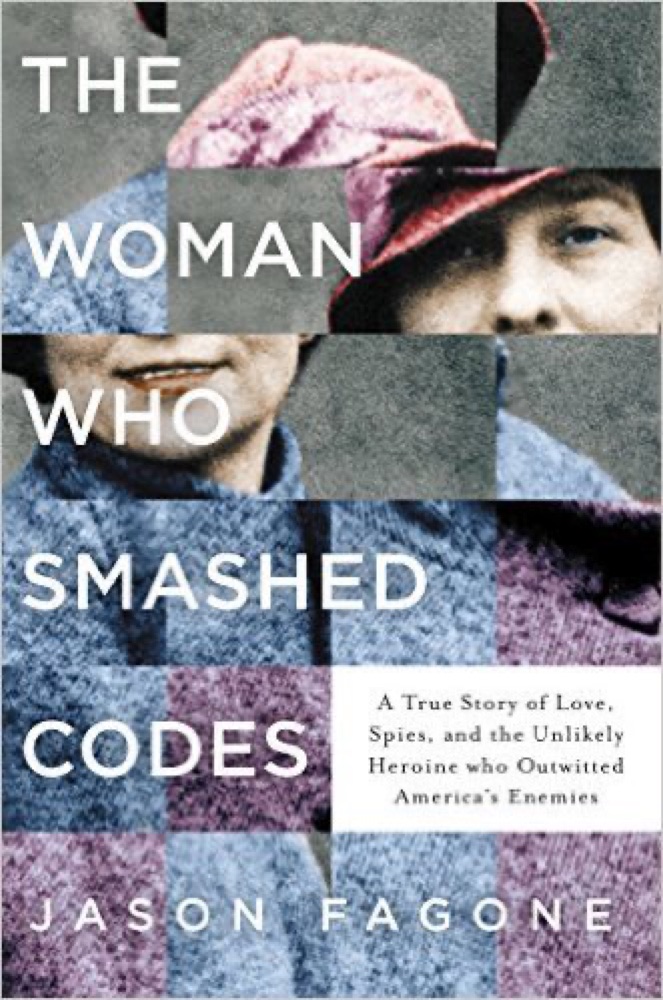
Joining the ranks of Hidden Figures and In the Garden of Beasts, the incredible true story of the greatest codebreaking duo that ever lived, an American woman and her husband who invented the modern science of cryptology together and used it to confront the evils of their time, solving puzzles that unmasked Nazi spies and helped win World War II
In 1916, at the height of World War I, brilliant Shakespeare expert Elizebeth Smith went to work for an eccentric tycoon on his estate outside Chicago. The tycoon had close ties to the U.S. government, and he soon asked Elizebeth to apply her language skills to an exciting new venture: code-breaking. There she met the man who would become her husband, groundbreaking cryptologist William Friedman.
In The Woman Who Smashed Codes, Jason Fagone chronicles the life of Elizebeth Smith who played an integral role in our nation's history for forty
Book details
- First published
- 2017
- Author
- Jason Fagone
- Genre
- Nonfiction
- Goodreads rating
- 4.09 (24k ratings)
Keep reading
Book and Dagger: How Scholars and Librarians Became the Unlikely Spies of World War II
 Agent Zigzag: A True Story of Nazi Espionage, Love, and Betrayal
 Under the Same Stars
 Code Girls: The Untold Story of the American Women Code Breakers Who Helped Win World War II
 The Girls of Atomic City: The Untold Story of the Women Who Helped Win World War II
 An Involuntary Spy
 The Da Vinci Code
 The Librarian of Burned Books
 Persepolis Rising
 Radio Free Albemuth
 The Making of the Atomic Bomb
 The Paris Vendetta
 Tiamat's Wrath
 Deception Point
 The Diamond Age
 Too Like the Lightning
 The Rise and Fall of D.O.D.O.
 Elsewhere
 The Collector of Burned Books
 The Book That Held Her Heart
 The Monuments Men: Allied Heroes, Nazi Thieves, and the Greatest Treasure Hunt in History
 Fall; or, Dodge in Hell
 Permanent Record
 The Book That Broke the World
 The Code Book: The Science of Secrecy from Ancient Egypt to Quantum Cryptography
 Gnomon
 Ripple
 These Truths: A History of the United States
 Truly, Devious
 Lexicon
 The Butlerian Jihad
 The Proud Tower: A Portrait of the World Before the War, 1890-1914
 Joseph Anton: A Memoir
 The Novel Habits of Happiness
 The Last Librarian
 Second Foundation
 1984
1984
 The Confessions of Frannie Langton
 Epitaph for a Spy
 The Best and the Brightest
 The Girl in the Spider's Web
 The Burning Page
 Genome
 Executive Orders
 Native Tongue
 The Institute
 Fall of Giants
 American Prometheus: The Triumph and Tragedy of J. Robert Oppenheimer
 Red Mars
 The Ghost
 Bluebeard
 Hidden Figures
 History Decoded: The 10 Greatest Conspiracies of All Time
 Equal Rites
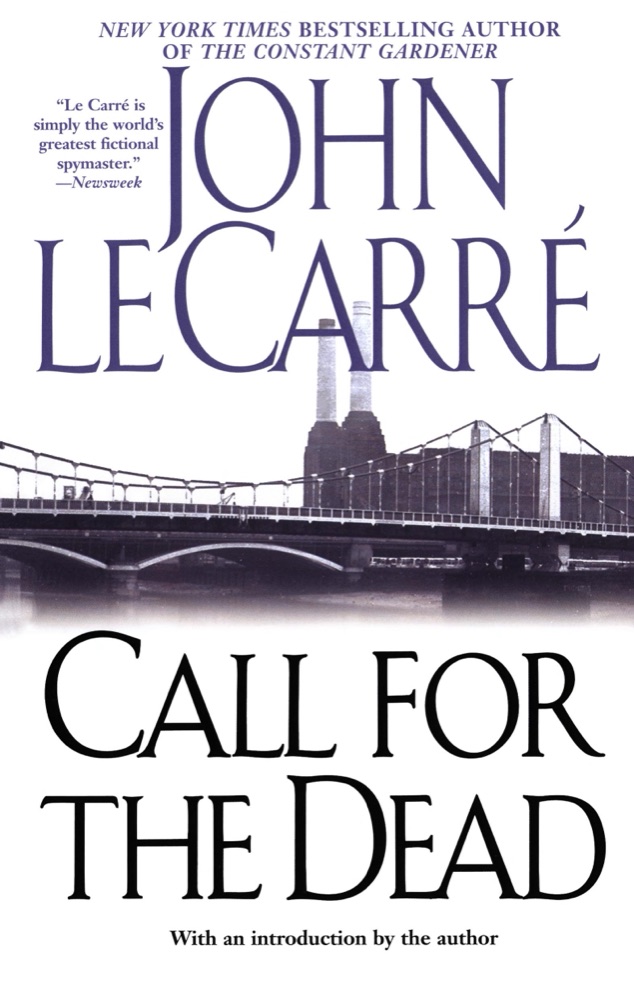 Call for the Dead
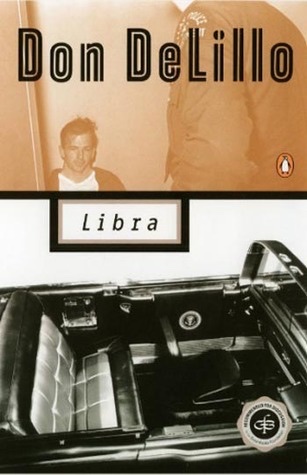 Libra
Libra
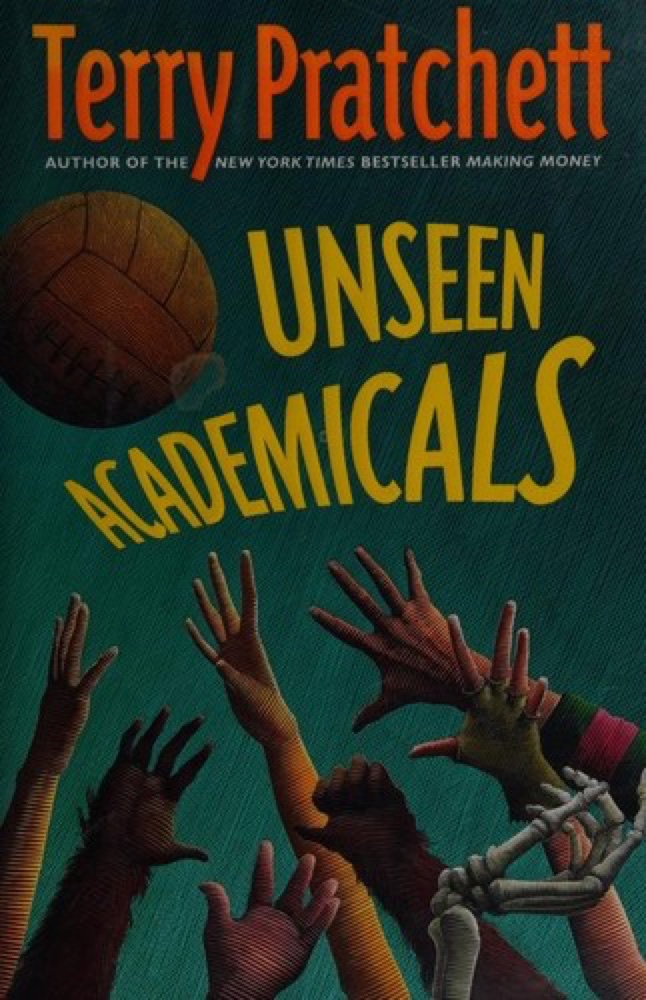 Unseen Academicals
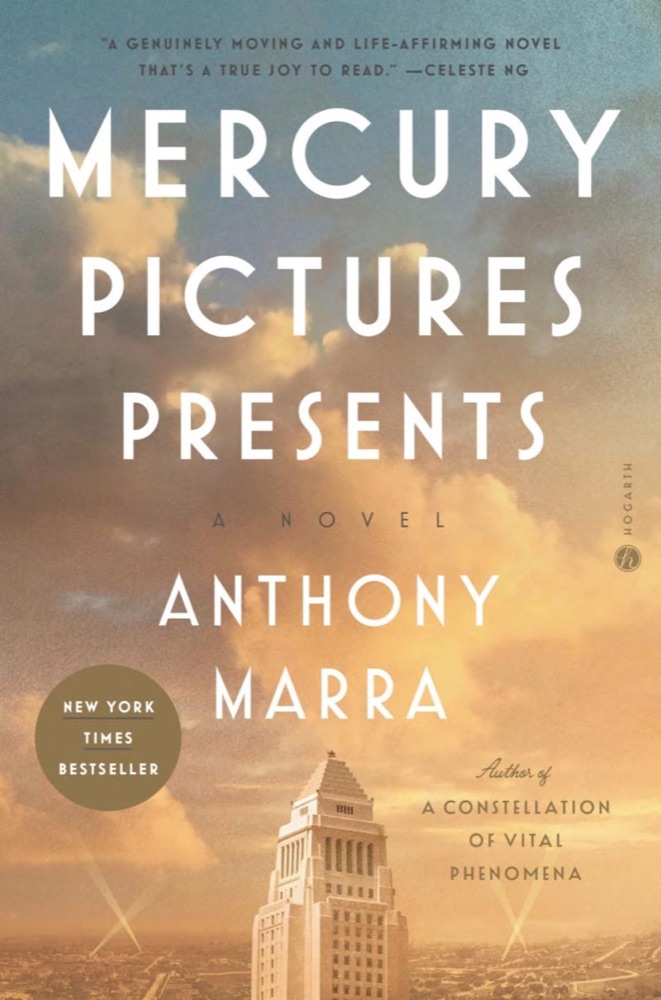 Mercury Pictures Presents
 A Quiet Flame
 Holy Bible: ESV Bible