
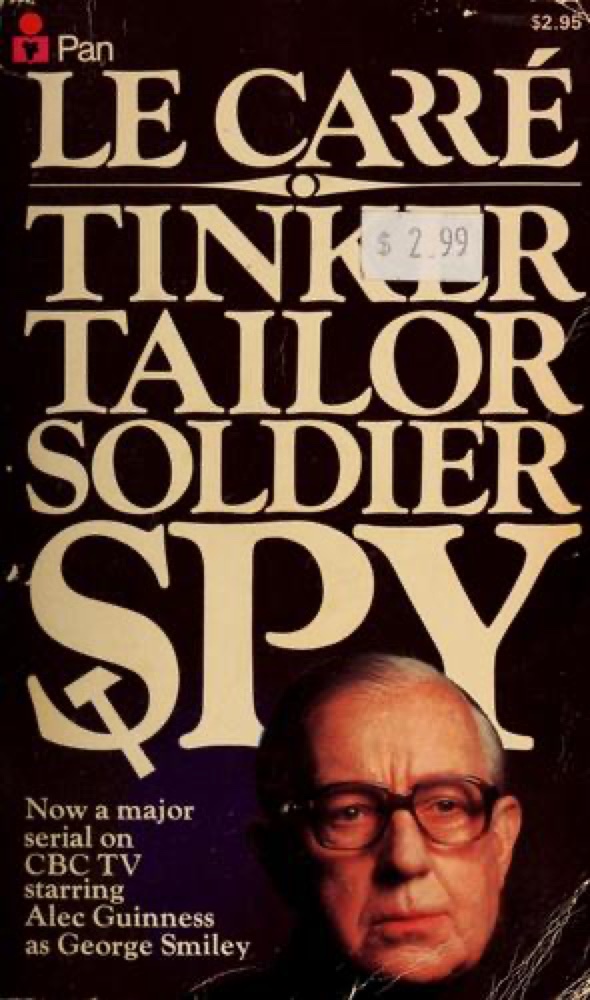
 Tinker Tailor Soldier Spy
Quotes from the Book
She had the experience to suffer with discretion.
16
Give a man a car of his own and he leaves humility and common sense behind him in the garage.
13
But gossip must see its characters in black and white, equip them with sins and motives easily conveyed in the shorthand of conversation.
13
Everything he admired or loved had been the product of intense individualism. ...when had mass philosophies ever brought benefit or wisdom?
13
It dawned on him gradually that he had entered middle-age without ever being young, and that he was, in the nicest possible way, "on the shelf".
12
He knew how intelligent men could be broken by the stupidity of their superiors, how weeks of patient work night and day could be cast aside by such a man
12
society is unconcerned with the aftermath of sensation.
11
Can't you see it's the same? The same guns, the same children dying in the streets? Only the dream has changed, the blood is the same colour. Is that what you want?
11
However closely we live together, at whatever time of day or night we sound the deepest thoughts in one another, we know nothing.
9
He had the nerve not to drink in a University where you proved your manhood by being drunk most of your first year.
8
They never understand it, do they? They never know what it costs—the sordid tricks of lying and deceiving, the isolation from ordinary people. They think you can run on their kind of fuel—the flag waving and the music. But you need a different kind of fuel, don't you, when you're alone? You've got to hate, and it needs strength to hate all the time. And what you must love is so remote, so vague when you're not a part of it.
7
To dream in doctrines, how tidy!
6
But despite such energetic mental exercise, the ghosts of time present would intrude and drive his dreams away. It was Ann who had robbed him of his peace, Ann who had once made the present so important and taught him the habit of reality, and when she went there was nothing.
6
Thought alone was valueless. You must act for thought to become effective.
5
They loved each other and believed they loved mankind, they fought each other and believed they fought the world.
5
He appeared to spend a lot of money on really bad clothes.
5
Afterwards Smiley always thought of that interview as a fan dance; a calculated progression of disclosures, each revealing different parts of a mysterious entity. Finally Steed-Asprey, who seemed to be Chairman, removed the last veil, and the truth stood before him in all its dazzling nakedness. He was being offered a post in what, for want of a better name, Steed-Asprey blushingly described as the Secret Service.
5
There had been a time when the mere business of driving a car was a relief to him; when he had found in the un-reality of a long, solitary journey a palliative to his troubled brain, when the fatigue of several hours’ driving had allowed him to forget more sombre cares. It was one of the subtler landmarks of middle age, perhaps, that he could no longer thus subdue his mind. It needed sterner measures now: he even tried on occasion to plan in his head a walk through a European city – to record the shops and buildings he would pass, for instance, in Berne on a walk from the Münster to the university. But despite such energetic mental exercise, the ghosts of time present would intrude and drive his dreams away. It was Ann who had robbed him of his peace, Ann who had once made the present so important and taught him the habit of reality, and when she went there was nothing.
4
His secretive nature detested the purpose of all interviews, their oppressive intimacy, their inescapable reality.
4
They had brought him in during the war, the professional civil servant from an orthodox department, a man to handle paper and integrate the brilliance of his staff with the cumbersome machine of bureaucracy. It comforted the Great to deal with a man they knew, a man who could reduce any colour to grey, who knew his masters and could walk among them. And he did it so well. They liked his diffidence when he apologized for the company he kept, his insincerity when he defended the vagaries of his subordinates, his flexibility when formulating new commitments. Nor did he let go the advantages of a cloak and dagger man malgré lui, wearing the cloak for his masters and preserving the dagger for his servants.
4
Mendel hated motorists. Give a man a car of his own and he leaves humility and common sense behind him in the garage.
4
There was a pause. Mendel said: 'It's the devil you don't know that gets you.
4
Her instinct was to defend, to hoard the treasures of her life, to build about herself the symbols of normal existence.
4
It comforted the great to deal with it and they knew, a man who could reduce any color to grey.
4
It’s an old illness you suffer from, Mr. Smiley,” she continued, taking a cigarette from the box; “and I have seen many victims of it. The mind becomes separated from the body; it thinks without reality, rules a paper kingdom and devises without emotion the ruin of its paper victims. But sometimes the division between your world and ours is incomplete; the files grow heads and arms and legs, and that’s a terrible moment, isn’t it? The names have families as well as records, and human motives to explain the sad little dossiers and their make-believe sins. When that happens I am sorry for you.
3
They might have you, and they pay badly enough to guarantee you decent company.
3
He had built a card-house as high as it would go, and he still had cards in his hand.
2
Watch on YouTube
About John le Carré
We have collected 352 quotes from 17 books by John le Carré on BookQuoters.
More about the author →More by John le Carré
All books by John le Carré →
About the book
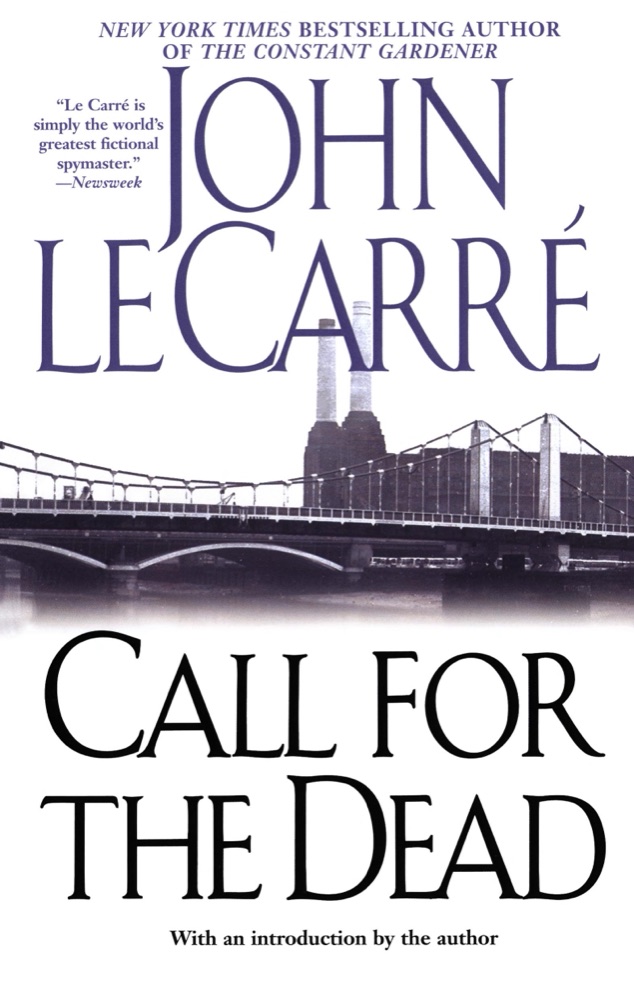
John le Carré classic novels deftly navigate readers through the intricate shadow worlds of international espionage with unsurpassed skill and knowledge, and have earned him -- and his hero, British Secret Service Agent George Smiley, who is introduced in this, his first novel -- unprecedented worldwide acclaim.
George Smiley had liked Samuel Fennan, and now Fennan was dead from an apparent suicide. But why? Fennan, a Foreign Office man, had been under investigation for alleged Communist Party activities, but Smiley had made it clear that the investigation -- little more than a routine security check -- was over and that the file on Fennan could be closed. The very next day, Fennan was found dead with a note by his body saying his career was finished and he couldn't go on. Smiley was puzzled...
Book details
- First published
- 1961
- Author
- John le Carré
- Genre
- Fiction
- Goodreads rating
- 3.85 (50k ratings)
Keep reading
 The Ministry of Fear
Tinker Tailor Soldier Spy
The Ministry of Fear
Tinker Tailor Soldier Spy
 The Honourable Schoolboy
 The Naked and the Dead
 The Damnation Game
 Victory
 A Dance to the Music of Time: 1st Movement
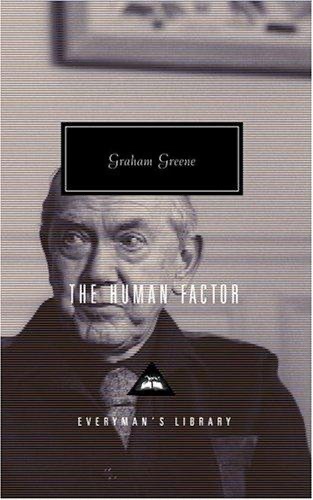 The Human Factor
 Reamde
 The Corrections
 The Brutal Telling
 From Here to Eternity
 Vigil
Vigil
 The Spy Who Came In from the Cold
 A Spot of Bother
 In Cold Blood
 Ragtime
 The Institute
 Authority
 Babbitt
 Tigerman
 Strangers on a Train
 Empire Falls
 The Long Dark Tea-Time of the Soul
 Hard Times
 The Casual Vacancy
 The Great Mistake
 Another Country
 The Secret Agent
 A Beautiful Blue Death
 The Proud Tower: A Portrait of the World Before the War, 1890-1914
 The Complete Stories
 Joe Country
 Martin Eden
 The Untouchable
 A Connecticut Yankee in King Arthur's Court
 Bad News
 The Tiger in the Smoke
 The Cuckoo's Calling
 The Man Who Knew Too Much
 A Rule Against Murder
 Dead Souls
 The Luminaries
 Capital
 Mohawk
 Gaudy Night
 The Jewel in the Crown
 A Lion Among Men
 I Am Pilgrim
 Of Human Bondage
 Moonglow
 Stone's Fall
 Knots and Crosses
 Ravelstein
 The Story of the Lost Child
 Glass Houses
 The Alienist
 Shift
Shift
 A Time of Torment