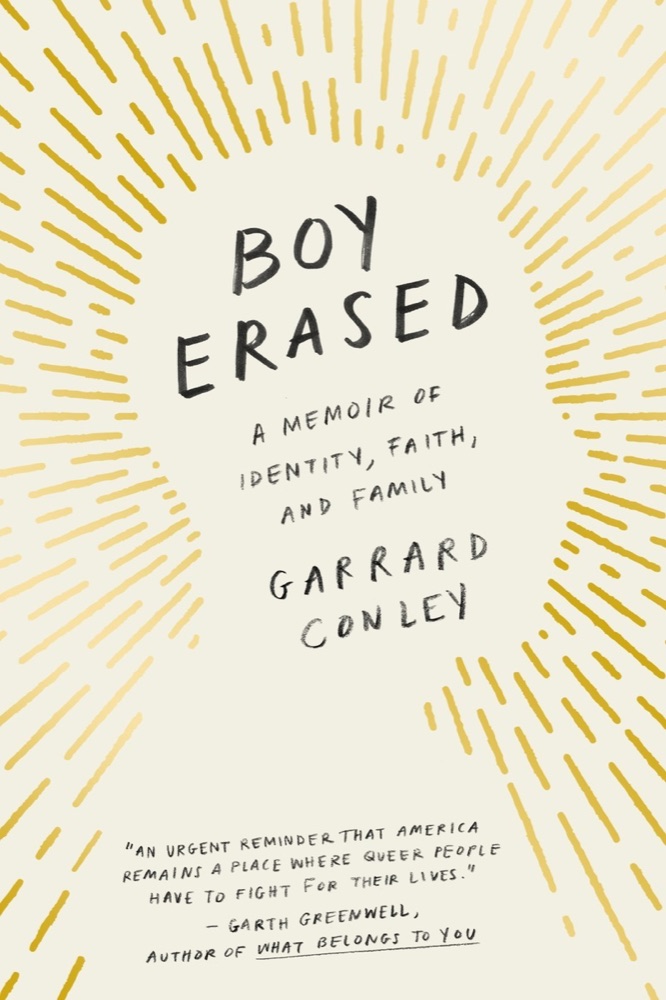
 Boy Erased: A Memoir of Identity, Faith, and Family
Quotes from the Book
I don't know how to describe the sound of a world crashing. Maybe there is no sound, just a great emptiness, an enveloping sorrow, a creeping nothingness that coils itself around you like a stiff wire.
47
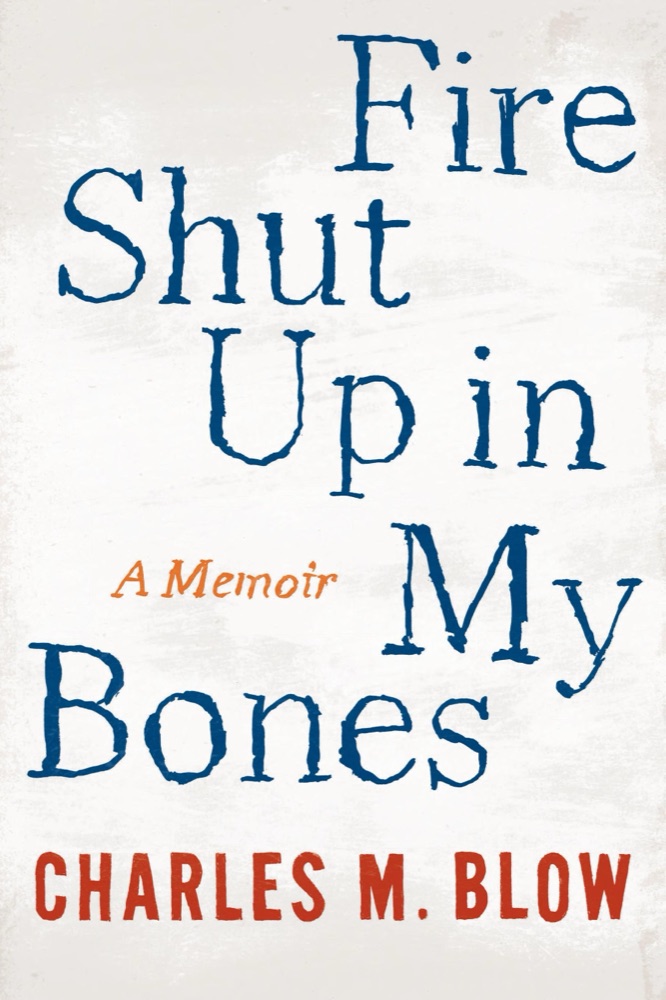
I would harness the truths that had been trapped in me like a fire shut up in my bones. I would give my life over to my passions, my writing, and my children, and they would breathe life back into me.
11
I had been fortified by trauma, the way a bone, once broken, grows back stronger than it had been.
10
No one knows how to hold a grudge like a proper Southerner.
7
Children see God every day; they just don't call it that. It's the summer sky painted with cumulus clouds by day and sequined with a million stars by night. It's the sweet whispers of sweet gum trees and the sounds riding the tops of honeysuckle-scented breezes. Children feel God stuffed into brown fluffy dogs with stitches strong enough to withstand a good squeeze, and on the lips of round women who can't get enough sugar from Chocolate. I began to believe that God is us and nature, beauty and love, mystery and majesty, everything right and good.
7
It was words and reading that had made me quiet, and being quiet had made me a mark.
7
It was the kind of building that remembered things, deep-down things, things that rode tears into the world, telling them back to anyone old enough or wise enough to know how to listen with their eyes.
7
A heart still works even when it's broken
7
But even more important was the idea that, at any moment, we all had the awesome and underutilized power to simply let go of our past and step beyond it.
3
It would only be in the cold gaze of hindsight that I would be able to comprehend that while in flight from pain, I became an agent of it.
3
I better understood the little lies that liquor told, lifting spirits and drowning sorrows while withholding the whole truth--that, in the end, it is the spirit in peril of drowning. Sorrows have gills.
3
The house had a small galley kitchen where my mother performed daily miracles, stretching a handful into a potful, making the most of what we raised. Cooking mostly from memory and instinct, she took a packet of meat, a bunch of greens or a bag of peas, a couple of potatoes, a bowl of flour, a cup of cornmeal, a few tablespoons of sugar, added a smattering of this and a smidgeon of that, and produced meals of rich and complementary flavors and textures. Delicious fried chicken, pork chops, and steak, sometimes smothered with hearty gravy, the meat so tender that it fell from the bone. Cob-scraped corn pan-fried in bacon drippings, served with black-eyed peas and garnished with thick slices of fresh tomato, a handful of diced onion, and a tablespoon of sweet pickle relish. A mess of overcooked turnips simmering in neck-bone-seasoned pot liquor, nearly black—tender and delectable. The greens were minced on the plate, doused with hot pepper sauce, and served with a couple sticks of green onions and palm-sized pieces of hot-water cornbread, fried golden brown, covered with ridges from the hand that formed them, crispy shell, crumbly soft beneath.
3
For much of my life I would crave attention with a carnal intensity. From anyone. From everyone. That feeling of being chosen. I would flirt with anyone who was congenial and amenable—a ravenous, indiscriminate flirtation, or a feather-light, barely-there one—or allow myself to be flirted with, by women and men alike, to cover the emptiness I felt or to fill in the hole, the desired culmination being not so much physical intimacy as emotional affirmation. The boy who had once felt invisible would forever ache simply to be seen.
3
He had learned a language and a protocol dictated by fear and necessary for survival. Like many older black people, he suffered from a chronic reflex racism. Having heard tell of—or witnessed, or experienced—so many horrible things done at the hands of white folks, he feared most and trusted few of them.
2
It was in my mind that I believed the thing had happened, and it was in my mind that I now fused together abuse and attraction.
2
Then I had the idea that it wasn’t her that I needed in that moment so much as a father. This was an issue among boys and men. I needed a man who could understand and help me make sense of what happened, a heavy arm in whose crook I could hide. I needed a father like Jed, someone with the kind of eyes that forgave secret shame before it scarred the throat in the speaking.
2
I had to stop romanticizing the man I might have been and be the man that I was, not by neatly fitting other people’s definitions of masculinity or constructs of sexuality, but by being uniquely me—made in the image of God, nurtured by the bosom of nature, and forged in the fire of life.
2
but blaming him for the whole of the difference in my peculiar sexual identity, while convenient, was most likely not completely accurate. Abusers don’t necessarily make children different in that way, but rather, they are diabolically gifted at detecting that kind of difference, often before the child can see it in him or herself, articulate it, and accept it. It is possible that Chester glimpsed a light in me, and that moved the darkness in him.
2
Boys hijacked by hormones don’t really think, they chase. They see risk and consequences as if through the wrong end of a telescope: smaller and pushed far away.
2
I was afraid that men like that could see the hole in me, a thing I dared not admit even to myself: that I had an aching need to be chosen, to be seen
2
Time ground to a halt and the trees whispered in the language of God and nature about steadfastness and resilience—gently saying that one could be constantly stirred yet not moved, bent but not broken, that a thing well grounded and deeply rooted could ever stand.
2
For a moment, I was free again. And that was the thing. I felt free only when I could separate myself from myself, when I could imagine that I was distinct from my body and life. There in the ethereal nothingness, in the quiet space of my mind, I found peace.
1
I would often recall one of my mother’s sayings: You could stay in hell for a little while if you knew that you were going to get out.
1
Building the steps would have been such a simple thing. He could have done it. He should have done it. The not-doing spoke volumes.
1
only children know God. Children see God every day; they just don’t call it that. It’s the summer sky painted with cumulus clouds by day and sequined with a million stars by night. It’s the sweet whispers of sweet gum trees and the sounds riding the tops of honeysuckle-scented breezes. Children feel God stuffed into brown fluffy dogs with stitches strong enough to withstand a good squeeze, and on the lips of round women who can’t get enough sugar from Chocolate.
1
praying for God to remove from me any desire to win. I was praying for Him to help me remember that His glory and His will were all that mattered.
But they were different. Weary, not sweet. The skin above Jed’s eyes fell soft, releasing the worries before they could stick.
Buffalo Soldiers in Italy: Black Americans in World War II
The not-doing spoke volumes.
Watch on YouTube
About Charles M. Blow
We have collected 29 quotes from 1 book by Charles M. Blow on BookQuoters.
More about the author →About the book
A gorgeous, moving memoir of how one of America's most innovative and respected journalists found his voice by coming to terms with a painful pastNew York Times columnist Charles M. Blow mines the compelling poetry of the out-of-time African-American Louisiana town where he grew up — a place where slavery's legacy felt astonishingly close, reverberating in the elders' stories and in the near-constant wash of violence.Blow's attachment to his mother — a fiercely driven woman with five sons, brass knuckles in her glove box, a job plucking poultry at a nearby factory, a soon-to-be-ex husband, and a love of newspapers and learning — cannot protect him from secret abuse at the hands of an older cousin. It's damage that triggers years of anger and searing self-questioning.Finally, Blow escapes to a nearby state university, where he joins a black fraternity after a passage of brutal hazing, and
Book details
- First published
- 2014
- Author
- Charles M. Blow
- Genre
- Biography
- Goodreads rating
- 4.01 (5k ratings)
Keep reading
Boy Erased: A Memoir of Identity, Faith, and Family
 Men We Reaped
 Black Boy
 How We Fight For Our Lives
 Somebody's Daughter
 Bastard Out of Carolina
 Heart Berries
 Indian Horse
 The Round House
 All But My Life: A Memoir
 The Death of Vivek Oji
 Mother Mary Comes to Me
 The Hour I First Believed
 The Sweetness of Water
 Chances Are...
 Women We Buried, Women We Burned: A Memoir
 The Lies About Truth
 When God Was a Rabbit
 Wolf Hollow
 Lucky
Lucky
 The Likeness
 A Room Made of Leaves
 The Invention of Wings
 Traveling Mercies: Some Thoughts on Faith
 The Prince of Tides
 Hot Milk
 The Man Who Lived Underground
 The Marriage of Opposites
 Tar Baby
 The Tell: A Memoir
 I Know Why the Caged Bird Sings
 Freshwater
 The Brutal Telling
 Moonglow
 The Sweet Taste of Muscadines
 World's Fair
 The Prophets
 Stay with Me
 Kindred
 A Small Indiscretion
 In the Woods
 Year of Wonders
 The Harder I Fight the More I Love You: A Memoir
 Heavy
Heavy
 Lit
Lit
 Testament of Youth
 The Beautiful Struggle: A Father, Two Sons and an Unlikely Road to Manhood
 A Thousand Acres
 My Friends
 A Thousand Moons
 Stray: Memoir of a Runaway
 Sign Here
 After the Flood
 My Name Is Mahtob: The Story that Began the Global Phenomenon Not Without My Daughter Continues
 Mechanica
 Little Monsters
 Betty
Betty
 All Over But the Shoutin'
 Light in August
 Singin' and Swingin' and Gettin' Merry Like Christmas