

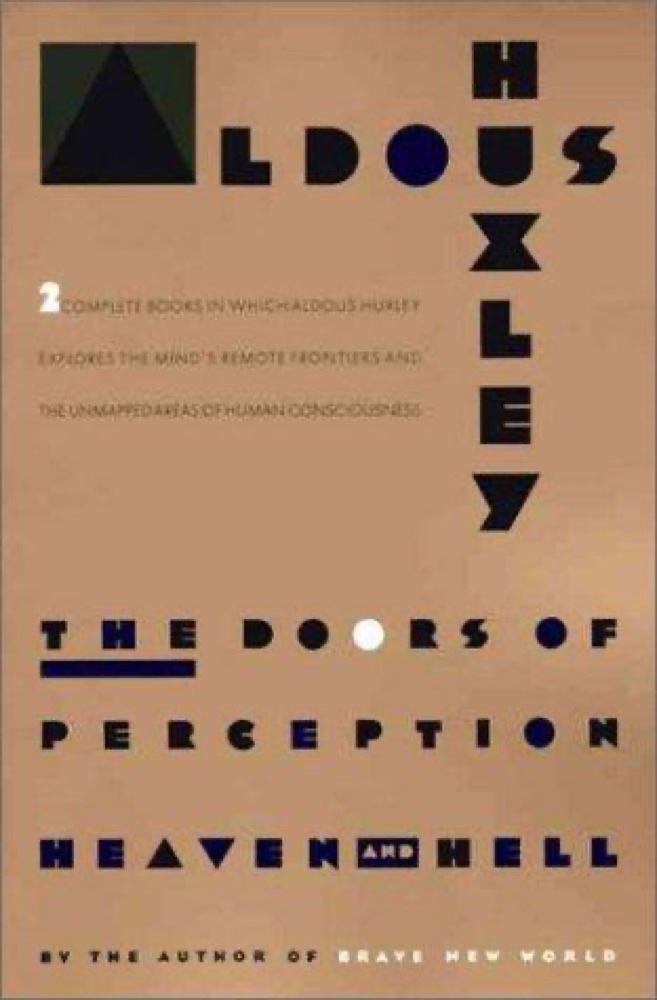
 The Doors of Perception & Heaven and Hell
Quotes from the Book
Perhaps it's good for one to suffer. Can an artist do anything if he's happy? Would he ever want to do anything? What is art, after all, but a protest against the horrible inclemency of life?
84
...‘I am interested in everything,’ interrupted Gumbril Junior. ‘Which comes to the same thing,’ said his father parenthetically, ‘as being interested in nothing.
15
Grief doesn't kill, love doesn't kill; but time kills everything, kills desire, kills sorrow, kills in the end the mind that feels them; wrinkels and softens the body while it still lives, tots it like a medlar, kills it too at last.
10
Shearwater sighed, like a whale in the night.
5
Many seeds had fallen in the stony places of his spirit, to spring luxuriantly up into stalky plants and wither again because they had no deepness of earth; many had been sown there and had died, since his mother scattered the seeds of the wild flowers
3
...‘Beetles, black beetles’ – his father had a really passionate feeling about the clergy. Mumbo-jumbery was another of his favourite words. An atheist and an anti-clerical of the strict old school he was.
3
...good she had been. Not nice, not merely molto simpatico – how charmingly and effectively these foreign tags assist one in calling a spade by some other name! – but good. You felt the active radiance of her goodness when you were near her…. And that feeling, was that less real and valid than two plus two?
2
He was wondering how anyone could talk so loud, could boast so extravagantly. It was as though the man had to shout in order to convince himself of his own existence.
1
Political liberty’s a swindle because a man doesn’t spend his time being political. He spends it sleeping, eating, amusing himself a little and working—mostly working. When they’d got all the political liberty they wanted—or found they didn’t want—they began to understand this.
1
Christlike in my behavior Like any good believer I imitate the Savior And cultivate a beaver
1
I wish they'd hurry up with the second scene,' said Mrs. Viveash. 'If there's anything that bores me, it's entr'actes.' 'Most of one's life is an entr'acte,' said Gumbril.
1
How can there ever be liberty under any system? No amount of profit-sharing or self-government by the workers, no amount of hygienic conditions or cocoa villages or recreation grounds can get rid of the fundamental slavery—the necessity of working. Liberty? Why, it doesn’t exist!
Aim at their dread of public opinion, at their ambition to be one better than their fellows and their terror of being different-at all the ludicrous weaknesses a well-developed social instinct exposes them to.
There are quiet places also in the mind,' he said, meditatively. 'But we build bandstands and factories on them. Deliberately - to put a stop to the quietness. We don't like the quietness. All the thoughts, all the preoccupations in my head - round and round, continually.' He made a circular motion with his hand. 'And the jazz bands, the music hall songs, the boys shouting the news. What's it for, what's it all for? To put an end to the quiet, to break it up and disperse it, to pretend at any cost is isn't there. Ah, but is is, it is there, in spite of everything, at the back of everything. Lying awake at night, sometimes - not restlessly, but serenely, waiting for sleep - the quiet reestablishes itself, piece by piece; all the broken bits, all the fragments of it we've been so busily dispersing all day long. It re-establishes itself, an inward quiet, like this outward quiet of grass and trees. It fills one, it grows - a crystal quiet, a growing expanding crystal. It grows, it becomes more perfect; it is beautiful and terrifying, yes, terrifying, as well as beautiful. For one's alone in the crystal and there 's no support from outside, there's nothing external and important, nothing external and trivial to pull oneself up by or stand on, superiorly, contemptuously, so that one can look down. There's nothing to laugh at or feel enthusiastic about. But the quiet grows and grows. Beautifully and unbearably. And at last you are conscious of something approaching; it is almost a faint sound of footsteps. Something inexpressibly lovely and wonderful advances through the crystal, nearer, nearer. And, oh, inexpressibly terrifying. For if it were to touch you, if it were to seize and engulf you, you'd die; all the regular, habitual, daily part of you would die. There would be an end of bandstands and whizzing factories, and one would have to begin living arduously in the quiet, arduously in some strange unheard-of manner. Nearer, nearer come the steps; but one can't face the advancing thing. One daren't. It's too terrifying, it's too painful to die. Quickly, before it is too late, start the factory wheels, bang the drum, blow the saxophone. Think of the women you'dl like to sleep with, the schemes for making money, the gossip about your friends, the last outrage of the politicians. Anything for a diversion. Break the silence, smash the crystal to pieces. There, it lies in bits; it is easily broken, hard to build up and easy to break. And the steps? Ah, those have taken themselves off, double quick. Double quick, they were gone at the first flawing of the crystal. And by this time the lovely and terrifying thing is three infinities away, at least. And you lie tranquilly on your bed, thinking of what you'd do if you had ten thousand pounds and of all the fornications you'll never commit.' He thought of Rosie's pink underwear.
Children—that would be the most desperate experiment of all. The most desperate, and perhaps the only one having any chance of being successful.
One knew in theory very well that others spoke of one contemptuously—as one spoke of them. In practice—it was hard to believe.
He was trembling with anger; at least one forgot unhappiness while one was angry.
Love makes you accept the world; it puts an end to criticism.
But the people we don’t know are only characters in the human comedy. We are the tragedians.
When the revolution comes, Mr. Gumbril—the great and necessary revolution, as Alderman Beckford called it—it won’t be the owning of a little money that’ll get a man into trouble. It’ll be his class-habits, Mr. Gumbril, his class-speech, his class-education. It’ll be Shibboleth all over again, Mr. Gumbril; mark my words. The Red Guards will stop people in the street and ask them to say some such word as ‘towel.’ If they call it ‘towel,’ like you and your friends, Mr. Gumbril, why then. …” Mr. Bojanus went through the gestures of pointing a rifle and pulling the trigger; he clicked his tongue against his teeth to symbolize the report. … “That’ll be the end of them. But if they say ‘tèaul,’ like the rest of us, Mr. Gumbril, it’ll be: ‘Pass Friend and Long Live the Proletariat.’ Long live Tèaul.
It must be pleasant, I should think, to hand oneself over to somebody else. It must give you a warm, splendid, comfortable feeling.
Still, if one has to suffer in order to be beautiful, one must also expect to be ugly in order not to suffer.
Why was it that people always got involved in one’s life? If only one could manage things on the principle of the railways! Parallel tracks—that was the thing. For a few miles you’d be running at the same speed. There’d be delightful conversation out of the windows; you’d exchange the omelette in your restaurant car for the vol-au-vent in theirs. And when you’d said all there was to say, you’d put on a little more steam, wave your hand, blow a kiss and away you’d go, forging ahead along the smooth, polished rails. But instead of that, there were these dreadful accidents; the points were wrongly set, the trains came crashing together; or people jumped on as you were passing through the stations and made a nuisance of themselves and wouldn’t allow themselves to be turned off.
Ah, revenge, revenge. In the better world of the imagination it was possible to get one’s own back. What fiendish vendettas were there carried to successful ends!
What I glory in is the civilized, middle way between stink and asepsis. Give me a little musk, a little intoxicating feminine exhalation, the bouquet of old wine and strawberries, a lavender bag under every pillow and potpourri in the corners of the drawing-room. Readable books, amusing conversation, civilized women, graceful art and dry vintage, music, with a quiet life and reasonable comfort—that’s all I ask for.
Until all teachers are geniuses and enthusiasts, nobody will learn anything, except what they teach themselves.
Ah, if only one had work of one’s own, proper work, decent work—not forced upon one by the griping of one’s belly!
Watch on YouTube
About Aldous Huxley
We have collected 363 quotes from 15 books by Aldous Huxley on BookQuoters.
More about the author →More by Aldous Huxley
All books by Aldous Huxley →

About the book
Antic Hay is one of Aldous Huxley's earlier novels, and like them is primarily a novel of ideas involving conversations that disclose viewpoints rather than establish characters; its polemical theme unfolds against the backdrop of London's post-war nihilistic Bohemia. This is Huxley at his biting, brilliant best: a novel, loud with derisive laughter, which satirically scoffs at all conventional morality and at stuffy people everywhere, a novel that's always charged with excitement.
Book details
- First published
- 1923
- Author
- Aldous Huxley
- Genre
- Fiction
- Goodreads rating
- 3.40 (3k ratings)
Keep reading
 Bleak House
 Selected Stories
 The Magic Mountain
 Eyeless in Gaza
 Selected Stories of Anton Chekhov
 Point Counter Point
 Gaudy Night
 Absalom, Absalom!
 The Adolescent
 The Story of the Lost Child
 Of Human Bondage
 That Hideous Strength
 V.
V.
 The Fall of Babel
 Martin Eden
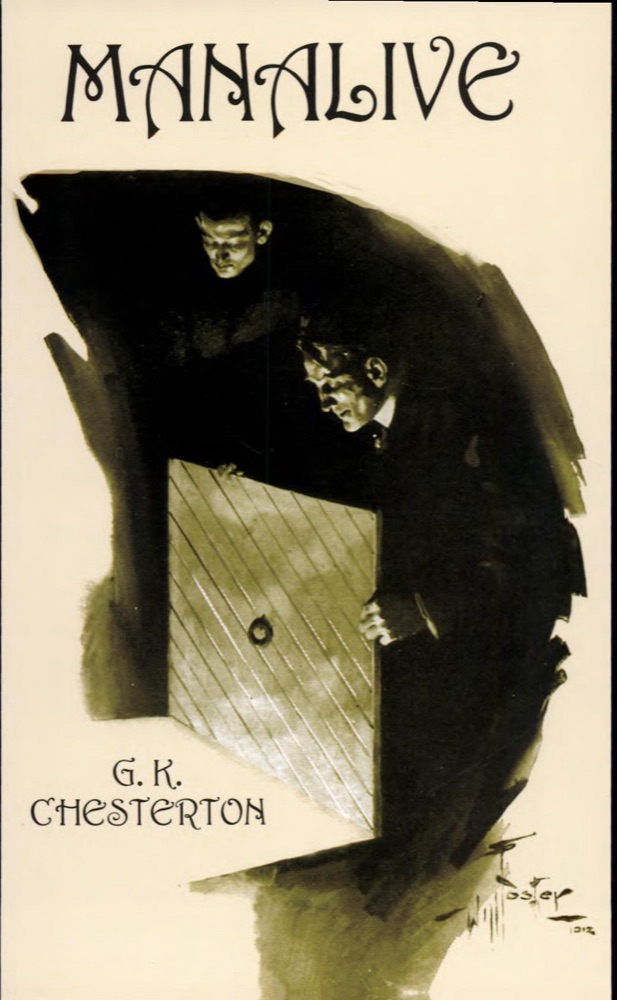 Manalive
 The Adventures of Augie March
 The Guermantes Way
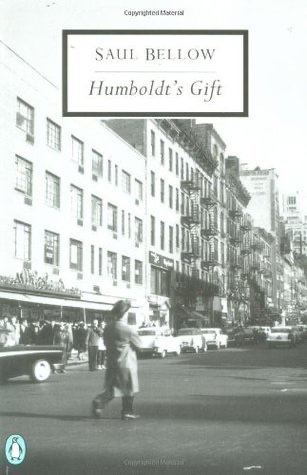 Humboldt's Gift
 Allan Quatermain
 Hard Times
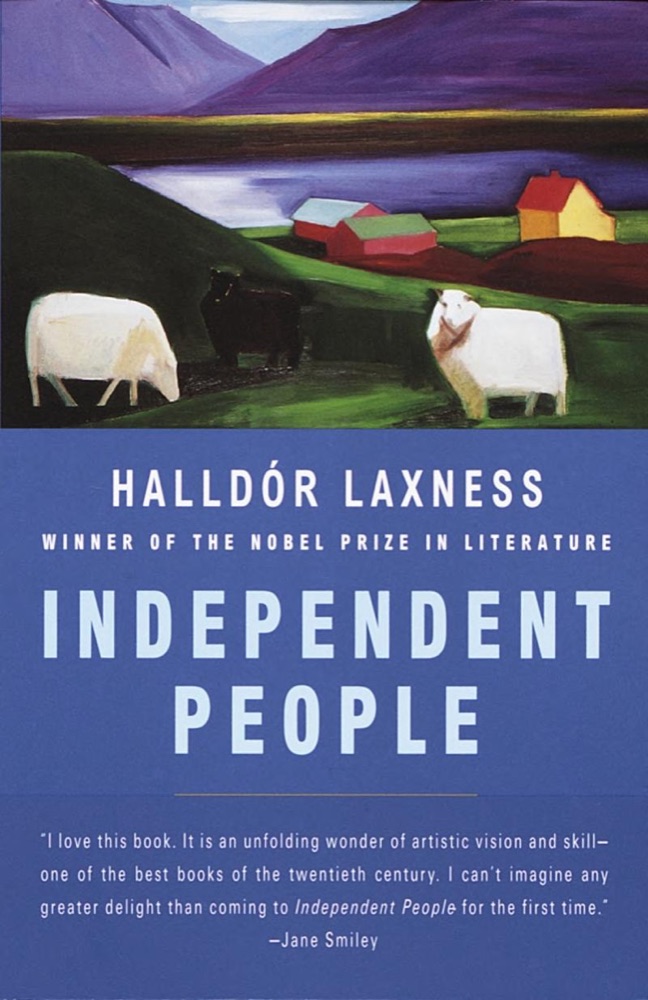 Independent People
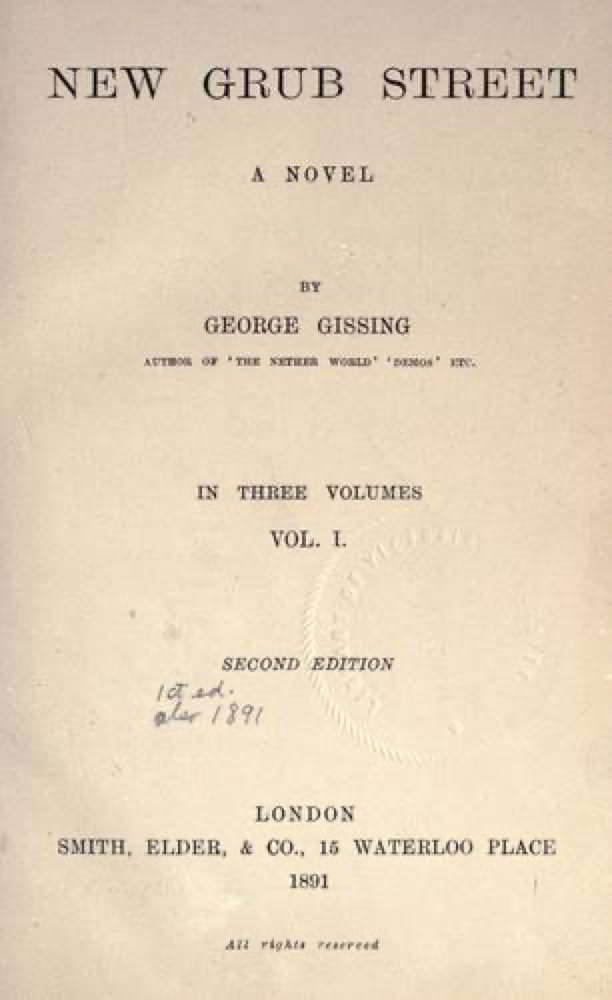 New Grub Street
 Daniel Deronda
 Lady Chatterley's Lover
 Doctor Zhivago
 The Once and Future King
 Fathers and Sons
 The Accursed
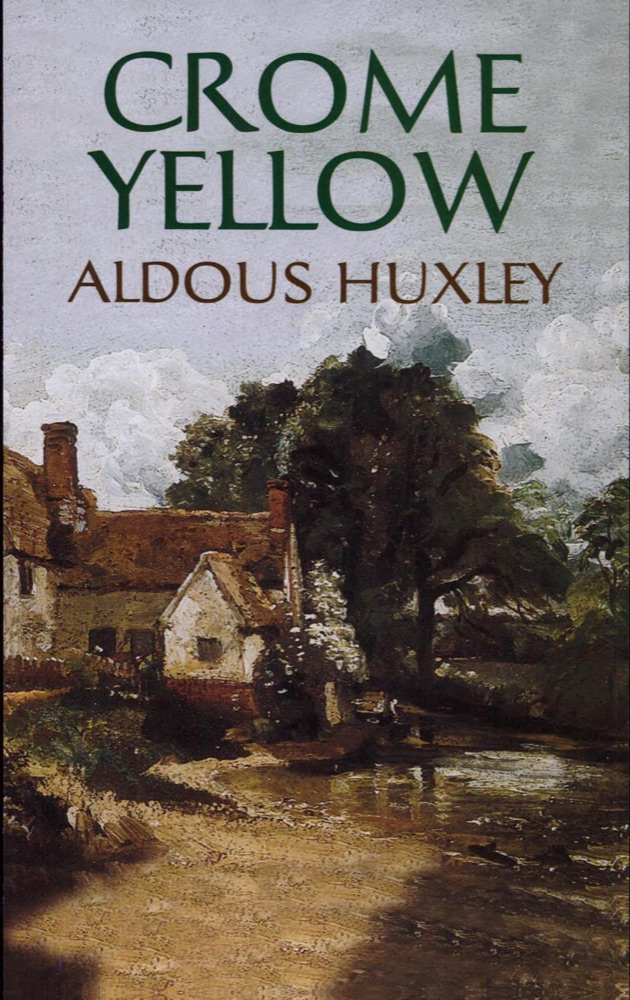 Crome Yellow
 Cocaine
 Ragtime
 Sixty Stories
 Miss Lonelyhearts
 The Tunnel
 The Magus
 Other Voices, Other Rooms
 Black Lamb and Grey Falcon
 Cat's Cradle
 False Memory
 Erewhon
 Girl with Curious Hair
 Dead Souls
 The Man Without Qualities
 Ravelstein
 The Rebel Angels
 Desperate Remedies
 A Room with a View
 The Untouchable
 Light in August
 The Red and the Black
 The Illustrated Man
 Revolutionary Road
 Don Juan
 Dhalgren
 The Fall
 Disgrace
 Flaubert's Parrot
 Brideshead Revisited: The Sacred and Profane Memories of Captain Charles Ryder
 The Man Who Was Thursday