 The Rational Optimist: How Prosperity Evolves
Quotes from the Book
If the automobile had followed the same development as the computer, a Rolls Royce would today cost $100 and get a million miles per gallon, and explode once a year killing everyone inside. —Robert X. Cringely, InfoWorld magazine
5
advances since 1970 have tended to be channeled into a narrow sphere of human activity having to do with entertainment, communications, and the collection and processing of information. For the rest of what humans care about—food, clothing, shelter, transportation, health, and working conditions both inside and outside the home—progress slowed down after 1970,
4
Don’t be too timid and squeamish about your actions. All life is an experiment. The more experiments you make the better. —Ralph Waldo Emerson, 1841
2
The combined effects of growing inequality, a faltering education system, demographic headwinds, and the strong likelihood of a fiscal correction imply that the real median disposable income will grow much more slowly in the future than in the past.
1
If the stock market continues to advance, we know that inequality will increase, for capital gains on equities accrue disproportionately to the top income brackets.
1
The new element in part III is the headwinds—inequality, education, demography, and debt repayment—that are buffeting the U.S. economy and pushing down the growth rate of the real disposable income of the bottom 99 percent of the income distribution to little above zero.
1
Compared to Canada, Japan, or any nation in western Europe, the United States combines by far the most expensive system with the shortest life expectancy.
1
Chief among these headwinds is the rise of inequality that since 1970 has steadily directed an ever larger share of the fruits of the American growth machine to the top of the income distribution.
1
Morris Kleiner has calculated that the percentage of jobs subject to occupational licensing has expanded from 10 percent in 1970 to 30 percent in 2008.
1
The post-2020 fiscal reckoning does not require higher payroll taxes or lower retirement benefits, as new sources of fiscal revenue are available from drug legalization, increased tax progressivity, tax reform that eliminates most tax deductions, and a carbon tax that provides incentives to reduce emissions.
1
Inequality can be alleviated and productivity growth promoted by combating overly zealous and regressive regulations
1
Unlike IR #2, the digital revolution IR #3 had a less powerful overall effect on productivity growth, and the main effect of its inventions occurred in the relatively short interval of 1996 to 2004, when the invention of the Internet, web browsers, search engines, and e-commerce created a fundamental change in business practices and procedures that was reflected in a temporary revival of productivity growth.
1
For instance, the degree of enjoyment provided by an hour of leisure spent watching a TV set in 1955 is greater than that provided by an hour listening to the radio in the same living room in 1935.
1
Hearst was eager to stoke the flames of conflict between Spain and the United States over Cuba and sent Frederick Remington the photographer, who could find no signs of war. In a famous exchange of cables, Hearst responded to Remington, “You provide the pictures; I’ll provide the war.
1
But the cable cars did not last long. They had disappeared from the streets of most cities by 1900 and from Chicago by 1906, and they remain to this day only in the single city of San Francisco, where they are primarily a tourist attraction.
1
The event happened at noon on May 10, 1869, at Promontory Summit, Utah. That moment was a pivotal episode in world history as Leland Stanford pounded a golden spike with a silver hammer and in an instant ended the isolation of California and the Great West from the eastern half of the United States.
1
This paradox is resolved when we recognize that advances since 1970 have tended to be channeled into a narrow sphere of human activity having to do with entertainment, communications, and the collection and processing of information. For the rest of what humans care about—food, clothing, shelter, transportation, health, and working conditions both inside and outside the home—progress slowed down after 1970, both qualitatively and quantitatively. Our
1
Third, the cumulative effect of these improvements from 1947 through 1983 was massive. Improvements in quality—that is, previously unmeasured components of consumer surplus that were not included in the GDP data—amounted to 100 percent of the cost of refrigerators and clothes dryers and 200 percent of the cost of room air conditioners.
The interstate highway system in its comprehensiveness was a belated attempt to duplicate not the Pennsylvania Turnpike but the German autobahn network over a spatial terrain roughly twenty times larger.
Striking was the absence of medium to large-sized cities that were typical in the northeast and Midwest. Most towns were merely crossroads.
This encouragement by the federal government pushed the frontier westward into Oklahoma, Kansas, Nebraska, and the Dakotas. But only about 40 percent of these claims were finalized. “Drought, insect plagues, low [farm] prices, and isolation caused thousands of farm sites to be abandoned.
before 1940.12 The rapid decline in working hours led John Maynard Keynes in 1931 to make a famous prediction that turned out to be quite wrong—that society would be so productive that each worker would only need to work for fifteen hours per week:
The ratio of disagreeable to nonroutine cognitive jobs shifted from 7.9 in 1870 to 2.1 in 1940 to 0.1 in 2010, one of the great achievements of American economic growth over the past fourteen decades.
Within the blue-collar category, skilled craft workers held their ground, declining only from 11.4 percent in 1870 to 8.2 percent in 2009.
In any case, it is clear that the phenomenon of retirement for males aged 65 or older began long before the New Deal’s invention of Social Security.
Historians have long recognized that “the automobile is European by birth, American by adoption.
Most of the developments that made possible the networked house of urban America in 1929 were achieved by anonymous and decentralized innovations in home appliances, bathroom fixtures, toilets, and furnaces, not to mention the hundreds of municipal officials who approved and financed the evolution of urban sanitation infrastructure.
Edison’s unique contribution was his solution of the double problem of inventing an efficient light bulb that could be manufactured in bulk while also establishing electric generating stations to bring power into the individual home.
teaches us that the invention of new services has been, if anything, more important than the invention of new goods.
Less speculative is the productivity-enhancing learning by doing that occurred during the high-pressure economy of World War II. Production miracles during 1941–45 taught firms and workers how to operate more efficiently, and the lessons of the wartime production miracle were not lost after the war: productivity continued to increase from 1945 to 1950.
Watch on YouTube
About Robert J. Gordon
About the book
How America's high standard of living came to be and why future growth is under threat
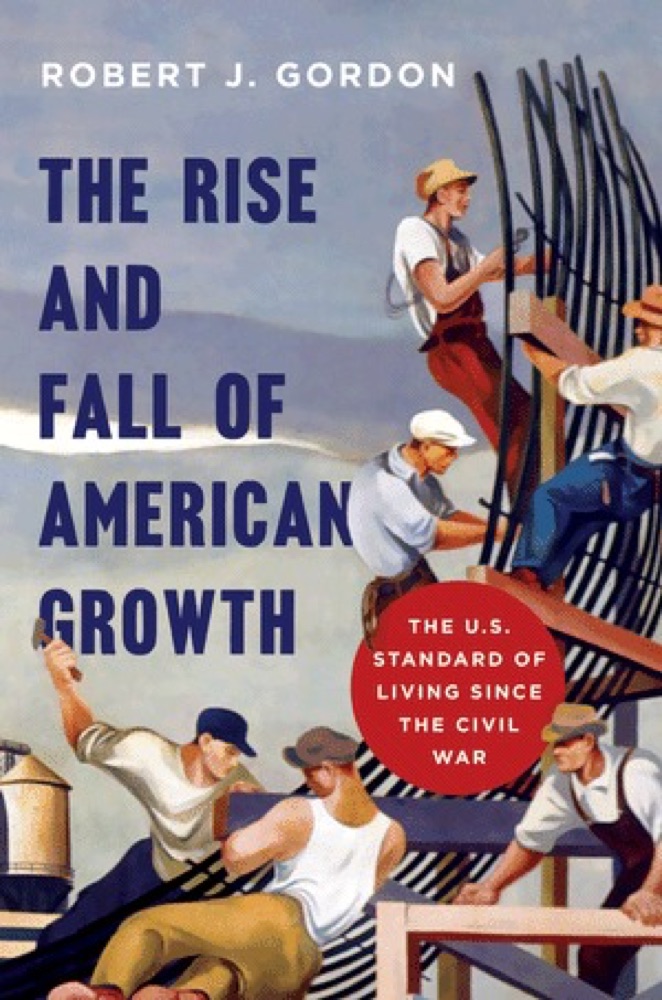
In the century after the Civil War, an economic revolution improved the American standard of living in ways previously unimaginable. Electric lighting, indoor plumbing, motor vehicles, air travel, and television transformed households and workplaces. But has that era of unprecedented growth come to an end? Weaving together a vivid narrative, historical anecdotes, and economic analysis, The Rise and Fall of American Growth challenges the view that economic growth will continue unabated, and demonstrates that the life-altering scale of innovations between 1870 and 1970 cannot be repeated. Gordon contends that the nation's productivity growth will be further held back by the headwinds of rising inequality, stagnating education, an aging population, and the rising debt of college students and the federal
Book details
- First published
- 2016
- Author
- Robert J. Gordon
- Genre
- Nonfiction
- Goodreads rating
- 4.19 (2k ratings)
Keep reading
The Rational Optimist: How Prosperity Evolves
 Capital in the Twenty-First Century
 Abundance: The Future Is Better Than You Think
 Principles for Dealing with the Changing World Order: Why Nations Succeed and Fail
 Naked Economics: Undressing the Dismal Science
 The Evolution of Everything: How New Ideas Emerge
 The World Is Flat: A Brief History of the Twenty-first Century
 American Colossus: The Triumph of Capitalism, 1865-1900
 How We Got to Now: Six Innovations That Made the Modern World
 Twilight of the Elites: America After Meritocracy
 The Prize: The Epic Quest for Oil, Money, and Power
 Wealth, Poverty and Politics: An International Perspective
 Evil Geniuses: The Unmaking of America
 Utopia for Realists: How We Can Build the Ideal World
 Give People Money: The Simple Idea to Solve Inequality and Revolutionise Our Lives
 Basic Economics: A Citizen's Guide to the Economy
 The Creature from Jekyll Island: A Second Look at the Federal Reserve
 Power and Progress: Our Thousand-Year Struggle Over Technology and Prosperity
 Capital and Ideology
 Upheaval: Turning Points for Nations in Crisis
 Early Retirement Extreme: A Philosophical and Practical Guide to Financial Independence
 23 Things They Don't Tell You About Capitalism
 India Unbound: The Social and Economic Revolution from Independence to the Global Information Age
 The Price of Tomorrow: Why Deflation is the Key to an Abundant Future
 The Spirit Level: Why More Equal Societies Almost Always Do Better
 A Short History of Progress
 The Wizard and the Prophet: Two Remarkable Scientists and Their Dueling Visions to Shape Tomorrow's World
 Small Is Beautiful: Economics as if People Mattered
 Kids These Days: Human Capital and the Making of Millennials
 Boomerang: Travels in the New Third World
 A Brief History of Equality
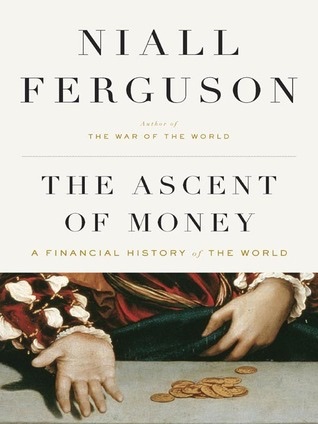 The Ascent of Money: A Financial History of the World
 Progress and Poverty
 The Ghost Map: The Story of London's Most Terrifying Epidemic - and How It Changed Science, Cities, and the Modern World
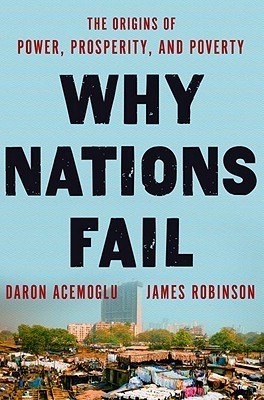 Why Nations Fail: The Origins of Power, Prosperity, and Poverty
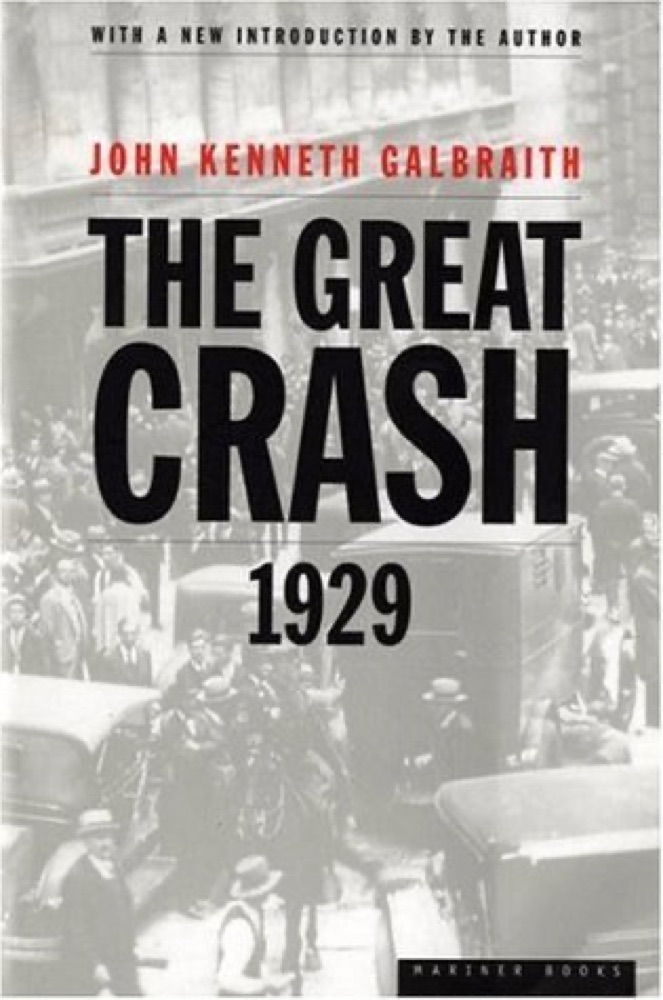 The Great Crash 1929
 One Summer: America, 1927
 Coming Apart: The State of White America, 1960-2010
 The Lessons of History
 Eaarth: Making a Life on a Tough New Planet
 Occupy
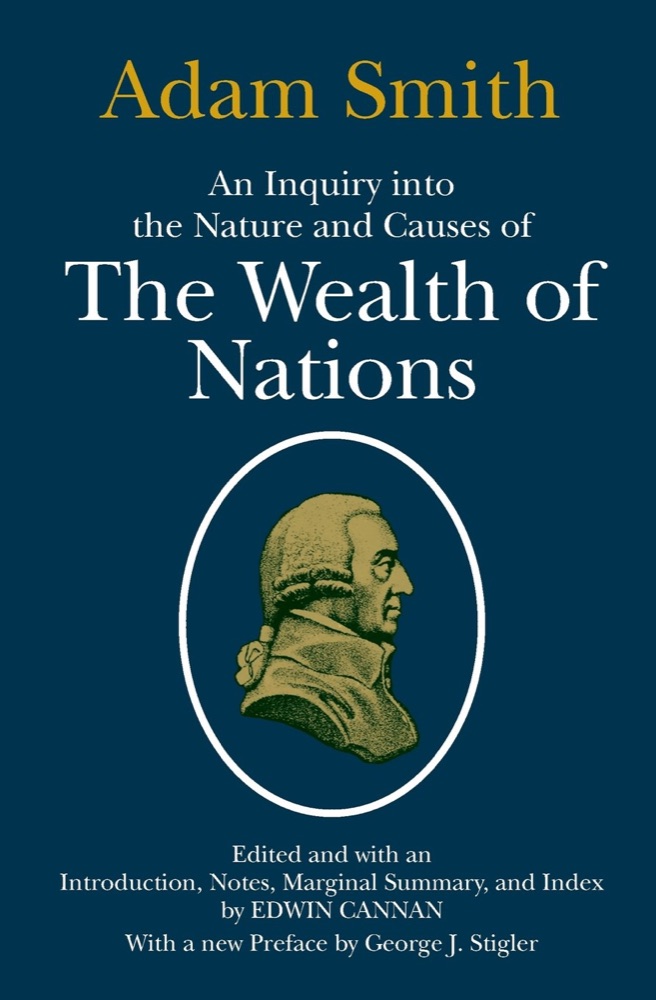 An Inquiry into the Nature and Causes of the Wealth of Nations
 Cheap: The High Cost of Discount Culture
 The Great Transformation: The Political and Economic Origins of Our Time
 At Home: A Short History of Private Life
 Blue Mars
 The Shock Doctrine: The Rise of Disaster Capitalism
 The Technological Republic: Hard Power, Soft Belief, and the Future of the West
 Freakonomics: A Rogue Economist Explores the Hidden Side of Everything
 Poor Economics: A Radical Rethinking of the Way to Fight Global Poverty
 Four Futures: Life After Capitalism
 Economics in One Lesson
 Free to Choose: A Personal Statement
 Currency Wars: The Making of the Next Global Crisis
 Guns, Germs, and Steel: The Fates of Human Societies
 Who Owns the Future?
 Ill Fares the Land
 The System: Who Rigged It, How We Fix It
 SuperFreakonomics: Global Cooling, Patriotic Prostitutes And Why Suicide Bombers Should Buy Life Insurance