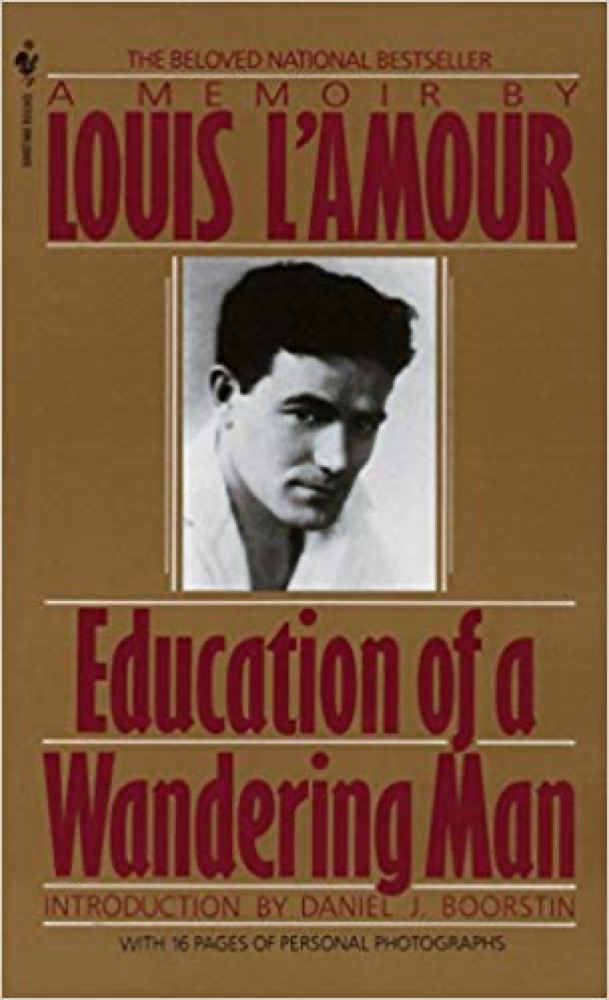
 Education of a Wandering Man: A Memoir
Quotes from the Book
As I sat dumbfounded, seemingly paralyzed in my corner, resorting to my old, reliable strategy of scribbling when unsure of how to respond to Sanjit, Sanjit appended his counsel with a dose of silence – one reminiscent to that of a few days prior. The students looked upward and downward, fans to notes to pens to toes, outward and inward, peers to souls, and of course, toward the direction of the perceived elephant in the room, Sanjit’s books. Simultaneously, Sanjit confidently and patiently searched among the students before finding my eyes; once connected, the lesson moved forward.
146
It is here where education is championed and gratefully pursued as the human right which many in our world classify it to be. For although regarded as a human right, many entitled to education often dismiss its equal standing to other rights of a similar plane: water, food, shelter. Without water, many perish; with education, many complain.
92
Sanjit says his apartment, the same one in which he grew up, has been flooded many times by the midsummer torrents. For what has been for millennia a primarily agricultural society, rains simultaneously destroy, create, and preserve life in India, similar to the functions of the three premier Hindu gods, Shiva, Brahma, and Vishnu. Every time Kolkata gets pounded by a cyclone, or when the monsoon first erupts in June (although the recent warming of the Indian Ocean increasingly disturbs a once-consistent timeline), Sanjit never fails to send along a video, his house flooded – seemingly destroyed – but the smiles on his, Bajju’s, or other house-guest’s faces signify just the opposite, having been cooled and relieved of perpetual heat. Flooded, they remain preserved.
87
In contrast, the gratification and education received from Sanjit’s classes is slow burning, personal, and in a changing world allegedly becoming more attuned to and obsessed with requiring that money spent – especially on education – must yield tangible results, what many would view as a paradoxical dynamic nevertheless persists there, near Park Circus, Kolkata. No grades, no forced accountability, all voluntary learning.
85
After Bajju delivered a few beaming salutations, we walked northward up the makeshift, winding path through protruding brush, not much but a few stones placed here and there for balance and leverage upon ascending or descending. Having advanced about hundred steps from the street below, a sharp left leads to Bajju’s property, which begins with his family’s miniature garden – at the time any signs of fertility were mangled by dried roots which flailed like wheat straw, but within the day Bajju’s children vehemently delivered blows with miniature hoes in preparation for transforming such a plot into a no-longer-neglected vegetable garden. A few steps through the produce, or preferably circumventing all of it by taking a few extra steps around the perimeter, leads to the sky-blue painted home. Twisting left, hundreds of miles of rolling hills and the occasional home peeps out, bound below by demarcated farming steppes. If you’re lucky on a clear day and twist to the right, the monstrous, perpetually snow-capped Chaukhamba mountain monopolizes the distance just fifteen miles toward the direction of Tibet in the north.
83
To reiterate: not all things need to be finished, and free reading is a prime example of this. Writing – or the composition of words which are intended to be read – just like painting, sculpting, or composing music, is a form of art. Typically, not all art is able to resonate with each and every viewer – or, in this case, reader. If we walk through a museum and see a boring painting, or listen to an album we don’t enjoy, we won’t keep staring at said painting, nor will we listen to the album. So, if we don’t like a book, if we aren’t learning from it, dreaming about it, enjoying its descriptions, pondering its messages, or whatever else may be redeeming about a specific book, why would we waste our time to “just finish it?” Sure, we may add another book to the list of books read, but is more always better?
83
Again, the exercise begins. For me, the American in me, the city of Detroit comes to mind. A house, once within the bustling city, now lies on the outskirts. Industry has come and gone, and the car manufacturers have relocated. I recall images of the rough lifestyles south of 8 Mile. The city’s borders have changed. Post-apocalyptic, long grasses sway with the wind. The house is melancholy and lonely. The owners: maybe there, maybe not.
82
Despite the business and auto-rickshaws and bantering Bengalis just beyond his brown front door, Sanjit cultivates a distinct learning environment and energy, one created and galvanized above the tile floors, within the thin walls, below the imperative ceiling fans, and embraced by books.
79
Yet, the work was not complete. Next, citing Bond’s veranda and our subsequent construction of it as an example, Sanjit elaborated on the thought which he had previously teased, but not fully explained: that when a reader reads, the reader constructs a setting and world and is able to view themselves through this world. However, he also added that when we read, we are not only able to see our constructed world, but to evaluate our constructed world. This is how, Sanjit would argue, we influence and better ourselves, even if unintentionally; for by pausing and analyzing our constructions we may be able to identify our assumptions about people, places, or things. And it is in this way that books may be an expressed form of art, not just for the writer, but also for the reader.
78
We proceeded to make way across the mighty Hooghly River, a monstrous offshoot of the Ganges, where we contemplated for a moment, our thoughts seemingly caught in the roaring southward current; there we gazed, toward where the city transitions into mangrove jungle, and somewhere a bit further to the southwest where all the rivers split infinitely like capillaries, where those famous Bengal tigers trod among the sunderbans. Peering in that direction, Bajju gripped the vertical bars just above the horizontal pedestrian railing, breathing slowly and silently, knees locked, still, despite being on arguably the busiest and loudest bridge in the world.
77
Of course, I couldn’t explain this vector calculus concept and so, slightly embarrassed in front of Rahul and the other Bengali students, I told Sanjit just that; he had cornered me, and honesty emerged as my only option. Simultaneous to my humiliating disclosure of the truth, Sanjit gradually inched toward where I was sitting. After hearing my reply, he slowly returned to his teacher stool and whiteboard, his back turned away from the class, the suspense building and his words impending, before turning around and breaking into speech, “Don’t trust your interior monologue. If you are asked something and you know it, then express or demonstrate it. Don’t just nod or say yes because then you are lying to yourself. Any ass can say yes, but not all asses can express it.” I modified my first impression: Sanjit was full of explicit aphorisms. Humbled, those words encouragingly rang between my ears for quite some time.
75
Water is to India as blood is to the body, with the many rivers functioning as arteries – the Ganges being the aorta – and the monsoon timelessly arriving as a much-needed annual blood transfusion.
75
Everyone is recharged for the second half, no bell, no forced learning, no principal’s office for tardiness or absenteeism; instead, a voluntary return to our collective pane of learning. Final conversations simmer down and the attention is refocused.
74
Watch on YouTube
About Colin Phelan
About the book
Although many view schools, colleges, and universities as the primary places from which we attain an education, opportunities for education surround us all in many overlooked forms, often around the corner, down the block, or even right in your own home. Written over the span of several years as he shuttled to and from the Indian subcontinent, Colin Phelan's debut book The Local School pays tribute to this idea: that the best schools are our local schools, ones of friends, of family, or of the people serendipitously encountered in your own neighborhood.
Fusing genres of travel writing, narrative journalism, memoir, and poetry, The Local School explores a counterintuitive perception of education and the need for an education renaissance in America. Detailing his experiences living and studying alongside two Indian men, one a Bengali teacher, and one a northern Indian truck driver, Phel
Book details
- First published
- 2022
- Author
- Colin Phelan
- Genre
- Nonfiction
- Goodreads rating
- 4.27 (6k ratings)
Keep reading
Education of a Wandering Man: A Memoir
 The Lives of Others
 The Argumentative Indian: Writings on Indian History, Culture and Identity
 The Hungry Tide
 The Cat's Table
 In the Light of What We Know
 Milk Teeth
 The White Tiger
 Stones Into Schools: Promoting Peace With Books, Not Bombs, in Afghanistan and Pakistan
 Illuminations: Essays and Reflections
 Checkout 19
 Flights
 Beyond the Sky and the Earth: A Journey into Bhutan
 The Abundance
 A Suitable Boy
 Mao II
 In Arabian Nights: A Caravan of Moroccan Dreams
 Always Coming Home
 There Are Rivers in the Sky
 Sorcerer's Apprentice
 Behind the Beautiful Forevers: Life, Death, and Hope in a Mumbai Undercity
 Knife: Meditations After an Attempted Murder
 Winter
 The Years of Rice and Salt
 The Book of Form and Emptiness
 The Book That Broke the World
 Essays of E.B. White
 Autumn
 West with the Night
 River of Smoke
 The Secret Keeper of Jaipur
 Wings of Fire: An Autobiography
 The Newcomers: Finding Refuge, Friendship, and Hope in an American Classroom
 Burning Questions: Essays and Occasional Pieces, 2004 to 2021
 Four Ways to Forgiveness
 The Snow Leopard
 One Way Street And Other Writings
 The Notebooks of Malte Laurids Brigge
 Moth Smoke
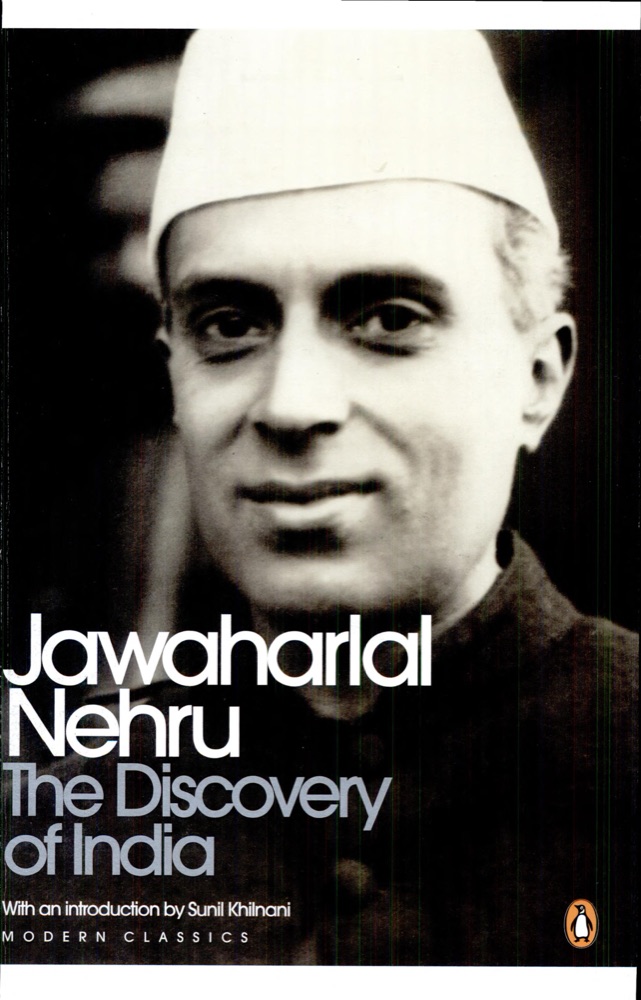 The Discovery of India
 Plainwater: Essays and Poetry
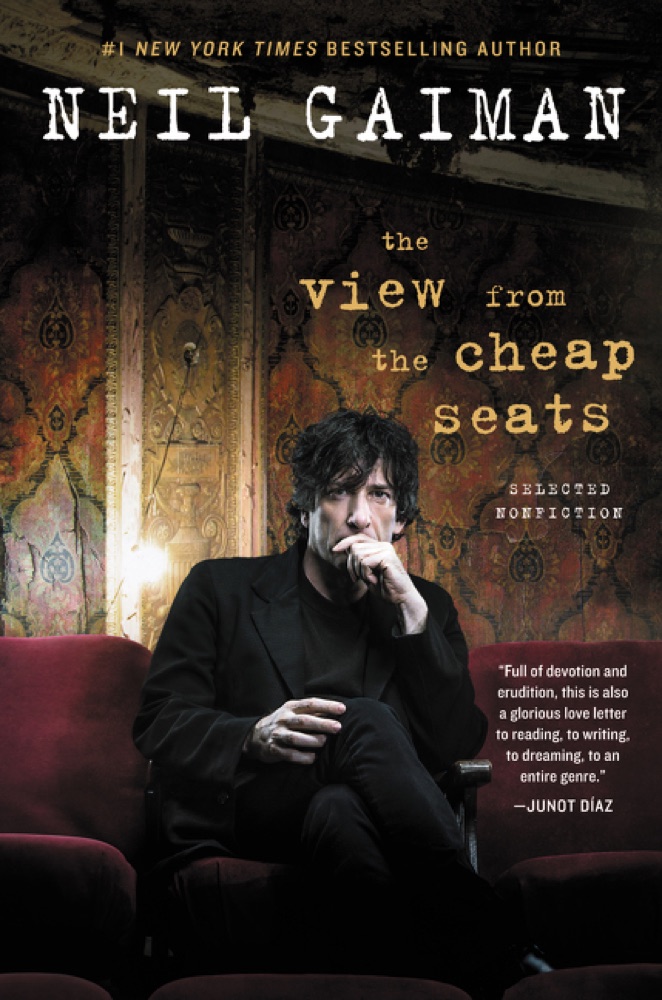 The View from the Cheap Seats: Selected Nonfiction
 Open City
 Running in the Family
 Where the Bluebird Sings to the Lemonade Springs: Living and Writing in the West
 Arctic Dreams
 Bicycle Diaries
 The Ministry of Utmost Happiness
 One Man's Meat
 A Passage to India
 I Am, I Am, I Am: Seventeen Brushes with Death
 Too Like the Lightning
 The Covenant of Water
 Dear Mr. M
 You Can't Go Home Again
 Universal Harvester
 The Rent Collector
 The Art of Inheriting Secrets
 What Young India Wants
 A Circle of Quiet