 The Seven Spiritual Laws of Success: A Practical Guide to the Fulfillment of Your Dreams
Quotes from the Book
What is happening within you and how you experience your life is entirely your making – your karma.
17
Karma simply means we have created the blueprint for our lives. It means we are the makers of our own fate. When we say “This is my karma,” we are actually saying “I am responsible for my life.
9
Living totally does not mean just having a good time. It means experiencing anything that comes your way fully and intensely. The very process of life is the dissolution of karma. If you live every moment of your life totally, you dissolve an enormous volume of karma.
7
If you avoid any experience—whether pain or pleasure, sorrow or joy—it is big karma. But if you go through the experience without resisting it, the karma dissolves. This is why Krishna in the great Indian epic the Mahabharata says that hesitation is the worst of all crimes.
5
As we have seen, whatever you do with your body, mind, or energy leaves a certain imprint. These imprints configure themselves into tendencies. These tendencies have been traditionally described in India by a wonderfully apt word: vasana. Literally, vasana means smell. This “smell” is generated by a vast accumulation of impressions caused by your physical, mental, emotional, and energy actions. Depending upon the type of smell you emit, you attract certain kinds of life situations to yourself.
4
responsibility for our own. When you live by the memory of a single book, you are religious. When you live by the memory of several books, you are intellectual. When you live by the memory of several generations of people, you become a truly compassionate human being. But when you live beyond the memory of generations of people, you become a mystic.
3
Your karma is not in what is happening to you; your karma is in the way you respond to what is happening to you.
3
what you consider to be “myself ” is just an accumulation of habits, predispositions, and tendencies you have acquired over time without being conscious of the process.
3
Your intention makes all the difference. If you say something prompted by love, and another person gets hurt, that is his karma, not yours. But if you say something out of hatred and anotehr person has no problem with it, it is good karma for them and not for you! You wll still acquire negative karma. How the recipeint of uyour hatred reacts is not the point. The accumulatio of karma is determined by your intention, not merrely by its impact on someone else.
2
So the source of your misery is not your past actions. The source of your misery is how you’re processing the imprint of the past now.
2
In today’s world, where information is available everywhere, a school should shift away from propagating information to becoming an inspirational place, which builds beautiful human beings. Education should become a joyful choice, not a compulsive extruder out of which every child has to come out in a certain shape.
2
It is not the content of your life that matters. It is the context of your life that does. So becoming a karma yogi does not mean you have to give up whatever you are doing right now. It means you do it with wholehearted involvement and, in the process, help create a more joyful world wherever you go.
2
On a certain day, three men were working on a site. A passerby came and asked the first man, “What are you doing?” The man looked up and said, “Hey, are you blind? Can’t you see I’m cutting stone?” The passerby went to the second man and asked the same question. “What do you think I’m doing?” growled the second man. “I’m trying to earn my living. I need to fill my belly.” The passerby went to the third man and asked again, “What are you doing here?” The man stood up in great joy. “I’m building a glorious temple!” All three men were doing the same work. For the first man, his work was simply cutting stone. For the second, his work was simply a means to eke out a livelihood. For the third, his work was an opportunity to create something beautiful that he cared for deeply. The how is the pivotal issue. Every single act in your life can be like this. It is not the content of your life that matters. It is the context of your life that does.
2
The fundamental difference between a human being and a machine is perception.
2
karma is like old software that you have written for yourself unconsciously. And, of course, you’re updating it on a daily basis! Depending on the type of physical, mental, and energetic actions you perform, you write your software. Once that software is written, your whole system functions accordingly. Based on the information from the past, certain memory patterns keep recurring. Now your life turns habitual, repetitive, and cyclical. Over
2
Your five senses are collecting data from the outside world every moment of your life. You are literally being bombarded with stimuli at every instant. Over time, this enormous volume of sense impressions begins to assume a certain distinctive pattern within you. This pattern slowly shapes itself into behavioral tendencies. A cluster of tendencies hardens over time into what you call your personality, or what you claim to be your true nature.
2
If you consciously accept this moment just the way it is, you arrive at a certain ease within yourself. Ease is a consequence of the relaxation of all you have created. You can, in turn, experience the whole of existence as yourself. Everything becomes a part of you, as creation in its very nature exists as one whole. Knowing this experience is yoga, or the ultimate union.
1
Now, if my talks were about quoting from a scripture, such friendship and affection would be impossible. Scripture means memory; memory means hierarchy. This hierarchy turns one thing into sacred, another into filthy. What we consider sacred becomes an authority; what comes from an authority becomes our truth. And this kind of truth renders us incapable, paradoxically, of ever experiencing real truth!
1
What is karma? Literally, the word means action.
1
Both memory and imagination exist only in your mind.
1
What you call fate is just a life situation you have created for yourself unconsciously. Your destiny is what you have crafted in unawareness. If you become a hundred percent conscious, your destiny becomes a conscious creation.
1
And so these are the only two things that you are suffering right now: your memory and your imagination.
1
Karma is the natural basis of all existence. It is not a law that is imposed from above. It does not allow us to outsource our responsibility anywhere else; it does not allow us to blame our parents, our teachers, our countries, our politicians, our gods, or our fates. It makes each one of us squarely responsible for our own destinies and, above all, the nature of our experience of life.
1
The basis of karma yoga is to be involved in the process, not the product.
1
SUTRA #1 Karma is about becoming the source of one’s own creation. In shifting responsibility from heaven to oneself, one becomes the very maker of one’s destiny.
1
We have reached a point today where authority has become the truth. But soon as we turn inward, we realize that truth is the only authority!
1
The intellect, which is based on memory, is a wonderful tool. However, it can only inform; it cannot transform.
1
Yama and niyama are simple guidelines, the dos and don’ts on the spiritual path, such as nonviolence; commitment to truth; not stealing; not hoarding wealth; purity; cleanliness; practice; and so on. They create the right atmosphere for one’s spiritual evolution.
1
The karmic mechanism is ceaseless. Every mental fluctuation in you creates a chemical reaction, which then proceeds to provoke a physical sensation. This sensation, in turn, reinforces the chemical reaction, which then strengthens the mental fluctuation. Over time, your very chemistry is determined by a series of unconscious reactions to sensory and mental stimuli.
1
karma is action on three levels: body, mind, and energy. Whatever you do on these three levels leaves a certain residue or imprint upon you.
1
Watch on YouTube
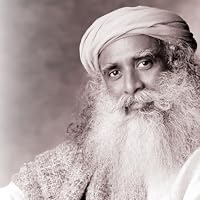
About Sadhguru
We have collected 30 quotes from 1 book by Sadhguru on BookQuoters.
More about the author →About the book
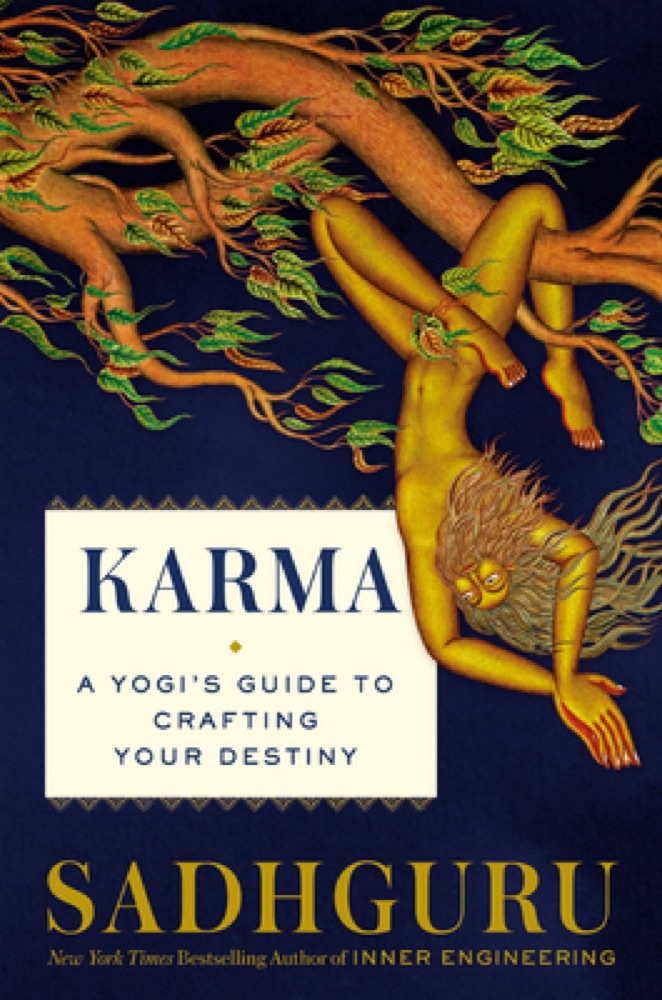
A new perspective on the overused and misunderstood concept of "karma" that offers the key to happiness and enlightenment, from the New York Times bestselling author and world-renowned spiritual master Sadhguru.
What is karma? Most people understand karma as a balance sheet of good and bad deeds, virtues and sins. The mechanism that decrees that we cannot evade the consequences of our own actions. In reality, karma has nothing to do with reward and punishment. Karma simply means action: your action, your responsibility. It isn't some external system of crime and punishment, but an internal cycle generated by you. Accumulation of karma is determined only by your intention and the way you respond to what is happening to you. Over time, it's possible to become ensnared by your own unconscious patterns of behavior.
In Karma, Sadhguru seeks to put you back in the driver's seat, turning
Book details
- First published
- 2021
- Author
- Sadhguru
- Genre
- Nonfiction
- Goodreads rating
- 4.28 (7k ratings)
Keep reading
The Seven Spiritual Laws of Success: A Practical Guide to the Fulfillment of Your Dreams
 The Book of Secrets: Unlocking the Hidden Dimensions of Your Life
 Awakening the Buddha Within
 The Book of Secrets
 The Power of Now: A Guide to Spiritual Enlightenment
 Celebrating Silence: Excerpts from Five Years of Weekly Knowledge 1995-2000
 The Yoga Sutras of Pantanjali
 My Gita
 Buddha's Brain: The Practical Neuroscience of Happiness, Love, and Wisdom
 Against the Stream: A Buddhist Manual for Spiritual Revolutionaries
 The Yoga Sutras of Patanjali
 The Art of Power
 Seth Speaks: The Eternal Validity of the Soul
 Way of the Peaceful Warrior: A Book That Changes Lives
 Living Untethered: Beyond the Human Predicament
 The Book of Wisdom
 Hardcore Zen: Punk Rock, Monster Movies and the Truth about Reality
 Striking Thoughts: Bruce Lee's Wisdom for Daily Living
 A New Earth: Awakening to Your Life's Purpose
 Waking Up: A Guide to Spirituality Without Religion
 The Power of Intention: Learning to Co-create Your World Your Way
 Ask and It Is Given: Learning to Manifest Your Desires
 Buddhism Plain & Simple: The Practice of Being Aware, Right Now, Every Day
 The Tibetan Book of Living and Dying
 The Four Agreements: A Practical Guide to Personal Freedom
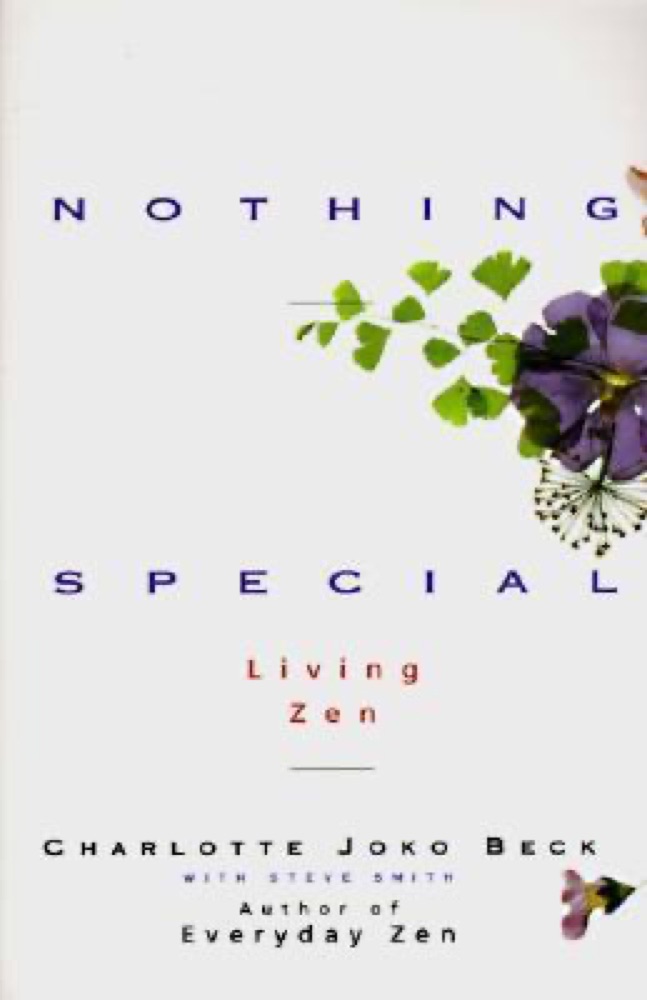 Nothing Special: A Zen Buddhist Guide to Awakening Through Daily Life's Feelings, Relationships, and Work
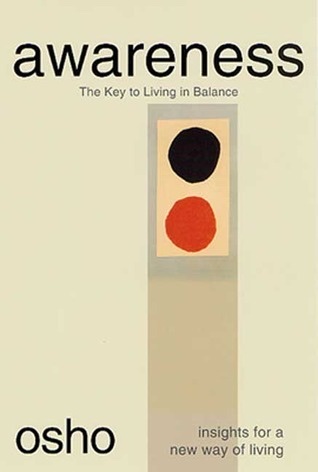 Awareness: The Key to Living in Balance
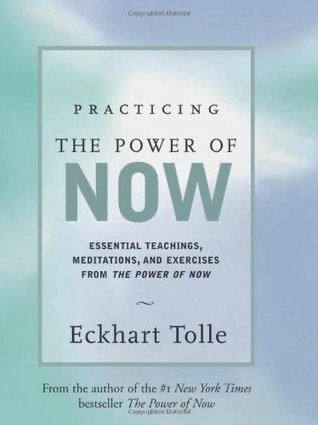 Practicing the Power of Now: Essential Teachings, Meditations, and Exercises from the Power of Now
 The Secret of Nagas
 The Master Key System
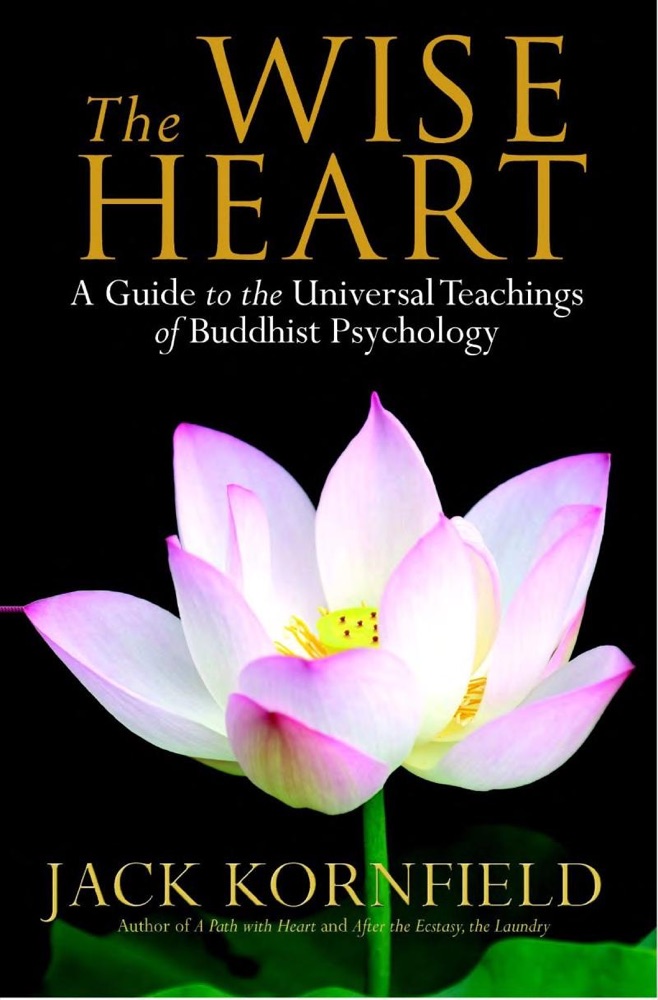 The Wise Heart: A Guide to the Universal Teachings of Buddhist Psychology
 The Art Of Living
 The Shift: Taking Your Life from Ambition to Meaning
 Be Here Now
 What the Buddha Taught
 The Power
 Conversations with God: An Uncommon Dialogue, Book 1
 Mindfulness in Plain English
 The Heart of the Buddha's Teaching: Transforming Suffering into Peace, Joy, and Liberation
 SynchroDestiny: Harnessing the Infinite Power of Coincidence to Create Miracles
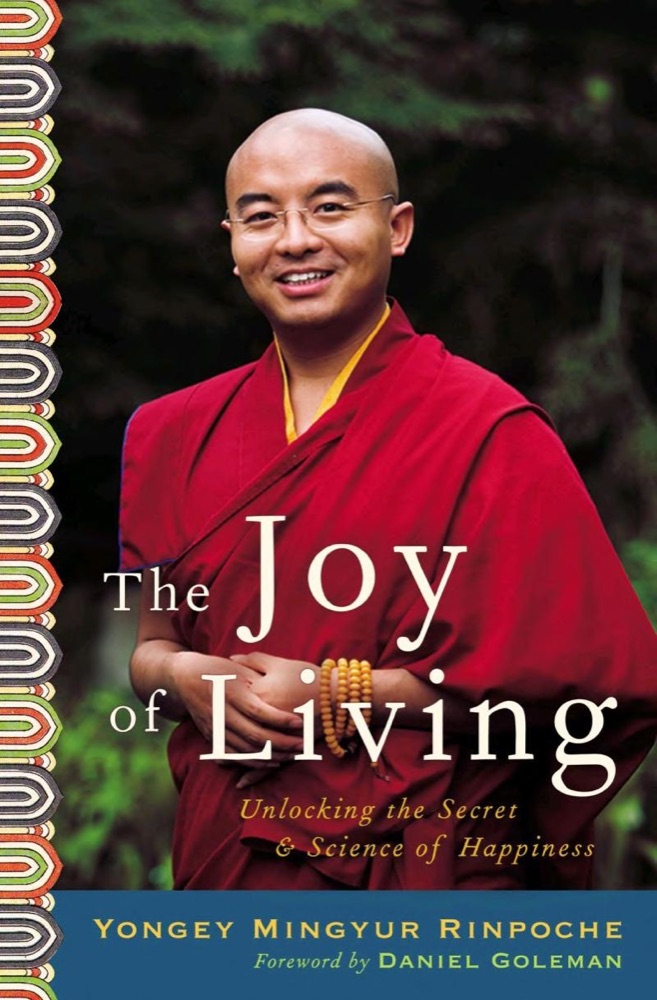 The Joy of Living: Unlocking the Secret and Science of Happiness
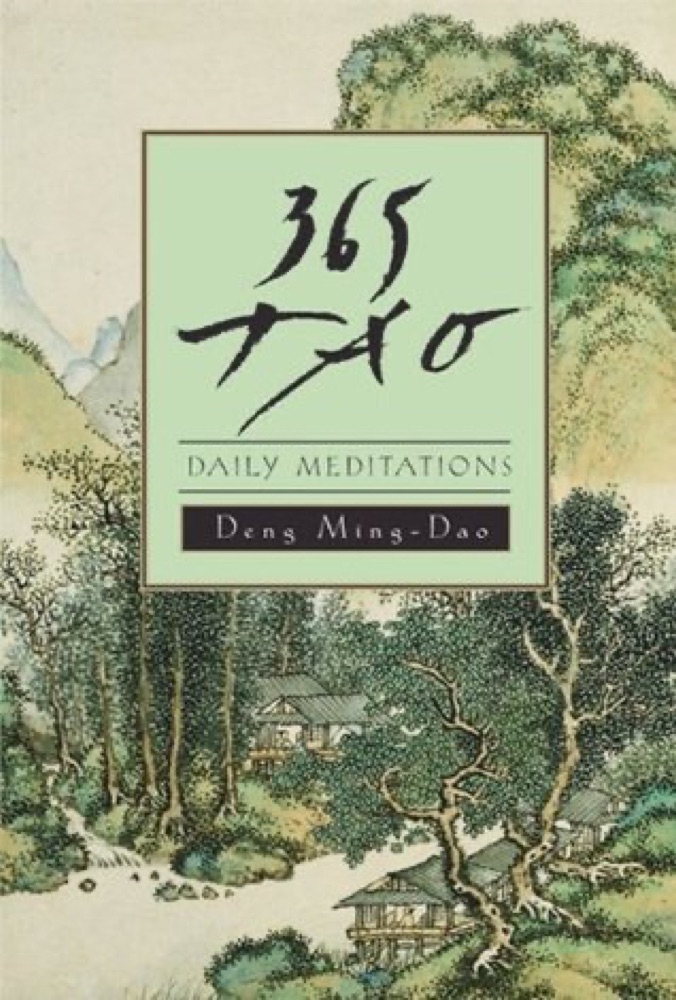 365 Tao: A Study of Taoist Wisdom for Daily Life
 A Joseph Campbell Companion: Reflections on the Art of Living
 Everyday Zen: Love & Work
 The Secret
 The Oath of the Vayuputras
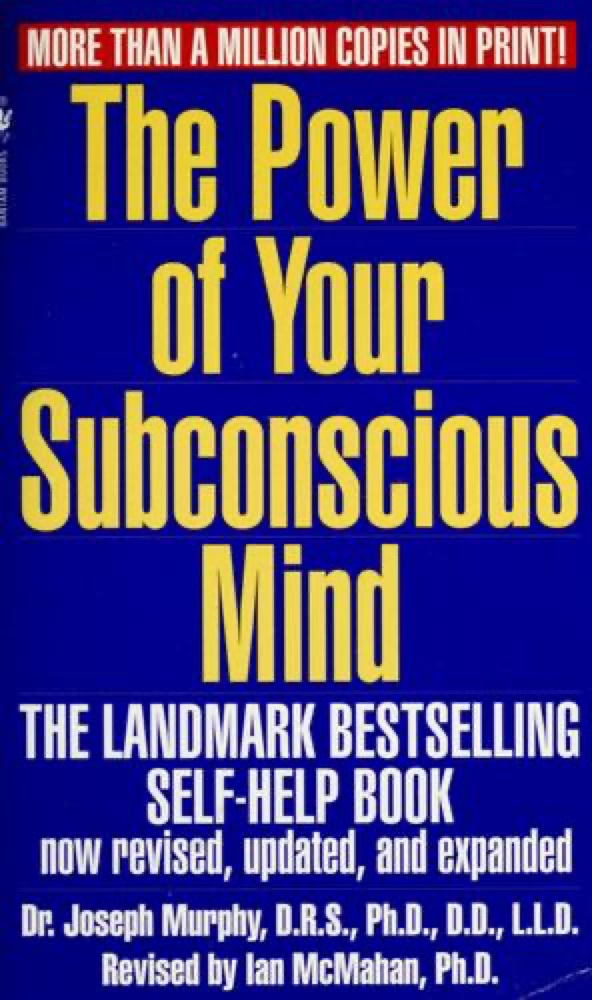 The Power of Your Subconscious Mind
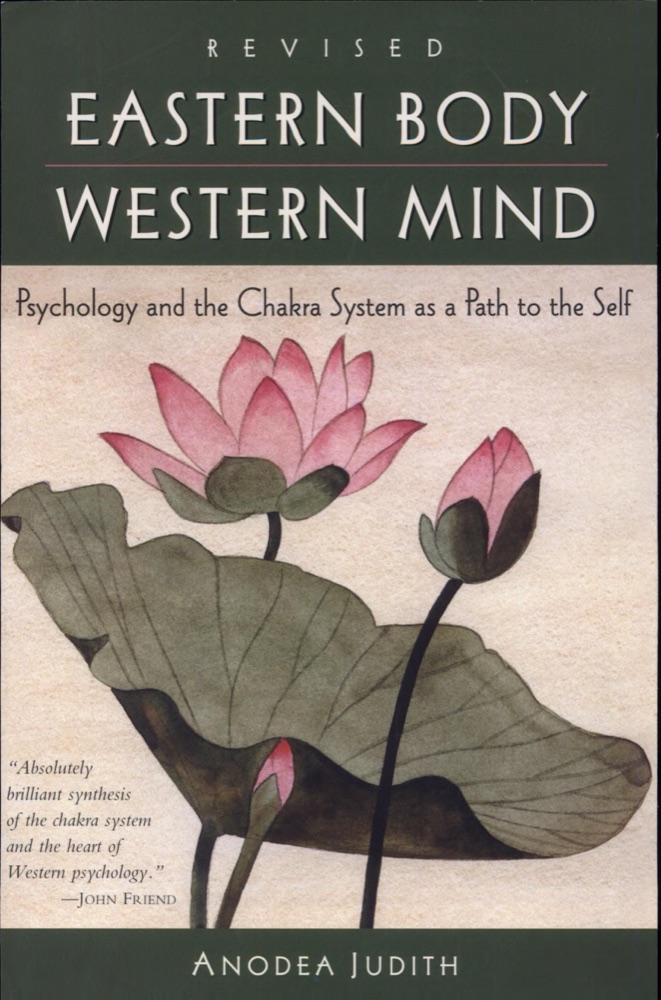 Eastern Body, Western Mind: Psychology and the Chakra System as a Path to the Self
 Meditation for Beginners
 Be Water, My Friend: The Teachings of Bruce Lee
 Anatomy of the Spirit: The Seven Stages of Power and Healing
 Your Erroneous Zones: Step-By-Step Advice for Escaping the Trap of Negative Thinking and Taking Control of Your Life
 Tibetan Book of the Dead
 The Power of Myth
 You Are the Placebo: Making Your Mind Matter
 The Law of Attraction: The Basics of the Teachings of Abraham
 Cutting Through Spiritual Materialism