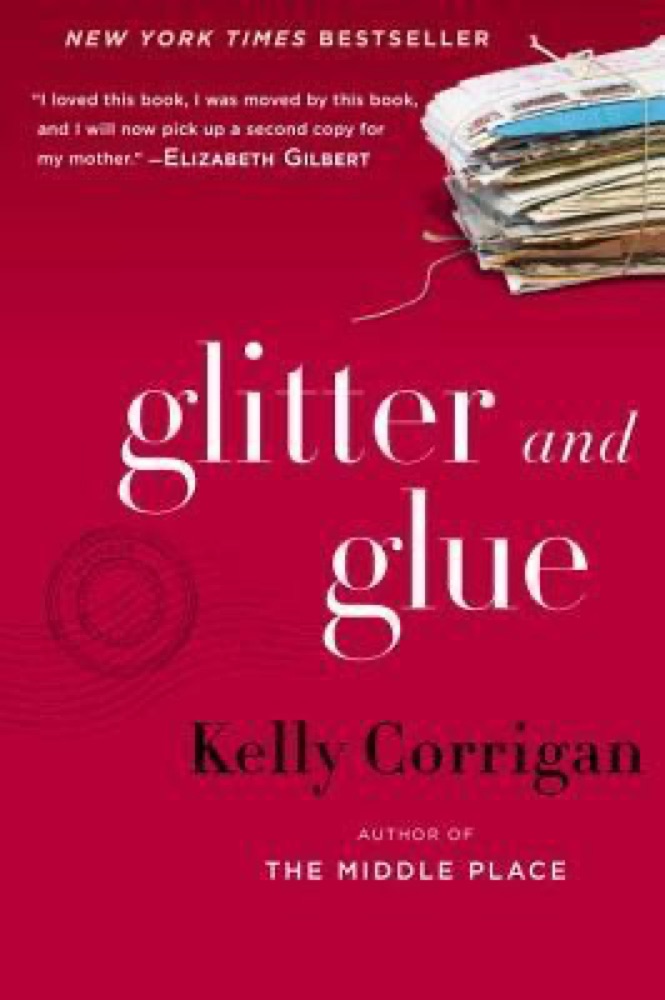
 Glitter and Glue
Quotes from the Book
The relationship between mother and son and mother and daughter is different, because the mother is a mirror in which the daughter sees her future self and the daughter is a mirror in which the mother sees her lost self.
9
If we knew, if we understood when we were young how crucial childhood is, no one would ever dare have children.
8
We all carry our mothers like a hole in our souls, small or big, living or dead.
4
The relationship of a work of art to reality is uninteresting, the work’s relationship to the truth is crucial; the true value of the work doesn’t lie in its relationship to a so-called reality, but in its effect on the observer.
2
The lie some people need to live can be the undoing of others.
1
It’s understandable that parents, once they are older and wiser, want their children to look at them afresh. But no one can expect or demand of the children that they forget the image of their mother as they experienced her in their childhood or that they erase the image of their mother created over the first thirty years of their life and instead see her objectively as a seventy or eighty-year-old.
1
The mother in real life, our experience of the individual, actual mother, is interwoven with the mythical mother, poor Mum and every mother and I who all bear the mythological cross.
I wonder if Mum always felt that being my mum was incompatible with being herself?
I don't miss anyone, the only thing I might miss is insight.
Someone who is in regular contact with their mother and who talks about the past with her, helps re-create the past, together they make history.
A mother can never be an ordinary human being to her children, and I am one of her children.
Jag bodde i hennes kropp i nio månader, hon födde mig under smärta och såg till att jag inte dog, jag sög mjölk ur hennes bröst, hon tvättade min kropps avfallsämnen och klädde mig i rena kläder, lade mig i en säng, jag utgår ifrån att den var varm. Hon vyssjade och bar mig, även om det var med största ambivalens, borstade mina tänder när de kom, lärde mig att prata [..] Den människa jag en gång upplevde mig själv som en del av, var symbiotisk med, totalt beroende av på alla sätt, den som om den försummade mig hotade min existens och som jag därför följde med argusögon, med öronen på skaft, hade hela min sinnesapparat riktad mot, vad viskade hon i mitt öra då hon vyssjade och bar mig, den första sång jag höra fick
Jag kör med hjärtat i halsgropen, det dunkar i svalget medan jag närmar mig, jag vet inte vad jag ger mig in i, det är det jag ska ta reda på. Satte mig i bilen annorlunda än jag brukar, vad som än händer kommer jag att lära mig något om mig själv, jag är nyfiken på vad det är.
Jag tänker på älgens svarta ögon och ritar dess tunga jordbundna gång med kolkrita, jag kan lämna in kolteckningar till den retrospektiva. Jag går ut och lägger mig på vallen, sluter ögonen och känner efter hand en intensiv fysisk kontakt med den knöliga mossan under mig, fukten från marken som långsamt sipprar upp i anoraken och överdragsbyxorna och gör mig våt och jag sjunker inåt i mig själv och känner jordens våta tyngd dra mig till sig och det blir klart för mig att det inte är till himlen vi ska vända oss, utan nedåt
Watch on YouTube
About Vigdis Hjorth
We have collected 14 quotes from 1 book by Vigdis Hjorth on BookQuoters.
More about the author →About the book
A cat and mouse game of surveillance and psychological torment develops between a middle-aged artist and her aging mother, as Vigdis Hjorth returns to the themes of her controversial modern classic, Will and Testament
'To mother is to murder, or close enough', thinks Johanna, as she looks at the spelling of the two words in Norwegian. She's recently widowed and back in Oslo after a long absence as she prepares for a retrospective of her art. The subject of her work is motherhood and some of her more controversial paintings have brought about a dramatic rift between parent and child. This new proximity, after decades of acrimonious absence, set both women on edge, and before too long Johanna finds her mother stalking her thoughts, and Johanna starts stalking her mother's house.
Book details
- First published
- 2020
- Author
- Vigdis Hjorth
- Genre
- Fiction
- Goodreads rating
- 3.86 (8k ratings)
The buzz
- The New York TimesReview in The New York Timesprofessional review (via Book Marks)
- Kirkus ReviewsReview in Kirkus Reviewsprofessional review (via Book Marks)
- Publishers WeeklyReview in Publishers Weeklyprofessional review (via Book Marks)
- AsymptotejournalReview in Asymptotejournalprofessional review (via Book Marks)
- ForewordreviewsReview in Forewordreviewsprofessional review (via Book Marks)
- 4ColumnsReview in 4Columnsprofessional review (via Book Marks)
Keep reading
Glitter and Glue
 Are You My Mother?: A Comic Drama
 Mom & Me & Mom
 The Mother-in-Law
 What My Mother and I Don't Talk About: Fifteen Writers Break the Silence
 Crying in H Mart
 A Woman's Story
 I'm Supposed to Protect You from All This
 Bluebeard's Egg
 Motherless Daughters: The Legacy of Loss
 The Bright Years
 The Book of Goose
 The House of My Mother: A Daughter's Quest for Freedom
 Burnt Sugar
 Wild Game: My Mother, Her Lover, and Me
 The New Wilderness
 One True Thing
 Aftermath: On Marriage and Separation
 The Lost Daughter
 Parade
 Mothers Who Can't Love: A Healing Guide for Daughters
 Untamed
 House of Glass
 The Trauma Cleaner: One Woman's Extraordinary Life in the Business of Death, Decay, and Disaster
 Women We Buried, Women We Burned: A Memoir
 The Many Daughters of Afong Moy
 Motherhood
 Summer Island
 Just as I Am
 Winter Garden
 Homecoming
 Saint X
 Now Is the Time to Open Your Heart
 Bettyville: A Memoir
 Please Look After Mom
 The Hidden Girl and Other Stories
 A Very Easy Death
 The End of Eddy
 The Push
 All Is Not Forgotten
 Joan Is Okay
 Stay with Me
 Beautyland
 Memories, Dreams, Reflections
 The Bonesetter's Daughter
 In Search of Our Mothers' Gardens: Womanist Prose
 They're Going to Love You
 Hot Milk
 Essential Labor: Mothering as Social Change
 My Mother's Secret
 Shame
Shame
 Motherthing
 All That I Am
 Violeta
 When Women Were Dragons
 Still Born
 Elizabeth Finch
 The Lying Life of Adults
 The Frozen River
 A Woman Is No Man