
 Dead Wake: The Last Crossing of the Lusitania
Quotes from the Book
If one is traveling simply for the sake of traveling,” Bly liked to say, “and not for the purpose of impressing fellow travelers, the problem of baggage becomes a very simple one.
3
A free American girl can accommodate herself to circumstances without the aid of a man.” -Nellie Bly
2
Nellie Bly and Elizabeth Bisland were not only racing around the world; they were also racing through the very heart of the Victorian age.
but all were shot through with Bly’s unmistakable passion for a good story and her uncanny ability to capture the public’s imagination, the sheer force of her personality demanding that attention be paid to the plight of the unfortunate, and, not incidentally, to herself.
The writer Mary Cadwalader Jones felt obliged to begin her book European Travel for Women: Notes and Suggestions by remarking that “unless travellers are willing to leave national prejudices behind them, and ready to see whatever is characteristic and excellent in a foreign country, without finding fault because it is unfamiliar, they had better remain at home. “Americans,” she pointedly added, “are among the worst offenders in this regard.
By the 1890s Americans had also begun to travel to Europe in much larger numbers—though often, in imperial fashion, they seemed to want to bring their own country with them. In Liverpool they could stay at the Hotel Washington, in Florence at the Hôtel du New York, and in Paris at the Hôtel États-Unis and Hôtel de l’Oncle Tom. Everywhere concierges, waiters, and carriage drivers learned English in order to communicate with American tourists who insisted on speaking only their own language. Throughout Europe, hotels installed extra baths and elevators in the American fashion, and restaurants began offering such American favorites as ice cream and soda; still, it was reported, American travelers often complained when they could not find fried ham or pork and beans on the menu. These were the tourists Henry James dismissed as “vulgar, vulgar, vulgar,” who could easily be recognized by their enormous bags, bad French, and demands for pale ale. Henry Adams decried the typical American traveler, “bored, patient, helpless, indulgent to an extreme,” who was to be found “in every railway station in Europe carefully explaining to every listener that the happiest day of his life would be the day he should land on the pier in New York.
This was an astonishing—and entirely unsubstantiated—accusation, made against not only Elizabeth Bisland but also the officers of the Oceanic, who had by Bly’s own account done everything possible to deliver her to San Francisco as quickly as possible and whom she elsewhere characterized as “perfect, from the captain down.” In that regard, it might also be noted that in fact the Oceanic arrived in San Francisco one day early, not one day late; the steamship was late only in relation to Chief Engineer William Allen’s prediction that Nellie Bly would be brought across the Pacific in record-breaking time—a prediction that he believed so strongly that he had it painted on the ship’s engines. All in all it was, the Tribune observed, “a pretty piece of feminine revenge.
From the very beginning of her career Bly had placed herself at the center of her reportage: her exposé of the Blackwell’s Island Lunatic Asylum, for instance, had focused in large part on how she managed to get inside the asylum—the women inmates did not even appear until midway through the story.
(To the shocked tourists among his parties Ah Cum quietly but firmly defended traditional Chinese practices; when asked, for instance, why Chinese women bound their feet he replied simply that European women pinched their waists, which was far more injurious.)
With that thought came to me a shamed feeling that there I was, a free-born American girl, the native of the grandest country on earth, forced to be silent because I could not in honesty speak proudly of the rulers of my land, unless I went back to those two kings of manhood, George Washington and Abraham Lincoln.
As she traveled among the English, Nellie Bly was becoming increasingly conscious of the peculiar privilege that imperial power conferred upon its citizens: the privilege of insensitivity.
The idea for the novel seems to have been born in the summer of 1871, when Jules Verne, sitting in a Paris café, noticed a newspaper advertisement for a tourist trip around the world being organized by the British travel agent Thomas Cook. That previously unthinkable notion—that not just a single country or continent but the entire globe might be the subject of a tourist excursion—was itself traceable to the opening of the Suez Canal in November 1869, which established for the first time a direct water route between Europe and Asia.
In October 1883, representatives of the largest railroad companies met at a General Time Convention in Chicago, at which it was decided to divide the country into four time zones, corresponding to the mean sun time at the meridians near Philadelphia, Memphis, Denver, and Fresno. This action had been taken without the consent of the president, the Congress, or the courts, but almost immediately it became the de facto law of the land. On Sunday, November 18, 1883, clocks across the country were changed to the new railroad standard; that Sunday became known as “the day of two noons.” Local mean time was gone; now everyone was living by railroad time.
The locomotive, its plume of smoke trailing behind it like a war pennant, now seemed to be a natural feature of the landscape, and to most Americans it represented progress, modernity, even beauty.
FIFTY-THREE MILES west of Ogden stood the railroad station at Promontory Summit, Utah, where only two decades earlier, in 1869, the final spike in the transcontinental railroad, the legendary “Golden Spike,” had been hammered into a ceremonial tie of polished California laurel. There the Union Pacific met the Central Pacific, and the nation, only a few years earlier torn apart in civil war, had been joined together by the railroads.
the fast mail train arrived at Ogden on schedule. The final seventy-six miles had been covered in sixty-five minutes—the shortest time ever recorded on that stretch of track. Having made good on his promise, Cyclone Bill Downing dismounted from his cab; casually remarking that these night rides were prone to give a man a cold, he passed through the swinging doors of a bar on the corner and was not seen again.
Nellie Bly first came to the World offices two years before to seek work as a reporter, the story idea she had suggested was to sail back from England in steerage so that she might allow The World’s readers to learn about the appalling conditions endured by those below on their journey across the ocean. Now, as a celebrated World reporter, she was only a few steps away, but during her time on the Augusta Victoria she seems never to have set foot into steerage, and she never wrote a word about it.
For those traveling in steerage, an oceangoing steamship was not a floating palace but a floating tenement: the class system did not stop at the water’s edge but was instead perfectly replicated, in miniature, aboard ship.
The writer Mary Cadwalder Jones felt obliged to begin her book European Travel for Women: Notes and Suggestions by remarking that "unless travellers are willing to leave national prejudices behind them, and ready to see whatever is characteristic and excellent in a foreign country, without finding fault because it is unfamiliar, they had better remain at home." "Americans," she pointedly added, "are among the worst offenders in this regard.
The wretchedness of the condition was perhaps best conveyed by the old saying that those suffering from seasickness believe they will die on the first day, are sure they will on the second, and hope they will on the third.
Travel, she had discovered, was a delightful means of gratifying the intelligent curiosity that Dr. Johnson had called the root of all wisdom and culture. “I go to bed exhaustedly happy,” she wrote in her notebook, “and wake up expectantly smiling.
The state of Illinois contained twenty-seven different time zones, Wisconsin thirty-eight. In Pittsburgh the train station had six clocks, and each one showed a different time. When a clock struck noon in Washington, D.C., the time was 12:08 in Philadelphia, 12:12 in New York, and 12:24 in Boston.
Her official name was Liberty Enlightening the World, but she was most often referred to simply as “Bartholdi’s statue.” The Alsatian sculptor Frédéric-Auguste Bartholdi had originally meant for her to stand at the entrance to the Suez Canal, where, in the veil and dress of an Egyptian peasant woman, she would have held up a lantern that symbolized the light of Egypt bringing progress to Asia. That plan, however, had been rejected by Egypt’s ruler Khedive Isma’il Pasha as too expensive, and so Bartholdi went back to the drawing board, where he converted progress into liberty.
After the period of sex-attraction has passed, women have no power in America.” -Elizabeth Bisland
Watch on YouTube
About Matthew Goodman
We have collected 24 quotes from 1 book by Matthew Goodman on BookQuoters.
More about the author →About the book
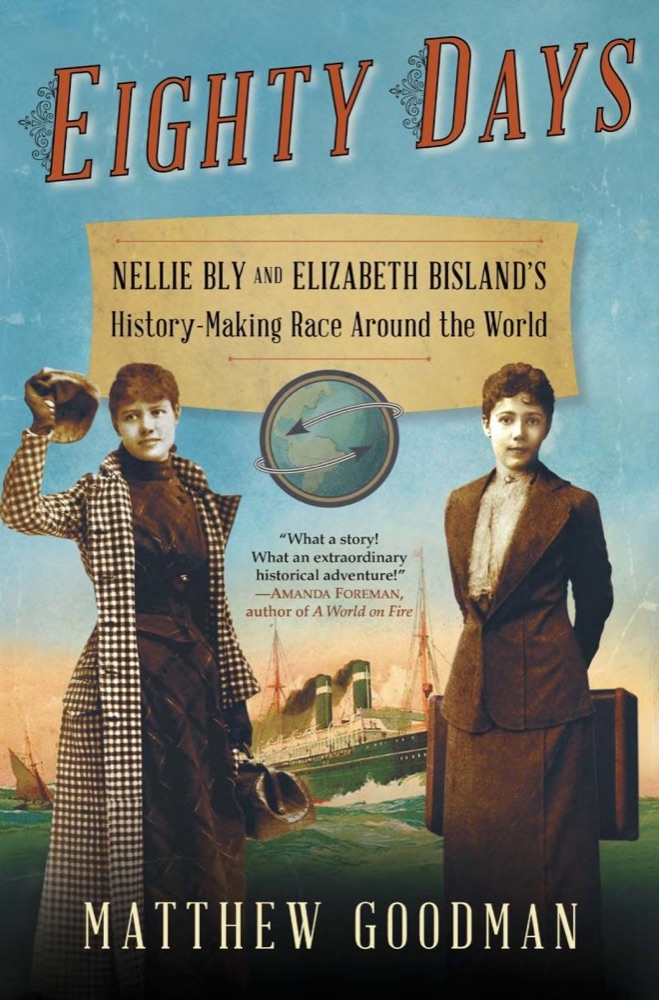
1889: Two women, successful journalists and writers, set off in a desperate rate in opposite directions, each determined to outdo Jules Verne's fictional hero Phileas Fogg and circle the globe in less than eighty days.
On November 14, 1889, Nellie Bly, the crusading young female reporter for Joseph Pulitzer's World newspaper, left New York City by steamship on a quest to break the record for the fastest trip around the world. Also departing from New York that day—and heading in the opposite direction by train - was a young journalist from The Cosmopolitan magazine, Elizabeth Bisland. Each woman was determined to outdo Jules Verne's fictional hero Phileas Fogg and circle the globe in less than eighty days. The dramatic race that ensued would span twenty-eight thousand miles, captivate the nation, and change both competitors' lives forever.
The two women were a study in contrasts. N
Book details
- First published
- 2013
- Author
- Matthew Goodman
- Genre
- Nonfiction
- Goodreads rating
- 3.73 (7k ratings)
Keep reading
Dead Wake: The Last Crossing of the Lusitania
 The Greater Journey: Americans in Paris
 America's Women: 400 Years of Dolls, Drudges, Helpmates, and Heroines
 The Path Between the Seas: The Creation of the Panama Canal, 1870-1914
 American Colossus: The Triumph of Capitalism, 1865-1900
 One Summer: America, 1927
 Prairie Fires: The American Dreams of Laura Ingalls Wilder
 TransAtlantic
 The Proud Tower: A Portrait of the World Before the War, 1890-1914
 Life on the Mississippi
 Made in America: An Informal History of the English Language in the United States
 The Devil in the White City: Murder, Magic, and Madness at the Fair That Changed America
 In Extremis: The Life of War Correspondent Marie Colvin
 Around the World in Eighty Days
 At Home: A Short History of Private Life
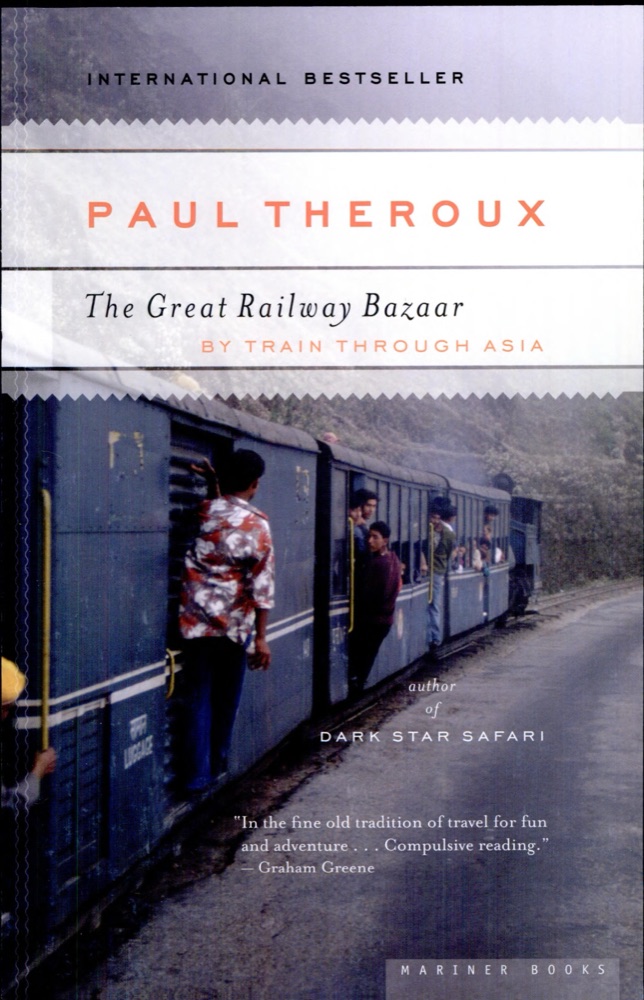 The Great Railway Bazaar
 The Fraud
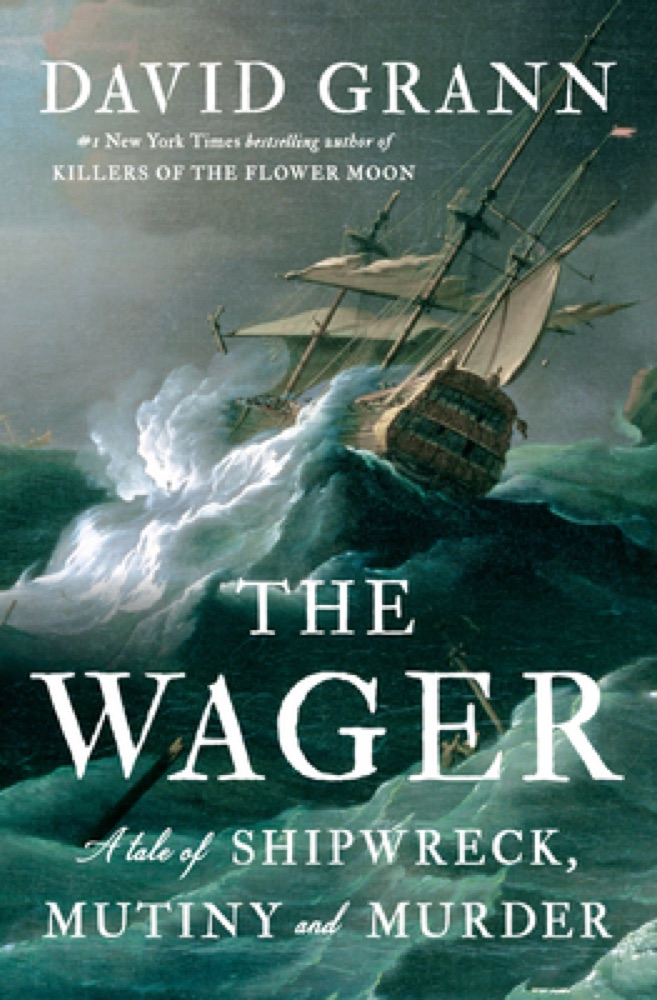 The Wager: A Tale of Shipwreck, Mutiny and Murder
 The Wayward Bus
 River of Smoke
 The Great Bridge: The Epic Story of the Building of the Brooklyn Bridge
 The Novel Habits of Happiness
 Shrines of Gaiety
 Mason & Dixon
 The Bonfire of the Vanities
 The Happy Isles of Oceania: Paddling the Pacific
 Essays of E.B. White
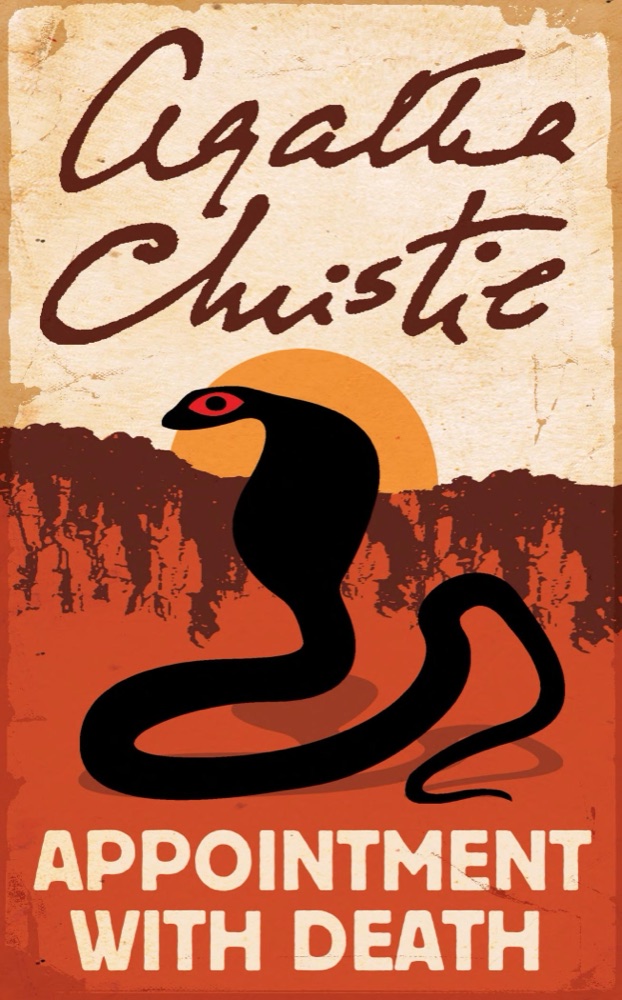 Appointment with Death
 Spying on the South: An Odyssey Across the American Divide
 2061: Odyssey Three
 Table for Two
 State of Wonder
 Undaunted Courage: The Pioneering First Mission to Explore America's Wild Frontier
 The Last Train to Zona Verde: My Ultimate African Safari
 Mislaid
 Eve's Hollywood
 Polostan
 The Innocents Abroad
 Mercury Pictures Presents
 Fall of Giants
 Nathaniel's Nutmeg: How One Man's Courage Changed the Course of History
 The Underground Railroad
 Unfamiliar Fishes
 New York
 Main Street
 Travels with Myself and Another
 A Bend in the River
 Gun Island
 Sea of Poppies
 The Warmth of Other Suns: The Epic Story of America's Great Migration
 The Splendid and the Vile: A Saga of Churchill, Family, and Defiance During the Blitz
 The First Salute : View of the American Revolution
 A Tramp Abroad
 Lone Women
 Precipice
 Destiny of the Republic: A Tale of Madness, Medicine and the Murder of a President
 Paris to the Moon
 The Day of the Scorpion
 Hell and Other Destinations: A 21st-Century Memoir