
 Integrity: The Courage to Meet the Demands of Reality
Quotes from the Book
Boundaries define us. They define what is me and what is not me. A boundary shows me where i end and someone else begins, leading me to a sense of ownership. Knowing what I am to own and take responsibility for gives me freedom. Taking responsibility for my life opens up many different options. Boundaries help us keep the good in and the bad out. Setting boundaries inevitably involves taking responsibility for your choices. You are the one who makes them. You are the one who must live with their consequences. And you are the one who may be keeping yourself from making the choices you could be happy with. We must own our own thoughts and clarify distorted thinking.
96
We can't manipulate people into swallowing our boundaries by sugarcoating them. Boundaries are a "litmus test" for the quality of our relationships. Those people in our lives who can respect our boundaries will love our wills, our opinions, our separateness. Those who can't respect our boundaries are telling us that they don't love our nos. They only love our yeses, our compliance. "I only like it when you do what I want.
89
The Bible is clear about two principles: (1) We always need to forgive, but (2) we don’t always achieve reconciliation. Forgiveness is something that we do in our hearts; we release someone from a debt that they owe us. We write off the person’s debt, and she no longer owes us. We no longer condemn her. She is clean. Only one party is needed for forgiveness: me. The person who owes me a debt does not have to ask my forgiveness. It is a work of grace in my heart.
73
When we begin to set boundaries with people we love, a really hard thing happens: they hurt. They may feel a hole where you used to plug up their aloneness, their disorganization, or their financial irresponsibility. Whatever it is, they will feel a loss. If you love them, this will be difficult for you to watch. But, when you are dealing with someone who is hurting, remember that your boundaries are both necessary for you and helpful for them. If you have been enabling them to be irresponsible, your limit setting may nudge them toward responsibility.
73
True intimacy is only built around the freedom to disagree.
69
If you continue to blame other people for “making” you feel guilty, they still have power over you, and you are saying that you will only feel good when they stop doing that. You are giving them control over your life. Stop blaming other people.
59
One of the first signs that you’re beginning to develop boundaries is a sense of resentment, frustration, or anger at the subtle and not-so-subtle violations in your life. Just as radar signals the approach of a foreign missile, your anger can alert you to boundary violations in your life.
57
We have our own thoughts, and if we want others to know them, we must tell them.
53
To rescue people from the natural consequences of their behavior is to render them powerless.
41
Forgiveness gives me boundaries because it unhooks me from the hurtful person, and then I can act responsibly, wisely. If I am not forgiving them, I am still in a destructive relationship with them.
41
Do not let an out-of-control person be the cue for you to change your course. Just allow him to be angry and decide for yourself what you need to do.
35
Many people are too quick to trust someone in the name of forgiveness and not make sure that the other is producing “fruit in keeping with repentance” (Luke 3:8). To continue to open yourself up emotionally to an abusive or addicted person without seeing true change is foolish. Forgive, but guard your heart until you see sustained
34
Never say to a third party something about someone that you do not plan to say to the person himself.
30
We’ve all been around middle-aged people who have the boundaries of an eighteen-month-old. They have tantrums or sulk when others set limits on them, or they simply fold and comply with others just to keep the peace.
28
Proverbs 22:3 says that “the prudent man sees the evil and hides himself.” Sometimes physically removing yourself from a situation will help maintain boundaries. You can do this to replenish yourself physically, emotionally, and spiritually after you have given to your limit, as Jesus often did.
28
Boundary construction is most evident in three-year-olds. By this time, they should have mastered the following tasks: 1. The ability to be emotionally attached to others, yet without giving up a sense of self and one‘s freedom to be apart, 2. The ability to say appropriate no's to others without fear of loss of love, 3. The ability to take appropriate no's from others without withdrawing emotionally. Noting these tasks, a friend said half-joking, "They need to learn this by age three? How about by fourty-three?" Yes, these are tall orders but boundary development is essential in the early years of life.
26
Many couples have trouble with this aspect of marriage. They feel abandoned when their spouse wants time apart. In reality, spouses need time apart, which makes them realize the need to be back together. Spouses in healthy relationships cherish each other’s space and are champions of each other’s causes.
26
Things can hurt and not harm us. In fact they can even be good for us. And things that feel good can be very harmful to us.
25
Boundaries help us to distinguish our property so that we can take care of it. They help us to "guard our heart with all diligence." We need to keep things that will nurture us inside our fences and keep things that will harm us outside.
21
Confronting an irresponsible person is not painful to him; only consequences are.
20
People who own their lives do not feel guilty when they make choices about where they are going. They take other people into consideration, but when they make choices for the wishes of others, they are choosing out of love, not guilt; to advance a good, not to avoid a bad.
16
Problems arise when people act as if their "boulders" are daily loads, and refuse help, or as if their “daily loads" are boulders they shouldn’t have to carry. The results of these two instances are either perpetual pain or irresponsibility.
15
It's important to understand that your no is always subject to you. You own your boundaries. They don't own you. If you set limits with someone, and she responds maturely and lovingly, you can renegotiate the boundary. In addition, you can change the boundary if you are in a safer place.
14
We often fear being honest because it was not safe to express honesty in our earthly relationships. With Job we fear both abandonment and retaliation. People abandoned us or attacked us when we told them how we really felt. Rest assured, however, that God desires truth in our “inner parts” (Ps. 51:6). He is seeking people who will have a real relationship with him (John 4:23–24). He wants to hear it all, no matter how bad it seems to us. When we own what is within our boundaries, when we bring it into the light, God can transform it with his love.
14
Since you cannot get them to change, you must change yourself so that their destructive patterns no longer work on you.
13
As iron sharpens iron, we need confrontation and truth from others to grow. No one likes to hear negative things about him or herself. But in the long run it may be good for us. The Bible says that if we are wise, we will learn from it. Admonition from a friend, while it can hurt, can also help.
13
It’s scary to realize that the only thing holding our friends to us isn’t our performance, or our lovability, or their guilt, or their obligation. The only thing that will keep them calling, spending time with us, and putting up with us is love. And that’s the one thing we can’t control.
13
Did the dentist hurt you when he drilled your tooth to remove the cavity?” “Yes.” “Did he harm you?” “No, he made me feel better.” “Hurt and harm are different,” I pointed out. “When you ate the sugar that gave you the cavity, did that hurt?” “No, it tasted good,” he said, with a smile that told me he was catching on. “Did it harm you?” “Yes.” “That’s my point. Things can hurt and not harm us. In fact they can even be good for us. And things that feel good can be very harmful to us.
12
People with boundary problems usually have distorted attitudes about responsibility. They feel that to hold people responsible for their feelings, choices, and behaviors is mean. However, Proverbs repeatedly says that setting limits and accepting responsibility will save lives (Prov. 13:18, 24).
12
When we can’t hold back, or set boundaries, on what comes from our lips, our words are in charge—not us. But we are still responsible for those words. Our words do not come from somewhere outside of us, as if we were a ventriloquist’s dummy. They are the product of our hearts. Our saying, “I didn’t mean that,” is probably better translated, “I didn’t want you to know I thought that about you.” We need to take responsibility for our words. “But I tell you that men will have to give account on the day of judgment for every careless word they have spoken” (Matt. 12:36).
12
Watch on YouTube
About Henry Cloud
We have collected 189 quotes from 7 books by Henry Cloud on BookQuoters.
More about the author →More by Henry Cloud
Integrity: The Courage to Meet the Demands of Reality
 Necessary Endings: The Employees, Businesses, and Relationships That All of Us Have to Give Up in Order to Move Forward
 Boundaries with Kids: How Healthy Choices Grow Healthy Children
 Changes That Heal: How to Understand the Past to Ensure a Healthier Future
About the book
In order to call themselves good Christians, many people have drawn overly flexible boundaries (unwilling to say no, always accommodating others' needs) or overly rigid boundaries (to the point of being righteous and judgmental). Psychologists and inspirational speakers Cloud and Townsend show readers how to set reasonable boundaries in order to follow the true path of Christianity. This book has become immensely popular, most likely because it makes personal boundaries easier to define and is filled with spiritual purpose. Some cautions: the format can be overly self-helpish for such a complex discussion and the authors at one point imply that judicious spankings may be an acceptable form of setting boundaries with children. However, many Christians will probably find themselves grateful for this biblical context of boundaries. --Gail Hudson
Book details
- First published
- 1992
- Author
- Henry Cloud
- Genre
- Nonfiction
- Goodreads rating
- 4.21 (89k ratings)
Keep reading
Changes That Heal: How to Understand the Past to Ensure a Healthier Future
 Boundaries in Marriage: Understanding the Choices That Make or Break Loving Relationships
 The New Codependency: Help and Guidance for Today's Generation
 Drama Free: A Guide to Managing Unhealthy Family Relationships
 Codependent No More: How to Stop Controlling Others and Start Caring for Yourself
 Unglued: Making Wise Choices in the Midst of Raw Emotions
 Us: Getting Past You and Me to Build a More Loving Relationship
 Enemies of the Heart: Breaking Free from the Four Emotions That Control You
 The Four Agreements: A Practical Guide to Personal Freedom
 Professional Troublemaker: The Fear-Fighter Manual
 Bonds That Make Us Free: Healing Our Relationship, Coming to Ourselves
 How to Be Free: An Ancient Guide to the Stoic Life
 Mind Platter
 The Shack
 The Language of Letting Go: Daily Meditations on Codependency
 Nonviolent Communication: A Language of Life
 The Bait Of Satan: Living Free from the Deadly Trap of Offense
 More Than Two: A Practical Guide to Ethical Polyamory
 For the Love: Fighting for Grace in a World of Impossible Standards
 Of Mess and Moxie: Wrangling Delight Out of This Wild and Glorious Life
 Radical Honesty : How to Transform Your Life by Telling the Truth
 Your Erroneous Zones: Step-By-Step Advice for Escaping the Trap of Negative Thinking and Taking Control of Your Life
 The Mastery of Love: A Practical Guide to the Art of Relationship: A Toltec Wisdom Book
 Atlas of the Heart: Mapping Meaningful Connection and the Language of Human Experience
 Stop Walking on Eggshells: Taking Your Life Back When Someone You Care about Has Borderline Personality Disorder
 The Truth: An Uncomfortable Book About Relationships
 Radical Love: Learning to Accept Yourself and Others
 No Bad Parts: Healing Trauma & Restoring Wholeness with the Internal Family Systems Model
 The Dance of Connection: How to Talk to Someone When You're Mad, Hurt, Scared, Frustrated, Insulted, Betrayed, or Desperate
Boundaries with Kids: How Healthy Choices Grow Healthy Children
The Dance of Connection: How to Talk to Someone When You're Mad, Hurt, Scared, Frustrated, Insulted, Betrayed, or Desperate
Boundaries with Kids: How Healthy Choices Grow Healthy Children
 Feeding the Soul (Because It's My Business): Finding Our Way to Joy, Love, and Freedom
 Life Will Be the Death of Me: . . . and you too!
 Maybe You Should Talk to Someone: A Therapist, Her Therapist, and Our Lives Revealed
 The Light We Carry: Overcoming in Uncertain Times
 A Return to Love: Reflections on the Principles of "A Course in Miracles"
 Welcome Home: A Guide to Building a Home for Your Soul
 We Can Do Hard Things: Answers to Life's 20 Questions
 Be a People Person
 Carry On, Warrior: Thoughts on Life Unarmed
 Discourses and Selected Writings
 The Things You Can See Only When You Slow Down: How to Be Calm in a Busy World
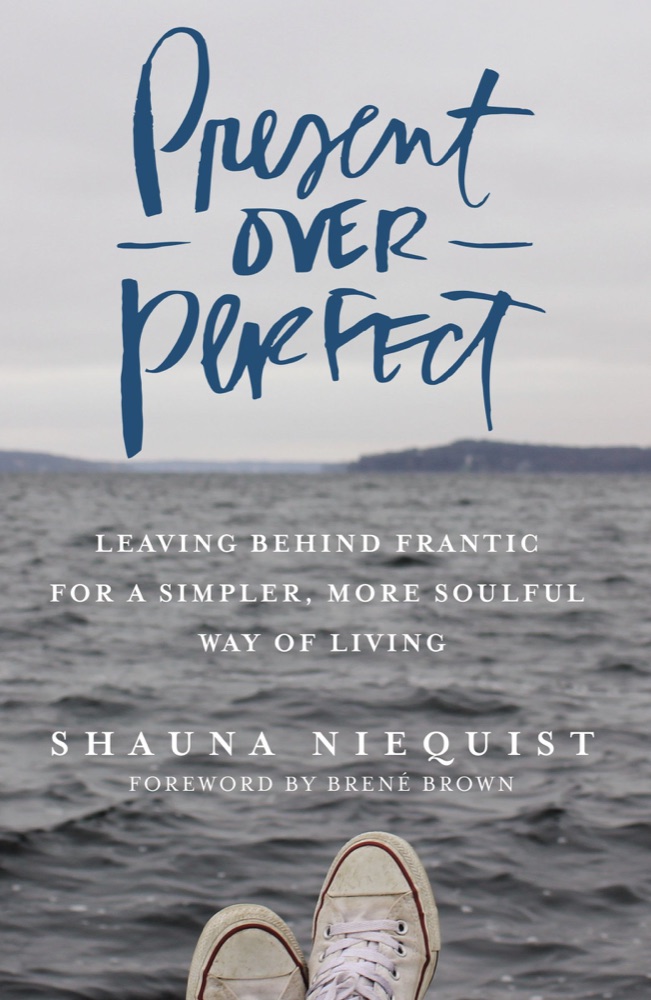 Present Over Perfect: Leaving Behind Frantic for a Simpler, More Soulful Way of Living
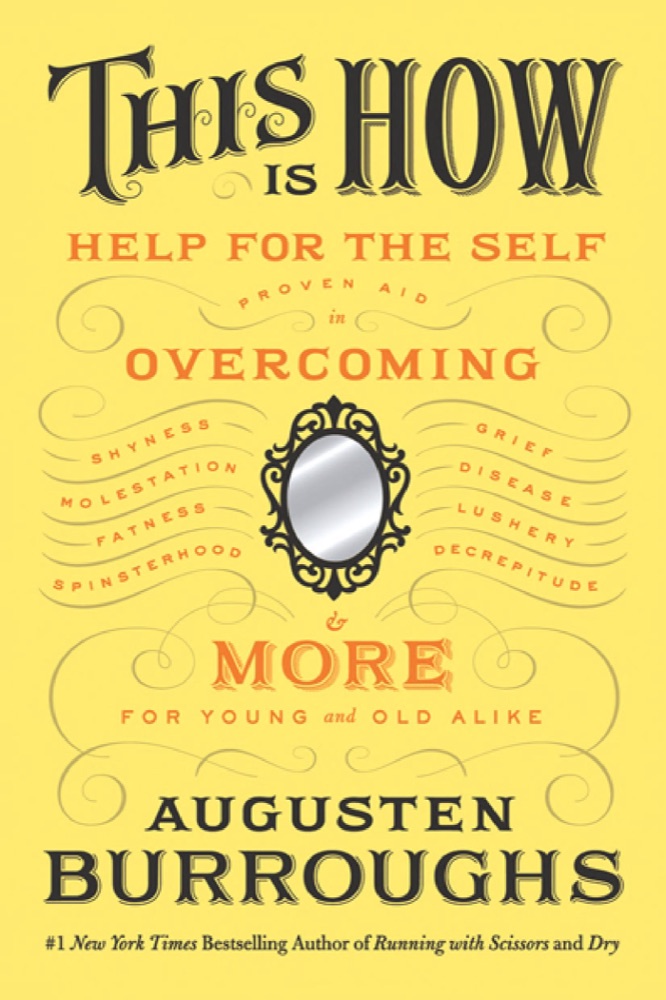 This Is How: Proven Aid in Overcoming Shyness, Molestation, Fatness, Spinsterhood, Grief, Disease, Lushery, Decrepitude & More. For Young and Old Alike.
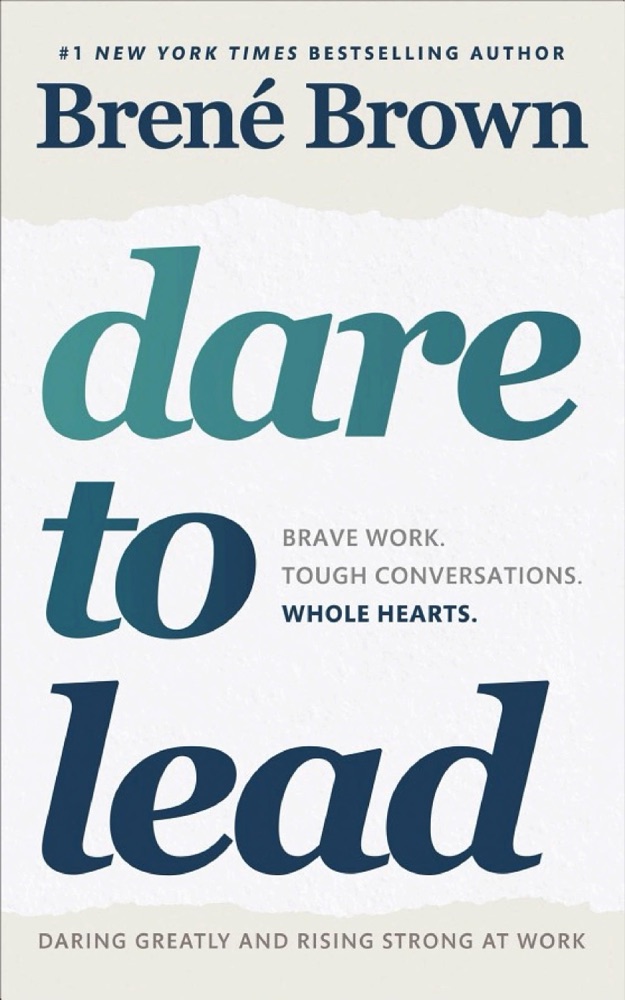 Dare to Lead
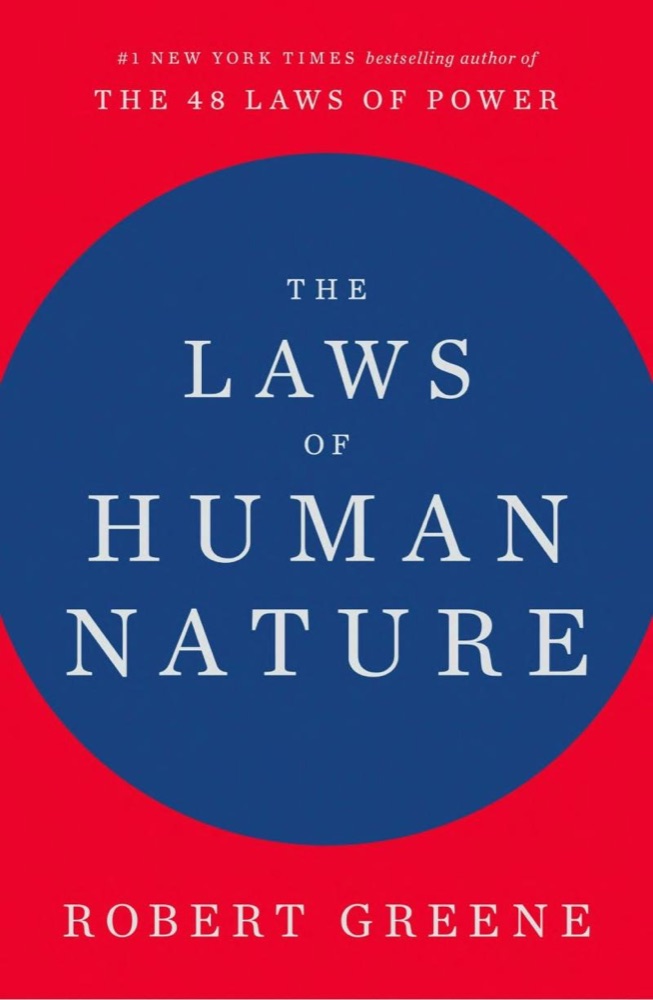 The Laws of Human Nature
 The Mountain Is You: Transforming Self-Sabotage Into Self-Mastery
 Rising Strong
 Some Assembly Required: A Journal of My Son's First Son
 Emotionally Healthy Spirituality: Unleash A Revolution In Your Life in Christ
 Tuesdays with Morrie
 Living Beyond Your Feelings: Controlling Emotions So They Don't Control You
 The Ethical Slut: A Guide to Infinite Sexual Possibilities
 The Art of Asking; or, How I Learned to Stop Worrying and Let People Help
 Messages from the Masters: Tapping into the Power of Love
 Stay
Stay
 Women Don't Owe You Pretty
 101 Essays That Will Change The Way You Think
 Brave Enough
 How to Be an Adult in Relationships: The Five Keys to Mindful Loving
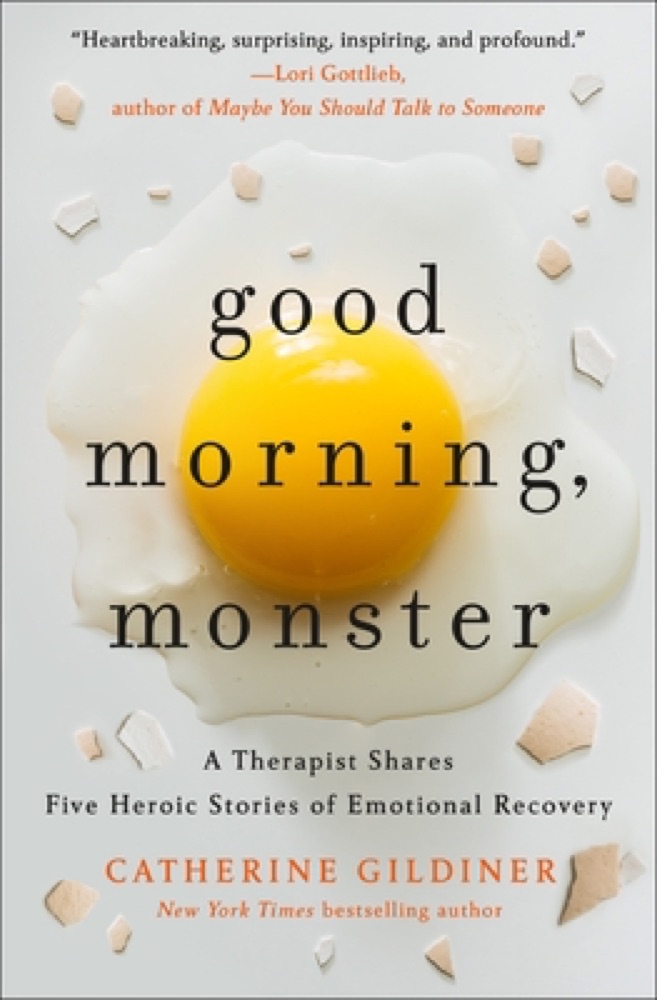 Good Morning, Monster: A Therapist Shares Five Heroic Stories of Emotional Recovery