
 Gliff
Gliff
Quotes from the Book
Words define us, they explain us, and, on occasion, they serve to control or isolate us.
116
I cannot overstate the benefits of a busy day for an anxious mind or a lonely heart.
93
Some words are more than letters on a page, don't you think? They have shape and texture. They are like bullets, full of energy, and when you give one breath you can feel its sharp edge against your lip.
72
A vulgar word, well placed and said with just enough vigour, can express far more than its polite equivalent.
56
...I realized that the words most often used to define us were words that described our function in relation to others. Even the most benign words- maiden, wife, mother - told the world whether we were virgins or not. What was the male equivalent of maiden? I could not think of it. What was the male equivalent of Mrs., of whore, of common scold?... Which words would define me? Which would be used to judge or contain?
49
Words are like stories ... They change as they are passed from mouth to mouth; their meanings stretch or truncate to fit what needs to be said.
43
LOSS 'Sorry for your loss, they say. And I want to know what they mean, because it's not just my boys I've lost. I've lost my motherhood, my chance to be a grandmother. I've lost the easy conversation of neighbours and the comfort of family in my old age. Every day I wake to some new loss that I hadn't thought of before, and I know that soon it will be my mind.' Vivienne Blackman, 1915
31
I feel like a dandelion just before the wind blows.
27
[Esme] 'And then I was born and then she [her mother Lily] died.' [Edith 'Ditte' Thompson, her godmother] 'Yes.' 'But when we talk about her, she comes to life.' 'Never forget that Esme. Words are our tools of resurrection.
24
It’s not about forgiveness, Essymay. We can’t always make the choices we’d like, but we can try to make the best of what we must settle for. Take care not to dwell.
23
It struck me that we are never fully at ease when we are aware of another's gaze. Perhaps we are never fully ourselves. In the desire to please or impress, to persuade or dominate, our movements become conscious, our features set. [Esme Nicholl]
22
...convention [is] the most subtle but oppressive dictator. [Edith 'Ditte' Thompson]
22
I often wondered what kind of slip I would be written on if I was a word. Something too long, certainly. Probably the wrong colour. A scrap of paper that didn't quite fit. I worried that perhaps I would never find my place in the pigeon-holes at all.
21
Some words are more important than others—I learned this, growing up in the Scriptorium. But it took me a long time to understand why.
20
Me needlework will always be here,” she said. “I see this and I feel…well, I don’t know the word. Like I’ll always be here.” “Permanent,” I said. “And the rest of the time?” “I feel like a dandelion just before the wind blows.
14
[Esme Nicholl] 'Morbs, Mabel? What does it mean?' [Mabel O'Shaughnessy] 'It's a sadness that comes and goes... I get the morbs, you get the morbs, even Miss Lizzie 'ere gets the morbs, though she'd never let on. A woman's lot, I reckon.' 'It must derive from morbid,' I said to myself.... 'I reckon it derives from grief,' said Mabel. 'From what we've lost and what we've never 'ad and never will. As I said, a woman's lot....
13
He shook his head. ‘I don’t think so. The war has made the present more important than the past, and far more certain than the future. How I feel right now is all I can rely on. And after all that you’ve told me, I think I love you more.
13
But when we talk about her, she comes to life.” “Never forget that, Esme. Words are our tools of resurrection.
12
It is context...that gives meaning. [Harry Nicholl]
12
The Dictionary is a history book, Esme. If it has taught me anything, it is that the way we conceive of things now will most certainly change.
11
Our thinking was limited by convention (the most subtle but oppressive dictator).
11
The past came towards me, and I closed the book.
11
We can't always make the choices we'd like, but we can try to make the best of what we must settle for.' [Lizzie Lester]
11
You are correct in your observation that words in common use that are not written down would necessarily be excluded. Your concern that some types of words, or words used by some types of people, will be lost to the future is really quite perceptive.
11
You are not the arbiter of knowledge, sir. You are its librarian.’ I pushed Women’s Words across his desk. ‘It is not for you to judge the importance of these words, simply to allow others to do so.
10
I clean, I help with the cooking, I set the fires. Everything I do gets eaten or dirtied or burned—at the end of a day there’s no proof I’ve been here at all.
9
Was I better? Before Shropshire I'd felt broken, as though I would fall should the scaffold of my work be removed. I didn't feel that now, but there was a fine crack through the middle of me, and I suspected it might never mend. I remembered Lizzie apologising to Mrs Lloyd the first time she stayed to chat, for the chip in the cup. 'A chip doesn't stop it from holding tea,' Mrs Lloyd had said.
9
Once the question of women’s political suffrage has been dealt with, less obvious inequalities will need to be exposed. Without realising it, you are already working for this cause. As grandfather said, it will be a long game. Play a position you are good at, and let others play theirs.
9
How reassuring it must be to know how you should act: like having a definition of yourself written clearly in black type.
9
A poet, perhaps, could arrange words in a way that creates the itch of fear or the heaviness of dread. They could make an enemy of mud and damp boots and raise your pulse just at the mention of them. A poet might be able to push this word or that to mean something more than what has been ordained by our dictionary men. I am not a poet, my love.
9
Watch on YouTube
About Pip Williams
We have collected 30 quotes from 1 book by Pip Williams on BookQuoters.
More about the author →About the book
In 1901, the word ‘Bondmaid’ was discovered missing from the Oxford English Dictionary. This is the story of the girl who stole it.
Esme is born into a world of words. Motherless and irrepressibly curious, she spends her childhood in the ‘Scriptorium’, a garden shed in Oxford where her father and a team of dedicated lexicographers are collecting words for the very first Oxford English Dictionary. Esme’s place is beneath the sorting table, unseen and unheard. One day a slip of paper containing the word ‘bondmaid’ flutters to the floor. Esme rescues the slip and stashes it in an old wooden case that belongs to her friend, Lizzie, a young servant in the big house. Esme begins to collect other words from the Scriptorium that are misplaced, discarded or have been neglected by the dictionary men. They help her make sense of the world.
Over time, Esme realises that some words are consider
Book details
- First published
- 2020
- Author
- Pip Williams
- Genre
- Historical
- Goodreads rating
- 4.01 (199k ratings)
The buzz
- Kirkus ReviewsReview in Kirkus Reviewsprofessional review (via Book Marks)
- Publishers WeeklyReview in Publishers Weeklyprofessional review (via Book Marks)
- Sydney Morning HeraldReview in Sydney Morning Heraldprofessional review (via Book Marks)
- BooklistReview in Booklistprofessional review (via Book Marks)
- BookreporterReview in Bookreporterprofessional review (via Book Marks)
- HistoricalnovelsocietyReview in Historicalnovelsocietyprofessional review (via Book Marks)
Keep reading
Gliff
 The Word Exchange
 Out of Oz
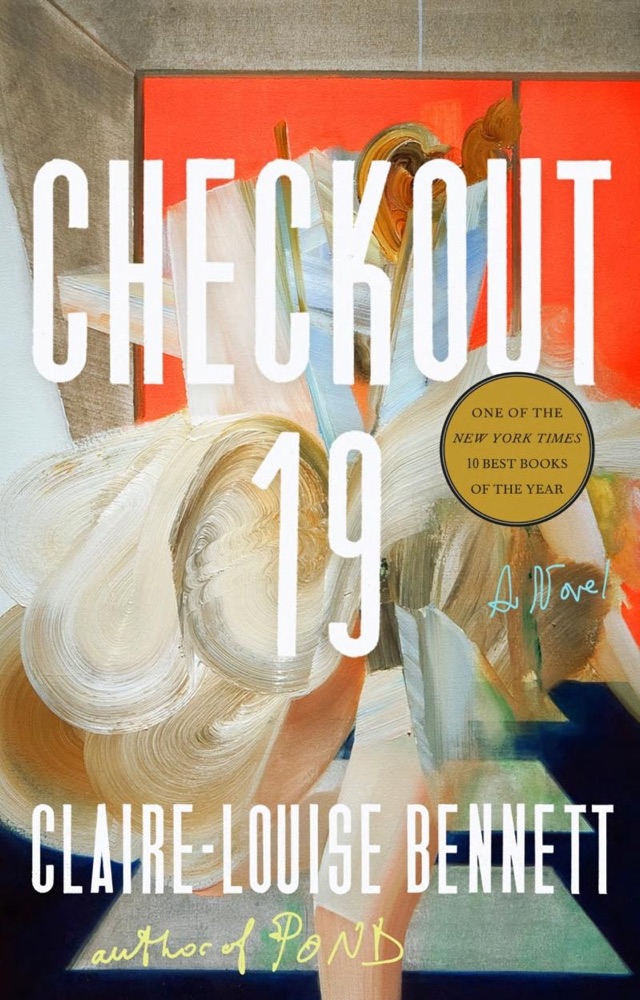 Checkout 19
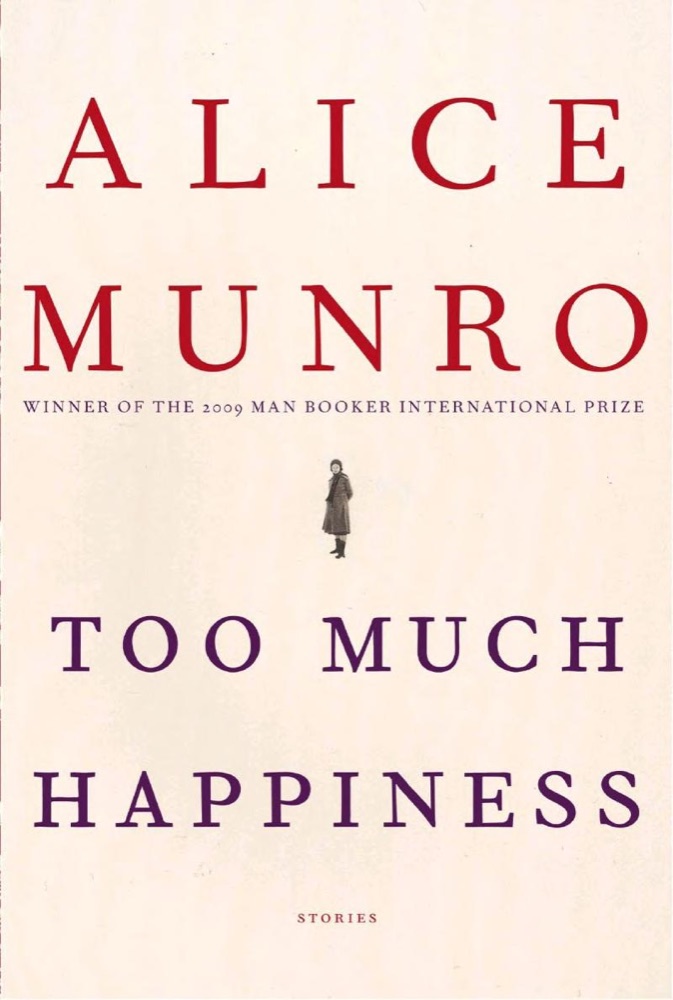 Too Much Happiness: Stories
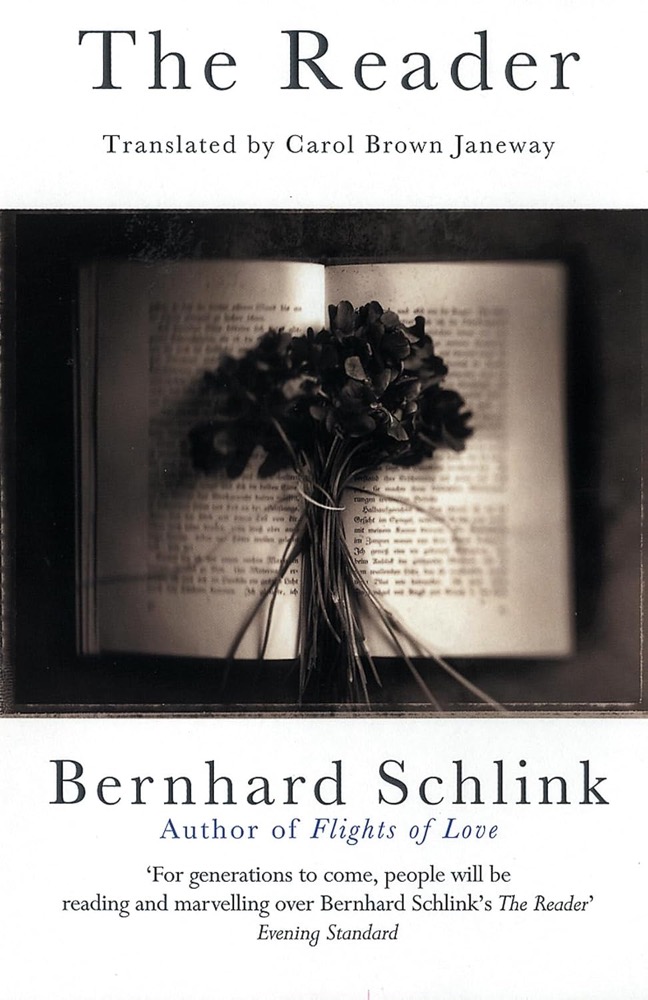 The Reader
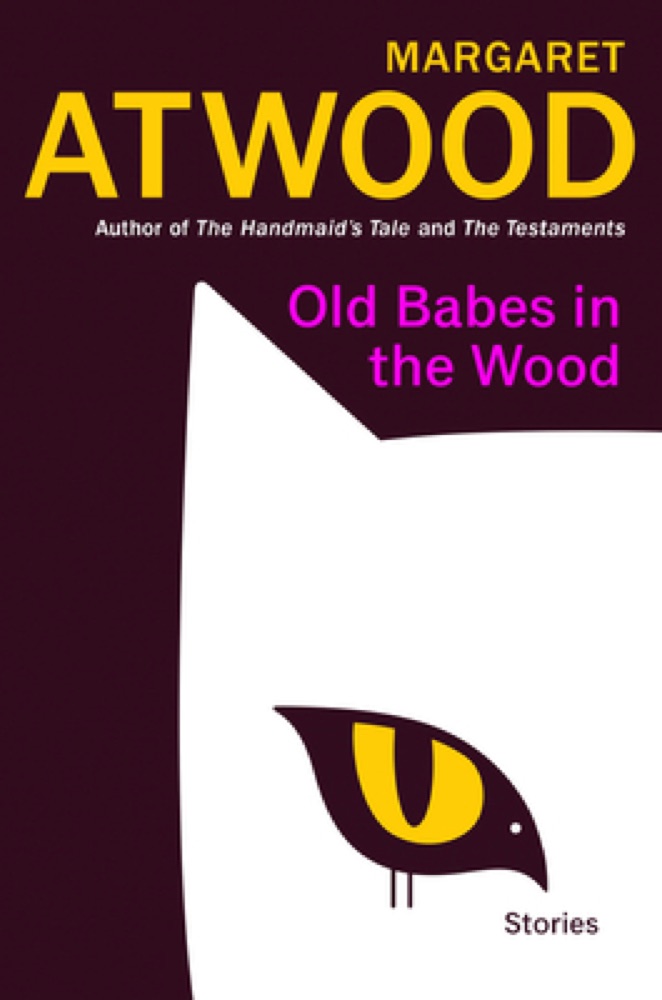 Old Babes in the Wood: Stories
 Middlesex
 The Name of the Wind
 The Bonesetter's Daughter
 Belong to Me
 NW
NW
 The Story of a New Name
 Hourglass: Time, Memory, Marriage
 The Names
 Palimpsest
 Almond
 The Folded Clock: A Diary
 I'll Be Seeing You
 The Beginning of Everything
 The Handmaid's Tale
 The Book of Salt
 Lexicon
 Where Reasons End
 What Is Not Yours Is Not Yours
 Possession
 The Collected Stories
 Mister Pip
 The Shock of the Fall
 Speak
Speak
 Hester
 What I Loved
 Anthropology of an American Girl
 The Shape of Mercy
 Warlight
 The Uncommon Appeal of Clouds
 The Book That Broke the World
 The Golden Notebook
 The Summer Without Men
 Incantation
 There but for the
 The Swan Thieves
 The Enchanted
 What We Saw
 The Year of Magical Thinking
 Library of Souls
 When Women Were Dragons
 The World and Other Places: Stories
 Sexing the Cherry
 The Tender Bar
 The Adoration of Jenna Fox
 The Broom of the System
 From the Mixed-Up Files of Mrs. Basil E. Frankweiler
 Em and The Big Hoom
 Agatha Christie: An Autobiography
 No Time To Spare: Thinking About What Matters
 The Hour I First Believed
 The Book of Tomorrow
 Enormous Changes at the Last Minute: Stories
 The Telling