 A Room of One's Own
Quotes from the Book
She had the perpetual sense, as she watched the taxi cabs, of being out, out, far out to sea and alone; she always had the feeling that it was very, very, dangerous to live even one day.
He thought her beautiful, believed her impeccably wise; dreamed of her, wrote poems to her, which, ignoring the subject, she corrected in red ink.
What does the brain matter compared with the heart?
It might be possible that the world itself is without meaning.
Mrs Dalloway is always giving parties to cover the silence
Did it matter then, she asked herself, walking towards Bond Street, did it matter that she must inevitably cease completely? All this must go on without her; did she resent it; or did it not become consoling to believe that death ended absolutely?
She thought there were no Gods; no one was to blame; and so she evolved this atheist's religion of doing good for the sake of goodness.
Mrs. Dalloway said she would buy the flowers herself.
Beauty, the world seemed to say. And as if to prove it (scientifically) wherever he looked at the houses, at the railings, at the antelopes stretching over the palings, beauty sprang instantly. To watch a leaf quivering in the rush of air was an exquisite joy. Up in the sky swallows swooping, swerving, flinging themselves in and out, round and round, yet always with perfect control as if elastics held them; and the flies rising and falling; and the sun spotting now this leaf, now that, in mockery, dazzling it with soft gold in pure good temper; and now again some chime (it might be a motor horn) tinkling divinely on the grass stalks—all of this, calm and reasonable as it was, made out of ordinary things as it was, was the truth now; beauty, that was the truth now. Beauty was everywhere.
It is a thousand pities never to say what one feels.
It was a silly, silly dream, being unhappy.
...she always had the feeling that it was very, very dangerous to live even one day.
Clarissa had a theory in those days - they had heaps of theories, always theories, as young people have. It was to explain the feeling they had of dissatisfaction; not knowing people; not being known. For how could they know each other? You met every day; then not for six months, or years. It was unsatisfactory, they agreed, how little one knew people. But she said, sitting on the bus going up Shaftesbury Avenue, she felt herself everywhere; not 'here, here, here'; and she tapped the back of the seat; but everywhere. She waved her hand, going up Shaftesbury Avenue. She was all that. So that to know her, or any one, one must seek out the people who completed them; even the places. Odd affinities she had with people she had never spoke to, some women in the street, some man behind a counter - even trees, or barns. It ended in a transcendental theory which, with her horror of death, allowed her to believe, or say that she believed (for all her scepticism), that since our apparitions, the part of us which appears, are so momentary compared with the other, the unseen part of us, which spreads wide, the unseen might survive, be recovered somehow attached to this person or that, or even haunting certain places, after death. Perhaps - perhaps.
The world wavered and quivered and threatened to burst into flames.
What is this terror? what is this ecstasy? he thought to himself. What is it that fills me with this extraordinary excitement? It is Clarissa, he said. For there she was.
But nothing is so strange when one is in love (and what was this except being in love?) as the complete indifference of other people.
Peter would think her sentimental. So she was. For she had come to feel that it was the only thing worth saying – what one felt. Cleverness was silly. One must say simply what one felt.
So he was deserted. The whole world was clamouring: Kill yourself, kill yourself, for our sakes. But why should he kill himself for their sakes? Food was pleasant; the sun hot; and this killing oneself, how does one set about it, with a table knife, uglily, with floods of blood, - by sucking a gaspipe? He was too weak; he could scarcely raise his hand. Besides, now that he was quite alone, condemned, deserted, as those who are about to die are alone, there was a luxury in it, an isolation full of sublimity; a freedom which the attached can never know.
An offering for the sake of offering, perhaps. Anyhow, it was her gift. Nothing else had she of the slightest importance; could not think, write, even play the piano. She muddled Armenians and Turks; loved success; hated discomfort; must be liked; talked oceans of nonsense: and to this day, ask her what the Equator was, and she did not know. All the same, that one day should follow another; Wednesday, Thursday, Friday, Saturday; that one should wake up in the morning; see the sky; walk in the park; meet Hugh Whitbread; then suddenly in came Peter; then these roses; it was enough. After that, how unbelievable death was!-that it must end; and no one in the whole world would know how she had loved it all; how, every instant . . .
Rigid, the skeleton of habit alone upholds the human frame
She belonged to a different age, but being so entire, so complete, would always stand up on the horizon, stone-white, eminent, like a lighthouse marking some past stage on this adventurous, long, long voyage, this interminable --- this interminable life.
Moments like this are buds on the tree of life. Flowers of darkness they are.
Her life was a tissue of vanity and deceit.
Fear no more, says the heart, committing its burden to some sea, which sighs collectively for all sorrows, and renews, begins, collects, lets fall
Fear no more, says the heart...
A thing there was that mattered; a thing, wreathed about with chatter, defaced, obscured in her own life, let drop every day in corruption, lies, chatter. This he had preserved. Death was defiance. Death was an attempt to communicate; people feeling the impossibility of reaching the centre which, mystically, evaded them; closeness drew apart; rapture faded, one was alone. There was an embrace in death.
First a warning, musical; then the hour, irrevocable. The leaden circles dissolved in the air.
Did you know?
- The novel's working title was 'The Hours.'
- It originated from two short stories, 'Mrs Dalloway in Bond Street' and the unfinished 'The Prime Minister.'
- All of the action, apart from flashbacks, takes place on a single day in the middle of June 1923.
- The first edition was published by the Hogarth Press, which Woolf ran with her husband Leonard.
- In 2005 it was included on Time magazine's list of the 100 best English-language novels written since 1923.
- The novel entered the public domain in the United States on January 1, 2021.
About Virginia Woolf
Virginia Woolf (1882-1941) was an English writer and a leading modernist, known for pioneering the use of stream of consciousness. With her husband Leonard she founded the Hogarth Press, which published much of her work.
More about the author →More by Virginia Woolf
All books by Virginia Woolf →
About the book
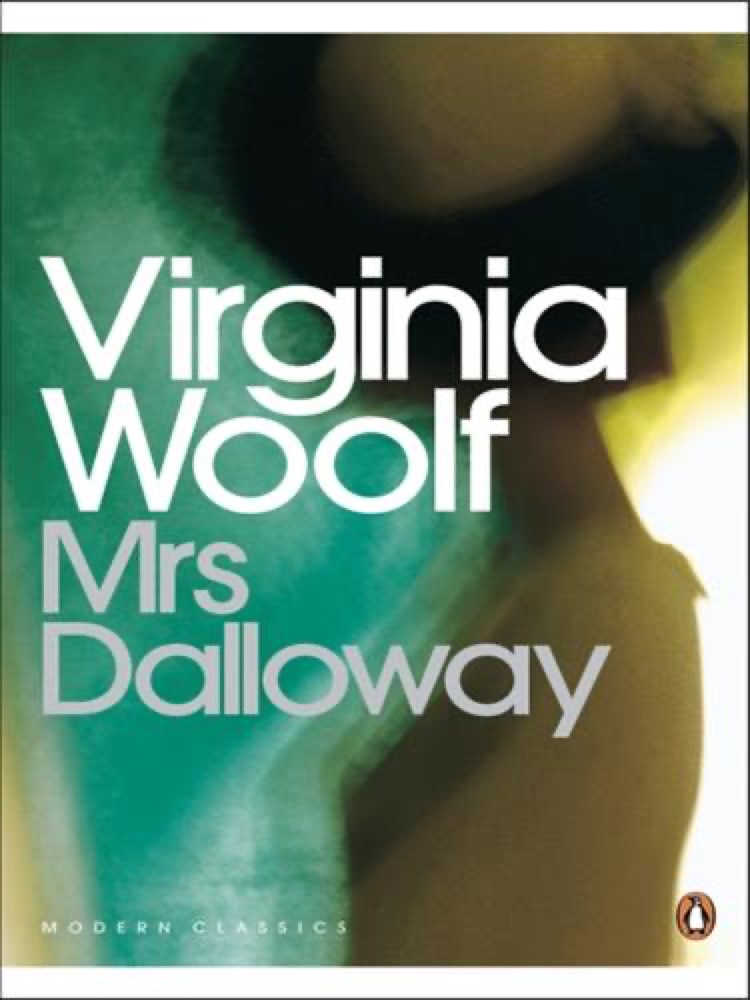
Mrs Dalloway, published by the Hogarth Press in 1925, follows a single day in the middle of June in post-First World War London as Clarissa Dalloway, an upper-class woman in her early fifties, prepares to host an evening party. Across the hours of that one day, the novel moves through her errands and memories while tracing a parallel storyline centered on Septimus Warren Smith, a shell-shocked veteran of the war whose deteriorating mental state runs alongside Clarissa's comparatively secure social world.
Virginia Woolf grew the book out of two short stories, 'Mrs Dalloway in Bond Street' and the unfinished 'The Prime Minister,' and its working title was 'The Hours.' It is a celebrated example of stream-of-consciousness storytelling: the narration closely tracks the momentary thoughts of one character after another, blurring the line between direct and indirect speech and shifting freely between omniscient description, interior monologue, and soliloquy.
Through its compressed single-day structure the novel meditates on time and mortality, memory and lost possibility, and the treatment of mental illness in the aftermath of the war. Long regarded as one of Woolf's central achievements, it was included on Time magazine's 2005 list of the 100 best English-language novels written since 1923, and it entered the public domain in the United States on January 1, 2021.
Key characters
- Clarissa DallowayUpper-class Londoner in her early fifties preparing to host an evening party
- Septimus Warren SmithShell-shocked First World War veteran experiencing hallucinations
- Peter WalshAn old friend of Clarissa's who still harbors feelings for her
- Sally SetonClarissa's passionate youthful friend, now conventionally married
- Lucrezia SmithSeptimus's Italian wife, struggling with his mental illness
- Richard DallowayClarissa's husband, a member of Parliament
Book details
- First published
- 1925
- Length
- 293 pages
- Reading time
- 3 hours
- Author
- Virginia Woolf
- Genre
- Classics
- Goodreads rating
- 3.77 (369k ratings) →
- First line
- “Mrs Dalloway said she would buy the flowers herself.”
If you liked this, read…
- 1To the LighthouseWoolf's own later novel using the same intimate stream-of-consciousness method
- 2UlyssesJoyce's modernist single-day narrative tracing characters' inner thoughts across one city
- 3The HoursMichael Cunningham's novel that reimagines and responds directly to Mrs Dalloway
Keep reading
 A Reliable Wife
 After Leaving Mr. Mackenzie
 Madame Bovary
 Atonement
 To the Lighthouse
 The Awakening
 The Years
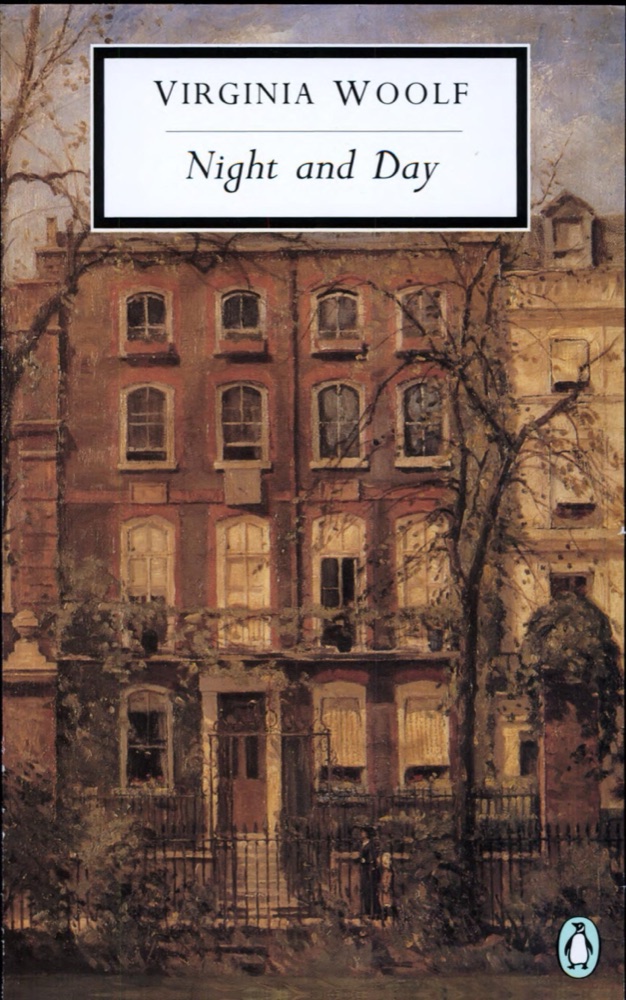 Night and Day
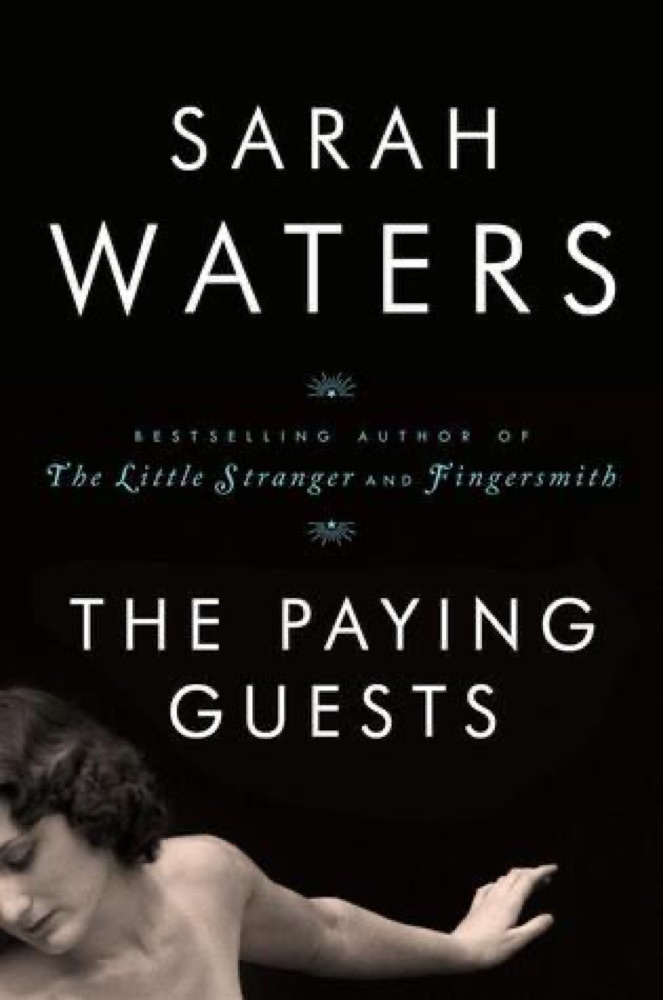 The Paying Guests
 The House of Mirth
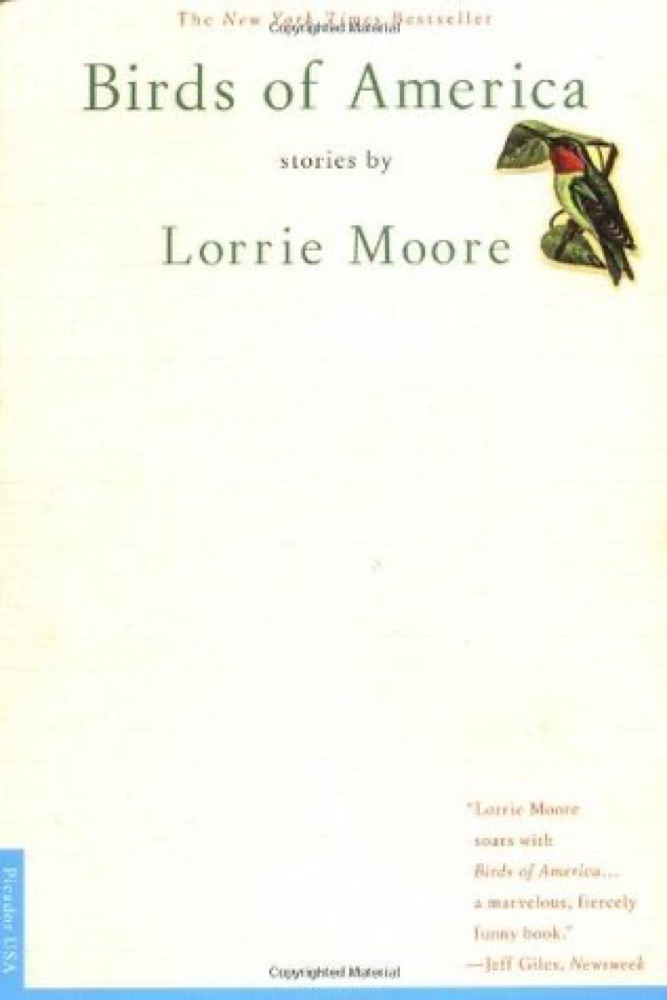 Birds of America
 The Wings of the Dove
 The Ministry of Utmost Happiness
 The Scarlet Letter
 Sula
Sula
 Tess of the D'Urbervilles
 The Book of the Unnamed Midwife
 The Vegetarian
 The Memory Keeper's Daughter
 The Rainbow
 Women in Love
 Green Dolphin Street
 Prodigal Summer
 The Enchanted April
 Longbourn
 All Passion Spent
 Dubliners
 Olive Kitteridge
 The Well of Loneliness
 The Lowland
 Home Fire
 The English Patient
 The Portrait of a Lady
 Rebecca
 10 Minutes 38 Seconds in This Strange World
 Johnny Panic and the Bible of Dreams: Short Stories, Prose and Diary Excerpts
 The Weight of Ink
 Under the Skin
 Shirley
 The Children Act
 Howards End
 The Fraud
 The Signature of All Things
 Everything That Rises Must Converge: Stories
 Ada, or Ardor: A Family Chronicle
 The Scarlet Pimpernel
 The Shell Seekers
 On Chesil Beach
 The Probable Future
 A Dangerous Place
 The Daughter of Doctor Moreau
 The Slow Regard of Silent Things
 The Return of the Native
 Clear Light of Day
 The Pursuit of Love
 No Name
 Little Dorrit
 A Theory of Dreaming
 Crudo
Crudo
 The Price of Salt