
 Consciousness and the Brain: Deciphering How the Brain Codes Our Thoughts
Quotes from the Book
Materialism is a beautiful and compelling view of the world, but to account for consciousness, we have to go beyond the resources it provides.
14
Conscious experience is at once the most familiar thing in the world and the most mysterious. There is nothing we know about more directly than consciousness, but it is far from clear how to reconcile it with everything else we know. Why does it exist? What does it do? How could it possibly arise from lumpy gray matter? We know consciousness far more intimately than we know the rest of the world, but we understand the rest of the world far better than we understand consciousness. Consciousness can be startlingly intense. It is the most vivid of phenomena; nothing is more real to us. But it can be frustratingly diaphanous: in talking about conscious experience, it is notoriously difficult to pin down the subject matter. The International Dictionary of Psychology does not even try to give a straightforward characterization: Consciousness: The having of perceptions, thoughts, and feelings; awareness. The term is impossible to define except in terms that are unintelligible without a grasp of what consciousness means. Many fall into the trap of confusing consciousness with self-consciousness—to be conscious it is only necessary to be aware of the external world. Consciousness is a fascinating but elusive phenomenon: it is impossible to specify what it is, what it does, or why it evolved. Nothing worth reading has been written about it. (Sutherland 1989)
9
Why should there be conscious experience at all? It is central to a subjective viewpoint, but from an objective viewpoint it is utterly unexpected. Taking the objective view, we can tell a story about how fields, waves, and particles in the spatiotemporal manifold interact in subtle ways, leading to the development of complex systems such as brains. In principle, there is no deep philosophical mystery in the fact that these systems can process information in complex ways, react to stimuli with sophisticated behavior, and even exhibit such complex capacities as learning, memory, and language. All this is impressive, but it is not metaphysically baffling. In contrast, the existence of conscious experience seems to be a new feature from this viewpoint. It is not something that one would have predicted from the other features alone. That is, consciousness is surprising. If all we knew about were the facts of physics, and even the facts about dynamics and information processing in complex systems, there would be no compelling reason to postulate the existence of conscious experience. If it were not for our direct evidence in the first-person case, the hypothesis would seem unwarranted; almost mystical, perhaps. Yet we know, directly, that there is conscious experience. The question is, how do we reconcile it with everything else we know?
6
Some say that consciousness is an "illusion," but I have little idea what this could even mean. It seems to me that we are surer of the existence of conscious experience than we are of anything else in the world.
5
The subject matter is perhaps best characterized as “the subjective quality of experience.” When we perceive, think, and act, there is a whir of causation and information processing, but this processing does not usually go on in the dark. There is also an internal aspect; there is something it feels like to be a cognitive agent. This internal aspect is conscious experience. Conscious experiences range from vivid color sensations to experiences of the faintest background aromas; from hard-edged pains to the elusive experience of thoughts on the tip of one’s tongue; from mundane sounds and smells to the encompassing grandeur of musical experience; from the triviality of a nagging itch to the weight of a deep existential angst; from the specificity of the taste of peppermint to the generality of one’s experience of selfhood. All these have a distinct experienced quality. All are prominent parts of the inner life of the mind. We can say that a being is conscious if there is something it is like to be that being, to use a phrase made famous by Thomas Nagel.
3
Positive arguments for the natural possibility of absent qualia have not been as prevalent as arguments for inverted qualia, but they have been made. The most detailed presentation of these arguments is given by Block (1978). These arguments almost always have the same form. They consist in the exhibition of a realization of our functional organization in some unusual medium, combined with an appeal to intuition. It is pointed out, for example, that the organization of our brain might be simulated by the people of China or even mirrored in the economy of Bolivia. If we got every person in China to simulate a neuron (we would need to multiply the population by ten or one hundred, but no matter), and equipped them with radio links to simulate synaptic connections, then the functional organization would be there. But surely, says the argument, this baroque system would not be conscious! There is a certain intuitive force to this argument. Many people have a strong feeling that a system like this is simply the wrong sort of thing to have a conscious experience. Such a “group mind” would seem to be the stuff of a science-fiction tale, rather than the kind of thing that could really exist. But there is only an intuitive force. This certainly falls far short of a knockdown argument. Many have pointed out that while it may be intuitively implausible that such a system should give rise to experience, it is equally intuitively implausible that a brain should give rise to experience! Whoever would have thought that this hunk of gray matter would be the sort of thing that could produce vivid subjective experiences? And yet it does. Of course this does not show that a nation's population could produce a mind, but it is a strong counter to the intuitive argument that it would not. . . . Once we realize how tightly a specification of functional organization constrains the structure of a system, it becomes less implausible that even the population of China could support conscious experience if organized appropriately. If we take our image of the population, speed it up by a factor of a million or so, and shrink it into an area the size of a head, we are left with something that looks a lot like a brain, except that it has homunculi—tiny people—where a brain would have neurons. On the face of it, there is not much reason to suppose that neurons should do any better a job than homunculi in supporting experience.
1
It may be that some are unwilling to accept the possibility of conscious thermostats simply because we understand thermostats too well. We know everything about their processing, and there seems no reason to invoke consciousness. But thermostats are really no different from brains here. Even once we understand brain processing perfectly, there will still seem to be no reason to invoke consciousness. The only difference is that right now, what is going on inside a brain is enough of a mystery that one may be tempted to suppose that consciousness is somehow “located” in those brain processes that we do not yet understand. But as I have argued, even coming to understand those processes will not alone bring consciousness into the picture; so here, once again, brains and thermostats are on a par. One might be bothered by the fact that one could build a thermostat oneself, without putting any consciousness in. But of course the same applies to a brain, at least in principle. When we build a brain (in reproduction and development, say), consciousness conies along for free; the same will go for a thermostat. We should not expect to locate consciousness as a physical component of the system! Some may worry about the fact that a thermostat is not alive; but it is hard to see why that should make a principled difference. A disembodied silicon brain of the sort discussed in the last chapter would arguably fail to qualify as alive, but we have seen that it might be conscious. And if the arguments in the last chapter are right, then the fact that a thermostat is not made up of biological components makes no difference, in principle.
1
Watch on YouTube
About David J. Chalmers
We have collected 7 quotes from 1 book by David J. Chalmers on BookQuoters.
More about the author →About the book
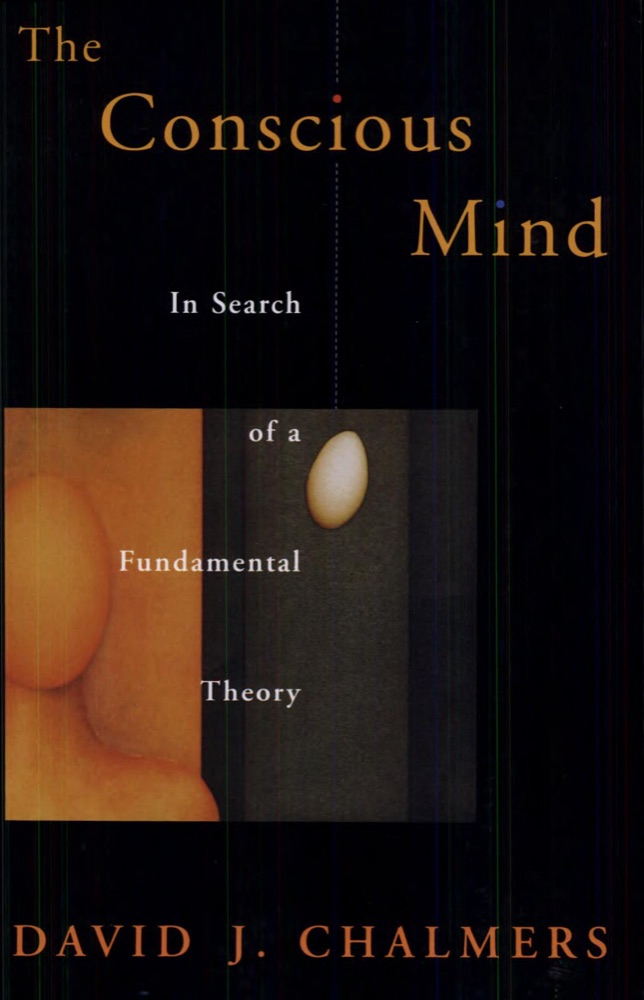
What is consciousness? How do physical processes in the brain give rise to the self-aware mind and to feelings as profoundly varied as love or hate, aesthetic pleasure or spiritual yearning? These questions today are among the most hotly debated issues among scientists and philosophers, and we have seen in recent years superb volumes by such eminent figures as Francis Crick, Daniel C. Dennett, Gerald Edelman, and Roger Penrose, all firing volleys in what has come to be called the consciousness wars. Now, in The Conscious Mind, philosopher David J. Chalmers offers a cogent analysis of this heated debate as he unveils a major new theory of consciousness, one that rejects the prevailing reductionist trend of science, while offering provocative insights into the relationship between mind and brain. Writing in a rigorous, thought-provoking style, the author takes us on a far-reaching tour th
Book details
- First published
- 1996
- Author
- David J. Chalmers
- Genre
- Philosophy
- Goodreads rating
- 4.00 (3k ratings)
Keep reading
Consciousness and the Brain: Deciphering How the Brain Codes Our Thoughts
 The Ego Tunnel: The Science of the Mind and the Myth of the Self
 The Case Against Reality: Why Evolution Hid the Truth from Our Eyes
 The Tell-Tale Brain: A Neuroscientist's Quest for What Makes Us Human
 The Origin of Consciousness in the Breakdown of the Bicameral Mind
 How to Change Your Mind: The New Science of Psychedelics
 The Big Picture: On the Origins of Life, Meaning, and the Universe Itself
 Descartes' Error: Emotion, Reason and the Human Brain
 Travels
 No Self, No Problem: How Neuropsychology Is Catching Up to Buddhism
 The Future of the Mind: The Scientific Quest to Understand, Enhance, and Empower the Mind
 The Accidental Universe: The World You Thought You Knew
 A Thousand Brains: A New Theory of Intelligence
 Incognito: The Secret Lives of the Brain
 Our Mathematical Universe: My Quest for the Ultimate Nature of Reality
 How the Mind Works
 The Psychedelic Experience: A Manual Based on the Tibetan Book of the Dead
 Phenomenology of Perception
 Helgoland: Making Sense of the Quantum Revolution
 Until the End of Time: Mind, Matter, and Our Search for Meaning in an Evolving Universe
 The Master and His Emissary: The Divided Brain and the Making of the Western World
 Destination: Void
 Andrew's Brain
 The Universe in a Single Atom: The Convergence of Science and Spirituality
 Existential Physics: A Scientist's Guide to Life's Biggest Questions
 My Stroke of Insight: A Brain Scientist's Personal Journey
 Waking Up: A Guide to Spirituality Without Religion
 The Joy of Living: Unlocking the Secret and Science of Happiness
 Seth Speaks: The Eternal Validity of the Soul
 Hallucinations
 The Blind Watchmaker: Why the Evidence of Evolution Reveals a Universe Without Design
 True Hallucinations
 The End of Time: The Next Revolution in Our Understanding of the Universe
 Maps of Meaning: The Architecture of Belief
 The Fourth Way
 Why Does the World Exist?: An Existential Detective Story
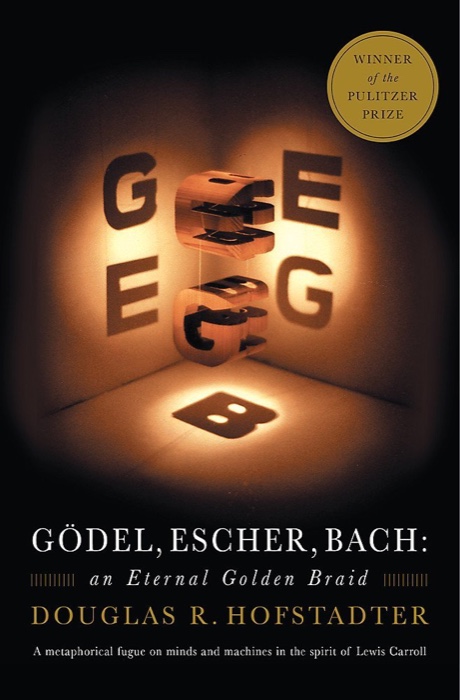 Gödel, Escher, Bach: An Eternal Golden Braid
 In Love with the World: A Monk's Journey Through the Bardos of Living and Dying
 The Convoluted Universe, Book 1
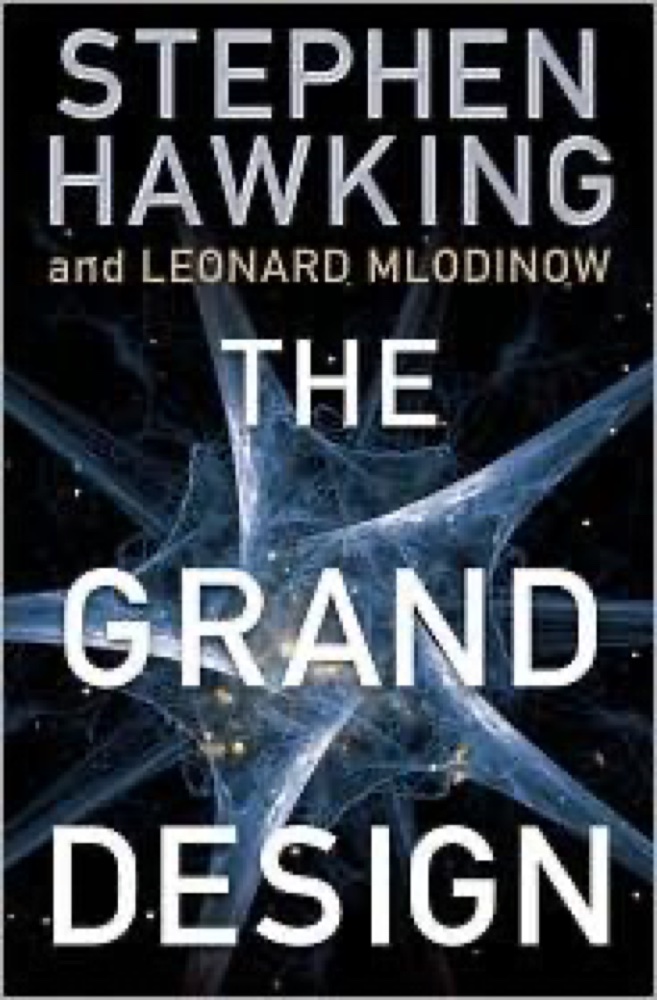 The Grand Design
 The Book: On the Taboo Against Knowing Who You Are
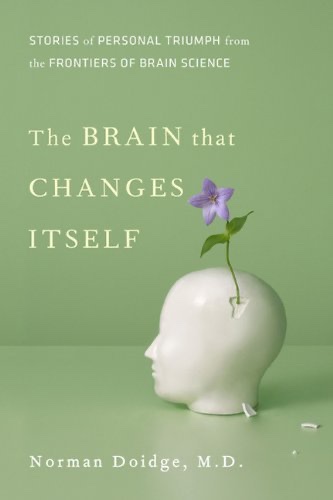 The Brain That Changes Itself: Stories of Personal Triumph from the Frontiers of Brain Science
 The Wisdom of Insecurity: A Message for an Age of Anxiety
 You Are the Placebo: Making Your Mind Matter
 The Occult
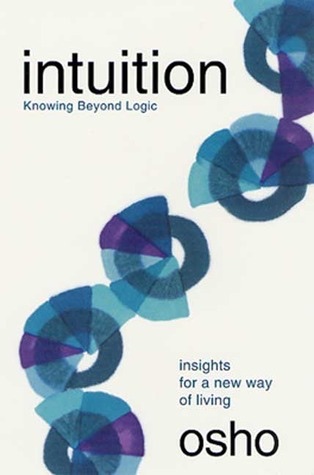 Intuition: Knowing Beyond Logic
 Evolve Your Brain: The Science of Changing Your Mind
 The Stuff of Thought: Language as a Window into Human Nature
 Consilience: The Unity of Knowledge
 Why Buddhism Is True: The Science and Philosophy of Meditation and Enlightenment
 Proof of Heaven: A Neurosurgeon's Journey into the Afterlife
 Think: A Compelling Introduction to Philosophy
 Myths to Live By
 Confession of a Buddhist Atheist
 The Conspiracy Against the Human Race
 The Doors of Perception & Heaven and Hell
 The Book of Secrets: Unlocking the Hidden Dimensions of Your Life
 Darwin's Dangerous Idea: Evolution and the Meanings of Life
 An Anthropologist on Mars