
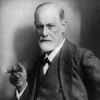
 Civilization and Its Discontents
Quotes from the Book
The virtuous man contents himself with dreaming that which the wicked man does in actual life.
Properly speaking, the unconscious is the real psychic; its inner nature is just as unknown to us as the reality of the external world, and it is just as imperfectly reported to us through the data of consciousness as is the external world through the indications of our sensory organs.
Dreams are the royal road to the unconscious.
I had thought about cocaine in a kind of day-dream.
The dream is the liberation of the spirit from the pressure of external nature, a detachment of the soul from the fetters of matter.
Conservatism, however, is too often a welcome excuse for lazy minds, loath to adapt themselves to fast changing conditions.
What is common in all these dreams is obvious. They completely satisfy wishes excited during the day which remain unrealized. They are simply and undisguisedly realizations of wishes.
dream is the dreamer's own psychical act.
I was making frequent use of cocaine at that time ... I had been the first to recommend the use of cocaine, in 1885, and this recommendation had brought serious reproaches down on me.
Our memory has no guarantees at all, and yet we bow more often than is objectively justified to the compulsion to believe what it says.
And it is only after seeing man as his unconscious, revealed by his dreams, presents him to us that we shall understand him fully. For as Freud said to Putnam: "We are what we are because we have been what we have been.
Only a rebuke that 'has something in it' will sting, will have the power to stir our feelings, not the other sort, as we know.
The sheer size too, the excessive abundance, scale, and exaggeration of dreams could be an infantile characteristic. The most ardent wish of children is to grow up and get as big a share of everything as the grown-ups; they are hard to satisfy; do not know the meaning of ‘enough.
Dream's evanescence, the way in which, on awakening, our thoughts thrust it aside as something bizarre, and our reminiscences mutilating or rejecting it—all these and many other problems have for many hundred years demanded answers which up till now could never have been satisfactory.
Nothing that is mentally our own can ever be lost.
Human life should not be considered as the proper material for wild experiments.
The dream has a very striking way of dealing with the category of opposites and contradictions. This is simply disregarded. To the dream 'No' does not seem to exist. In particular, it prefers to draw opposites together into a unity or to represent them as one. Indeed, it also takes the liberty of representing some random element by its wished-for opposite, so that at first one cannot tell which of the possible poles is meant positively or negatively in the dream-thoughts.
The medical profession is justly conservative. Human life should not be considered as the proper material for wild experiments.
Dreams are never concerned with trivia.
A large number of observers acknowledge that dream life is capable of extraordinary achievements—at any rate, in certain fields ("Memory").
But since the downfall of the mythological hypothesis an interpretation of the dream has been wanting. The conditions of its origin; its relationship to our psychical life when we are awake; its independence of disturbances which, during the state of sleep, seem to compel notice; its many peculiarities repugnant to our waking thought; the incongruence between its images and the feelings they engender; then the dream's evanescence, the way in which, on awakening, our thoughts thrust it aside as something bizarre, and our reminiscences mutilating or rejecting it—all these and many other problems have for many hundred years demanded answers which up till now could never have been satisfactory. Before all there is the question as to the meaning of the dream, a question which is in itself double-sided. There is, firstly, the psychical significance of the dream, its position with regard to the psychical processes, as to a possible biological function; secondly, has the dream a meaning—can sense be made of each single dream as of other mental syntheses?
The medical profession is justly conservative.
but the state of sleep, we found, is not characterized by the disintegration of psychical interconnections, but by the focus on the wish to sleep by the psychical system in control of the day.
Three tendencies can be observed in the estimation of dreams. Many philosophers have given currency to one of these tendencies, one which at the same time preserves something of the dream's former over-valuation. The foundation of dream life is for them a peculiar state of psychical activity, which they even celebrate as elevation to some higher state. Schubert, for instance, claims: "The dream is the liberation of the spirit from the pressure of external nature, a detachment of the soul from the fetters of matter." Not all go so far as this, but many maintain that dreams have their origin in real spiritual excitations, and are the outward manifestations of spiritual powers whose free movements have been hampered during the day ("Dream Phantasies," Scherner, Volkelt). A large number of observers acknowledge that dream life is capable of extraordinary achievements—at any rate, in certain fields ("Memory").
Dream-displacement and dream-condensation are the two foremen in charge of the dream-work, and we may put the shaping of our dreams down mainly to their activity.
Watch on YouTube
About Sigmund Freud
We have collected 145 quotes from 8 books by Sigmund Freud on BookQuoters.
More about the author →More by Sigmund Freud
All books by Sigmund Freud →


Book details
- Author
- Sigmund Freud
- Genre
- Classics
- Goodreads rating
- 3.84 (83k ratings) →
Keep reading
 Modern Man in Search of a Soul
 Memories, Dreams, Reflections
 Introductory Lectures on Psychoanalysis
 number9dream
 Veterans of the Psychic Wars
 Swann's Way
 Man and His Symbols
 The Poetics of Space
 Queen of Dreams
 The Shaking Woman, or A History of My Nerves
 Cities of the Plain
 Dreams and Shadows
 The Origin of Consciousness in the Breakdown of the Bicameral Mind
 Manifestoes of Surrealism
 Speak, Memory
 The Pilgrimage
 The Infernal Desire Machines of Doctor Hoffman
 Hallucinations
 Animal Dreams
 The Celestine Prophecy
 The Doors of Perception & Heaven and Hell
 The Tenth Insight: Holding the Vision
 Dreamtigers
 The Myth of Sisyphus
 The Magic Mountain
 The Doors of Perception
 The Sorrows of an American
 Myths to Live By
 The Rose Field
 Year of the Monkey
 The Art of Seduction
 The Memory Librarian: And Other Stories of Dirty Computer
 The Captive & The Fugitive
 Maps of Meaning: The Architecture of Belief
 In Search of Lost Time
 Fables & Reflections
 Finding Meaning in the Second Half of Life: How to Finally, Really Grow Up
 Saturday
 The Stone Diaries
 The Fairy Tales of Hermann Hesse
 Stumbling on Happiness
 Stories of Your Life and Others
 The Palace of Illusions
 Oracle Night
 The Myth of Sisyphus and Other Essays
 A Gentle Creature and Other Stories
 The Varieties of Religious Experience
 A Sport and a Pastime
 The White Album
 Angle of Repose
 Beyond the Pleasure Principle
 Briefing for a Descent Into Hell
 Wings of Fire: An Autobiography
 Dune
Dune
 Gravity's Rainbow
 How to Change Your Mind: The New Science of Psychedelics
 False Memory
 The Master and His Emissary: The Divided Brain and the Making of the Western World
 1984
1984
 Autobiography of a Yogi