
 Lysistrata
Quotes from the Book
How can I study from below, that which is above?
26
That is what we do each time we see someone who falls in love with evil strategies, until we hurl him into misery, so he may learn to fear the Gods.
6
SOCRATES. Silence, old man, give heed to the prayers.... Oh! most mighty king, the boundless air, that keepest the earth suspended in space, thou bright Aether and ye venerable goddesses, the Clouds, who carry in your loins the thunder and the lightning, arise, ye sovereign powers and manifest yourselves in the celestial spheres to the eyes of the sage.
3
Strep. Socrates! My little Socrates! Socrates. Why callest thou me, thou creature of a day? Strep. First tell me, I beseech you, what are you doing. Soc. I am walking in the air, and speculating about the sun. Strep. And so you look down upon the gods from your basket, and not from the earth? Soc. For I should not have rightly discovered things celestial if I had not suspended the intellect, and mixed the thought in a subtle form with its kindred air. But if, being on the ground, I speculated from below on things above, I should never have discovered them. For the earth forcibly attracts to itself the meditative moisture. Water-cresses also suffer the very same thing. Strep. What do you say? Does meditation attract the moisture to the water-cresses? Come then, my little Socrates, descend to me, that you may teach me those things, for the sake of which I have come.
3
Unjust Discourse: To invoke solely the weaker arguments and yet triumph is a talent worth more than a hundred thousand drachmae.
3
STREPSIADES. So the rear of a gnat is a trumpet. Oh! what a splendid discovery! Thrice happy Socrates! ‘Twould not be difficult to succeed in a law-suit, knowing so much about the gut of a gnat!
2
STREPSIADES. Very well then! Look this way. Do you see that little door and that little house? PHIDIPPIDES. Yes, father. But what are you driving at? STREPSIADES. That is the school of wisdom. There, they prove that we are coals enclosed on all sides under a vast extinguisher, which is the sky. If well paid, these men also teach one how to gain law-suits, whether they be just or not. PHIDIPPIDES. What do they call themselves? STREPSIADES. I do not know exactly, but they are deep thinkers and most admirable people.
2
For I have been called among the deep thinkers the "worse cause" on this very account, that I first contrived how to speak against both law and justice; and this art is worth more than ten thousand staters, that one should choose the worse cause, and nevertheless be victorious.
2
Cho. O mortal, who hast desired great wisdom from us! How happy will you become among the Athenians and among the Greeks, if you be possessed of a good memory, and be a deep thinker, and endurance of labour be implanted in your soul, and you be not wearied either by standing or walking, nor be exceedingly vexed at shivering with cold, nor long to break your fast, and you refrain from wine, and gymnastics, and the other follies, and consider this the highest excellence, as is proper a clever man should, to conquer by action and counsel, and by battling with your tongue.
2
Soc. For, in fact, these alone are goddesses; and all the rest is nonsense. Strep. But come, by the Earth, is not Jupiter, the Olympian, a god? Soc. What Jupiter? Do not trifle. There is no Jupiter. Strep. What do you say? Who rains then? For first of all explain this to me. Soc. These to be sure. I will teach you it by powerful evidence. Come, where have you ever seen him raining at any time without Clouds? And yet he ought to rain in fine weather, and these be absent. Strep. By Apollo, of a truth you have rightly confirmed this by your present argument. And yet, before this, I really thought that Jupiter caused the rain. But tell me who is it that thunders. This makes me tremble. Soc. These, as they roll, thunder. Strep. In what way? you all-daring man! Soc. When they are full of much water, and are compelled to be borne along, being necessarily precipitated when full of rain, then they fall heavily upon each other and burst and clap. Strep. Who is it that compels them to borne along? Is it not Jupiter? Soc. By no means, but aethereal Vortex. Strep. Vortex? It had escaped my notice that Jupiter did not exist, and that Vortex now reigned in his stead.
2
Strep. Tell me, O Socrates, I beseech you, by Jupiter, who are these that have uttered this grand song? Are they some heroines? Soc. By no means; but heavenly Clouds, great divinities to idle men; who supply us with thought and argument, and intelligence and humbug, and circumlocution, and ability to hoax, and comprehension
2
Strep. Then what shall I gain, pray? Soc. You shall become in oratory a tricky knave, a thorough rattle, a subtle speaker.
2
Phid. In what then, pray, shall I obey you? Strep. Reform your habits as quickly as possible, and go and learn what I advise. Phid. Tell me now, what do you prescribe? Strep. And will you obey me at all? Phid. By Bacchus, I will obey you. Strep. Look this way then! Do you see this little door and little house? Phid. I see it. What then, pray, is this, father? Strep. This is a thinking-shop of wise spirits. There dwell men who in speaking of the heavens persuade people that it is an oven, and that it encompasses us, and that we are the embers. These men teach, if one give them money, to conquer in speaking, right or wrong. Phid. Who are they? Strep. I do not know the name accurately. They are minute philosophers, noble and excellent. Phid. Bah! They are rogues; I know them. You mean the quacks, the pale-faced wretches, the bare-footed fellows, of whose numbers are the miserable Socrates and Chaerephon. Strep. Hold! Hold! Be silent! Do not say anything foolish. But, if you have any concern for your father's patrimony, become one of them, having given up your horsemanship. Phid. I would not, by Bacchus, even if you were to give me the pheasants which Leogoras rears! Strep. Go, I entreat you, dearest of men, go and be taught. Phid. Why, what shall I learn? Strep. They say that among them are both the two causes—the better cause, whichever that is, and the worse: they say that the one of these two causes, the worse, prevails, though it speaks on the unjust side. If, therefore you learn for me this unjust cause, I would not pay any one, not even an obolus of these debts, which I owe at present on your account. Phid. I can not comply; for I should not dare to look upon the knights, having lost all my colour.
2
The night I wedded her, I went to bed smelling of fresh wine, fleeces, figs and great affluence, and she on her side reeked of lubricant, saffron seeds, tongue kisses, wealth, gluttony and the Goddess of Sex.
2
Socrates: So now you won't acknowledge any gods except the ones we do--Chaos, the Clouds, the Tongue--just these three? Strepsiades: Absolutely-- I'd refuse to talk to any other gods, if I ran into them--and I decline to sacrifice or pour libations to them. I'll not provide them any incense... I want to twist all legal verdicts in my favor, to evade my creditors. Chorus Leader: You'll get that, just what you desire. For what you want is nothing special. So be confident--give yourself over to our agents here. Strepsiades: I'll do that--I'll place my trust in you. Necessity is weighing me down--the horses, those thoroughbreds, my marriage--all that has worn me out. So now, this body of mine I'll give to them, with no strings attached, to do with as they like--to suffer blows, go without food and drink, live like a pig, to freeze or have my skin flayed for a pouch-- if I can just get out of all my debt and make men think of me as bold and glib, as fearless, impudent, detestable, one who cobbles lies together, makes up words, a practiced legal rogue, a statute book, a chattering fox, sly and needle sharp, a slippery fraud, a sticky rascal, foul whipping boy or twisted villain, troublemaker, or idly prattling fool. If they can make those who run into me call me these names, they can do what they want--no questions asked. If, by Demeter, they're keen, they can convert me into sausages and serve me up to men who think deep thoughts. Chorus: Here's a man whose mind's now smart, no holding back--prepared to start. When you have learned all this from me you know your glory will arise among all men to heaven's skies. Strepsiades: And what will I get out of this? Chorus: For all time, you'll live with me a life most people truly envy. Strepsiades: You mean one day I'll really see that? Chorus: Hordes will sit outside your door wanting your advice and more-- to talk, to place their trust in you for their affairs and lawsuits, too, things which merit your great mind. They'll leave you lots of cash behind. Chorus Leader: [to Socrates] So get started with this old man's lessons, what you intend to teach him first of all--rouse his mind, test his intellectual powers. Socrates: Come on then, tell me the sort of man you are--once I know that, I can bring to bear on you my latest batteries with full effect. Strepsiades: What's that? By god, are you assaulting me? Socrates: No--I want to learn some things from you. What about your memory? Strepsiades: To tell the truth, it works two ways. If someone owes me something, I remember really well. But if it's poor me that owes the money, I forget a lot. Socrates: Do you have a natural gift for speech? Strepsiades: Not for speaking--only for evading debt. Socrates: ... Now, what do you do if someone hits you? Strepsiades: If I get hit, I wait around a while, then find witnesses, hang around some more, then go to court.
2
[On the Inferior Argument] "λέγω δὲ πρῶτον μὲν ὡς οὐκ ἔστιν Δίκη, εἶτα τὸν ἥττω λόγον κρείττω ποιῶ." "First I say that Justice does not exist, and then I make the weaker argument stronger." [On the Superior Argument] "ἡμᾶς δ᾽ ἐπαίδευσεν ἡ παλαιὰ μουσική, σωφρονεῖν καὶ καρτερεῖν καὶ σιγᾶν." "The old education trained us to be self-controlled, to endure hardship, and to keep silent.
Watch on YouTube
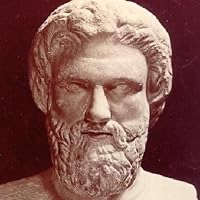
About Aristophanes
We have collected 54 quotes from 3 books by Aristophanes on BookQuoters.
More about the author →More by Aristophanes
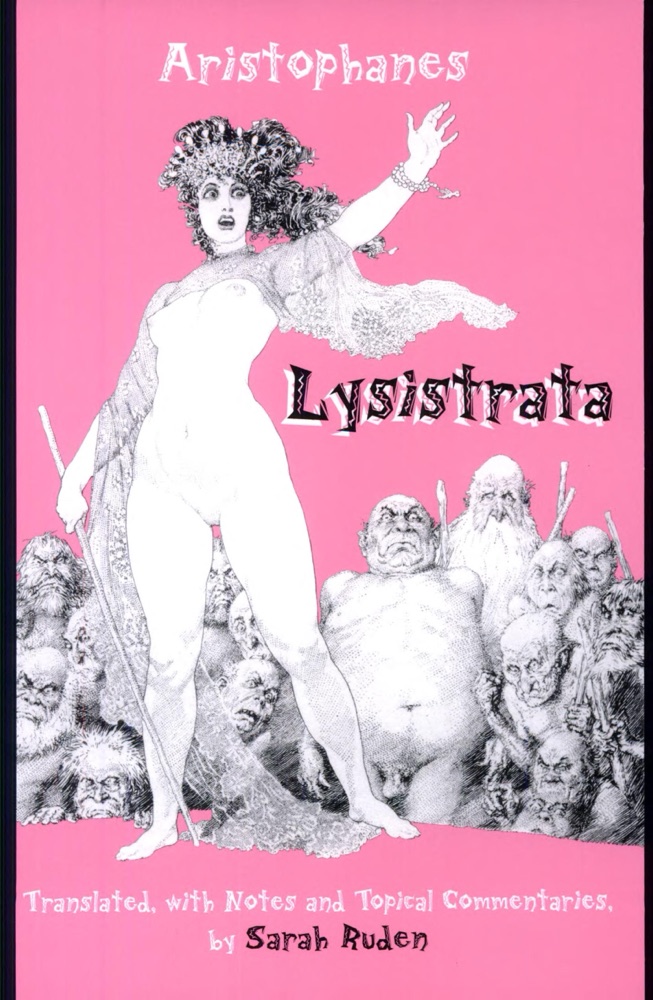
Lysistrata
 The Frogs
About the book
This new paperback edition of Aristophanes' popular play includes the complete Greek text and extensive notes and commentary. Dover examines the two versions of the play, recounts the history of the text, and analyzes a number of problems surrounding the play's overall interpretation, including the Greek notion of right and wrong, the purpose of the chorus, and Aristophanes' sexual jokes.
Book details
- First published
- 1989
- Author
- Aristophanes
- Genre
- Classics
- Goodreads rating
- 3.61 (12k ratings)
Keep reading
 Phaedrus
 Complete Works
 Gorgias
 Mythos - The Greek Myths Retold
 Troilus and Cressida
 Basic Writings of Nietzsche
 The Satyricon
 The Bacchae
 The Dream of Scipio
 Ilium
Ilium
 Gargantua and Pantagruel
 The Gay Science
 Twilight of the Idols/The Anti-Christ
 Lord of Light
 The Complete Works
 The Greek Way
 Coriolanus
 Antigonick
 Arcadia
 Sword & Citadel
 The Colossus of Maroussi
 Maldoror and the Complete Works
 The Man Who Laughs
 The Invention of Love
 The Sixteen Satires
 Lives of the Stoics: The Art of Living from Zeno to Marcus Aurelius
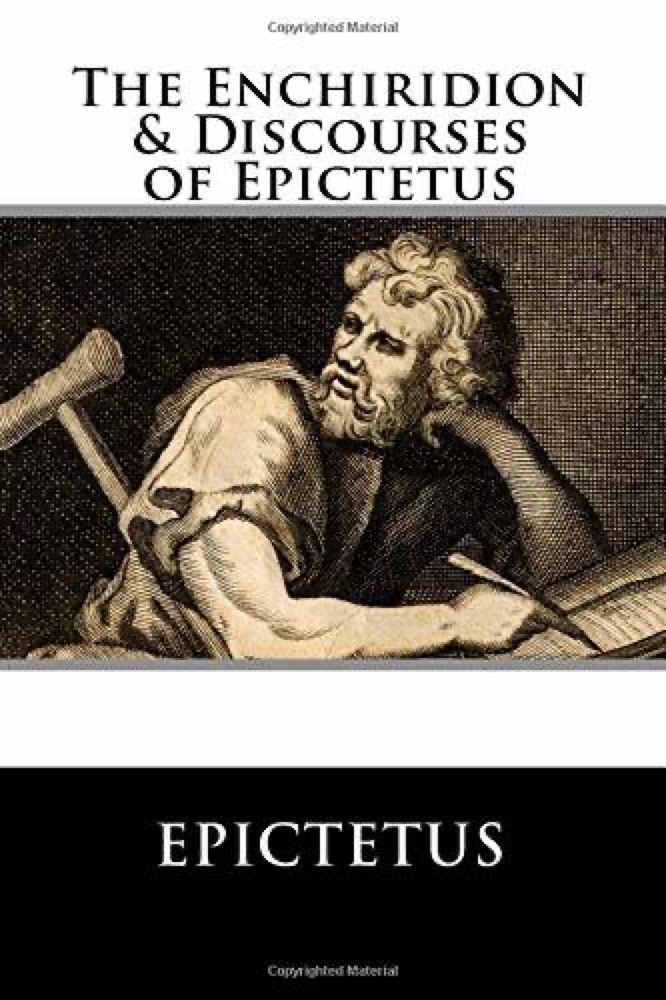 The Enchiridion & Discourses of Epictetus
 The Ides of March
 Letters from the Earth: Uncensored Writings
 The Red Book: Liber Novus
 Sexus
Sexus
 The Last Song of Penelope
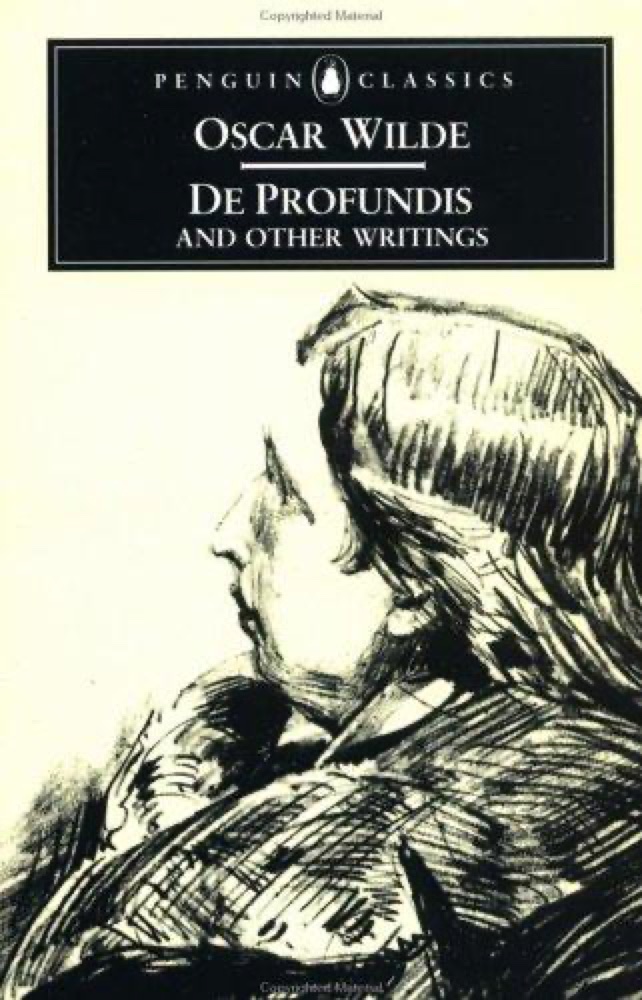 De Profundis and Other Writings
 Metamorphoses
 Ulysses
 A Canticle for Leibowitz
 The Oresteia
 Armadale
 The Book of Mirdad: The Strange Story of a Monastery Which Was Once Called the Ark
 The Golden Age
 The Histories
 Orthodoxy
 Galileo
 Dictator
 Theogony / Works and Days
 Foucault's Pendulum
Lysistrata
Foucault's Pendulum
Lysistrata
 Praise of Folly
 The Canterbury Tales
 Philosophical Dictionary
 The Gods Themselves
 Will in the World: How Shakespeare Became Shakespeare
 Don Juan
 Heretics
 At Swim-Two-Birds
 An Enquiry Concerning the Principles of Morals
 The Secret Magdalene
 The Last of the Wine
 Grief Lessons: Four Plays by Euripides