
 The Ode Less Travelled: Unlocking the Poet Within
Quotes from the Book
Gaia visited her daughter Mnemosyne, who was busy being unpronounceable.
156
For the world seems never to offer anything worthwhile without also providing a dreadful opposite.
80
The Greeks created gods that were in their image; warlike but creative, wise but ferocious, loving but jealous, tender but brutal, compassionate, but vengeful.
64
Gaia listened carefully to this wise counsel and - as we all do, whether mortal or immortal - ignored it.
62
Painters, poets and philosophers have seen many things in the myth of Sisyphus. They have seen an image of the absurdity of human life, the futility of effort, the remorseless cruelty of fate, the unconquerable power of gravity. But they have seen too something of mankind’s courage, resilience, fortitude, endurance and self-belief. They see something heroic in our refusal to submit.
51
It is enough to say that the Greeks thought it was Chaos who, with a massive heave, or a great shrug, or hiccup, vomit or cough, began the long chain of creation that has ended with pelicans and penicillin and toadstools and toads, sea-lions, lions, human beings and daffodils and murder and art and love and confusion and death and madness and biscuits.
45
When lust descends, discretion, common sense and wisdom fly off and what may seem cunning concealment to one in the grip of passion looks like transparently clumsy idiocy to everyone else.
40
What Pandora did not know was that, when she shut the lid of the jar so hastily, she for ever imprisoned inside one last daughter of Nyx. One last little creature was left behind to beat its wings hopelessly in the jar for ever. Its name was ELPIS, Hope.
30
Brooding, simmering and raging in the ground, deep beneath the earth that once loved him, Ouranos compressed all his fury and divine energy into the very rock itself, hoping that one day some excavating creature somewhere would mine it and try to harness the immortal power that radiated from within. That could never happen, of course. It would be too dangerous. Surely the race had yet to be born that could be so foolish as to attempt to unleash the power of uranium?
26
The Greek word for 'everything that is the case', what we could call 'the universe', is COSMOS. And at the moment - although 'moment' is a time word and makes no sense just now (neither does the phrase 'just now') - at the moment, Cosmos is Chaos and only Chaos because Chaos is the only thing that is the case.
23
The seeding of Gaia gave us meaning, a germination of thought into shape. Seminal semantic semiology from the semen of the sky.
23
Here Phaeton lies who in the sun-god’s chariot fared. And though greatly he failed, more greatly he dared.
22
Whatever the truth, science today agrees that everything is destined to return to Chaos. It calls this inevitable fate entropy: part of the great cycle from Chaos to order and back again to Chaos.
20
...we do not lend the hearth quite the importance that our ancestors did, Greek or otherwise. Yet, even for us, the word stands for something more than just a fireplace. We speak of 'hearth and home'. The word 'hearth' shares its ancestry with 'heart', just as the modern Greek for 'hearth' is kardia, which also means 'heart'. In Ancient Greece the wider concept of hearth and home was expressed by the oikos, which lives on for us today in economics and ecology. The Latin for hearth is focus - with speaks for itself. It is a strange and wonderful thing that out of the words for fireplace we have spun "cardiologist', 'deep focus' and 'eco-warrior'. The essential meaning of centrality that connects them also reveals the great significance of the hearth to the Greeks and Romans, and consequently the importance of Hestia, its presiding deity.
20
She loved him, in fact; his violence and strength appealed to some deep part of her. He in turn grew to love her, so far as such a violent brute was capable of the emotion. Love and war, Venus and Mars, have always had a strong affinity. No one quite knows why, but plenty of money has been made trying to find an answer.
15
Poseidon spent almost all his time pursuing a perfectly exhausting quantity of beautiful girls and boys and fathering by the girls an even greater number of monsters, demigods and human heroes - Percy Jackson and Theseus to name but two.
15
It is their refusal to see any divine beings as perfect, whole and complete of themselves, whether Zeus, Moros or Prometheus, that makes the Greeks so satisfying.
14
Even meaning and destiny themselves can be read in ordinary things, if you have the gift.
14
It is probably best for us not to concentrate in too literal a fashion on the temporal structure of myth.
13
Perhaps narcissism is best defined as a need to look on other people as mirrored surfaces who satisfy us only when they reflect back a loving or admiring image of ourselves. When we look into another’s eyes, in other words, we are not looking to see who they are, but how we are reflected in their eyes. By this definition, which of us can honestly disown our share of narcissism?
11
We can’t just stand here in the rain with our backs to the town,’ said Baucis. ‘I’ll look if you will.’ ‘I love you Philemon, my husband.’ ‘I love you Baucis, my wife.’ They turned and looked down. They were just in time to see the great flood inundating Eumeneia before Philemon was turned into an oak tree and Baucis into a linden. For hundreds of years the two trees stood side by side, symbols of eternal love and humble kindness, their intertwining branches hung with the tokens left by admiring pilgrims.
11
This species, the mute swan, became holy to Apollo. In remembrance of the death of the beloved Phaeton the bird is silent all its life until the very moment of its death, when it sings with terrible melancholy its strange and lovely goodbye, its swan song. In honour of Cygnus the young of all swans are called ‘cygnets’.
10
Goodness me. You don’t ask for the moon, do you?” “Oh, what a good idea! The moon. Yes, I’d love the moon, please. That will be all. I’ll never ask for anything ever again ever.
8
Priapus became the god of male genitalia and phalluses; he was especially prized by the Romans as the minor deity of the major boner.
8
Pandora’s imprisonment of it was a triumphant act that saved us from Zeus’s worst cruelty. With hope, Nietzsche argued, we are foolish enough to believe there is a point to existence, an end and a promise.
8
Dreams were told to priests on the morning after an overnight stay (known as an 'incubation') and Asclepius himself often manifested to patients. Especially, I believe, to those who paid the most.
7
Kronos had seen by now that his wife was expecting and he readied himself for the happy day when he could consume the sixth of his children. He was taking no chances.
7
By the time he was twenty Asclepius had mastered all the arts of surgery and medicine. He embraced his teacher Chiron in a fond farewell and left to set up on his own as the world’s first physician, apothecary and healer. His fame spread around the Mediterranean with great speed. The sick, lame and unhappy flocked to his surgery, outside which he hung a sign – a wooden staff with a snake twined round it, seen to this day on many ambulances, clinics and (often disreputable) medical websites.
6
Did you know?
- It is the first book in Stephen Fry's series of Greek mythology retellings, later followed by Heroes, Troy, and Odyssey.
- Fry drew primarily on classical sources such as Hesiod's Theogony and Ovid's Metamorphoses.
- The narrative begins with the cosmos emerging from Chaos and proceeds through the Titans to the Olympian gods.
- Fry frequently highlights the Greek origins of modern English words throughout the retellings.
- Fry also adapted the material for the stage as part of a theatrical production, Mythos: A Trilogy.
About Stephen Fry
Stephen Fry is an English actor, comedian, writer, and broadcaster, widely known for his work in television, film, and as a narrator and author. His non-fiction includes memoirs and, beginning with Mythos, a popular series of retellings of Greek mythology.
More about the author →More by Stephen Fry
All books by Stephen Fry →
About the book
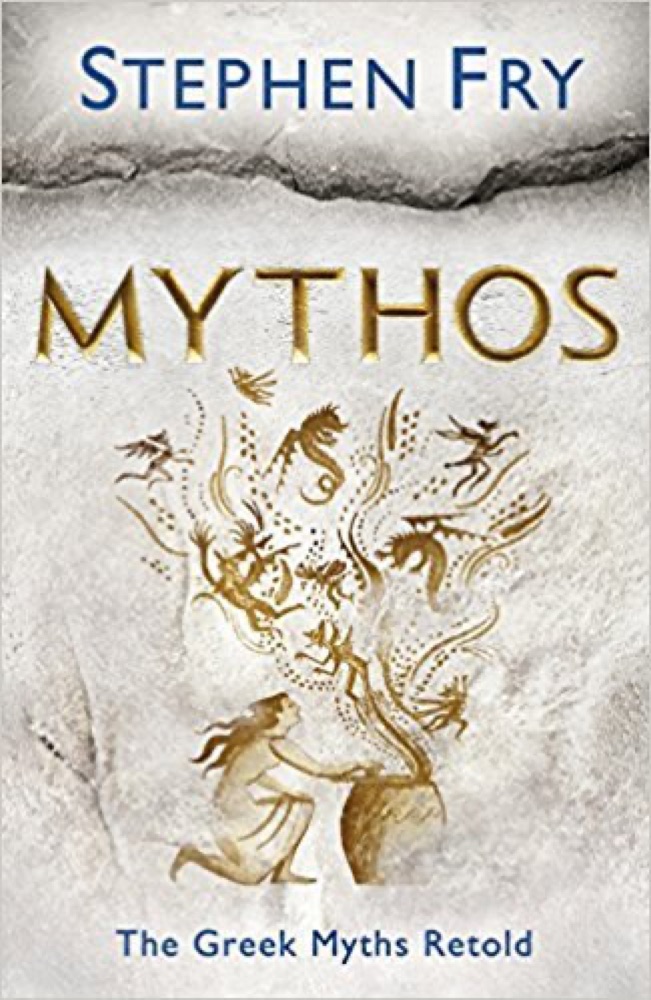
Mythos: The Greek Myths Retold is Stephen Fry's accessible retelling of ancient Greek mythology, beginning with the emergence of the cosmos from Chaos and moving through the births of the primordial deities, the Titans, and the Olympian gods. Fry recounts familiar stories such as the rise of Zeus, the creation of humankind, and tales of figures like Prometheus, Persephone, Midas, and Echo and Narcissus, drawing chiefly on classical sources including Hesiod's Theogony and Ovid's Metamorphoses.
Fry presents the myths not as remote academic texts but as vivid, human dramas, foregrounding their humour, cruelty, desire, and caprice. Recurring threads include the origins of the world and the natural order, the often arbitrary power of the gods, and the way these stories explain human emotions and the world's phenomena. He frequently pauses to note the etymologies and modern echoes of Greek names and words, underscoring mythology's enduring imprint on language and culture.
The book was a commercial success and the first installment in Fry's bestselling sequence of Greek-myth retellings, followed by Heroes, Troy, and Odyssey. Reviews were generally positive, praising Fry's enthusiasm, wit, and accessibility, while some critics noted unevenness in tone and the necessarily selective range of myths covered. Classicist Edith Hall observed that Fry's distinctive voice brings a lively, humorous, and intimate quality to the ancient material.
Book details
- First published
- 2017
- Length
- 416 pages
- Series
- Stephen Fry's Greek Myths #1
- Reading time
- 9 hours
- Author
- Stephen Fry
- Genre
- Nonfiction
- Goodreads rating
- 4.25 (172k ratings)
- First line
- “These days the origin of the universe is explained by proposing a Big Bang, a single event that instantly brought into being all the matter from which everything and everyone are made.”
Critical reception
- The Telegraph gave the book a positive review of four out of five stars.
- Classicist Edith Hall praised Fry's distinctive, lively, humorous, and intimate voice while noting the limited selection of myths.
- Some reviewers, such as The Scotsman, praised its accessibility and enthusiasm but criticized stylistic inconsistency.
Series & reading order
- 1 Mythos
- 2 Heroes
- 3 Troy
- 4 Odyssey
If you liked this, read…
- 1The Greek MythsRobert Graves's classic comprehensive compendium of Greek mythology.
- 2HeroesFry's own follow-up, continuing the retellings with mortal heroes.
- 3Norse MythologyNeil Gaiman's accessible, narrative retelling of another mythological tradition.
Keep reading
 Mythology
 Divine Might - Goddesses in Greek Myth
 Theogony / Works and Days
 Troy
Troy
 Metamorphoses
 The Fall of Hyperion
 The Last Song of Penelope
 The Greek Way
 The Rise of Endymion
 The Hymn to Dionysus
 The Bacchae
 The King Must Die
 Basic Writings of Nietzsche
 The Histories
 Phaedrus
 The Golden Compass
 A Short History of Myth
 The Penelopiad
 Julian
 The Hero With a Thousand Faces
 Percy Jackson's Greek Heroes
 The Enchantress of Florence
 The Sirens of Titan
 Age of Myth
 Songs of Distant Earth
 The Norse Myths
 The Fifth Science
 Orthodoxy
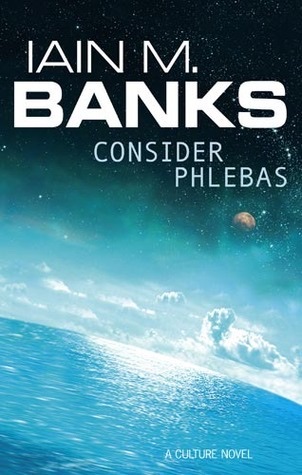 Consider Phlebas
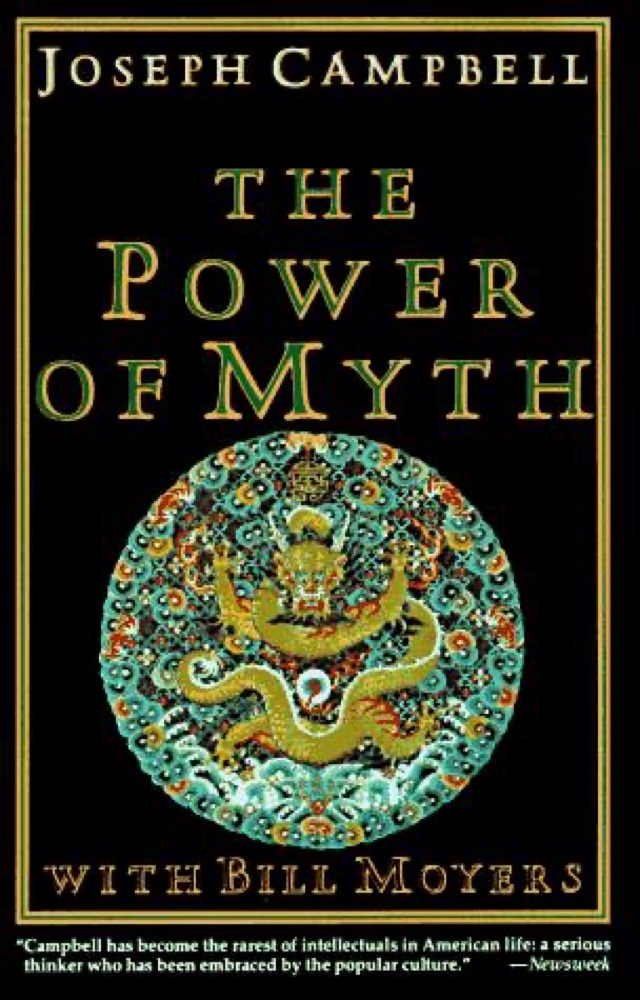 The Power of Myth
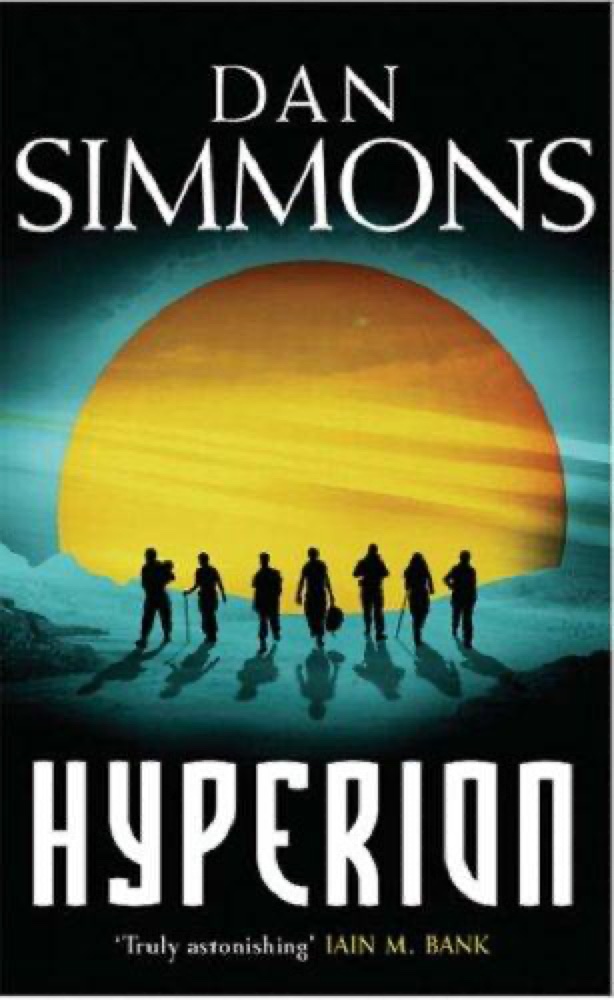 Hyperion
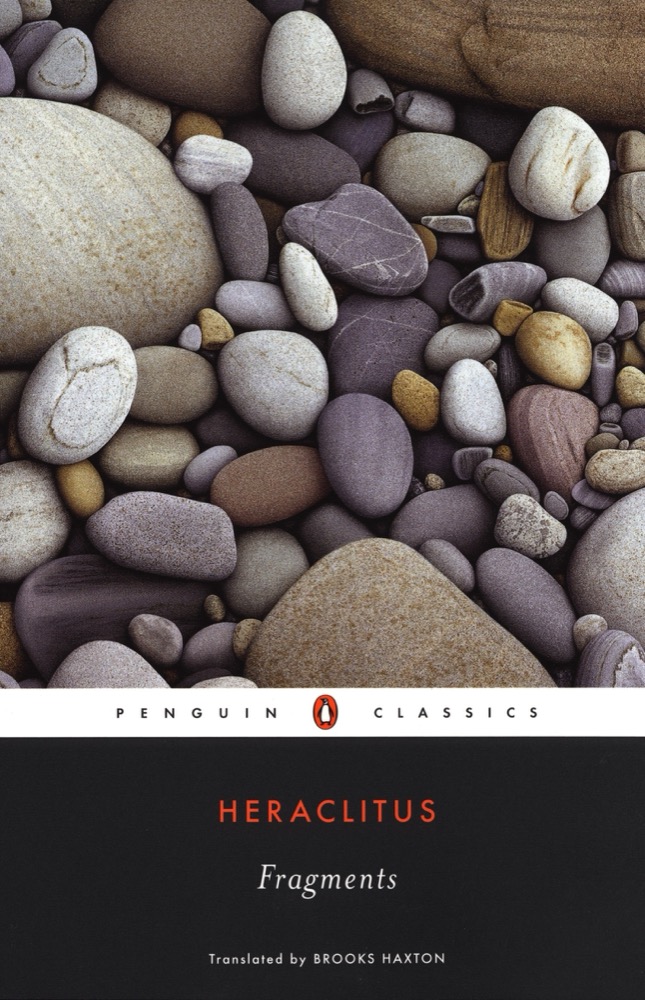 Fragments
 Percy Jackson's Greek Gods
 The Island of the Day Before
 The Birth of Tragedy/The Case of Wagner
 The Gay Science
 Maldoror and the Complete Works
 Grief Lessons: Four Plays by Euripides
 Arcadia
 Pandora's Jar: Women in the Greek Myths
 Seven Surrenders
 The Ruin of Angels
 Empire of Silence
 Forge of Darkness
 Timaeus
 Sword & Citadel
 The Iliad
 Gardens of the Moon
 Toll the Hounds
 Ninety-Three
 The Everlasting Man
 Quicksilver
 The Name of the Rose
 Selected Poems
 The Gospel of Loki
 Allan Quatermain
 Zeus Grants Stupid Wishes: A No-Bullshit Guide to World Mythology
 Pyramids
 Ben-Hur: A Tale of the Christ
 The Etched City