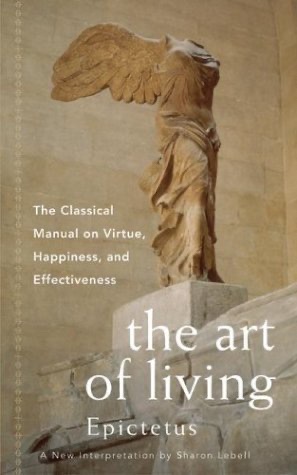
 The Art of Living: The Classical Manual on Virtue, Happiness and Effectiveness
Quotes from the Book
Remember that you must behave in life as at a dinner party. Is anything brought around to you? Put out your hand and take your share with moderation. Does it pass by you? Don’t stop it. Is it not yet come? Don’t stretch your desire towards it, but wait till it reaches you. Do this with regard to children, to a wife, to public posts, to riches, and you will eventually be a worthy partner of the feasts of the gods. And if you don’t even take the things which are set before you, but are able even to reject them, then you will not only be a partner at the feasts of the gods, but also of their empire.
20
Never call yourself a philosopher, nor talk a great deal among the unlearned about theorems, but act conformably to them. Thus, at an entertainment, don’t talk how persons ought to eat, but eat as you ought. For remember that in this manner Socrates also universally avoided all ostentation. And when persons came to him and desired to be recommended by him to philosophers, he took and recommended them, so well did he bear being overlooked. So that if ever any talk should happen among the unlearned concerning philosophic theorems, be you, for the most part, silent. For there is great danger in immediately throwing out what you have not digested. And, if anyone tells you that you know nothing, and you are not nettled at it, then you may be sure that you have begun your business. For sheep don’t throw up the grass to show the shepherds how much they have eaten; but, inwardly digesting their food, they outwardly produce wool and milk. Thus, therefore, do you likewise not show theorems to the unlearned, but the actions produced by them after they have been digested.
16
No, it is events that give rise to fear -- when another has the power over them or can prevent them, that person becomes able to inspire fear. How is the fortress destroyed? Not by iron or fire, but by judgments... here is where we must begin, and it is from this front that we must seize the fortress and throw out tyrants.
3
Our master is anyone who has the power to implement or prevent the things that we want or don’t want. Whoever wants to be free, therefore, should wish for nothing or avoid nothing that is up to other people.
3
What say you, fellow? Chain me? My leg you will chain--yes, but my will--no, not even Zeus can conquer that.
1
Watch on YouTube
About Epictetus
We have collected 83 quotes from 4 books by Epictetus on BookQuoters.
More about the author →More by Epictetus
The Art of Living: The Classical Manual on Virtue, Happiness and Effectiveness
 Discourses and Selected Writings
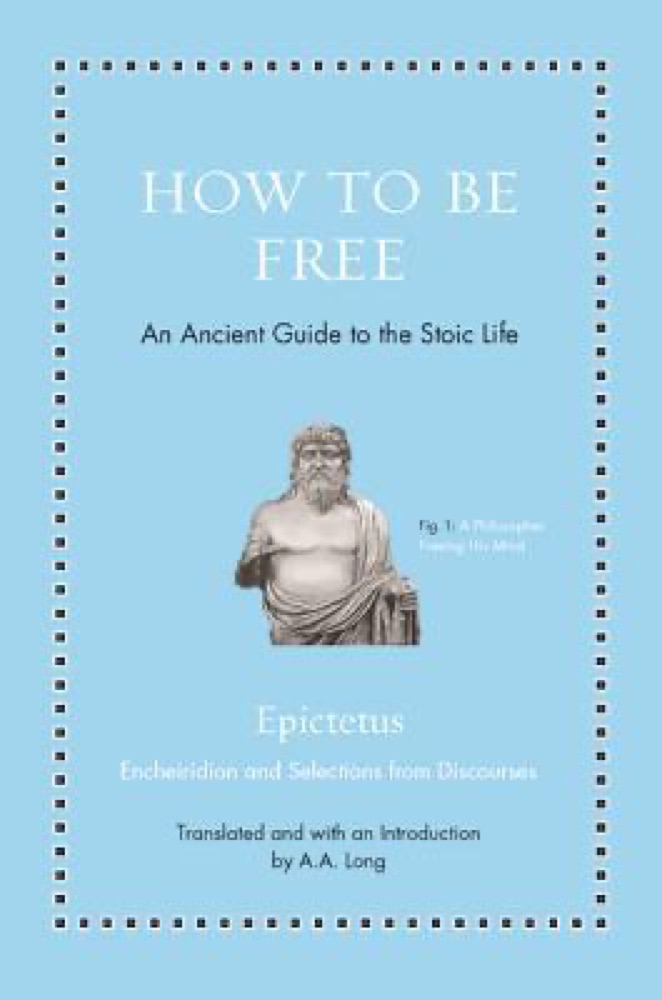 How to Be Free: An Ancient Guide to the Stoic Life
About the book
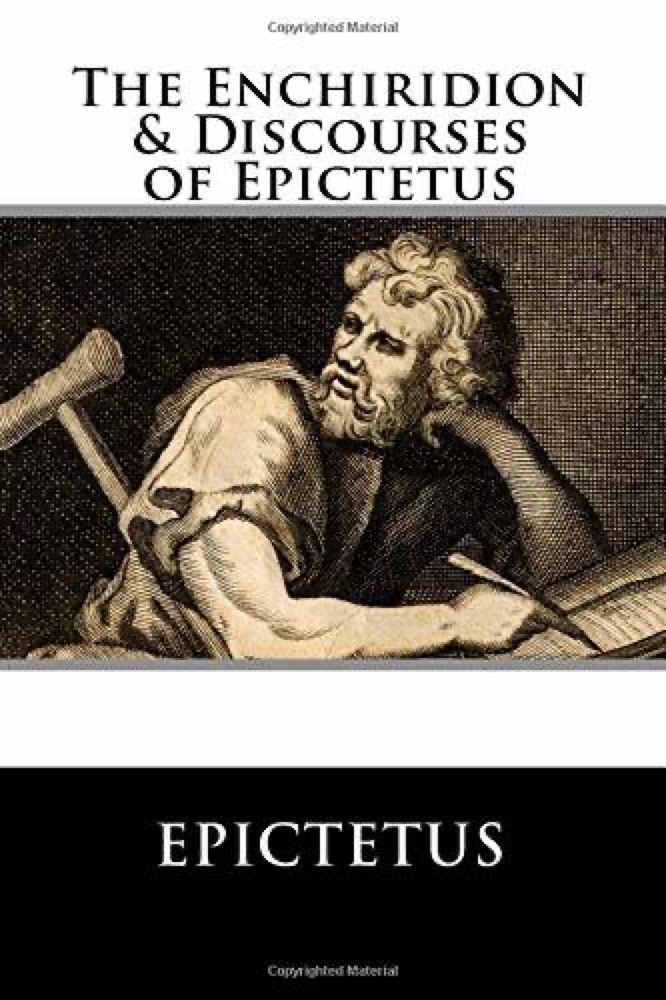
This collection has four preserved volumes of The Discourses and The Enchiridion by Epictetus and a detailed biography of the book's author.
About the Author:
In light of modern research and knowledge gained by deciphering of the Greek anecdotes of ancient times, the date of birth of Epictetus is estimated to be around 55 A.D. His place of birth is contemplated as Hierapolis, Phrygia (now a part of Turkey). The birth name of Epictetus is still unknown and his known name "Epictetus" simply means "acquired" in Greek. Possibly this name was christened or rechristened upon him by his master Epaphroditos. Epaphroditos was a wealthy freedman and a secretary to Nero (Nero Claudius Caesar Augustus Germanicus was a Roman Emperor between 54–68 A.D.; Nero was an infamous emperor who according to the Greek people was responsible for lighting the Great Fire of Rome in 18 July to 19 July 64 A.
Book details
- First published
- 108
- Author
- Epictetus
- Genre
- Philosophy
- Goodreads rating
- 4.24 (2k ratings)
Keep reading
How to Be Free: An Ancient Guide to the Stoic Life
 The Book of Chuang Tzu
 Gorgias
 The World's Last Night: And Other Essays
 Daybreak: Thoughts on the Prejudices of Morality
 The Red Book: Liber Novus
 The I Ching or Book of Changes
 Phaedrus
 Midnight Tides
 Self-Reliance and Other Essays
 The Portable Nietzsche
 Chuang Tzu: Basic Writings
 The Ego and Its Own
 The Story of My Experiments With Truth
The Art of Living: The Classical Manual on Virtue, Happiness and Effectiveness
The Story of My Experiments With Truth
The Art of Living: The Classical Manual on Virtue, Happiness and Effectiveness
 Self-Reliance: An Excerpt from Collected Essays, First Series
 A Canticle for Leibowitz
 Lord of the Silver Bow
 The Book of Mirdad: The Strange Story of a Monastery Which Was Once Called the Ark
 Laurus
 Children of Dune
 Untimely Meditations
 The Ides of March
 Heretics
 The Greek Way
 The Daily Stoic: 366 Meditations on Wisdom, Perseverance, and the Art of Living
 How to Be a Stoic: Using Ancient Philosophy to Live a Modern Life
 Lord of Light
 The Dream of Scipio
 Shōgun
 Theaetetus
 A Calendar of Wisdom: Daily Thoughts to Nourish the Soul
 The 48 Laws of Power
 The Hundred Thousand Kingdoms
 The Hands of the Emperor
 The Dispossessed
 The Claw of the Conciliator
 The Spinoza Problem
 Dictator
 Journey to Ixtlan
 Sword & Citadel
Discourses and Selected Writings
Sword & Citadel
Discourses and Selected Writings
 Clouds
 Demian
 Parable of the Talents
 Listen, Little Man!
 The Story of B: An Adventure of the Mind and Spirit
 The Fencing Master
 The Monster Baru Cormorant
 The Glass Bead Game
 God Emperor of Dune
 Perelandra
 The Weight of Glory
 12 Rules for Life: An Antidote to Chaos
 Leviathan
 The Book of Wisdom
 Freedom: The Courage to Be Yourself
 Tao Te Ching
 The Biggest Secret: The Book That Will Change the World