

 Trick Mirror: Reflections on Self-Delusion
Quotes from the Book
Sometimes I would worry about my internet habits and force myself awy from the computer, to read a magazine or book. Contemporary literature offered no respite: I would find the prose cluttered with data points, tenuous historical connections, detail so finely tuned it could have only been extracted from a feverish night of search-engine queries. Aphorisms were in; authors were wired. I would pick up books that had been heavily documented on social media, only to find that the books themselves had a curatorial affect: beautiful descriptions of little substance, arranged in elegant vignettes—gestural text, the equivalent of a rumpled linen bedsheet or a bunch of dahlias placed just so. Oh, I would think, turning the page. This author is addicted to the internet, too.
27
The internet was a collective howl, an outlet for everyone to prove that they mattered.
14
Warm laundry, radio, waiting for the bus. I could get frustrated, overextended, overwhelmed, uncomfortable. Sometimes I ran late. But these banal inefficiencies—I thought they were luxuries, the mark of the unencumbered. Time to do nothing, to let my mind run anywhere, to be in the world. At the very least, they made me feel human.
13
Being the only woman on a nontechnical team, providing customer support to software developers, was like immersion therapy for internalized misogyny. I liked men—I had a brother. I had a boyfriend. But men were everywhere: the customers, my teammates, my boss, his boss. I was always fixing things for them, tiptoeing around their vanities, cheering them up. Affirming, dodging, confiding, collaborating. Advocating for their career advancement; ordering them pizza. My job had placed me, a self-identified feminist, in a position of ceaseless, professionalized deference to the male ego.
13
Why did it feel so taboo, I asked, to approach work the way most people did, as a trade of my time and labor for money? Why did we have to pretend it was all so fun? Leah nodded, curls bobbing. ‘That's real,’ she said. ‘But I wonder if you're forcing things. Your job can be in service of the rest of your life.
9
The city, trapped in nostalgia for its own mythology, stuck in a hallucination of a halcyon past, had not quite caught up to the newfound momentum of tech’s dark triad: capital, power, and a bland, overcorrected, heterosexual masculinity.
8
If the personalized playlists were full of sad singer-songwriters, I could only blame myself for getting the algorithm depressed.
7
All this time, and I could just leave. I could have left months ago. For nearly two years, I had been seduced by the confidence of young men. They made it look so simple, knowing what you wanted and getting it. I had been ready to believe in them, eager to organize my life around their principles. I had trusted them to tell me who I was, what mattered, how to live. I had trusted them to have a plan, and trusted that it was the best plan for me. I thought they knew something I did not know. I swam in relief. Watching the city, wrapped in Ian’s jacket, I did not see that I was in good company: an entire culture had been seduced. I understood my blind faith in ambitious, aggressive, arrogant young men from America’s soft suburbs as a personal pathology, but it wasn’t personal at all. It had become a global affliction.
7
Tech, for the most part, wasn't progress. It was just business.
7
I didn’t think to mention that if he wanted more women in leadership roles, perhaps we should start by hiring more women. I didn’t note that even if we did hire more women, there were elements of our office culture that women might find uncomfortable. Instead, I told him I would do whatever he needed.
7
The mark of a hustler, a true entrepreneurial spirit, was creating the job that you wanted and making it look indispensable, even if it was institutionally unnecessary. This was an existential strategy for the tech industry itself, and it did not come naturally to me.
6
My impulse, over the past few years, had been to remove myself from my own life, to watch from the periphery and try to see the vectors, the scaffolding, the systems at play. Psychologists might refer to this as dissociation; I considered it the sociological approach. It was, for me, a way out of unhappiness.
6
It was like an entire generation had developed its political identity online, using the style and tone of internet forums.
5
Was I trying too hard to make this mean something? I asked Leah. Was that just buying into the industry's own narratives about itself? I tried to summarize the frantic, self-important work culture in Silicon Valley, how everyone was optimizing their bodies for longer lives, which would then be spent productively; how it was frowned upon to acknowledge that a tech job was a transaction rather than a noble mission or a seat on a rocket ship. In this respect, it was not unlike book publishing: talking about doing work for money felt like screaming the safe word. While perhaps not unique to tech--it may even have been endemic to a generation--the expectation was overbearing. Why did it feel so taboo, I asked, to approach work the way most people did, as a trade of my time and labor for money? Why did we have to pretend it was all so fun? Leah nodded, curls bobbing. "That's real," she said. "but I wonder if you're forcing things. Your job can be in service of the rest of your life." She reached out to squeeze my wrist, then leaned her head against the window. "You're allowed to enjoy your life," she said. The city streaked past, the bridge cables flickering like a delay, or a glitch.
5
We were all from North America. We were all white, and in our twenties and thirties. These were not individual moral failings, but they didn't help. We were aware we had blind spots. They were still blind spots.
5
I still clung to the belief that I could find meaning and fulfillment in work - the result of over two decades of educational affirmation, parental encouragement, socioeconomic privilege, and generational mythology.
4
I understood my blind faith in ambitious, aggressive, arrogant young men from America's soft suburbs as a personal pathology, but it wasn't personal at all. It had become a global affliction.
4
I was worried about a lot of things: loneliness, failure, earthquakes. But I wasn't too worried about my soul. There had always been two sides to my personality. One side was sensible and organized, good at math; appreciative of order, achievement, authority, rules. The other side did everything it could to undermine the first. I behaved as if the first side dominated, but it did not. I wished it did: practicality, I thought, was a safe hedge against failure. It seemed an easier way to move through the world.
4
The endgame was the same for everyone: Growth at any cost. Scale above all. Disrupt, then dominate. At the end of the idea: A world improved by companies improved by data. A world of actionable metrics, in which developers would never stop optimizing and users would never stop looking at their screens. A world freed of decision-making, the unnecessary friction of human behavior, where everything—whittled down to the fastest, simplest, sleekest version of itself—could be optimized, prioritized, monetized, and controlled.
4
Instead of being an artificial intelligence, I was an intelligent artifice, an empathetic text snippet or a warm voice giving instructions, listening comfortingly.
4
I felt rising frustration and resentment. I was frustrated because I felt stuck, and I was resentful because I was stuck in an industry that was chipping away at so many things I cared about.
4
My own psychic burden was that I could command a six-figure salary, yet I did not know how to do anything. Whatever I learned to do in my late twenties, I learned from online tutorials: how to remove mold from a windowsill; slow-cook fish; straighten a cowlick; self-administer a breast exam. Whenever I wrenched a piece of self-assembly furniture into place, or reinforced a loose button, I experienced an unfamiliar and antiquated type of satisfaction. I went so far as to buy a sewing machine, like I was looking for ways to shame myself.a
3
I wasted time scrolling through the photos and errant musings of people I should have long since forgotten, and exchanged endless, searching emails with friends, in which we swapped inexpert professional and dating advice. I read the online archives of literary magazines that no longer existed, digitally window-shopped for clothing I could not afford, and created and abandoned private, aspirational blogs with names like A Meaningful Life, in the vain hope that they might push me closer to leading one.
3
There was something to be said for expertise.
3
or the stack of data-driven T-shirts I kept
3
The platforms, designed to accommodate and harvest infinite data, inspired an infinite scroll. They encouraged a cultural impulse to fill all spare time with someone else’s thoughts. The internet was a collective howl, an outlet for everyone to prove that they mattered. The full spectrum of human emotion infused social platforms. Grief, joy, anxiety, mundanity flowed. People were saying nothing, and saying it all the time. Strangers swapped confidences with other strangers in return for unaccredited psychological advice. They shared stories of private infidelities and public incontinence; photos of their bedroom interiors; photos, faded and cherished, of long-dead family members; photos of their miscarriages. People were giving themselves away at every opportunity.
2
Maybe the money would spread out a little bit. Maybe the people building the tools could have a say in how those tools were used. Maybe we shouldn’t all be so quick to identify with charismatic CEOs, maybe we shouldn’t assume that the money and the perks and the job market would be there forever, maybe we should factor in the possibility that we might age out. What were we doing anyway, helping people become billionaires? Billionaires were the mark of a sick society, they shouldn’t exist. There was no moral structure in which such a vast accumulation of wealth should be acceptable.
2
My desires were generic. I wanted to find my place in the world, and be independent, useful, and good. I wanted to make money, because I wanted to feel affirmed, confident, and valued. I wanted to be taken seriously. Mostly, I didn’t want anyone to worry about me.
2
We didn’t think of ourselves as participating in the surveillance economy. We weren’t thinking about our role in facilitating and normalizing the creation of unregulated, privately held databases on human behavior. We were just allowing product managers to run better A/B tests.
2
This concentration of public pain was new to me, unsettling. I had never seen such a shameful juxtaposition of blatant suffering and affluent idealism. It was a well-publicized disparity, but one I had underestimated. As a New Yorker, I had thought I was prepared. I thought I’d seen it all. I felt humbled and naïve—and guilty, all the time.
2
Watch on YouTube
About Anna Wiener
We have collected 30 quotes from 1 book by Anna Wiener on BookQuoters.
More about the author →About the book
The prescient, page-turning account of a journey in Silicon Valley: a defining memoir of our digital age
In her mid-twenties, at the height of tech industry idealism, Anna Wiener—stuck, broke, and looking for meaning in her work, like any good millennial--left a job in book publishing for the promise of the new digital economy. She moved from New York to San Francisco, where she landed at a big-data startup in the heart of the Silicon Valley bubble: a world of surreal extravagance, dubious success, and fresh-faced entrepreneurs hell-bent on domination, glory, and, of course, progress.
Anna arrived amidst a massive cultural shift, as the tech industry rapidly transformed into a locus of wealth and power rivaling Wall Street. But amid the company ski vacations and in-office speakeasies, boyish camaraderie and ride-or-die corporate fealty, a new Silicon Valley began to emerge: one in
Book details
- First published
- 2020
- Author
- Anna Wiener
- Genre
- Nonfiction
- Goodreads rating
- 3.63 (36k ratings)
Keep reading
Trick Mirror: Reflections on Self-Delusion
 Private Citizens
 Severance
 White
White
 Machine Man
 Generation X: Tales for an Accelerated Culture
 The Atopia Chronicles
 Purity
 The Circle
 Ripe
Ripe
 No One Is Talking About This
 The Discomfort Zone: A Personal History
 The Escape Room
 One's Company
 Maid: Hard Work, Low Pay, and a Mother's Will to Survive
 Selfie: How the West Became Self-Obsessed
 The Folded Clock: A Diary
 Girls Can Kiss Now: Essays
 Chaos Monkeys: Obscene Fortune and Random Failure in Silicon Valley
 I Hate the Internet
 The Likeness
 Microserfs
 Every Exquisite Thing
 The Candy House
 Oblivion
 Diary of a Void
 Where Am I Now?
 Counterfeit
 Hunger Makes Me a Modern Girl
 An Absolutely Remarkable Thing
 We Were Dreamers: An Immigrant Superhero Origin Story
 Things I Don't Want to Know
 Joan Is Okay
 Acceptance: A Memoir
 Middlesex
 Fall; or, Dodge in Hell
 The Rosie Effect
 Galatea 2.2
 Bleeding Edge
 The Book of the Most Precious Substance
 The Idiot
 Revolutionary Road
 No One Tells You This
 Becoming
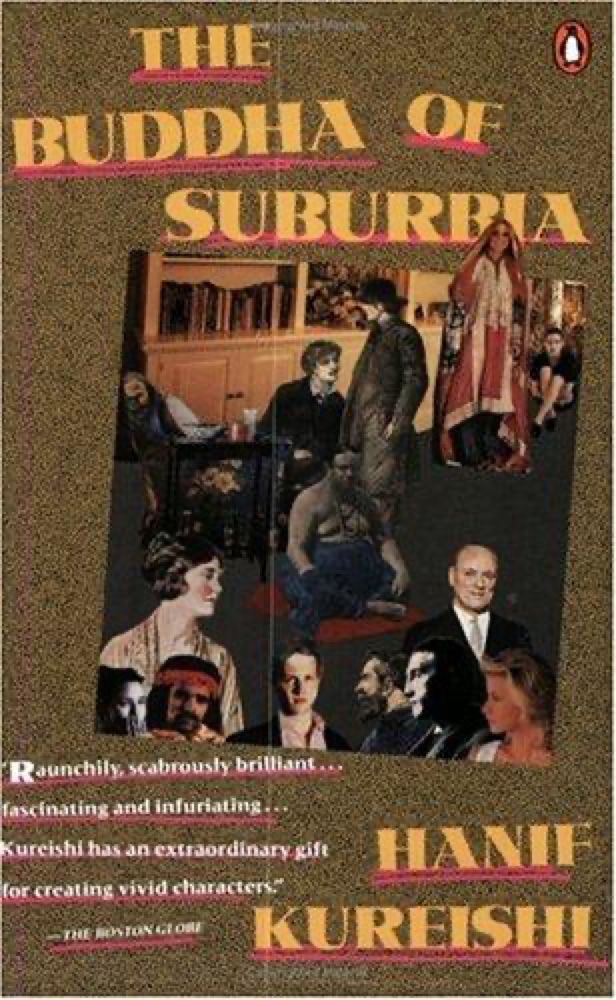 The Buddha of Suburbia
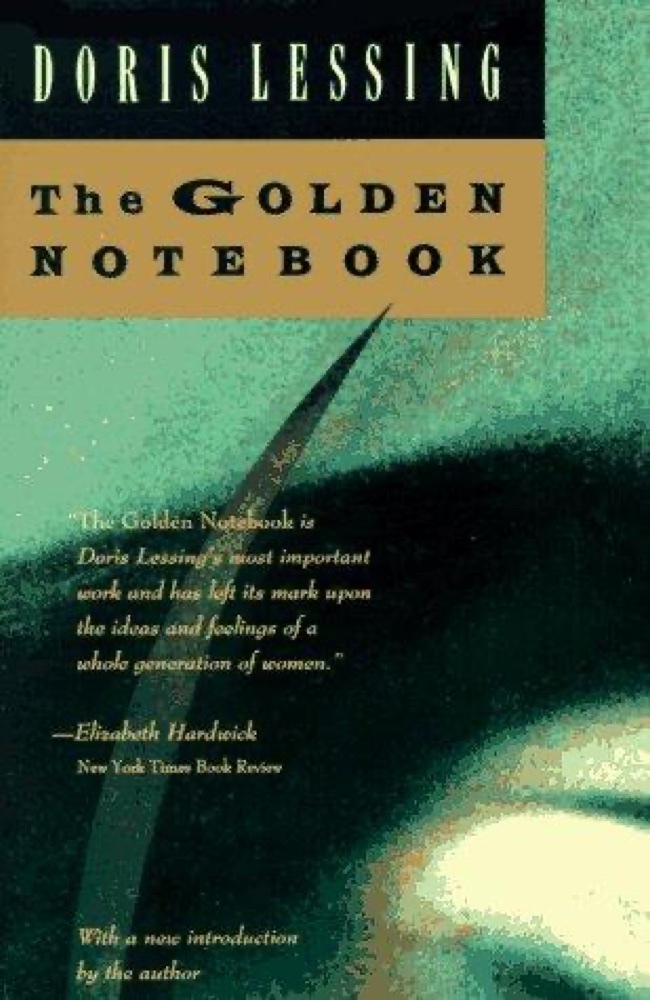 The Golden Notebook
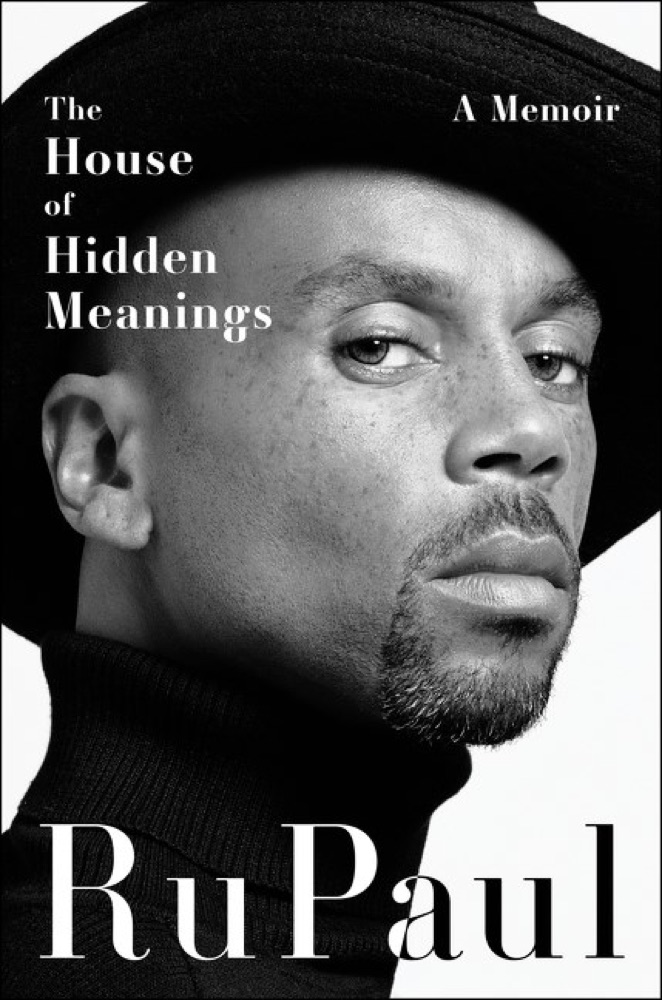 The House of Hidden Meanings
 The Rachel Incident
 All Fours
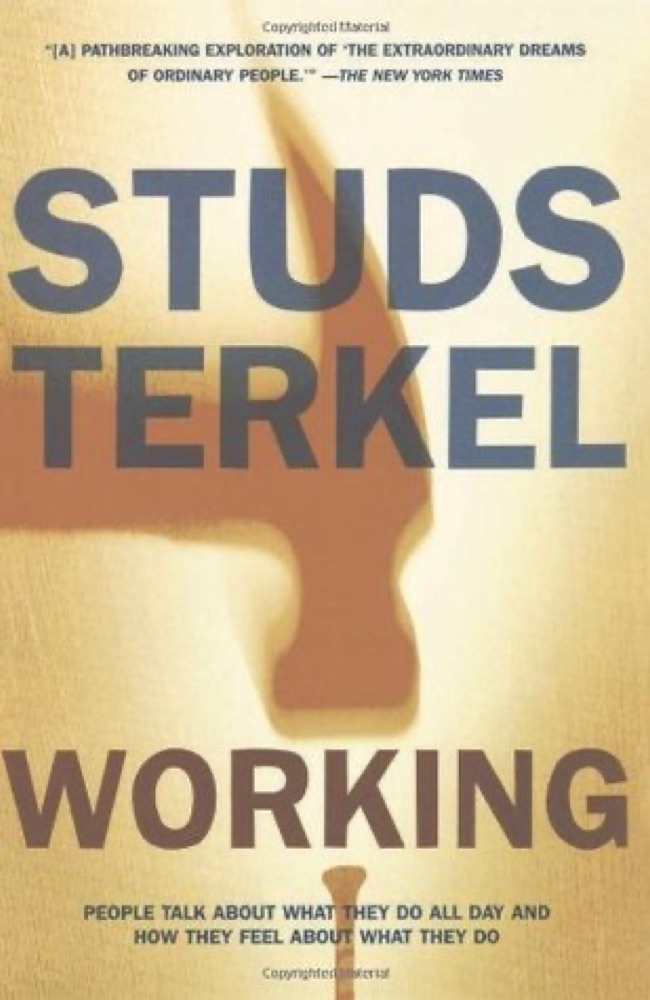 Working: People Talk About What They Do All Day and How They Feel About What They Do
 Dream Count
 The Story of a New Name
 Lakewood
 One in a Millennial: On Friendship, Feelings, Fangirls, and Fitting In
 The Post-Birthday World
 Who Thought This Was a Good Idea?: And Other Questions You Should Have Answers to When You Work in the White House
 Idol, Burning
 Birnam Wood
 All This Could Be Different
 A Supposedly Fun Thing I'll Never Do Again: Essays and Arguments