

 The Complete Poems of Emily Dickinson
Quotes from the Book
The art of losing isn't hard to master; so many things seemed filled with the intent to be lost that their loss is no disaster
1.3k
Time to plant tears, says the almanac. The grandmother sings to the marvelous stove and the child draws another inscrutable house.
22
Each night he must be carried through artificial tunnels and dream recurrent dreams. Just as the ties recur beneath his train, these underlie his rushing brain. He does not dare look out the window, for the third rail, the unbroken draught of poison, runs there beside him. He regards it as a disease he has inherited the susceptibility to. He has to keep his hands in his pockets, as others must wear mufflers.
9
Love's the son stood stammering elocution while the poor ship in flames went down
6
If they should say you have no sense, don’t you mind them; it won’t make much difference. Lullaby.
4
Too pretty, dreamlike mimicry! O falling fire and piercing cry and panic, and a weak mailed fist clenched ignorant against the sky!
4
Somebody embroidered the doily. Somebody waters the plant, or oils it, maybe. Somebody arranges the rows of cans so that they softly say: esso—so—so—so to high-strung automobiles. Somebody loves us all.
4
All the untidy activity continues, awful but cheerful.
2
The tumult in the heart keeps asking questions. And then it stops and undertakes to answer in the same tone of voice. No one could tell the difference. Uninnocent, these conversations start, and then engage the senses, only half-meaning to. And then there is no choice, and then there is no sense; until a name and all its connotation are the same.
1
The Man-Moth Man-Moth: Newspaper misprint for “mammoth.” Here, above, cracks in the buildings are filled with battered moonlight. The whole shadow of Man is only as big as his hat. It lies at his feet like a circle for a doll to stand on, and he makes an inverted pin, the point magnetized to the moon. He does not see the moon; he observes only her vast properties, feeling the queer light on his hands, neither warm nor cold, of a temperature impossible to record in thermometers. But when the Man-Moth pays his rare, although occasional, visits to the surface, the moon looks rather different to him. He emerges from an opening under the edge of one of the sidewalks and nervously begins to scale the faces of the buildings. He thinks the moon is a small hole at the top of the sky, proving the sky quite useless for protection. He trembles, but must investigate as high as he can climb. Up the façades, his shadow dragging like a photographer’s cloth behind him he climbs fearfully, thinking that this time he will manage to push his small head through that round clean opening and be forced through, as from a tube, in black scrolls on the light. (Man, standing below him, has no such illusions.) But what the Man-Moth fears most he must do, although he fails, of course, and falls back scared but quite unhurt. Then he returns to the pale subways of cement he calls his home. He flits, he flutters, and cannot get aboard the silent trains fast enough to suit him. The doors close swiftly. The Man-Moth always seats himself facing the wrong way and the train starts at once at its full, terrible speed, without a shift in gears or a gradation of any sort. He cannot tell the rate at which he travels backwards. Each night he must be carried through artificial tunnels and dream recurrent dreams. Just as the ties recur beneath his train, these underlie his rushing brain. He does not dare look out the window, for the third rail, the unbroken draught of poison, runs there beside him. He regards it as a disease he has inherited the susceptibility to. He has to keep his hands in his pockets, as others must wear mufflers. If you catch him, hold up a flashlight to his eye. It’s all dark pupil, an entire night itself, whose haired horizon tightens as he stares back, and closes up the eye. Then from the lids one tear, his only possession, like the bee’s sting, slips. Slyly he palms it, and if you’re not paying attention he’ll swallow it. However, if you watch, he’ll hand it over, cool as from underground springs and pure enough to drink.
1
Love's the boy stood on the burning deck trying to recite "The boy stood on the burning deck." Love's the son stood stammering elocution while the poor ship in flames went down. Love's the obstinate boy, the ship, even the swimming sailors, who would like a schoolroom platform, too, or an excuse to stay on deck. And love's the burning boy.
1
Is it dew or is it tears, dew or tears, hanging there for years and years like a heavy dew of tears?
Come like a light in the white mackerel sky, come like a daytime comet with a long unnebulous train of words, from Brooklyn, over the Brooklyn Bridge, on this fine morning, please come flying.
I am in need of music that would flow Over my fretful, feeling fingertips, Over my bitter-tainted, trembling lips, With melody, deep, clear, and liquid-slow. Oh, for the healing swaying, old and low, Of some song sung to rest the tired dead, A song to fall like water on my head, And over quivering limbs, dream flushed to glow! There is a magic made by melody: A spell of rest, and quiet breath, and cool Heart, that sinks through fading colors deep To the subaqueous stillness of the sea, And floats forever in a moon-green pool, Held in the arms of rhythm and of sleep.
Alone on the railroad track I walked with pounding heart. The ties were too close together or maybe too far apart.
Time's in her pocket, ticking loud on one stalled second.
The great light cage has broken up in the air, freeing, I think, about a million birds whose wild ascending shadows will not be back, and all the wires come falling down. No cage, no frightening birds; the rain is brightening now. The face is pale that tried the puzzle of their prison and solved it with an unexpected kiss, whose freckled unsuspected hands alit." — Elizabeth Bishop, “Rain Towards Morning,” from “Four Poems,” The Complete Poems 1927-1979 (Farrar Straus Giroux, January 1, 1983)
A blue-white sky, a simple web, backing for feathery detail: brief arcs, a pale-green broken wheel, a few palms, swarthy, squat, but delicate; and perching there in profile, beaks agape, the big symbolic birds keep quiet, each showing only half his puffed and padded, pure-colored or spotted breast. Still in the foreground there is Sin: five sooty dragons near some massy rocks. The rocks are worked with lichens, grey moonbursts splattered and overlapping, threatened from underneath by moss in lovely hell-green flames, attacked from above by scaling-ladder vines, oblique and neat, “one leaf yes and one leaf no” (in Portuguese).
The Weed I dreamed that dead, and meditating, I lay upon a grave, or bed, (at least, some cold and close-built bower) In the cold heart, its final thought stood frozen, drawn immense and clear, stiff and idle as I was there; and we remained unchanged together for a year, a minute, an hour. Suddenly there was a motion, as startling, there, to every sense as an explosion. Then it dropped to an insistent, cautious creeping in the region of the heart, prodding me from desperate sleep. I raised my head. A slight young weed had pushed up through the heart and its green head was nodding on the breast. (All this was in the dark.) It grew an inch like a blade of grass; next, one leaf shot out of its side a twisting, waving flag, and then two leaves moved like a semaphore The stem grew thick. The nervous roots reached to each side; the graceful head changed its position mysteriously, since there was neither sun nor moon to catch its young attention. The rooted heart began to change (not beat) and then it spit apart and from it broke a flood of water. Two rivers glanced off from the sides, one to the right, one to the left, two rushing, half-clear streams, (the ribs made of them two cascades) which assuredly, smooth as glass, went off through the fine black grains of earth. The weed was almost swept away; it struggled with its leaves, lifting them fringed with heavy drops. A few drops fell upon my face and in my eyes, so I could see (or, in that black place, thought I saw) that each drop contained a light, a small, illuminated scene; the weed-deflected stream was made itself of racing images. (As if a river should carry all the scenes that it once reflected shut in its waters, and not floating on momentary surfaces.) The weed stood in the severed heart. "What are you doing there?" I asked. it lifted its head all dripping wet (with my own thoughts?) and answered then: "I grow," it said, "but to divide your heart again.
-like kings of old, or like a miracle. It was still dark. One foot of the sun steadied itself on a long ripple in the river. The first ferry of the day had just crossed the river.
Receding for miles on either side into a flushed, still sky are overhanging pale blue cliffs hundreds of feet high, their bases fretted by little arches, the entrances to caves running in along the level of a bay masked by perfect waves. On the middle of that quiet floor sits a fleet of small black ships, square-rigged, sails furled, motionless, their spars like burnt match-sticks. And high above them, over the tall cliffs’ semi-translucent ranks, are scribbled hundreds of fine black birds hanging in n’s in banks. One can hear their crying, crying, the only sound there is except for occasional sighing as a large aquatic animal breathes. In the pink light the small red sun goes rolling, rolling, round and round and round at the same height in perpetual sunset, comprehensive, consoling, while the ships consider it. Apparently they have reached their destination. It would be hard to say what brought them there, commerce or contemplation.
What childishness is it that while there's a breath of life in our bodies, we are determined to rush to see the sun the other way around?
Sleep on and on, war’s over soon. Drop the silly, harmless toy, pick up the moon. Lullaby.
– and looked and looked our infant sight away.
Watch on YouTube
About Elizabeth Bishop
We have collected 24 quotes from 1 book by Elizabeth Bishop on BookQuoters.
More about the author →About the book
Elizabeth Bishop was vehement about her art--a perfectionist who didn't want to be seen as a "woman poet." In 1977, two years before her death she wrote, "art is art and to separate writings, paintings, musical compositions, etc., into two sexes is to emphasize values in them that are not art." She also deeply distrusted the dominant mode of modern poetry, one practiced with such detached passion by her friend Robert Lowell, the confessional. Bishop was unforgiving of fashion and limited ways of seeing and feeling, but cast an even more trenchant eye on her own work. One wishes this volume were thicker, though the perfections within mark the rightness of her approach. The poems are sublimely controlled, fraught with word play, fierce moral vision (see her caustic ballad on Ezra Pound, "Visits to St. Elizabeths"), and reticence. From the surreal sorrow of the early "Man-Moth" (leaping off
Book details
- First published
- 1990
- Author
- Elizabeth Bishop
- Genre
- Literature
- Goodreads rating
- 4.20 (13k ratings)
Keep reading
The Complete Poems of Emily Dickinson
 The Collected Poems of W.B. Yeats
 The Collected Poems
 Dearly
 Collected Poems
 Johnny Panic and the Bible of Dreams: Short Stories, Prose and Diary Excerpts
 The Complete Stories and Poems
 Plainwater: Essays and Poetry
 The Complete Poems
 Selected Poems
 The Dream Songs
 Between the Acts
 Meditations in an Emergency
 Titus Groan
 Poems New and Collected
 Independent People
 In the Heart of the Heart of the Country and Other Stories
 Collected Poems, 1909-1962
 Selected Poems
 The Collected Poems of Emily Dickinson
 Ada, or Ardor: A Family Chronicle
 The Complete Poems and Plays, 1909-1950
 Tar Baby
 View with a Grain of Sand: Selected Poems
 The Tunnel
 The Poetry of Robert Frost
 Sonnets to Orpheus
 Selected Poems
 By Grand Central Station I Sat Down and Wept
 The Collected Poems
 Absalom, Absalom!
 Orlando
 Palimpsest
 Ulysses
 Jacob's Room
 Shirley
 Pale Fire
 Light in August
 Poems, 1962-2012
 Glass, Irony and God
 Little, Big
 Emily's Quest
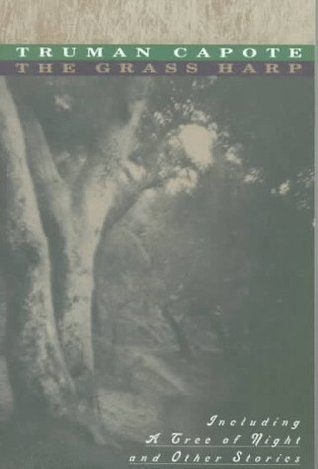 The Grass Harp, Including A Tree of Night and Other Stories
 Speak, Memory
 Collected Poems
 The Complete Poems
 The Complete Poems
 Tinkers
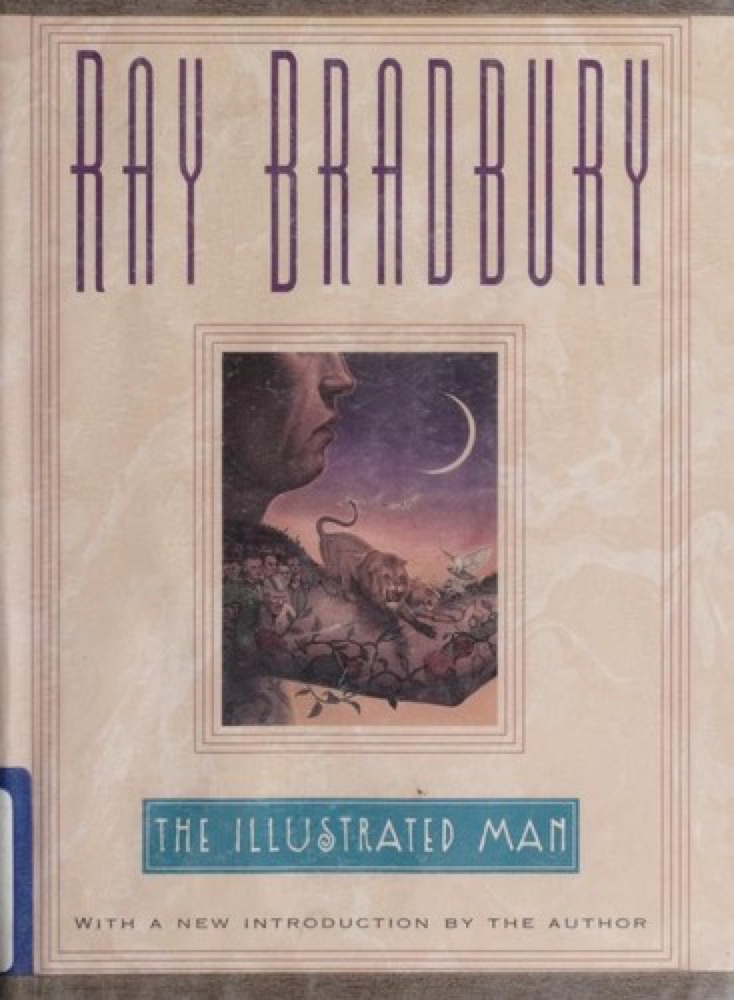 The Illustrated Man
 The Slynx
 Nightwood
 Opened Ground
 Miss Lonelyhearts
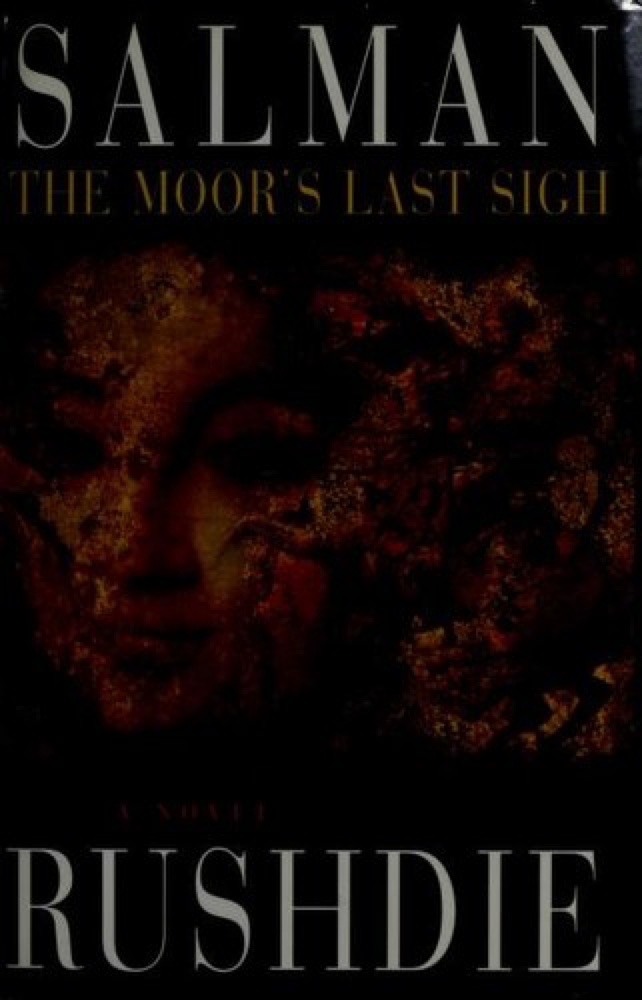 The Moor's Last Sigh
 Love
Love
 All of Us: The Collected Poems
 Dhalgren
 Sexing the Cherry
 Swann's Way
 Macbeth