

 Grief Lessons: Four Plays by Euripides
Quotes from the Book
You remember too much, my mother said to me recently. Why hold onto all that? And I said, Where can I put it down?
1k
Girls are cruelest to themselves. Someone like Emily Brontë, who remained a girl all her life despite her body as a woman, had cruelty drifted up in all the cracks of her like spring snow.
54
Perhaps the hardest thing about losing a lover is to watch the year repeat its days.
42
...I am talking about evil. It blooms. It eats. It grins.
36
Where does unbelief begin? When I was young there were degrees of certainty. I could say, Yes I know that I have two hands. Then one day I awakened on a planet of people whose hands occasionally disappear–
19
Aristotle tells us that the high-pitched voice of the female is one evidence of her evil disposition, for creatures who are brave or just (like lions, bulls, roosters and the human male) have large deep voices…. High vocal pitch goes together with talkativeness to characterize a person who is deviant from or deficient in the masculine ideal of self-control. Women, catamites, eunuchs and androgynes fall into this category. Their sounds are bad to hear and make men uncomfortable…. Putting a door on the female mouth has been an important project of patriarchal culture from antiquity to the present day. Its chief tactic is an ideological association of female sound with monstrosity, disorder and death…. Woman is that creature who puts the inside on the outside. By projections and leakages of all kinds—somatic, vocal, emotional, sexual—females expose or expend what should be kept in…. [As Plutarch comments,] “…she should as modestly guard against exposing her voice to outsiders as she would guard against stripping off her clothes. For in her voice as she is blabbering away can be read her emotions, her character and her physical condition.”… Every sound we make is a bit of autobiography. It has a totally private interior yet its trajectory is public. A piece of inside projected to the outside. The censorship of such projections is a task of patriarchal culture that (as we have seen) divides humanity into two species: those who can censor themselves and those who cannot…. It is an axiom of ancient Greek and Roman medical theory and anatomical discussion that a woman has two mouths. The orifice through which vocal activity takes place and the orifice through which sexual activity takes place are both denoted by the wordstoma in Greek (os in Latin) with the addition of adverbs ano and kato to differentiate upper mouth from lower mouth. Both the vocal and the genital mouth are connected to the body by the neck (auchen in Greek, cervix in Latin). Both mouths provide access to a hollow cavity which is guarded by lips that are best kept closed.
15
Banal sexism aside, I find myself tempted to read Wuthering Heights as one thick stacked act of revenge for all that life withheld from Emily. But the poetry shows traces of a deeper explanation. As if anger could be a kind of vocation for some women. It is a chilly thought.
13
She said, When you see these horrible images why do you stay with them? Why keep watching? Why not go away? I was amazed. Go away where? I said.
13
It is generally anger dreams that occupy my nights now. This is not uncommon after loss of love— blue and black and red blasting the crater open. I am interested in anger.
10
Where does unbelief begin? / When I was young // there were degrees of certainty. / I could say, Yes I know that I have two hands. / Then one day I awakened on a planet of people whose hands / occasionally disappear–
10
My religion makes no sense and does not help me therefore I pursue it.
9
There is a loneliness that fills the plain. Total. Lunar.
9
I had not been in love before. It was like a wheel rolling downhill.
7
So about an hour later we are in the taxi shooting along empty country roads towards town. The April light is clear as an alarm. As we pass them it gives a sudden sense of every object existing in space on its own shadow. I wish I could carry this clarity with me into the hospital where distinctions tend to flatten and coalesce. I wish I had been nicer to him before he got crazy. These are my two wishes.
7
A thousand questions hit my eyes from the inside.
6
My mother always closes her bedroom drapes tight before going to bed at night. I open mine as wide as possible. I like to see everything, I say. What’s there to see? Moon. Air. Sunrise. All that light on your face in the morning. Wakes you up. I like to wake up.
5
Her marble tears run down her marble face. A stranger is someone who has no handkerchief. Who has no words to say. Whose shadow mind is burning as he sits watching her hands and thinks how rare! to see a Roman talk with no gestures at all.
5
You remember too much, my mother said to me recently. Why hold onto all that? And I said, Where can I put it down? She shifted to a question about airports.
5
Not passion but compassion. Com—means "with." What kind of withness would that be?
4
By this time, midway through winter, I had become entirely fascinated with my spiritual melodrama. Then it stopped. Days passed, months passed and I saw nothing. I continued to peer and glance, sitting on the rug in front of my sofa in the curtainless morning with my nerves open to the air like something skinned. I saw nothing. Outside the window spring storms came and went. April snow folded its huge white paws over doors and porches. I watched a chunk of it lean over the roof and break off and fall and I thought, How slow! as it glided soundlessly past, but still—nothing. No nudes. No Thou. A great icicle formed on the railing of my balcony so I drew up close to the window and tried peering through the icicle, hoping to trick myself into some interior vision, but all I saw was the man and woman in the room across the street making their bed and laughing. I stopped watching. I forgot about Nudes. I lived my life, which felt like a switched-off TV. Something had gone through me and out and I could not own it. 'No need now to tremble for the hard frost and the keen wind. Emily does not feel them,' wrote Charlotte the day after burying her sister. Emily had shaken free. A soul can do that. Whether it goes to join Thou and sit on the porch for all eternity enjoying jokes and kisses and beautiful cold spring evenings, you and I will never know. But I can tell you what I saw. Nude #13 arrived when I was not watching for it. It came at night. Very much like Nude #1. And yet utterly different. I saw a high hill and on it a form shaped against hard air. It could have been just a pole with some old cloth attached, but as I came closer I saw it was a human body trying to stand against winds so terrible that the flesh was blowing off the bones. And there was no pain. The wind was cleansing the bones. They stood forth silver and necessary. It was not my body, not a woman’s body, it was the body of us all. It walked out of the light.
3
I wonder if there might not be another idea of human order than repression, another notion of human virtue than self-control, another kind of human self than one based on dissociation of inside and outside. Or indeed, another human essence than self.
3
The basic rules of male-female relations were imparted atmospherically in our family, no direct speech allowed.
3
Unsociable even at home and unable to meet the eyes of strangers when she ventured out, Emily made her awkward way across days and years whose bareness appalls her biographers.
3
… in between the neighbour who recalls her coming in from a walk on the moors with her face “lit up by a divine light” and the sister who tells us Emily never made a friend in her life, is a space where the little raw soul slips through.
3
… his voice saying, You beauty. I can feel that beauty’s heart beating inside mine as she presses into his arms in the high blue room–
2
What is the holiness of the citizen? It is to open a day to a stranger, who has no day of his own.
1
It is very cold walking into the long scraped April wind. At this time of the year there is no sunset just some movements inside the light and then as sinking away.
1
Isaiah go home and get some sleep, said God. Isaiah went home, slept, woke again. Isaiah felt a sensation below the neck, it was a silk and bitter sensation. Isaiah looked down. It was milk forcing the nipples open. Isaiah was more than whole. I am not with you am in you, said the muffled white voice of God.
1
Watch on YouTube
About Anne Carson
We have collected 227 quotes from 11 books by Anne Carson on BookQuoters.
More about the author →More by Anne Carson
Grief Lessons: Four Plays by Euripides
 An Oresteia
 Plainwater: Essays and Poetry
 Decreation: Poetry, Essays, Opera
About the book
Known as a remarkable classicist, Anne Carson weaves contemporary and ancient poetic strands with stunning style in Glass, Irony and God. This collection includes: "The Glass Essay," a powerful poem about the end of a love affair, told in the context of Carson's reading of the Brontë sisters; "Book of Isaiah," a poem evoking the deeply primitive feel of ancient Judaism; and "The Fall of Rome," about her trip to "find" Rome and her struggle to overcome feelings of a terrible alienation there.
Book details
- First published
- 1995
- Author
- Anne Carson
- Genre
- Literature
- Goodreads rating
- 4.32 (5k ratings)
Keep reading
 By Grand Central Station I Sat Down and Wept
 Her Body and Other Parties
 Palimpsest
 The English Patient
Plainwater: Essays and Poetry
The English Patient
Plainwater: Essays and Poetry
 Morning in the Burned House: Poems
 In the Heart of the Heart of the Country and Other Stories
 Sexing the Cherry
 Parade
 Brideshead Revisited: The Sacred and Profane Memories of Captain Charles Ryder
 Hell
Hell
 Art and Lies
 Shirley
 The Hurting Kind: Poems
 Banyan Moon
 Old Babes in the Wood: Stories
 Bluebeard's Egg
 Hot Milk
 How We Are Hungry
 The Ministry of Utmost Happiness
 What Is Not Yours Is Not Yours
 Devotion
 The Swan Thieves
 Em and The Big Hoom
 Near to the Wild Heart
 A Severed Head
 Now Is the Time to Open Your Heart
 Poems, 1962-2012
 The World and Other Places: Stories
 The Reader
 Sixty Stories
 Nightwood
 Under the Udala Trees
 Rebecca
 The Secret History
 View with a Grain of Sand: Selected Poems
 Uncle Silas
 Rouge
Rouge
 The Lover
 Affinity
 Sexus
Sexus
 White Oleander
 The Broom of the System
 Future Home of the Living God
 The Stone Diaries
 And I Do Not Forgive You: Stories & Other Revenges
 Year of Wonders
 The Woman Destroyed
 Johnny Panic and the Bible of Dreams: Short Stories, Prose and Diary Excerpts
 The Chimes
 The Enchanted
 The Complete Poems of Anna Akhmatova
 The Witching Hour
 Tropic of Capricorn
 What I Loved
 Selected Poems
 Lives of Girls and Women
 First Love and Other Novellas
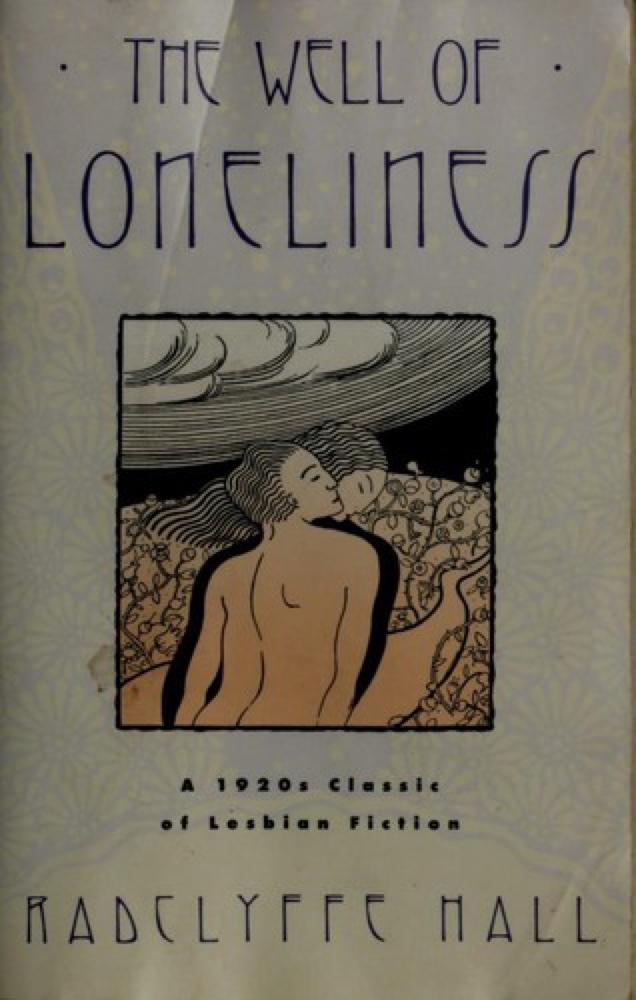 The Well of Loneliness