
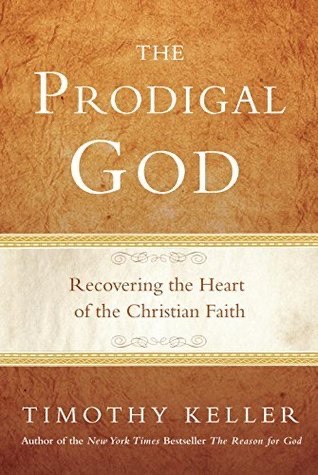
 The Prodigal God: Recovering the Heart of the Christian Faith
Quotes from the Book
Everybody has got to live for something, but Jesus is arguing that, if he is not that thing, it will fail you. First, it will enslave you. Whatever that thing is, you will tell yourself that you have to have it or there is no tomorrow. That means that if anything threatens it, you will become inordinately scared; if anyone blocks it, you will become inordinately angry; and if you fail to achieve it, you will never be able to forgive yourself. But second, if you do achieve it, it will fail to deliver the fulfillment you expected. Let me give you an eloquent contemporary expression of what Jesus is saying. Nobody put this better than the American writer David Foster Wallace. He got to the top of his profession. He was an award-winning, bestselling postmodern novelist known around the world for his boundary-pushing storytelling. He once wrote a sentence that was more than a thousand words long. A few years before the end of his life, he gave a now-famous commencement speech at Kenyon College. He said to the graduating class, Everybody worships. The only choice we get is what to worship. And the compelling reason for maybe choosing some sort of god . . . to worship . . . is that pretty much anything else you worship will eat you alive. If you worship money and things, if they are where you tap real meaning in life, then you will never have enough, never feel you have enough. It’s the truth. Worship your own body and beauty and sexual allure, and you will always feel ugly. And when time and age start showing, you will die a million deaths before [your loved ones] finally plant you. . . . Worship power, and you will end up feeling weak and afraid, and you will need ever more power over others to numb you to your own fear. Worship your intellect, being seen as smart, you will end up feeling stupid, a fraud, always on the verge of being found out. Look, the insidious thing about these forms of worship is not that they are evil or sinful; it is that they’re unconscious. They are default settings.4 Wallace was by no means a religious person, but he understood that everyone worships, everyone trusts in something for their salvation, everyone bases their lives on something that requires faith. A couple of years after giving that speech, Wallace killed himself. And this nonreligious man’s parting words to us are pretty terrifying: “Something will eat you alive.” Because even though you might never call it worship, you can be absolutely sure you are worshipping and you are seeking. And Jesus says, “Unless you’re worshipping me, unless I’m the center of your life, unless you’re trying to get your spiritual thirst quenched through me and not through these other things, unless you see that the solution must come inside rather than just pass by outside, then whatever you worship will abandon you in the end.
16
The basic purpose of prayer is not to bend God’s will to mine but to mold my will into his.
5
Every other religion and philosophy says you have to do something to connect to God; but Christianity says no, Jesus Christ came to do for you what you couldn’t do for yourself.
5
In Fyodor Dostoyevsky’s great novel The Brothers Karamazov, there is a scene in which two people are talking about suffering. Ivan Karamazov is talking about there being any possibility that we can make sense of suffering, and here’s what he says: “I believe like a child that suffering will be healed and made up for, that all the humiliating absurdity of human contradictions will vanish like a pitiful mirage, like the despicable fabrication of the impotent and infinitely small Euclidean mind of man, that in the world’s finale, at the moment of eternal harmony, something so precious will come to pass that it will suffice for all hearts, for the comforting of all resentments, for the atonement of all the crimes of humanity, of all the blood that they’ve shed; that it will make it not only possible to forgive but to justify all that has happened.
4
As long as you think there is a pretty good chance that you will achieve some of your dreams, as long as you think you have a shot at success, you experience your inner emptiness as “drive” and your anxiety as “hope.” And so you can remain almost completely oblivious to how deep your thirst actually is. Most of us tell ourselves that the reason we remain unfulfilled is because we simply haven’t been able to achieve our goals. And so we can live almost our entire lives without admitting to ourselves the depth of our spiritual thirst. And that is why the few people in life who actually do reach or exceed their dreams are shocked to discover that these longed-for circumstances do not satisfy. Indeed they can enhance the inner emptiness by their presence.
3
So Jesus is a great model of how to live, pray, and relate to people. But remember that if Jesus is only a model for us, then he is no encouragement—for he is too good. No one could live up to his standard. Jesus came not just to be a model but a savior.
2
But Christianity is not just for the strong; it’s for everyone, especially for people who admit that, where it really counts, they’re weak.
2
He is the Lion and the Lamb. Despite his high claims, he is never pompous; you never see him standing on his own dignity. Despite being absolutely approachable to the weakest and broken, he is completely fearless before the corrupt and powerful. He has tenderness without weakness. Strength without harshness. Humility without the slightest lack of confidence. Unhesitating authority with a complete lack of self-absorption. Holiness and unending convictions without any shortage of approachability. Power without insensitivity.
1
As C. S. Lewis says in The Great Divorce, if in this life you never say to God, “Thy will be done,” then eventually God will say to you for the afterlife, “All right, then thy will be done.” If you want freedom from God, you will quite justly get what you hope for.
1
At the beginning of history there was also a garden and a command. God put Adam and Eve in that garden, and they were told not to eat of the Tree. The direction was: “Obey me about the Tree, and you will live”—obey me and I’ll bless you. But they disobeyed. Now there is another garden, and a Second Adam, and another command. Jesus Christ has been sent by the Father to go to the cross, which is also a tree. To the first Adam he said, “Obey me about the Tree and I will bless you”—and Adam didn’t do it. But to the second Adam he says, “Obey me about the Tree and I will crush you”—and Jesus does. Jesus is the first and last person in history to be told that obedience would bring a curse. The Father is saying, essentially, “If you obey me, if you are faithful to me, I will forsake you, cast you off and send your soul into hell.” And yet Jesus obeyed. Even as he was dying, abandoned by his Father, he called him “My God”—words that in the Bible were covenant language, conveying intimacy. Even though he was being forsaken, Jesus was still obeying.
1
If there is a God, you owe him far more than a morally decent life. He deserves to be at the center of your life.
1
We often forget how thirsty we are because we believe we will fulfill our dreams.
1
There are thousands of men and women who go to churches every Sunday . . . but you never see any “fight” about their religion! Of spiritual strife, and exertion, and conflict, and self-denial, and watching, and warring they know literally nothing at all.
Despite being absolutely approachable to the weakest and broken, he is completely fearless before the corrupt and powerful. He has tenderness without weakness. Strength without harshness. Humility without the slightest lack of confidence. Unhesitating authority with a complete lack of self-absorption. Holiness and unending convictions without any shortage of approachability. Power without insensitivity.
if you want to be sure that you are developing sound, thoughtful answers to the fundamental questions, you need at the very least to become acquainted with the teachings of Christianity. The best way to do that is to see how Jesus explained himself and his purposes to people he met—and how their lives were changed by his answers to their questions.
But in general, Satan doesn’t control us with fang marks on the flesh, but with lies in the heart. We see this in the Garden of Eden account, where Satan tempts Adam and Eve. He
In yourself, alone on your side of the scale, you are a sinner; but in him you are perfect, just, beautiful, righteous. You’re lost in your Advocate. Paul wrote in 2 Corinthians 5:21, “God made him who had no sin to be sin for us, so that in him we might become the righteousness of God.” That means that just as Jesus was not personally sinful but was treated as sinful and punished on the cross, now we who believe in him, while not personally righteous and perfect, are treated as righteous, beautiful, and perfect by the Father, for Jesus’ sake. So what is the job of the first Advocate? It is to say before the Father, “Look at what I’ve done. And now, accept them in me.
Jesus Christ can say, in effect, “Father, my people have sinned, and the law demands that the wages of sin be death. But I have paid for those sins. See, here is my blood, the token of my death! On the cross I have paid the penalty for these sins completely. Now, if anyone were to exact two payments for the same sin, it would be unjust. And so—I am not asking for mercy for them; I’m asking for justice.
But the metaphor of the living water means even more than that. Jesus is not just telling us that what he has to offer is lifesaving—he’s also revealing that it satisfies from the inside.
Christianity is about God coming to earth in the form of Jesus Christ, dying on the cross, to find you.
Faith doesn't mean hoping in what isn't true; it means certainty about what you can't see. And so compelling evidence, evidence that engages rationality is one of the greatest boosts to Christianity
That is the gospel—the good news that we are saved by the work of Christ through grace.
Jesus did not come with a sword in his hands; he came with nails in his hands. He did not come to bring judgment; he came to bear judgment.
She reasoned, she doubted, she surrendered, she connected with others.
The second thing Mary does is to express her doubts openly.
The third thing Mary does is surrender completely.
Life is filled with hard choices, and it is childish to think you can avoid them.
The first Advocate is speaking to God for you, but the second Advocate is speaking to you for you.
And yet, why do you think Jesus Christ came into this world through a pregnant, unwed teenage girl in a patriarchal shame-and-honor culture? God didn’t have to do it that way. But I think it was his way of saying, “I don’t do things the way the world expects, but in the opposite way altogether. My power is made perfect in weakness. My Savior-Prince will be born not into a cradle in a royal palace but into a feed trough in a stable --not to powerful and famous people but to disgraced peasants. And that is all part of the pattern.
Watch on YouTube
About Timothy J. Keller
We have collected 286 quotes from 10 books by Timothy J. Keller on BookQuoters.
More about the author →More by Timothy J. Keller
The Prodigal God: Recovering the Heart of the Christian Faith
 Counterfeit Gods: The Empty Promises of Money, Sex, and Power, and the Only Hope That Matters
 The Reason for God: Belief in an Age of Skepticism
 The Meaning of Marriage: Facing the Complexities of Commitment with the Wisdom of God
About the book
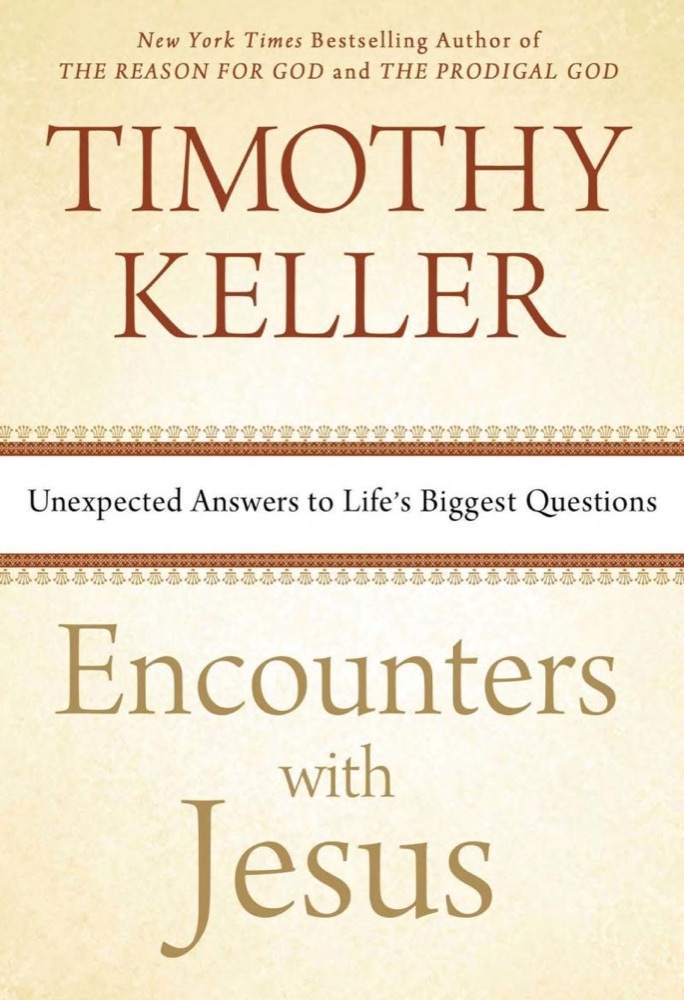
Renowned pastor and New York Times bestselling author of The Prodigal Prophet Timothy Keller shows how people were changed when they met Jesus personally—and how we can be changed today through our own encounter with him.
What is my purpose in life? What is a good life? Why is there so much wrong with our world? What can I do to help make it right? These are some of the big questions that everyone must answer. And any lasting change in our lives will start with a change to one or more of our answers to these questions.
Jesus changed the life of every person he met in the Gospels, through powerful experiences and words that led them to unexpected and transforming answers to their big questions. These conversations can still address our questions and doubts today. Originally published as an eSeries, Encounters with Jesus focuses on several of these meetings — including with a skeptic
Book details
- First published
- 2013
- Author
- Timothy J. Keller
- Genre
- Nonfiction
- Goodreads rating
- 4.48 (4k ratings)
Keep reading
 King's Cross: The Story of the World in the Life of Jesus
 Jesus Is: Find a New Way to Be Human
 Seeking Allah, Finding Jesus: A Devout Muslim Encounters Christianity
The Prodigal God: Recovering the Heart of the Christian Faith
Seeking Allah, Finding Jesus: A Devout Muslim Encounters Christianity
The Prodigal God: Recovering the Heart of the Christian Faith
 The Jesus I Never Knew
 Jesus Over Everything: Uncomplicating the Daily Struggle to Put Jesus First
 The Case for Faith: A Journalist Investigates the Toughest Objections to Christianity
 He Chose the Nails: What God Did to Win Your Heart
 The Message Remix
 Studies in the Sermon on the Mount
The Reason for God: Belief in an Age of Skepticism
Studies in the Sermon on the Mount
The Reason for God: Belief in an Age of Skepticism
 Velvet Elvis: Repainting the Christian Faith
 The Divine Conspiracy: Rediscovering Our Hidden Life in God
 Jesus Among Other Gods: The Absolute Claims of the Christian Message
 The Ragamuffin Gospel
 Radical: Taking Back Your Faith from the American Dream
 The Furious Longing of God
 The Grand Weaver: How God Shapes Us through the Events in Our Lives
 The Normal Christian Life
 Gentle and Lowly: The Heart of Christ for Sinners and Sufferers
 To Live Is Christ: Joining Paul's Journey of Faith
 The Secret Thoughts of an Unlikely Convert: An English Professor's Journey Into Christian Faith
 Searching for God Knows What
 The Explicit Gospel
 Beautiful Outlaw: Experiencing the Playful, Disruptive, Extravagant Personality of Jesus
 How People Change
 My Utmost for His Highest
 Love Wins Low Price CD: Love Wins Low Price CD
 Having a Mary Heart in a Martha World: Finding Intimacy with God in the Busyness of Life
 All In: You Are One Decision Away From a Totally Different Life
 The Heavenly Man: The Remarkable True Story of Chinese Christian Brother Yun
 Pastrix: The Cranky, Beautiful Faith of a Sinner & Saint
 Jesus of Nazareth: The Infancy Narratives
 The Bible Jesus Read
 Girl Meets God
 Speaking of Jesus: The Art of Not-Evangelism
 The Cross of Christ
 Jesus > Religion: Why He Is So Much Better Than Trying Harder, Doing More, and Being Good Enough
 What's So Amazing About Grace?
 Grace for the Moment: Inspirational Thoughts for Each Day of the Year, Volume 1
 What We Talk about When We Talk about God
 Practicing the Way: Be with Jesus, Become Like Him, Do As He Did
 The Sermon on the Mount: The Key to Success in Life
 All of Grace
 Discipline: The Glad Surrender
 40 Days of Decrease: A Different Kind of Hunger. A Different Kind of Fast.
 Erasing Hell: What God Said About Eternity, and the Things We've Made Up
 Simply Christian
 3:16: The Numbers of Hope
 The Attributes of God: A Journey Into the Father's Heart
 Leaving Church: A Memoir of Faith
 Moving Mountains: Praying with Passion, Confidence, and Authority
 Anything: The Prayer That Unlocked My God and My Soul
 Waking the Dead: The Glory of a Heart Fully Alive
 Life of Christ
 In His Image: 10 Ways God Calls Us to Reflect His Character
 The Life You've Always Wanted: Spiritual Disciplines for Ordinary People
 The Cost of Discipleship
 Believing God