

 Institutes of the Christian Religion, 2 Vols
Quotes from the Book
The gospel is not a doctrine of the tongue, but of life. It cannot be grasped by reason and memory only, but it is fully understood when it possesses the whole soul and penetrates to the inner recesses of the heart.
104
The Lord commands us to do good unto all men without exception, though the majority are very undeserving when judged according to their own merits... [The Scripture] teaches us that we must not think of man's real value, but only of his creation in the image of God to which we owe all possible honor and love.
22
Let us, however, remember this truth: No one has made much progress in the school of Christ who doesn’t look forward joyfully both to his death and the day of his final resurrection.
4
When He orders you to forgive that man for whatever sin he has committed against you, He calls you to do so not because that man deserves it, but because God Himself has forgiven you (Luke 17:3–4).
4
We carefully conceal our abundant vices from others—and we pretend they’re small and insignificant. In fact, we so delude ourselves that we sometimes embrace our vices as virtues. When
3
Believers are also trained in obedience by means of the cross. For thus they are taught to live according to God's will rather than their own. If everything went according to their own plans, they would never know what it means to follow God.
2
Would the Lord have dressed the flowers with a beauty that runs freely to meet our eyes if it were wrong to be moved by such beauty? Would He have endowed them with so sweet a fragrance that flows freely into our nostrils if it were wrong to be moved by the pleasantness of such fragrance?
2
The Holy Spirit has consecrated us as temples of God. We, therefore, must let the glory of God shine through us, and we must not pollute ourselves with sin.
2
It teaches us not to regard others according to their own merits, but to consider in them the image of God to which we owe both honor and love. But
2
Moreover, many philosophers, being overcome with arrogance, have recommended seeking virtue for its own sake. They recommend seeking virtue only for the sake of pride. Yet God isn’t pleased with those who strive after fleeting praise. He isn’t pleased with those who have puffed-up hearts and who manifest to others that they have received their reward in this life (Matt. 6:5–6, 16). Prostitutes and tax collectors are nearer to the kingdom of heaven than such people.
2
The proper use, then, of all the good gifts we have received is the free and generous sharing of those gifts with others.
1
We see how many tricks they try, how many pursuits they exhaust themselves with in order to secure the objects of their ambition or greed, while trying to avoid, on the other hand, poverty and humility.
1
Each of us thinks we have just cause for elevating ourselves and despising all others in comparison to ourselves—our self-love ruins us with such blindness. If, in fact, God has gifted us with something that is good in itself, we immediately make it the basis for praising ourselves to such a degree that we not only swell up but almost burst with pride.
1
Therefore, let us not cease to strive, that we may be incessantly advancing in the way of the Lord; nor let us despair on account of the smallness of our success; for however our success may not correspond to our wishes, yet our labour is not lost, when this day surpasses the preceding one; provided that, with sincere simplicity, we keep our end in view, and press forward to the goal, not practising self-adulation, nor indulging our own evil propensities, but perpetually exerting our endeavours after increasing degrees of amelioration, till we shall have arrived at a perfection of goodness, which, indeed, we seek and pursue as long as we live, and shall then attain, when, divested of all corporeal infirmity, we shall be admitted by God into complete communion with him.
In order to lead us by the hand to such self-denial, Scripture warns us that whatever we have freely received from the Lord is given to us on the condition that it be used for the common good of the church. As each has received a gift, use it to serve one another, as good stewards of God’s varied grace. 1 PETER 4:10
We are not our own; therefore, neither our reason nor our will should dominate our plans and actions. We are not our own; therefore, let us not make the gratification of our flesh our end. We are not our own; therefore, as much as possible, let us forget ourselves and our own interests.
Let this be our principle, that we err not in the use of the gifts of Providence when we refer them to the end for which their author made and destined them, since he created them for our good, and not for our destruction. No man will keep the true path better than he who shall have this end carefully in view. Now then, if we consider for what end he created food, we shall find that he consulted not only for our necessity, but also for our enjoyment and delight. Thus, in clothing, the end was, in addition to necessity, comeliness and honour; and in herbs, fruits, and trees, besides their various uses, gracefulness of appearance and sweetness of smell. Were it not so, the Prophet would not enumerate among the mercies of God "wine that maketh glad the heart of man, and oil to make his face to shine," (Ps. civ. 15). The Scriptures would not everywhere mention, in commendation of his benignity, that he had given such things to men. The natural qualities of things themselves demonstrate to what end, and how far, they may be lawfully enjoyed.
Therefore, you have no cause to evade anyone who stands before you and needs your service. Suppose he’s a stranger. The Lord, however, has stamped him with His own mark that’s familiar to you, and for that reason God forbids you to despise your own flesh. Suppose he is contemptible and worthless. The Lord, however, shows him to be one whom He has condescended to decorate with His own image. Suppose you owe him nothing for what he’s done. But God—to whom you know you are obligated because of His many wonderful benefits to you—puts Himself, as it were, in that person’s place. Suppose he is unworthy of even your smallest labors for his sake. But the image of God, according to which this person is commended to you, warrants your giving of yourself and your all. Supposing a man not only deserves nothing good from you, but he has also provoked you with injustices and injuries—even this is not just cause for you to stop embracing him with affection and fulfilling your duties of love to him. He has deserved, you might say, something much different from me. But what has the Lord deserved? When He orders you to forgive that man for whatever sin he has committed against you, He calls you to do so not because that man deserves it, but because God Himself has forgiven you (Luke 17:3–4). This is the only path to achieving that which is not only difficult for, but entirely adverse to, our human nature—that is, loving those who hate us, repaying evil with good, and blessing those who curse us.
THE GOAL OF God’s work in us is to bring our lives into harmony and agreement with His own righteousness, and so to manifest to ourselves and others our identity as His adopted children.
It was in olden times truly observed by Cato, that there is great concern about the appearance of the body but great carelessness about virtue. There is also an old proverb, that they who pay much attention to the body generally neglect the soul.
But this we may positively state, that nobody has made any progress in the school of Christ unless he cheerfully looks forward to the day of his death and to the day of the final resurrection.
Nor was there anything unreasonable in the behavior of the Scythians, who mourned and wept at the birth of their relatives, and who solemnly celebrated at their funerals.
It is, indeed, true for pagans that the greatest blessing is not to be born, and the next, to die immediately.
We, therefore, truly reap advantage from the discipline of the cross only when we learn that this life, taken by itself, is full of unrest, trouble, and misery, and not really happy from any point of view; and that all its so-called blessings are uncertain, passing, vain, and mixed with endless adversity. In consequence of this we should at once come to the conclusion that nothing in this world can be sought or expected but strife, and that we must raise our eyes to heaven to see a crown. But it must be admitted that our heart is never seriously inclined to wish for and to meditate on the future life unless it has first thoroughly learned to forsake the vanities of the present world.
But we must always come back to this consolation: The Lord planned our sorrow, so let us submit to his will. Even in the throes of grief, groans, and tears, we must encourage ourselves with this reflection, so that our hearts may cheerfully bear up while the storms pass over our heads (John 21:18).
At present there are among Christians modern Stoics who think it is wrong to groan and to weep and even to grieve in loneliness. Such wild opinions generally come forth from men who are more dreamers than practical men, and who, therefore, cannot produce anything else but fantasies.
It is clear that bearing the cross patiently does not mean that we harden ourselves or do not feel any sorrow; according to the old notion of the Stoic philosophers that a greathearted man is someone who has laid off his humanity, and who is not touched by adversity and prosperity, and not even by joy and sorrow, but who acts like a cold rock.
For the more we are afflicted by adversities, the more surely our fellowship with Christ is confirmed!
We should forever keep in mind that we must not brood on the wickedness of man, but realize that he is God’s image bearer.
You cannot imagine a more certain rule or a more powerful suggestion than this, that all the blessings we enjoy are divine deposits which we have received on this condition that we distribute them to others.
Watch on YouTube
About John Calvin
We have collected 57 quotes from 2 books by John Calvin on BookQuoters.
More about the author →More by John Calvin
Institutes of the Christian Religion, 2 Vols
About the book
For centuries, Christians of all ages have turned to John Calvin’s A Little Book on the Christian Life to help them on their journey as they follow Christ. This book is one of the great classics of the Christian faith, calling believers to pursue holiness and endure suffering as they rest in Christ alone.
In this new translation from the Latin, Drs. Aaron Denlinger and Burk Parsons capture Calvin’s biblical faithfulness, theological integrity, and pastor’s heart. This is a book for every Christian to pick up, read, and apply.
Book details
- First published
- 1536
- Author
- John Calvin
- Genre
- Nonfiction
- Goodreads rating
- 4.53 (4k ratings)
Keep reading
 The Imitation of Christ
Institutes of the Christian Religion, 2 Vols
The Imitation of Christ
Institutes of the Christian Religion, 2 Vols
 In His Image: 10 Ways God Calls Us to Reflect His Character
 Desiring God: Meditations of a Christian Hedonist
 The Cross of Christ
 The Rare Jewel of Christian Contentment
 Introduction to the Devout Life
 The Spirit of the Disciplines: Understanding How God Changes Lives
 Studies in the Sermon on the Mount
 The Mystery of Providence
 The Normal Christian Life
 Morning and Evening, Based on the English Standard Version
 The Sermon on the Mount: The Key to Success in Life
 The Way of Perfection
 Knowing God
 The Bruised Reed
 The Bible Jesus Read
 Discipline: The Glad Surrender
 To Live Is Christ: Joining Paul's Journey of Faith
 Abandonment to Divine Providence: The Classic Text with a Spiritual Commentary
 My Utmost for His Highest
 No Man Is an Island
 On Christian Doctrine
 A Long Obedience in the Same Direction: Discipleship in an Instant Society
 Renovation of the Heart: Putting On the Character of Christ
 The Pursuit of God: The Human Thirst for the Divine
 The Pursuit of Holiness
 The Divine Conspiracy: Rediscovering Our Hidden Life in God
 All of Grace
 The Cost of Discipleship
 The Grand Weaver: How God Shapes Us through the Events in Our Lives
 Catechism of the Catholic Church
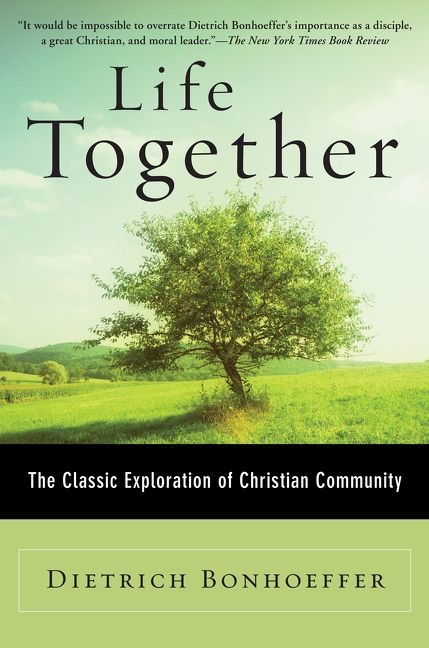 Life Together: The Classic Exploration of Christian Community
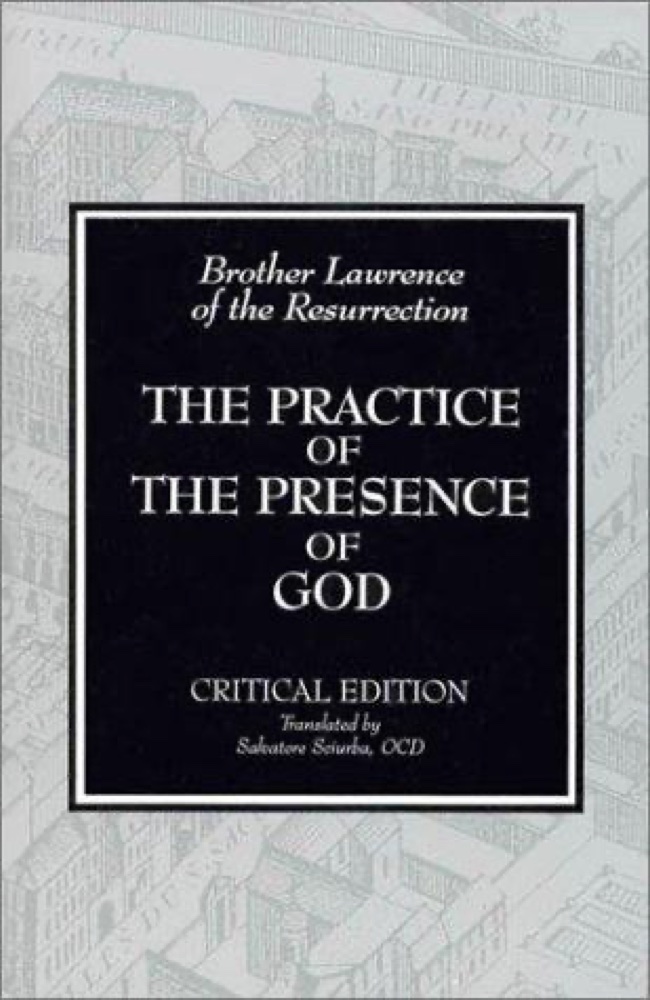 The Practice of the Presence of God
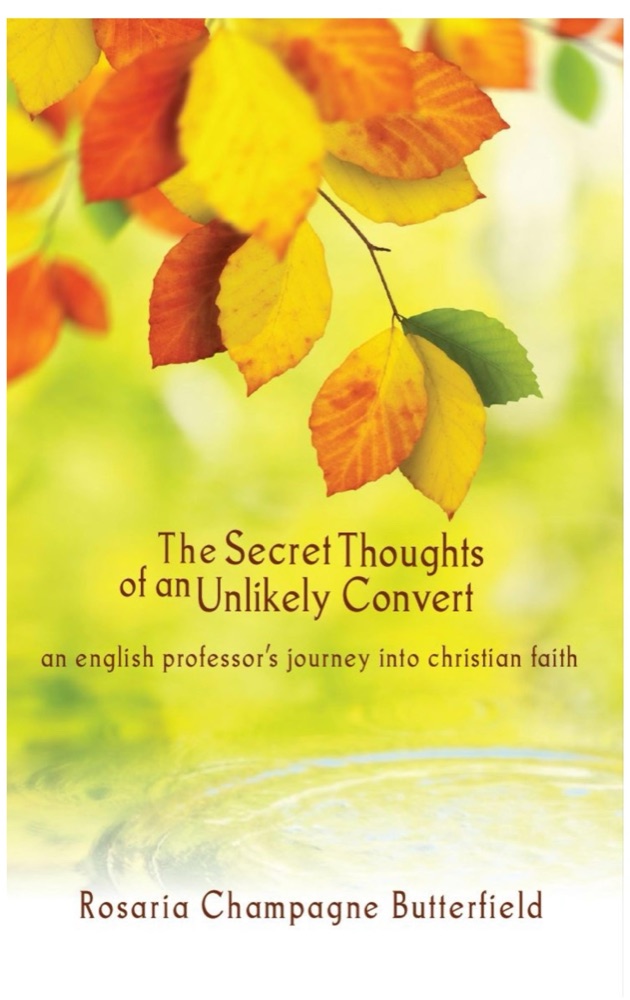 The Secret Thoughts of an Unlikely Convert: An English Professor's Journey Into Christian Faith
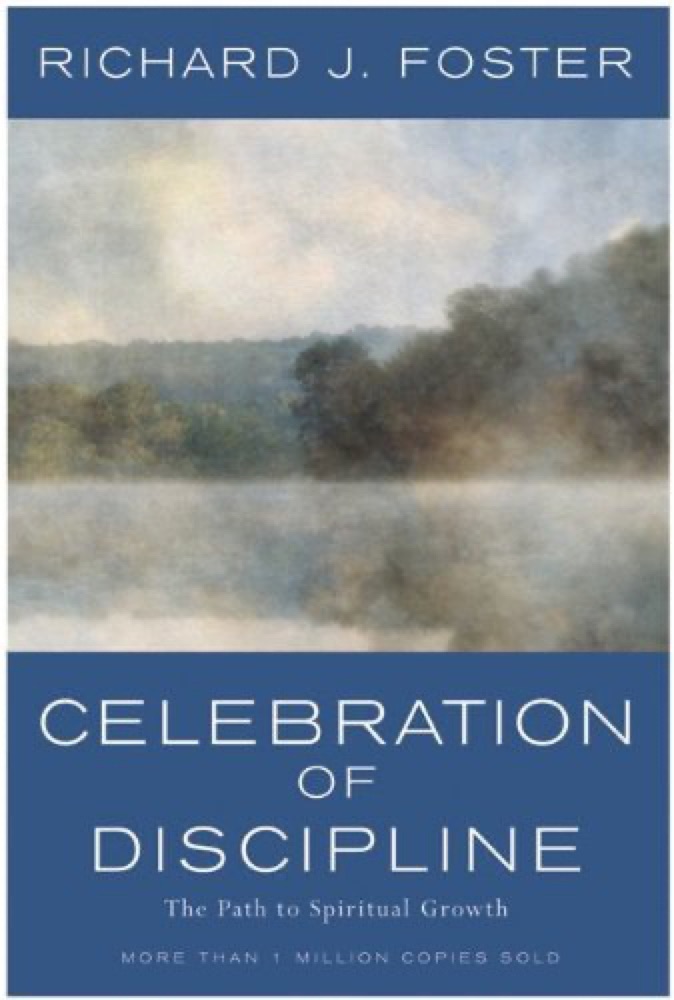 Celebration of Discipline: The Path to Spiritual Growth
 Life of Christ
 Hope for the Troubled Heart: Finding God in the Midst of Pain
 Grace for the Moment: Inspirational Thoughts for Each Day of the Year, Volume 1
 On the Incarnation
 Searching for and Maintaining Peace: A Small Treatise on Peace of Heart
 The Message Remix
 Matthew Henry's Commentary on the Whole Bible
 Letters and Papers from Prison
 The Pleasures of God: Meditations on God's Delight in Being God
 Because He Loves Me: How Christ Transforms Our Daily Life
 The Prodigal God: Recovering the Heart of the Christian Faith
 Encounters with Jesus: Unexpected Answers to Life's Biggest Questions
 Interior Castle
 The Explicit Gospel
 The Holiness of God
 Disciplines of a Godly Man
 Reflections on the Psalms
 Rediscover Catholicism
 What's So Amazing About Grace?
 Systematic Theology: An Introduction to Biblical Doctrine
 Simply Christian
 The Crucible of Doubt: Reflections On the Quest for Faith