
 History and Utopia
Quotes from the Book
I don’t understand why we must do things in this world, why we must have friends and aspirations, hopes and dreams. Wouldn’t it be better to retreat to a faraway corner of the world, where all its noise and complications would be heard no more? Then we could renounce culture and ambitions; we would lose everything and gain nothing; for what is there to be gained from this world?
646
As far as I am concerned, I resign from humanity. I no longer want to be, nor can still be, a man. What should I do? Work for a social and political system, make a girl miserable? Hunt for weaknesses in philosophical systems, fight for moral and esthetic ideals? It’s all too little. I renounce my humanity even though I may find myself alone. But am I not already alone in this world from which I no longer expect anything?
491
If I were to be totally sincere, I would say that I do not know why I live and why I do not stop living. The answer probably lies in the irrational character of life which maintains itself without reason.
319
Tears do not burn except in solitude.
311
We are so lonely in life that we must ask ourselves if the loneliness of dying is not a symbol of our human existence.
273
How important can it be that I suffer and think? My presence in this world will disturb a few tranquil lives and will unsettle the unconscious and pleasant naiveté of others. Although I feel that my tragedy is the greatest in history—greater than the fall of empires—I am nevertheless aware of my total insignificance. I am absolutely persuaded that I am nothing in this universe; yet I feel that mine is the only real existence.
270
True confessions are written with tears only. But my tears would drown the world, as my inner fire would reduce it to ashes.
261
Only those are happy who never think or, rather, who only think about life's bare necessities, and to think about such things means not to think at all. True thinking resembles a demon who muddies the spring of life or a sickness which corrupts its roots. To think all the time, to raise questions, to doubt your own destiny, to feel the weariness of living, to be worn out to the point of exhaustion by thoughts and life, to leave behind you, as symbols of your life's drama, a trail of smoke and blood - all this means you are so unhappy that reflection and thinking appear as a curse causing a violent revulsion in you.
211
No matter which way we go, it is no better than any other. It is all the same whether you achieve something or not, have faith or not, just as it is all the same whether you cry or remain silent.
205
I would like to be free, totaly free... free like an aborted child.
132
I hate wise men because they are lazy, cowardly, and prudent. To the philosophers' equanimity, which makes them indifferent to both pleasure and pain, I prefer devouring passions. The sage knows neither the tragedy of passion, nor the fear of death, nor risk and enthusiasm, nor barbaric, grotesque, or sublime heroism. He talks in proverbs and gives advice. He does not live, feel, desire, wait for anything. He levels down all the incongruities of life and then suffers the consequences. So much more complex is the man who suffers from limitless anxiety. The wise man's life is empty and sterile, for it is free from contradiction and despair. An existence full of irreconcilable contradictions is so much richer and creative. The wise man's resignation springs from inner void, not inner fire. I would rather die of fire than of void.
128
I cannot contribute anything to this world because I only have one method: agony.
122
There are no arguments. Can anyone who has reached the limit bother with arguments, causes, effects, moral considerations, and so forth? Of course not. For such a person there are only unmotivated motives for living. On the heights of despair, the passion for the absurd is the only thing that can still throw a demonic light on chaos. When all the current reasons—moral, esthetic, religious, social, and so on—no longer guide one's life, how can one sustain life without succumbing to nothingness? Only by a connection with the absurd, by love of absolute uselessness, loving something which does not have substance but which simulates an illusion of life. I live because the mountains do not laugh and the worms do not sing.
89
How I wish I didn't know anything about myself and this world!
82
There are people who are destined to taste only the poison in things, for whom any surprise is a painful surprise and any experience a new occasion for torture. if someone were to say to me that such suffering has subjective reasons, related to the individual's particular makeup, i would then ask; is there an objective criterion for evaluating suffering? who can say with precision that my neighbor suffers more than i do or that jesus suffered more than all of us? there is no objective standard because suffering cannot be measured according to the external stimulation or local irritation of the organism, but only as it is felt and reflected in consciousness. alas, from this point of view, any hierarchy is out of the question. each person remains with his own suffering, which he believes absolute and unlimited. how much would we diminish our own personal suffering if we were to compare it to all the world's sufferings until now, to the most horrifying agonies and the most complicated tortures, the mostcruel deaths and the most painful betrayals, all the lepers, all those burned alive or starved to death? nobody is comforted in his sufferings by the thought that we are all mortals, nor does anybody who suffers really find comfort in the past or present suffering of others. because in this organically insufficient and fragmentary world, the individual is set to live fully, wishing to make of his own existence an absolute.
77
For animals, life is all there is; for man, life is a question mark. An irreversible question mark, for man has never found, nor will ever find, any answers. Life not only has no meaning; it can never have one.
62
Everything is possible, and yet nothing is. All is permitted, and yet again, nothing. No matter which way we go, it is no better than any other. It is all the same whether you achieve something or not, have faith or not, just as it is all the same whether you cry or remain silent. There is an explanation for everything, and yet there is none. Everything is both real and unreal, normal and absurd, splendid and insipid. There is nothing worth more than anything else, nor any idea better than any other. Why grow sad from one’s sadness and delight in one’s joy? What does it matter whether our tears come from pleasure or pain? Love your unhappiness and hate your happiness, mix everything up, scramble it all! Be a snowflake dancing in the air, a flower floating downstream! Have courage when you don’t need to, and be a coward when you must be brave! Who knows? You may still be a winner! And if you lose, does it really matter? Is there anything to win in this world? All gain is a loss, and all loss is a gain. Why always expect a definite stance, clear ideas, meaningful words? I feel as if I should spout fire in response to all the questions which were ever put, or not put, to me.
60
Memories vanish when we want to remember, but fix themselves permanently in the mind when we want to forget.
60
What would happen if a man's face could adequately express his suffering, if his entire inner agony would be objectified in his facial expression? Could we still communicate? Wouldn't we then cover our faces with our hands while talking? Life would really be impossible if the infinitude of feelings we harbor within ourselves would be fully expressed in the lines of our face. Nobody would dare look at himself in the mirror, because a grotesque, tragic image would mix in the contours of his face with stains and traces of blood, wounds which cannot be healed, and unstoppable streams of tears. I would experience a kind of voluptuous awe if I could see a volcano of blood, eruptions as red as fire and as burning as despair, burst into the comfortable and superficial harmony of everyday life, or if I could see all our hidden wounds open, making of us a bloody eruption forever. Only then would be truly understand and appreciate the advantages of loneliness, which silences our suffering and makes it inaccessible. The venom drawn out from suffering would be enough to poison the whole world in a bloody eruption, bursting out of the volcano of our being. There is so much venom, so much poison, in suffering!
60
The deepest and most organic death is death in solitude, when even light becomes a principle of death. In such moments you will be severed from life, from love, smiles, friends and even from death. And you will ask yourself if there is anything besides the nothingness of the world and your own nothingness.
59
How good would it be if one could die by throwing oneself into an infinite void.
47
Eu nu am idei ci obsesii. Idei poate avea oricine. Nimeni nu s-a prăbușit din cauza ideilor.
46
the deepest subjective experiences are also the most universal, because through them one reaches the universal source of life.
45
Nobody would dare look at himself in the mirror, because a grotesque, tragic image would mix in the contours of his face with stains and traces of blood, wounds which cannot be healed, and unstoppable streams of tears. I would experience a kind of voluptuous awe if I could see a volcano of blood, eruptions as red as fire and as burning as despair, burst into the midst of the comfortable and superficial harmony of everyday life, or if I could see all our hidden wounds open, making of us a bloody eruption forever. Only then would we truly understand and appreciate the advantage of loneliness, which silences our suffering and makes it inaccessible. The venom drawn out from suffering would be enough to poison the whole world in a bloody eruption, bursting out of the volcano of our being. There is so much venom, so much poison, in suffering!
39
În somn uiți drama vieții tale, uiți complicațiile și obsesiile așa încât fiecare deșteptare este un început nou de viață, este o speranță nouă. Viața păstrează astfel o discontinuitate plăcută care dă impresia unei continue regenerări a unei renașteri permanente.
31
My soul is chaos, how can it be at all? There is everything in me: search and you will find out. I am a fossil dating from the beginning of the world: not all of its elements have completely crystallized, and initial chaos still shows through. I am absolute contradiction, climax of antinomies, the last limit of tension; in me anything is possible, for I am he who at the supreme moment, in front of absolute nothingness, will laugh.
28
After having struggled madly to solve all problems, after having suffered on the heights of despair, in the supreme hour of revelation, you will find that the only answer, the only reality, is silence.
27
I like thought which preserves a whiff of flesh and blood, and I prefer a thousand times an idea rising from sexual tension or nervous depression to empty abstraction.
25
Watch on YouTube
About Emil M. Cioran
We have collected 135 quotes from 6 books by Emil M. Cioran on BookQuoters.
More about the author →More by Emil M. Cioran
All books by Emil M. Cioran →
About the book
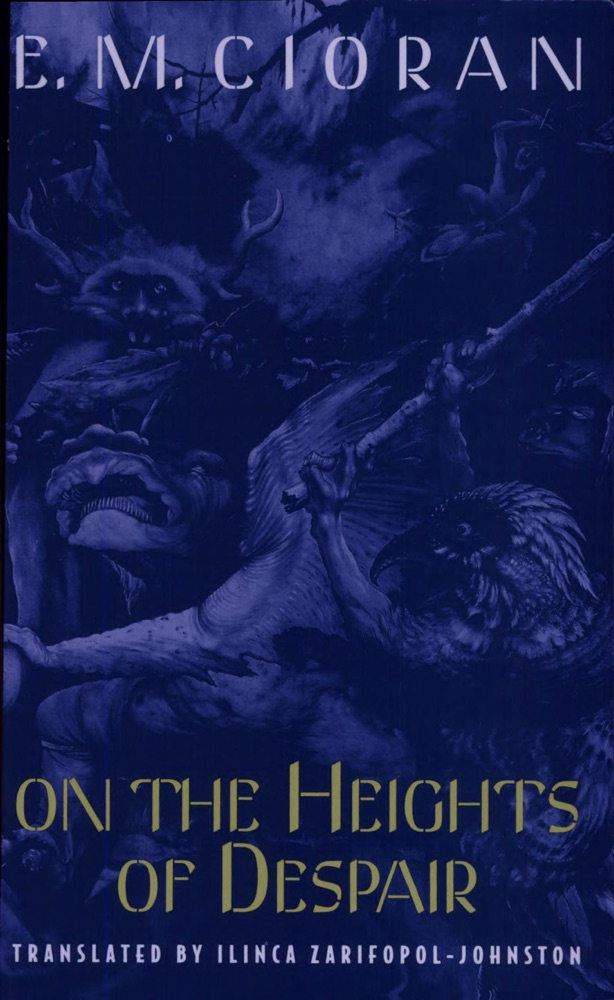
Born of a terrible insomnia—"a dizzying lucidity which would turn even paradise into hell"—this book presents the youthful Emil Cioran, a self-described "Nietzsche still complete with his Zarathustra, his poses, his mystical clown's tricks, a whole circus of the heights."On the Heights of Despair shows Cioran's first grappling with themes he would return to in his mature works: despair and decay, absurdity and alienation, futility and the irrationality of existence. It also presents Cioran as a connoisseur of apocalypse, a theoretician of despair, for whom writing and philosophy both share the "lyrical virtues" that alone lead to a metaphysical revelation."No modern writer twists the knife with Cioran's dexterity. . . . His writing . . . is informed with the bitterness of genuine compassion."—Bill Marx, Boston Phoenix"The dark, existential despair of Romanian philosopher Cioran's short m
Book details
- First published
- 1934
- Author
- Emil M. Cioran
- Genre
- Philosophy
- Goodreads rating
- 4.16 (10k ratings)
Keep reading
 Tears and Saints
 Either/Or: A Fragment of Life
 The Myth of Sisyphus
 The Setting Sun
 Stella Maris
 Tropic of Capricorn
 Tragic Sense of Life
 Hell
Hell
 The Passion According to G.H.
 The Magus
 Eyeless in Gaza
 Creatures of a Day: And Other Tales of Psychotherapy
 Doctor Zhivago
 The Conspiracy Against the Human Race
 Memories, Dreams, Reflections
 Sexus
Sexus
 The Temptation to Exist
 A Confession
 The Book of Disquiet
 The Fall
 Immortality
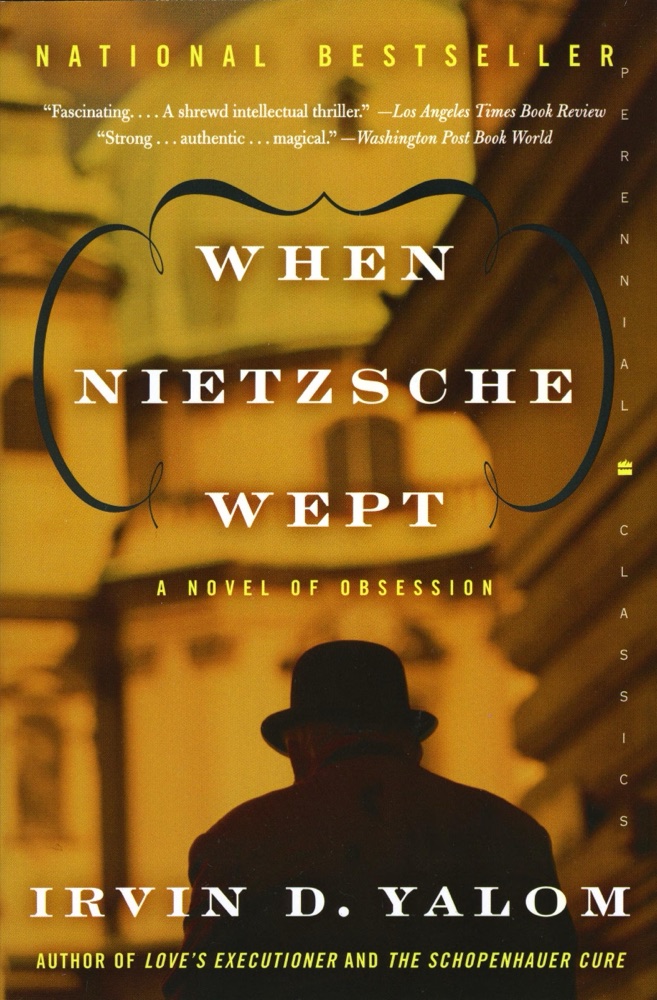 When Nietzsche Wept
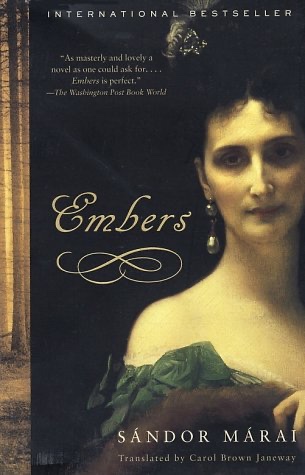 Embers
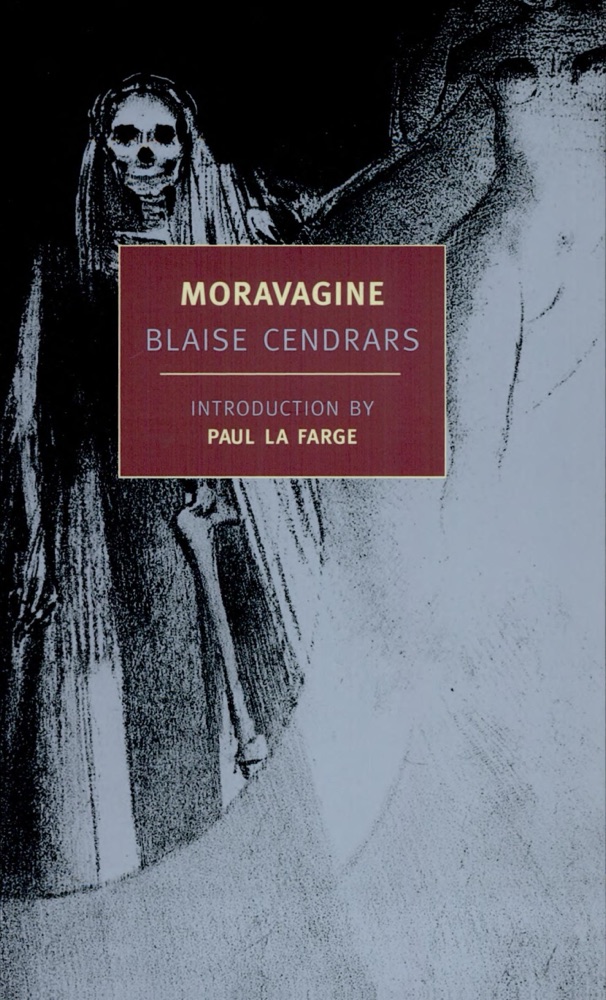 Moravagine
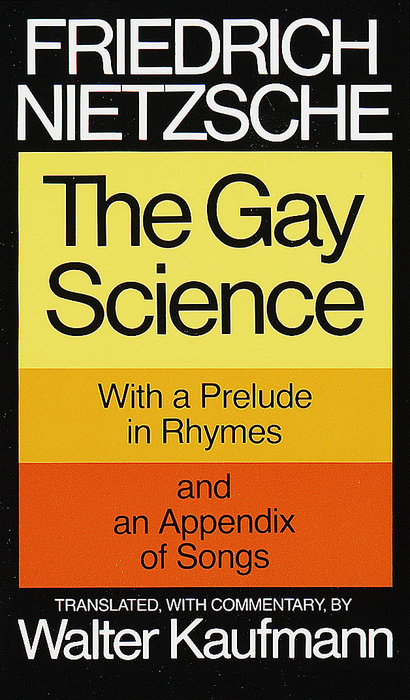 The Gay Science
 Steppenwolf
 Drive Your Plow Over the Bones of the Dead
 The Brothers Karamazov
 Diaries, 1910-1923
 The World as Will and Representation, Vol 1
 Demons
 Twilight of the Idols/The Anti-Christ
 The Schopenhauer Cure
 On the Suffering of the World
 The Essential Kierkegaard
 Demian
 The Myth of Sisyphus and Other Essays
 The Trouble with Being Born
 An Interrupted Life: The Diaries, 1941-1943; and Letters from Westerbork
 Tropic of Cancer
 Taltos
 Correction
 Whatever
 A Breath of Life
 Notes from Underground
 Reveries of the Solitary Walker
 On the Genealogy of Morals/Ecce Homo
 The Man Without Qualities
 Henderson the Rain King
 The Loser
 Nausea
 Without Dogma
 No Longer Human
 We
We
 Nutshell
 The Journals of Sylvia Plath
 The Empusium
 Narcissus and Goldmund
 Heart of Darkness
 Journal of a Solitude