
 Coraline
Quotes from the Book
Because,” said Thor, “when something goes wrong, the first thing I always think is, it is Loki’s fault. It saves a lot of time.
322
Of course it was Loki. It's always Loki.
170
He said nothing: seldom do those who are silent make mistakes.
136
The Norse myths are the myths of a chilly place, with long, long winter nights and endless summer days, myths of a people who did not entirely trust or even like their gods, although they respected and feared them.
113
Loki was not evil, although he was certainly not a force for good. Loki was . . . complicated.
91
That was the thing about Loki. You resented him even when you were at your most grateful, and you were grateful to him even when you hated him the most.
79
Fair enough,” said Thor. “What’s the price?” “Freya’s hand in marriage.” “He just wants her hand?” asked Thor hopefully. She had two hands, after all, and might be persuaded to give up one of them without too much of an argument. Tyr had, after all. “All of her,” said Loki. “He wants to marry her.” “Oh,” said Thor. “She won't like that.
73
There were things Thor did when something went wrong. The first thing he did was ask himself if what had happened was Loki’s fault. Thor pondered. He did not believe that even Loki would have dared to steal his hammer. So he did the next thing he did when something went wrong, and he went to ask Loki for advice.
59
He is tolerated by the gods, perhaps because his stratagems and plans save them as often as they get them into trouble. Loki makes the world more interesting but less safe. He is the father of monsters, the author of woes, the sly god.
57
But. My hammer," said Thor. "Shut up, Thor," said Loki
52
And the game begins anew.
47
Cease your weeping!" he said. "It is I, Loki, here to rescue you!" Idunn glared at him with red-rimmed eyes. "It is you who are the source of my troubles." she said. "Well, perhaps. But that was so long ago. That was yesterday's Loki. Today's Loki is here to save you and take you home.
47
I’m not happy about any of this,” said Thor. “I’m going to kill somebody soon, just to relieve the tension. You’ll see.
43
Loki's green eyes flashed with anger and with admiration, for he loved a good trick as much as he hated being fooled.
41
The fun comes in telling them yourself—something I warmly encourage you to do, you person reading this. Read the stories in this book, then make them your own,
40
There is no end. It is simply the end of the old times, Loki, and the beginning of the new times. Rebirth always follows death.
39
Do you wonder where poetry come from? Where do we get the songs we sing and the tales we tell? Do you ever ask yourself how it is that some people can dream great, wise, beautiful dreams and pass those dreams on as poetry to the world, to be sung and retold as long as the moon will wax and wane? Have you ever wondered why some people make beautiful songs and poems and tales, and some of us do not? It is a long story, and it does no credit to anyone: there is murder in it, and trickery, lies and foolishness, seduction and pursuit. Listen.
34
It is a long story, and it does no credit to anyone: there is murder in it, and trickery, lies and foolishness, seduction and pursuit. Listen.
29
That is how the worlds will end, in ash and flood, in darkness and in ice. That is the final destiny of the gods.
28
Loki makes the world more interesting but less safe.
26
Here is the last thing, and a shameful admission it is. When the all-father in eagle form had almost reached the vats, with Suttung immediately behind him, Odin blew some of the mead out of his behind, a splatter wet fart of foul-smelling mead right in Suttung's face, blinding the giant and throwing him off Odin's trail. No one, then or now, wanted to drink the mead that came out of Odin's ass. But whenever you hear bad poets declaiming their bad poetry, filled with foolish similes and ugly rhymes, you will know which of the meads the have tasted.
25
In their huge bedroom that night, Tyr said to Thor, "I hope you know what you are doing." "Of course I do," said Thor. But he didn't. He was just doing whatever he felt like doing. That was what Thor did best.
24
Each insult is woven with just enough truth to make it wound.
20
I tried to imagine myself a long time ago, in the lands where these stories were first told, during the long winter nights perhaps, under the glow of the northern lights,
16
Loki was trying to look serious, but even so, he was smiling at the corners of his mouth. It was not a reassuring smile.
16
I learned the Norse gods came with their own doomsday: Ragnarok, the twilight of the gods, the end of it all. The gods were going to battle the frost giants, and they were all going to die. Had Ragnarok happened yet? Was it still to happen? I did not know then. I am not certain now.
16
One of the dwarfs walked in front of Thor to get a better view of the prye, and Thor kicked him irritably into the middle of the flames, which made Thor feel slightly better and made all the dwarfs feel much worse.
15
On the day the Gjallerhorn is blown, it will wake the gods, no matter where they are, no matter how deeply they sleep. Heimdall will blow Gjallerhorn only once, at the end of all things, Ragnarok.
14
A squirrel, Ratatosk, lives in the branches of the world-tree. It takes gossip and messages from Nidhogg, the dread corpse-eater, to the eagle and back again. The squirrel tells lies to both of them, and takes joy in provoking anger.
12
Did you know?
- The book retells Norse myths drawn primarily from the Poetic Edda and the Prose Edda.
- It is structured as sixteen chapters running from the creation of the cosmos to Ragnarok.
- Many of the stories center on the gods Odin, Thor, and Loki.
- Gaiman narrated the audiobook edition himself.
- A BBC Radio 4 audio drama adaptation aired in 2018, featuring Derek Jacobi and Colin Morgan.
- Dark Horse Comics published a comic-book adaptation as a series running from 2020 to 2022.
About Neil Gaiman
Neil Gaiman is a British author known for works including the novels American Gods and Neverwhere, the graphic novel series The Sandman, and Coraline. His writing frequently draws on mythology and folklore, and he has won numerous awards across fiction, comics, and children's literature.
More about the author →More by Neil Gaiman
Coraline
 Trigger Warning: Short Fictions and Disturbances
 The Graveyard Book
 The Ocean at the End of the Lane
About the book
Norse Mythology is Neil Gaiman's prose retelling of the myths of the Norse gods, drawn largely from the medieval Icelandic sources known as the Poetic Edda and the Prose Edda. Across sixteen linked chapters it moves from the creation of the cosmos and the nine worlds, through a sequence of self-contained tales about Odin, Thor, and Loki, and on to the foretold doom of the gods at Ragnarok. Gaiman presents the stories in his own narrative voice rather than as scholarly translation, foregrounding the trickery of Loki, the bluntness of Thor, and the cunning of Odin.
The book's central preoccupations are the ones embedded in the source material: fate and inevitability, the limits of cunning, the cost of broken oaths, and the cyclical nature of destruction and renewal. Gaiman emphasizes the humor, mischief, and earthy character of the gods alongside the looming tragedy of Ragnarok, treating the mythology as a coherent arc that runs from beginning to end. Reviewers have noted that his selection deliberately gives space to lesser-known episodes rather than only the most famous ones.
The book was a commercial success and reached bestseller lists on publication in early 2017, and critics generally praised Gaiman's accessible, atmospheric prose. Kirkus Reviews called the retellings rich and atmospheric, while Michael Dirda in The Washington Post found them gripping and strongly characterised. Classicist Natalie Haynes described the work as egalitarian for highlighting both popular and obscure mythological material, distinguishing it from pop-culture versions of the Norse gods.
Book details
- First published
- 2017
- Length
- 304 pages
- Reading time
- 4 hours
- Author
- Neil Gaiman
- Genre
- Fantasy
- Goodreads rating
- 4.10 (347k ratings)
Critical reception
- Reached bestseller lists following its February 2017 publication.
- Kirkus Reviews described the retellings as rich and atmospheric.
- Michael Dirda of The Washington Post called the stories gripping and strongly characterised.
- Classicist Natalie Haynes praised the book as egalitarian for including both popular and lesser-known myths.
Movie & TV adaptations
- IMDb
- IMDb
Keep reading
 Loki
Loki
 Runelight
 The Norse Myths
 Loki: Where Mischief Lies
 Runemarks
 Zeus Grants Stupid Wishes: A No-Bullshit Guide to World Mythology
 The Gospel of Loki
 The Poetic Edda
 The Sword of Summer
 Ragnarok
 Percy Jackson's Greek Heroes
 Mythology
 Windwitch
 Age of Myth
 Sunbringer
 Percy Jackson's Greek Gods
 Beowulf
 The Hallowed Hunt
 Lords of the North
 The Last Kingdom
 The Empty Throne
 Njal's Saga
 Horus Rising
 Faithbreaker
 Three Parts Dead
 Godkiller
 Spiderlight
 Saturnine
 Mythos - The Greek Myths Retold
 Thor's Serpents
 Krampus: The Yule Lord
 The Crippled God
 The Steel Remains
 Hunted
 The Dragon Reborn
 Theogony / Works and Days
 The Great Hunt
 The Eye of the World
 Odd and the Frost Giants
 The Lord of the Rings
 How to Twist a Dragon's Tale
 Shades in Shadow - An Inheritance Tryptich
 Trapped
 Dragons of Spring Dawning
 Elric of Melniboné
 American Gods
 The Road of Bones
 The Lord of the Rings: The Two Towers
 The Hymn to Dionysus
 Morgoth's Ring
 The Eyes of the Dragon
 Odin's Ravens
 The Last Wish
 The Epic of Gilgamesh
 Sword of Destiny
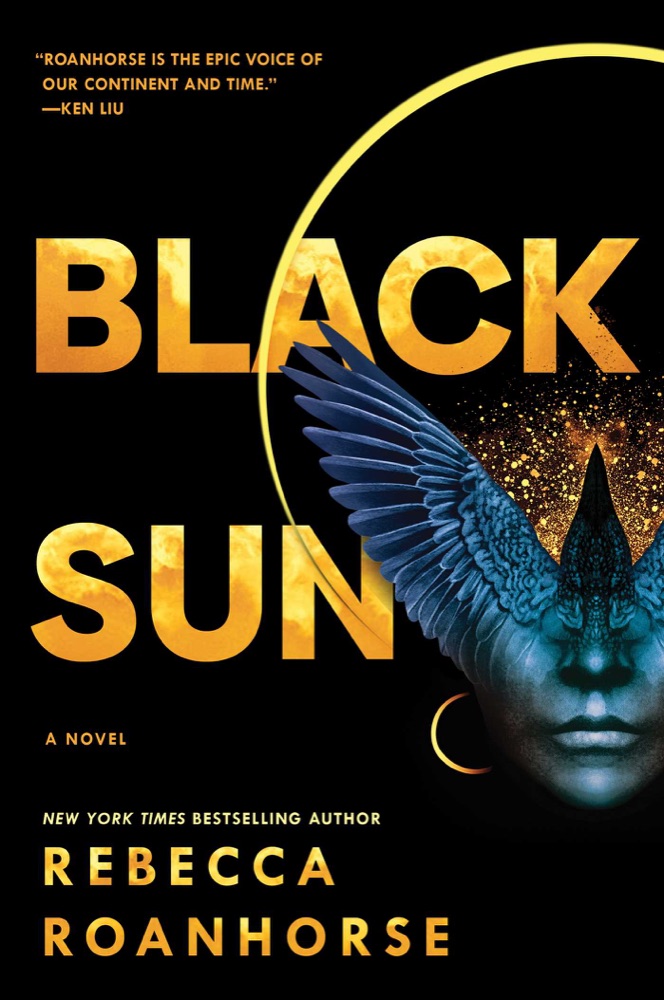 Black Sun
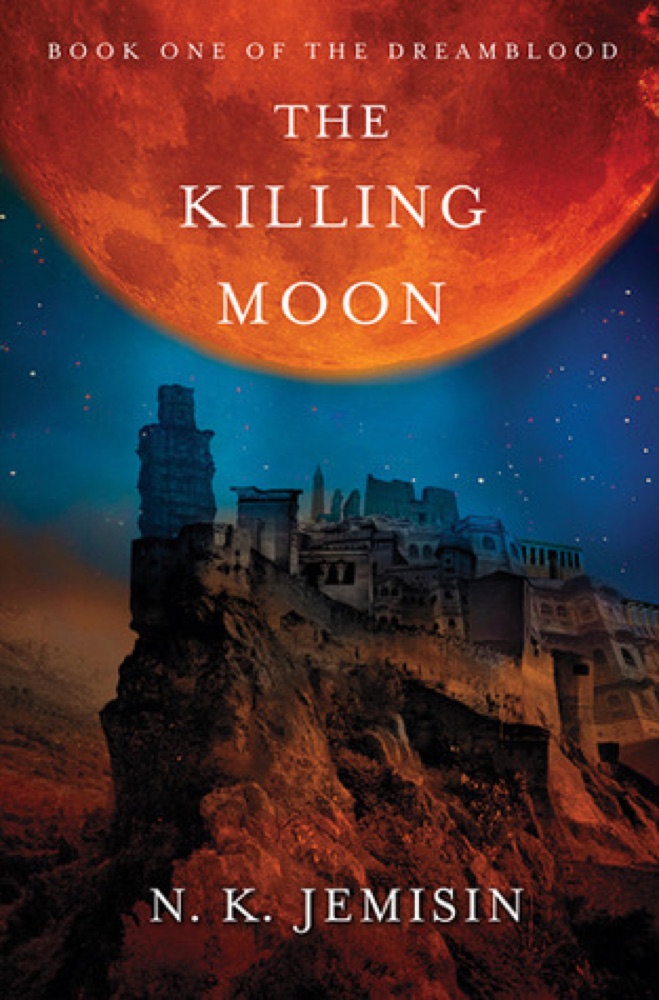 The Killing Moon
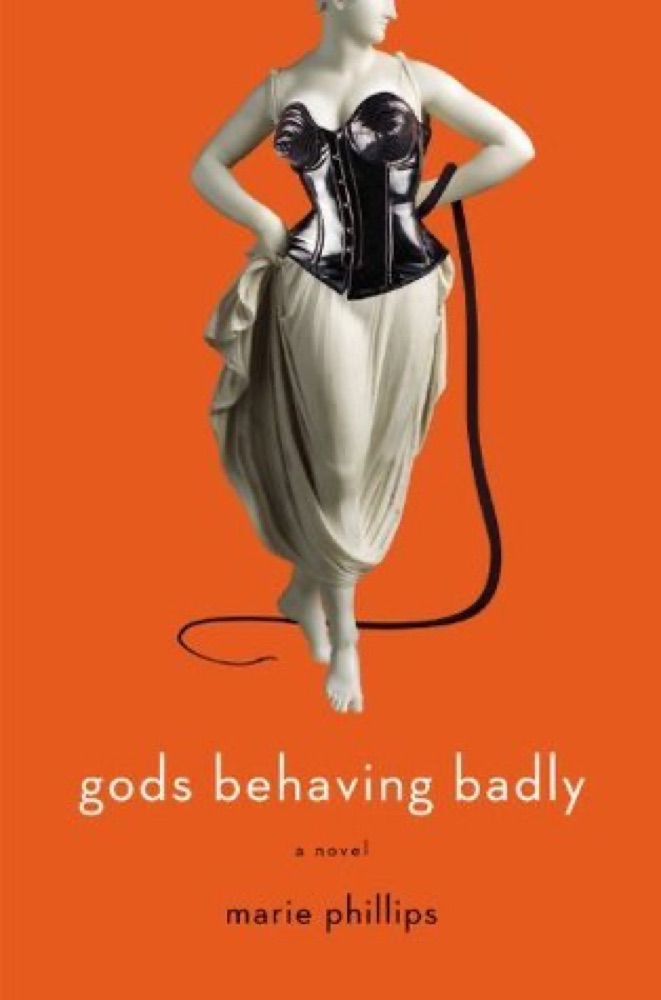 Gods Behaving Badly
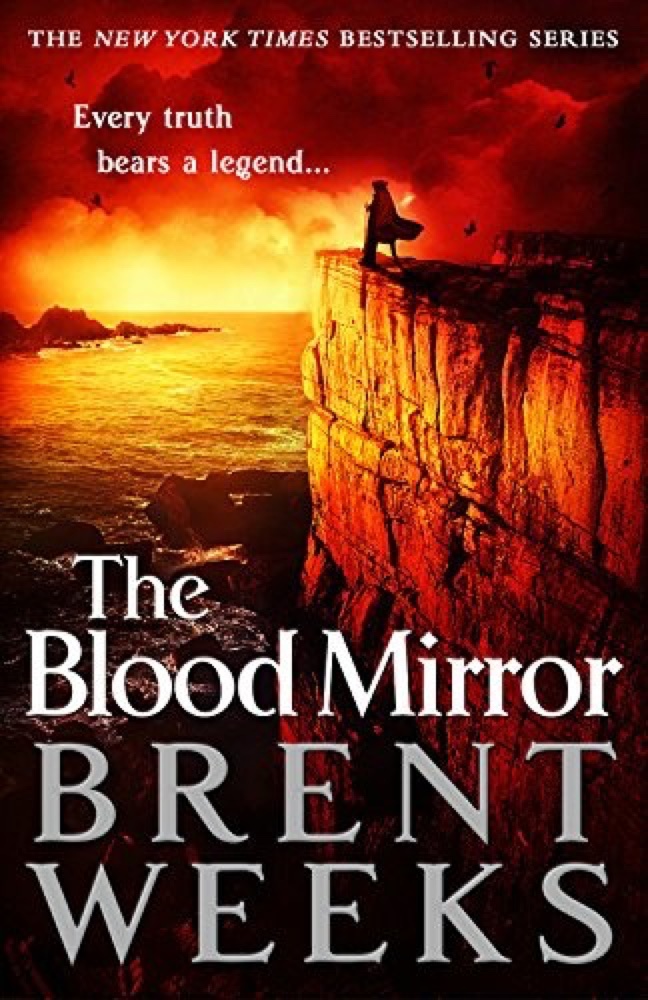 The Blood Mirror
 Gilded