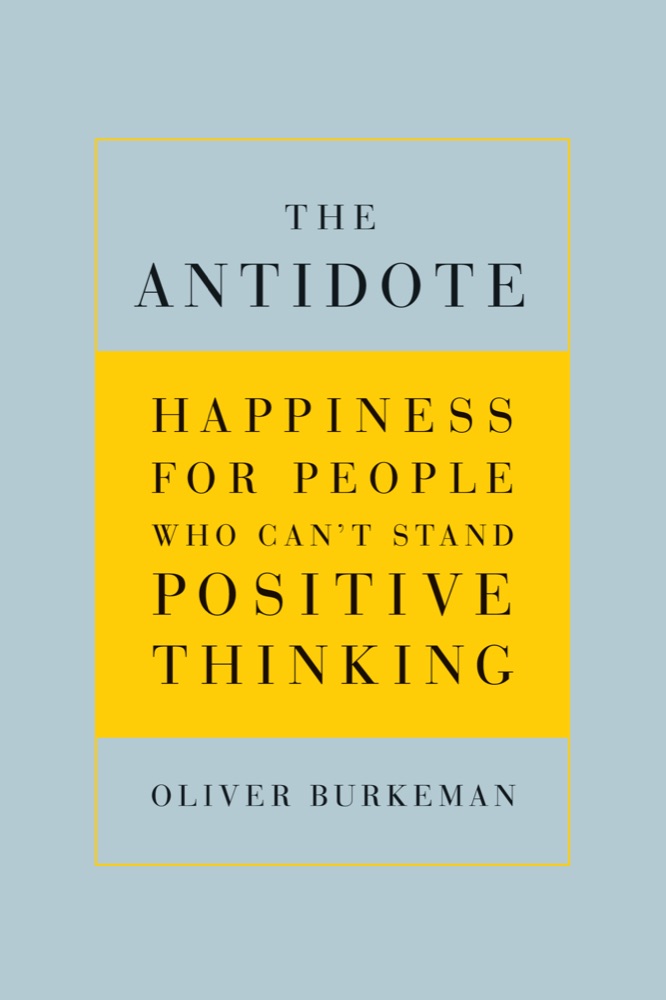
 The Antidote: Happiness for People Who Can't Stand Positive Thinking
Quotes from the Book
Productivity is a trap. Becoming more efficient just makes you more rushed, and trying to clear the decks simply makes them fill up again faster. Nobody in the history of humanity has ever achieved “work-life balance,” whatever that might be, and you certainly won’t get there by copying the “six things successful people do before 7:00 a.m.” The day will never arrive when you finally have everything under control—when the flood of emails has been contained; when your to-do lists have stopped getting longer; when you’re meeting all your obligations at work and in your home life; when nobody’s angry with you for missing a deadline or dropping the ball; and when the fully optimized person you’ve become can turn, at long last, to the things life is really supposed to be about. Let’s start by admitting defeat: none of this is ever going to happen. But you know what? That’s excellent news.
105
what you pay attention to will define, for you, what reality is.
77
mortality makes it impossible to ignore the absurdity of living solely for the future.
66
choosing curiosity (wondering what might happen next) over worry (hoping that a certain specific thing will happen next, and fearing it might not) whenever you can.
58
Convenience culture seduces us into imagining that we might find room for everything important by eliminating only life’s tedious tasks. But it’s a lie. You have to choose a few things, sacrifice everything else, and deal with the inevitable sense of loss that results.
58
It’s alarming to face the prospect that you might never truly feel as though you know what you’re doing, in work, marriage, parenting, or anything else. But it’s liberating, too, because it removes a central reason for feeling self-conscious or inhibited about your performance in those domains in the present moment: if the feeling of total authority is never going to arrive, you might as well not wait any longer to give such activities your all—to put bold plans into practice, to stop erring on the side of caution. It is even more liberating to reflect that everyone else is in the same boat, whether they’re aware of it or not.
53
The world is bursting with wonder, and yet it’s the rare productivity guru who seems to have considered the possibility that the ultimate point of all our frenetic doing might be to experience more of that wonder.
44
We’ve been granted the mental capacities to make almost infinitely ambitious plans, yet practically no time at all to put them into action.
43
The problem with trying to make time for everything that feels important—or just for enough of what feels important—is that you definitely never will. The reason isn’t that you haven’t yet discovered the right time management tricks or supplied sufficient effort, or that you need to start getting up earlier, or that you’re generally useless. It’s that the underlying assumption is unwarranted: there’s no reason to believe you’ll ever feel ‘on top of things,’ or make time for everything that matters, simply by getting more done.
41
our lives, thanks to their finitude, are inevitably full of activities that we’re doing for the very last time. Just as there will be a final occasion on which I pick up my son—a thought that appalls me, but one that’s hard to deny, since I surely won’t be doing it when he’s thirty—there will be a last time that you visit your childhood home, or swim in the ocean, or make love, or have a deep conversation with a certain close friend. Yet usually there’ll be no way to know, in the moment itself, that you’re doing it for the last time. Harris’s point is that we should therefore try to treat every such experience with the reverence we’d show if it were the final instance of it. And indeed there’s a sense in which every moment of life is a “last time.” It arrives; you’ll never get it again—and once it’s passed, your remaining supply of moments will be one smaller than before. To treat all these moments solely as stepping-stones to some future moment is to demonstrate a level of obliviousness to our real situation that would be jaw-dropping if it weren’t for the fact that we all do it, all the time.
38
There is an alternative: the unfashionable but powerful notion of letting time use you, approaching life not as an opportunity to implement your predetermined plans for success but as a matter of responding to the needs of your place and your moment in history.
34
The day will never arrive when you finally have everything under control—when the flood of emails has been contained; when your to-do lists have stopped getting longer; when you’re meeting all your obligations at work and in your home life; when nobody’s angry with you for missing a deadline or dropping the ball; and when the fully optimized person you’ve become can turn, at long last, to the things life is really supposed to be about. Let’s start by admitting defeat: none of this is ever going to happen.
30
One can waste years this way, systematically postponing precisely the things one cares about the most.
27
The real measure of any time management technique is whether or not it helps you neglect the right things.
27
In an age of instrumentalization, the hobbyist is a subversive: he insists that some things are worth doing for themselves alone, despite offering no payoffs in terms of productivity or profit. The derision we heap upon the avid stamp collector or train spotter might really be a kind of defense mechanism, to spare us from confronting the possibility that they’re truly happy in a way that the rest of us—pursuing our telic lives, ceaselessly in search of future fulfillment—are not. This also helps explain why it’s far less embarrassing (indeed, positively fashionable) to have a “side hustle,” a hobbylike activity explicitly pursued with profit in mind.
25
the noblest of human goals wasn’t to become godlike, but to be wholeheartedly human instead.
23
In order to most fully inhabit the only life you ever get, you have to refrain from using every spare hour for personal growth.
20
if you’re procrastinating on something because you’re worried you won’t do a good enough job, you can relax—because judged by the flawless standards of your imagination, you definitely won’t do a good enough job. So you might as well make a start.
18
The real problem isn’t planning. It’s that we take our plans to be something they aren’t. What we forget, or can’t bear to confront, is that, in the words of the American meditation teacher Joseph Goldstein, “a plan is just a thought.” We treat our plans as though they are a lasso, thrown from the present around the future, in order to bring it under our command. But all a plan is—all it could ever possibly be—is a present-moment statement of intent. It’s an expression of your current thoughts about how you’d ideally like to deploy your modest influence over the future. The future, of course, is under no obligation to comply.
17
3. In what ways have you yet to accept the fact that you are who you are, not the person you think you ought to be?
17
the core challenge of managing our limited time isn’t about how to get everything done—that’s never going to happen—but how to decide most wisely what not to do, and how to feel at peace about not doing it.
16
Attention, on the other hand, just is life: your experience of being alive consists of nothing other than the sum of everything to which you pay attention.
15
Rendering yourself more efficient — either by implementing various productivity techniques or by driving yourself harder—won’t generally result in the feeling of having ‘enough time,’ because, all else being equal, the demands will increase to offset any benefits. Far from getting things done, you’ll be creating new things to do.
15
1. Where in your life or your work are you currently pursuing comfort, when what’s called for is a little discomfort? Pursuing the life projects that matter to you the most will almost always entail not feeling fully in control of your time, immune to the painful assaults of reality, or confident about the future. It means embarking on ventures that might fail, perhaps because you’ll find you lacked sufficient talent; it means risking embarrassment, holding difficult conversations, disappointing others, and getting so deep into relationships that additional suffering—when bad things happen to those you care about—is all but guaranteed. And so we naturally tend to make decisions about our daily use of time that prioritize anxiety-avoidance instead. Procrastination, distraction, commitment-phobia, clearing the decks, and taking on too many projects at once are all ways of trying to maintain the illusion that you’re in charge of things. In a subtler way, so too is compulsive worrying, which offers its own gloomy but comforting sense that you’re doing something constructive to try to stay in control. James Hollis recommends asking of every significant decision in life: “Does this choice diminish me, or enlarge me?” The question circumvents the urge to make decisions in the service of alleviating anxiety and instead helps you make contact with your deeper intentions for your time. If you’re trying to decide whether to leave a given job or relationship, say, or to redouble your commitment to it, asking what would make you happiest is likely to lure you toward the most comfortable option, or else leave you paralyzed by indecision. But you usually know, intuitively, whether remaining in a relationship or job would present the kind of challenges that will help you grow as a person (enlargement) or the kind that will cause your soul to shrivel with every passing week (diminishment). Choose uncomfortable enlargement over comfortable diminishment whenever you can.
14
Cosmic insignificance therapy is an invitation to face the truth about your irrelevance in the grand scheme of things. To embrace it, to whatever extent you can. (Isn’t it hilarious, in hindsight, that you ever imagined things might be otherwise?) Truly doing justice to the astonishing gift of a few thousand weeks isn’t a matter of resolving to “do something remarkable” with them. In fact, it entails precisely the opposite: refusing to hold them to an abstract and overdemanding standard of remarkableness, against which they can only ever be found wanting, and taking them instead on their own terms, dropping back down from godlike fantasies of cosmic significance into the experience of life as it concretely, finitely—and often enough, marvelously—really is.
14
So if a certain activity really matters to you – a creative project, say, though it could just as easily be nurturing a relationship, or activism in the service of some cause – the only way to be sure it will happen is to do some of it today, no matter how little, and no matter how many other genuinely big rocks may be begging for your attention.
13
You have to accept that there will always be too much to do; that you can’t avoid tough choices or make the world run at your preferred speed; that no experience, least of all close relationships with other human beings, can ever be guaranteed in advance to turn out painlessly and well—and that from a cosmic viewpoint, when it’s all over, it won’t have counted for very much anyway.
11
You can’t know that things will turn out all right. The struggle for certainty is an intrinsically hopeless one—which means you have permission to stop engaging in it.
10
The average human lifespan is absurdly, terrifyingly, insultingly short. But that isn’t a reason for unremitting despair, or for living in an anxiety-fueled panic about making the most of your limited time. It’s a cause for relief. You get to give up on something that was always impossible—the quest to become the optimized, infinitely capable, emotionally invincible, fully independent person you’re officially supposed to be. Then you get to roll up your sleeves and start work on what’s gloriously possible instead.
9
your experience of being alive consists of nothing other than the sum of everything to which you pay attention.
9
Did you know?
- The title comes from the calculation that a person who lives to age eighty has roughly four thousand weeks of life.
- The book reached the New York Times bestseller list.
- It was included in Time magazine's selection of must-read books of 2021.
- Author Oliver Burkeman previously wrote the long-running Guardian column "This Column Will Change Your Life."
- Burkeman is also the author of the earlier book "The Antidote: Happiness for People Who Can't Stand Positive Thinking."
- The book argues for embracing limitation and "cosmic insignificance" rather than trying to master time.
About Oliver Burkeman
Oliver Burkeman (born 1975) is a British author and journalist who for many years wrote the Guardian column "This Column Will Change Your Life" on psychology and self-help. Educated at Christ's College, Cambridge, he is also the author of "The Antidote: Happiness for People Who Can't Stand Positive Thinking."
More about the author →More by Oliver Burkeman
The Antidote: Happiness for People Who Can't Stand Positive Thinking
About the book
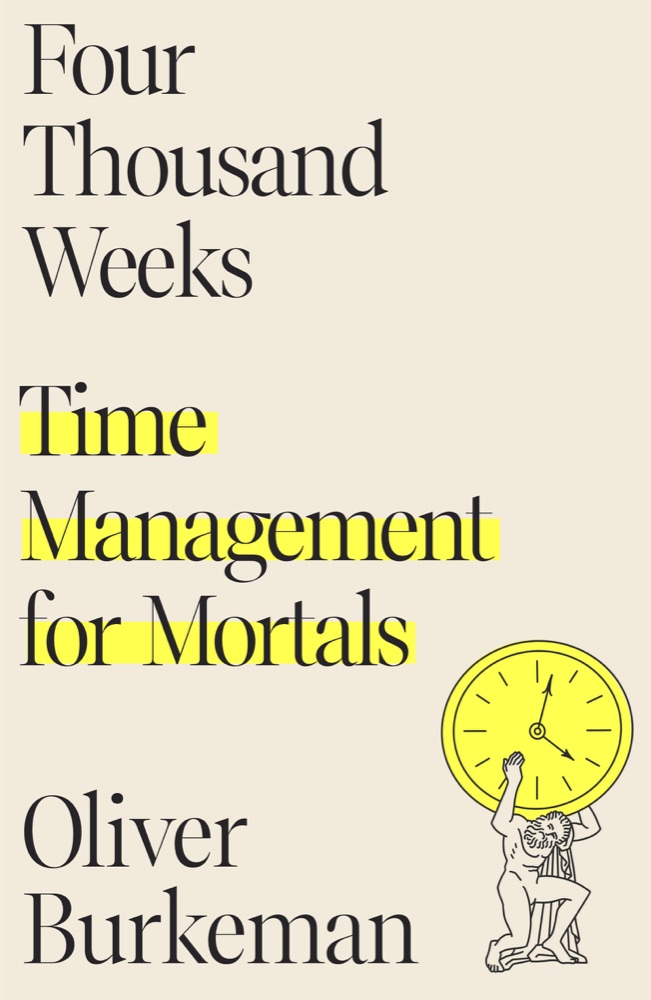
"Four Thousand Weeks: Time Management for Mortals" is Oliver Burkeman's argument against conventional productivity culture, built on a stark premise: if you live to eighty, you get only about four thousand weeks of life. Rather than offering tips to squeeze more into each day, the book contends that the modern obsession with efficiency and optimization is self-defeating, leaving people more anxious and less present. Burkeman draws on philosophy, psychology, and his own years of testing time-management systems to make the case that confronting our finitude is the starting point for a meaningful life.
Its central themes turn productivity advice on its head. Burkeman argues that you can never get on top of everything, that trying to do so only generates more demands, and that the real task is choosing what to neglect. He champions accepting limitation, embracing what he calls our "cosmic insignificance" as a relief rather than a threat, and valuing "atelic" activities pursued for their own sake rather than for some future payoff. The book reframes patience, presence, and the willingness to let go of total control as the foundations of a well-spent life.
The book was widely praised and became a bestseller, reaching the New York Times list and appearing on Time magazine's selection of must-read books of 2021. It was discussed across major outlets including NPR, The Guardian, and The Atlantic, and helped establish Burkeman, a former Guardian columnist, as a leading voice questioning hustle and optimization culture. Its blend of philosophical reflection and practical reframing has made it a frequently cited touchstone in conversations about time, attention, and finitude.
Book details
- First published
- 2021
- Length
- 288 pages
- Reading time
- 5 hours
- Author
- Oliver Burkeman
- Genre
- Nonfiction
- Goodreads rating
- 4.16 (136k ratings)
Critical reception
- Appeared on the New York Times bestseller list.
- Named to Time magazine's list of must-read books of 2021.
- Reviewed and discussed in major outlets including NPR, The Guardian, and The Atlantic.
Keep reading
 Ready for Anything: 52 Productivity Principles for Getting Things Done
 Finding Flow: The Psychology of Engagement with Everyday Life
 The Bullet Journal Method: Track Your Past, Order Your Present, Plan Your Future
 The 4-Hour Workweek
 I Didn't Do the Thing Today: Letting Go of Productivity Guilt
 How to Be Here: A Guide to Creating a Life Worth Living
 Getting Things Done: The Art of Stress-Free Productivity
 Overwhelmed: Work, Love, and Play When No One Has the Time
 Awaken The Giant Within
 The Happiness of Pursuit: Finding the Quest That Will Bring Purpose to Your Life
 Essentialism: The Disciplined Pursuit of Less
 First Things First
 How Will You Measure Your Life?
 Make Time: How to Focus on What Matters Every Day
 The Practicing Mind: Bringing Discipline and Focus into Your Life
 Be Useful: Seven Tools for Life
 The Accidental Creative: How to Be Brilliant at a Moment's Notice
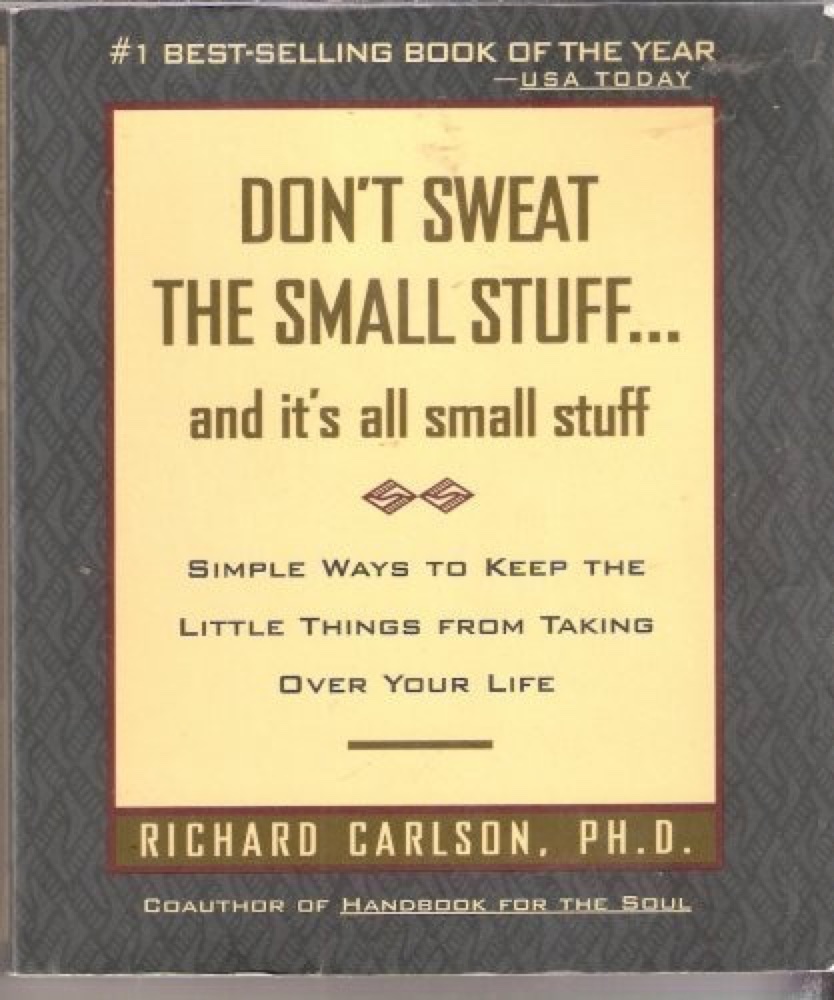 Don't Sweat the Small Stuff ... and it's all small stuff: Simple Ways to Keep the Little Things from Taking Over Your Life
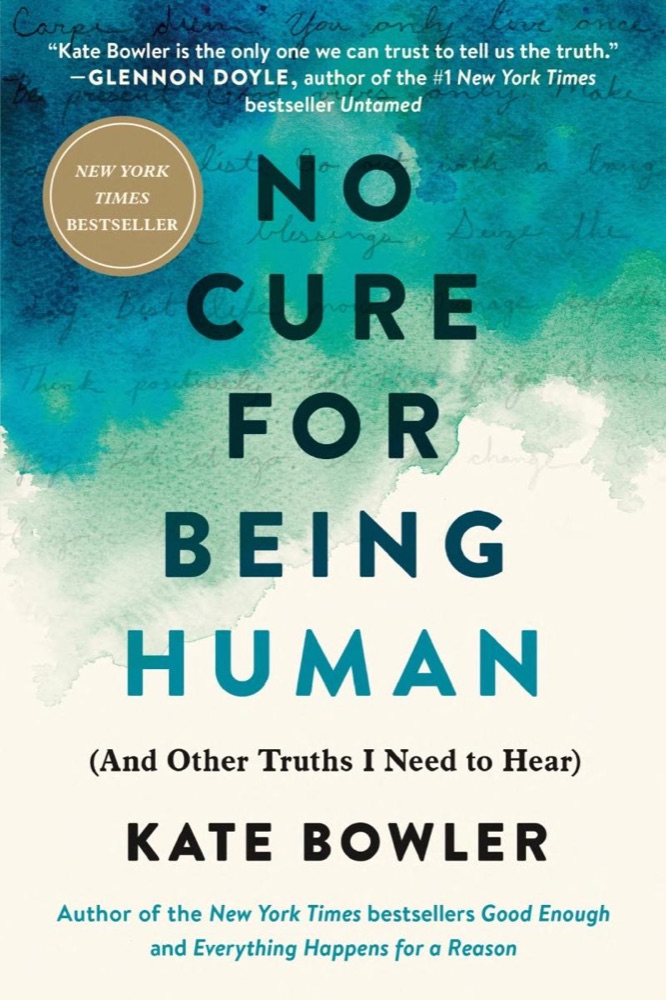 No Cure for Being Human: And Other Truths I Need to Hear
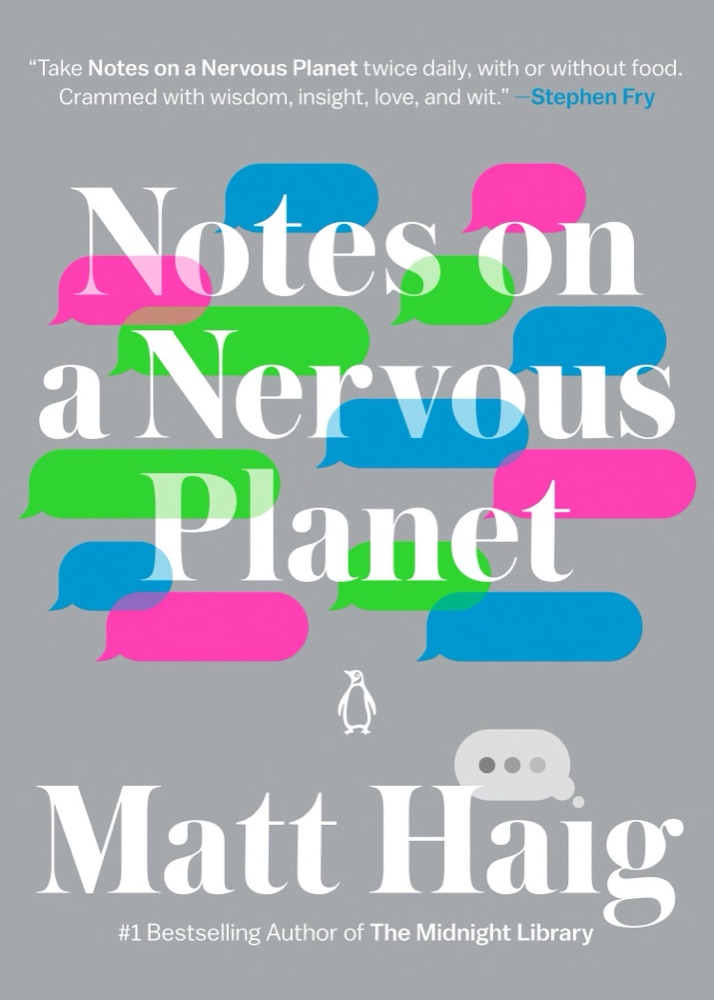 Notes on a Nervous Planet
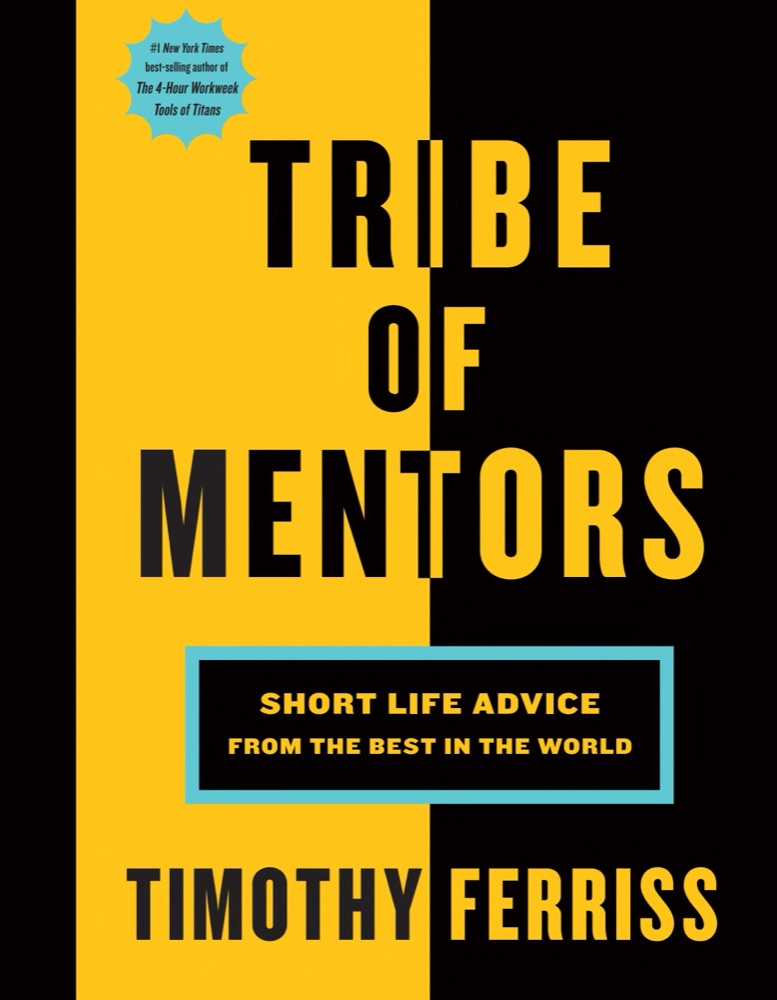 Tribe Of Mentors: Transformative Wisdom From Icons and Innovators to Help You Navigate Life's Challenges
 Flow: The Psychology of Optimal Experience
 The Happiness Project
 How to Fail at Almost Everything and Still Win Big: Kind of the Story of My Life
 The Defining Decade: Why Your Twenties Matter—And How to Make the Most of Them Now
 Thrive: The Third Metric to Redefining Success and Creating a Life of Well-Being, Wisdom, and Wonder
 101 Essays That Will Change The Way You Think
 The Lazy Genius Way: Embrace What Matters, Ditch What Doesn't, and Get Stuff Done
 The Noticer: Sometimes, All a Person Needs Is a Little Perspective
 You Are a Badass at Making Money: Master the Mindset of Wealth
 The Productivity Project: Accomplishing More by Managing Your Time, Attention, and Energy
 How to Stop Worrying and Start Living
 You Learn by Living: Eleven Keys for a More Fulfilling Life
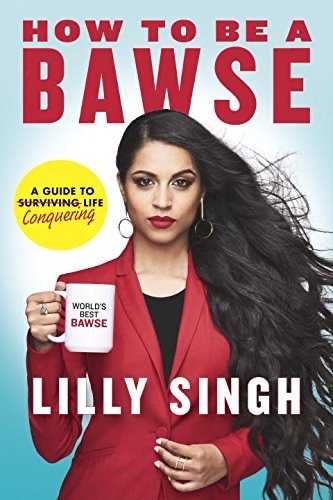 How to Be a Bawse: A Guide to Conquering Life
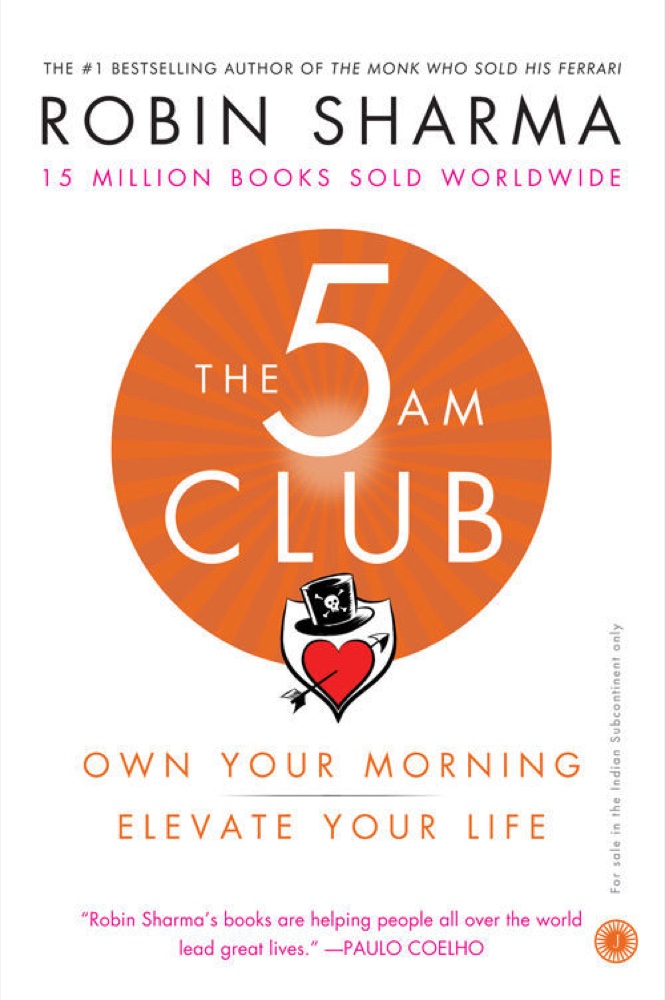 The 5 AM Club: Own Your Morning. Elevate Your Life
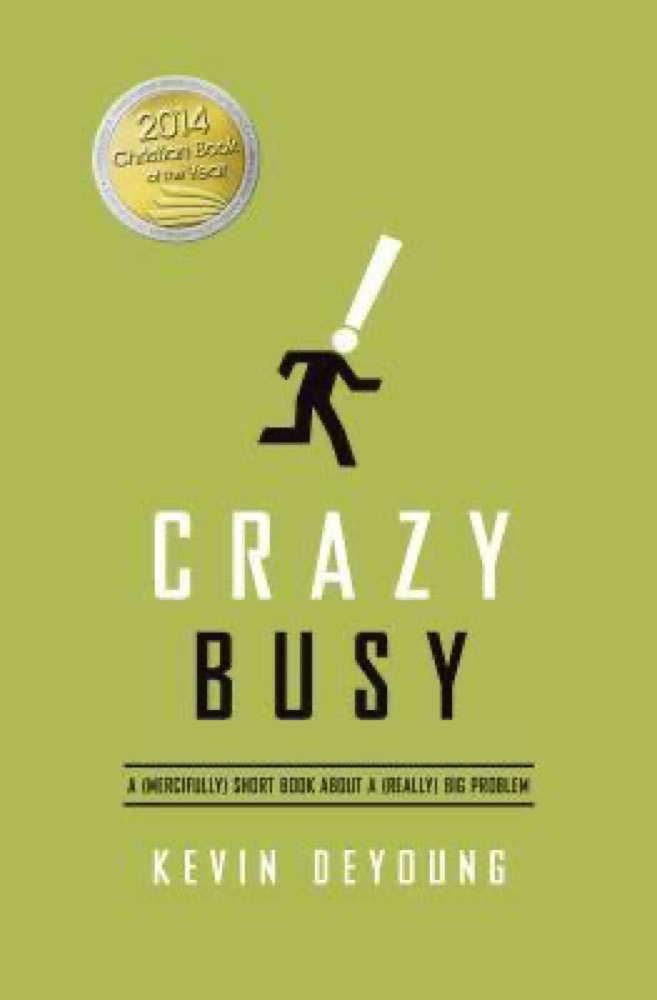 Crazy Busy: A (Mercifully) Short Book about a (Really) Big Problem
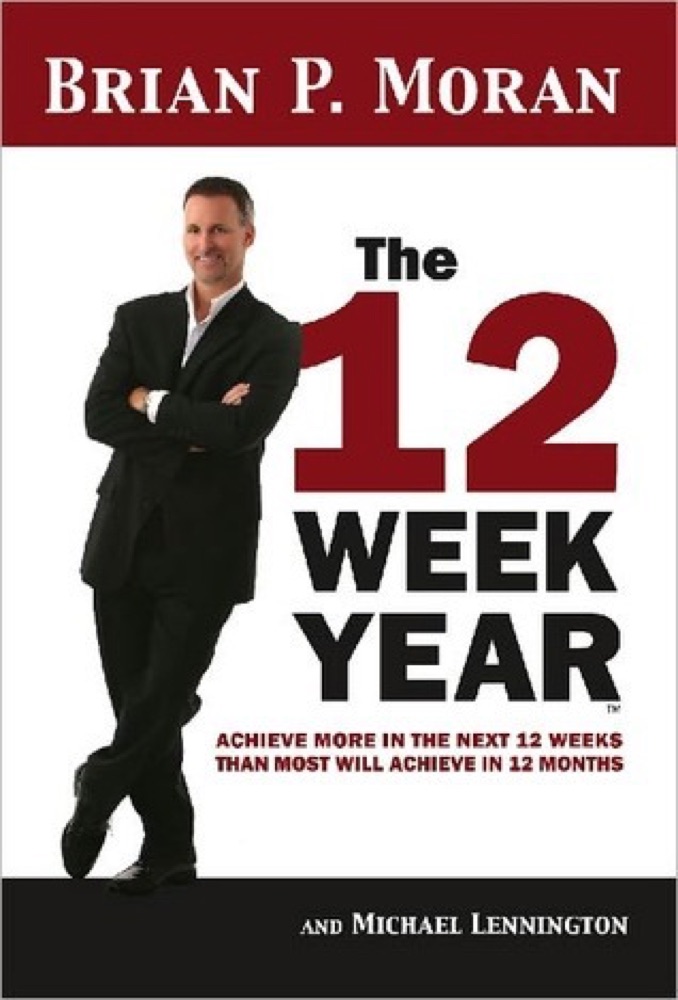 The 12 Week Year
 The Freedom Manifesto
 Living Forward: A Proven Plan to Stop Drifting and Get the Life You Want
 Stillness Is the Key
 The Now Habit: A Strategic Program for Overcoming Procrastination and Enjoying Guilt-Free Play
 Discipline Is Destiny: The Power of Self-Control
 Today Matters: 12 Daily Practices to Guarantee Tomorrow's Success
 Girl Wash your Face
 The Perfectionist's Guide to Losing Control: A Path to Peace and Power
 The Happiness Equation: Want Nothing + Do Anything = Have Everything
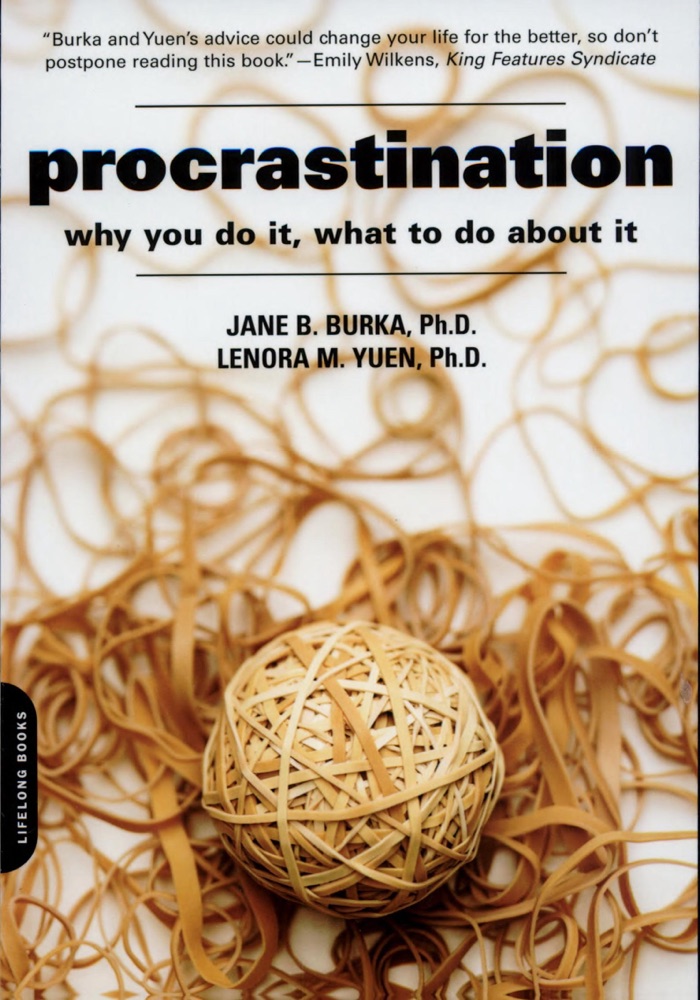 Procrastination: Why You Do It, What To Do About It
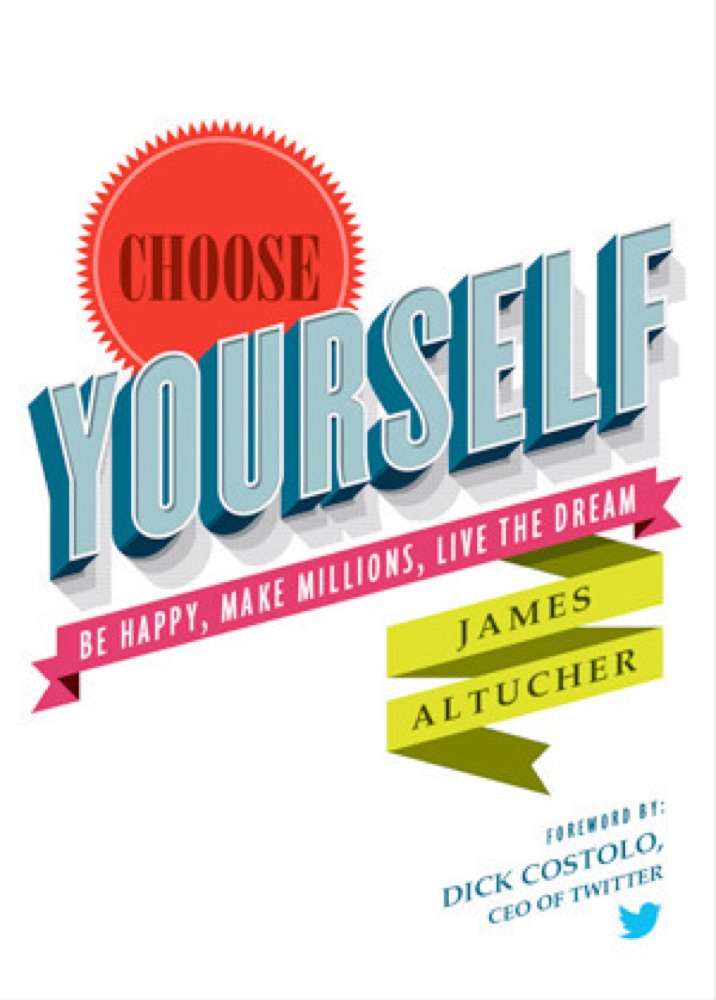 Choose Yourself: Be Happy, Make Millions, Live the Dream
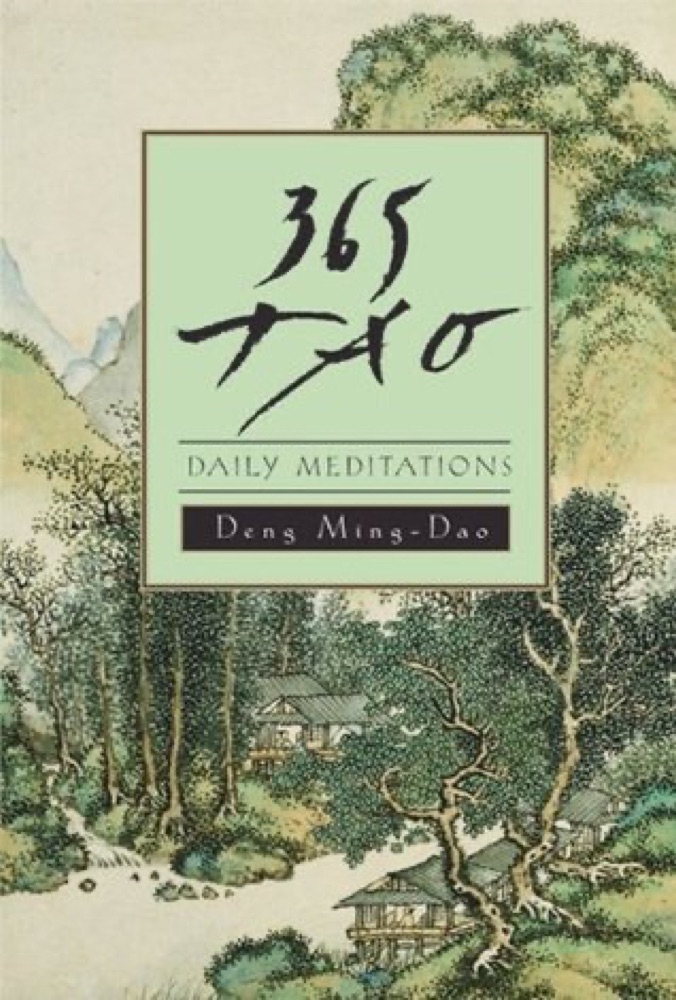 365 Tao: A Study of Taoist Wisdom for Daily Life
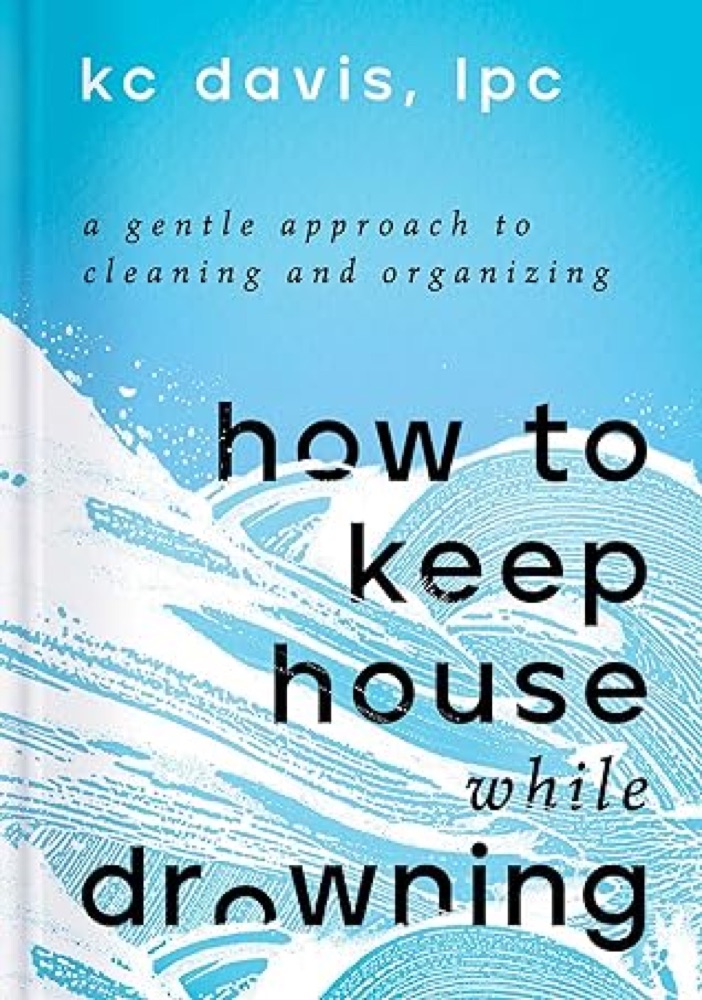 How to Keep House While Drowning
 The Art of Work
 You Are a Badass: How to Stop Doubting Your Greatness and Start Living an Awesome Life
 Do Over: Rescue Monday, Reinvent Your Work, and Never Get Stuck
 The Miracle Morning: The Not-So-Obvious Secret Guaranteed to Transform Your Life: Before 8AM
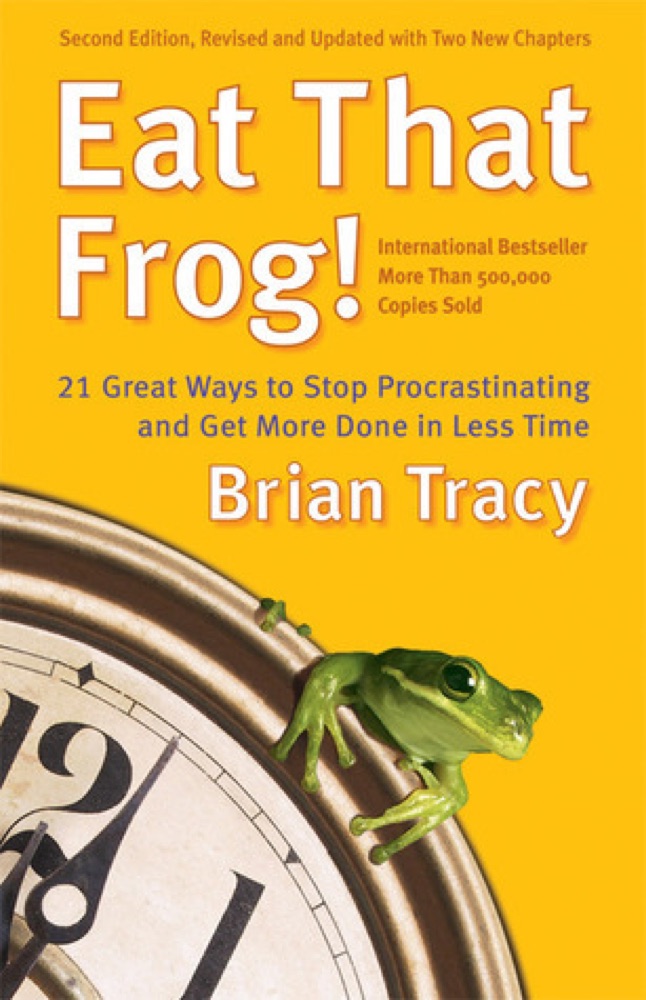 Eat That Frog! 21 Great Ways to Stop Procrastinating and Get More Done in Less Time
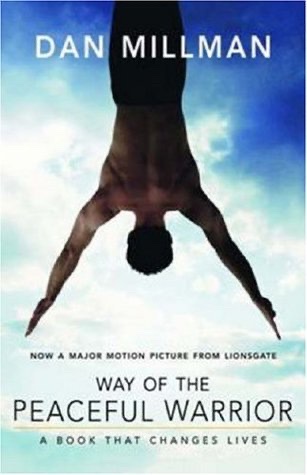 Way of the Peaceful Warrior: A Book That Changes Lives