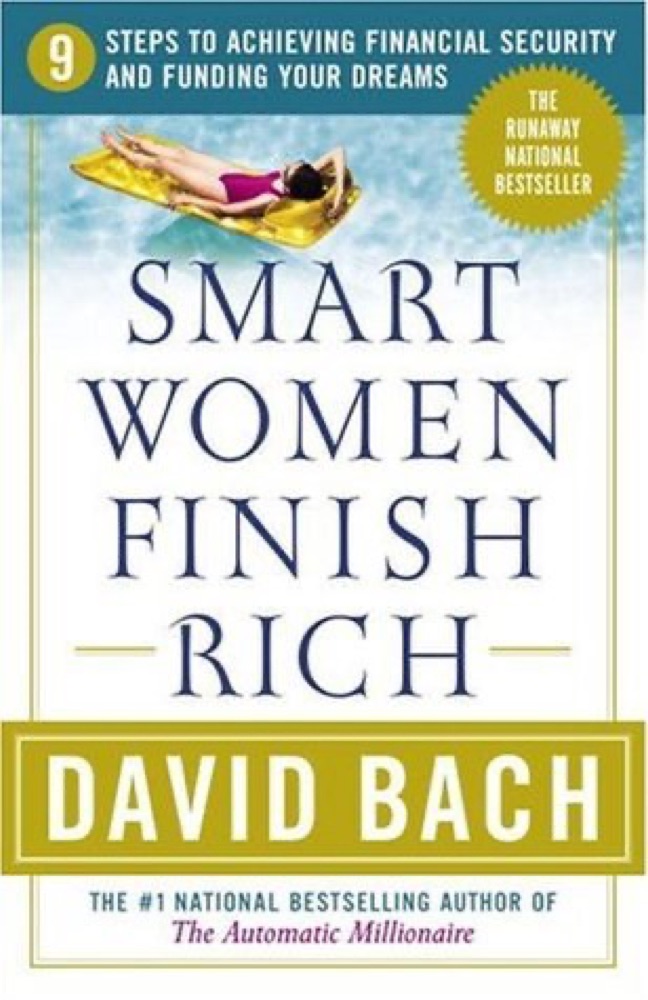
 Smart Women Finish Rich: 9 Steps to Achieving Financial Security and Funding Your Dreams
Quotes from the Book
I hope my message has at least jarred you into rethinking the standard and conventional approaches to living one’s life—get a good job, work hard through endless hours, and then retire in your sixties or seventies and live out your days in your so-called golden years. But I still ask you: Why wait until your health and life energy have begun to wane? Rather than just focusing on saving up for a big pot full of money that you will most likely not be able to spend in your lifetime, live your life to the fullest now: Chase memorable life experiences, give money to your kids when they can best use it, donate money to charity while you’re still alive. That’s the way to live life. Remember: In the end, the business of life is the acquisition of memories. So what are you waiting for?
12
we all have at least the potential to make more money in the future, we can never go back and recapture time that is now gone. So it makes no sense to let opportunities pass us by for fear of squandering our money. Squandering our lives should be a much greater worry.
10
What Good Is Wealth Without Health?
8
Realize that at every moment you have a choice. The choices you make reflect your priorities, so be sure you’re making those choices deliberately.
7
When you face asymmetric risk, it makes total sense to be bold, to grab the opportunity at hand. At the extreme, when the downside is very low (or nonexistent, as in the “nothing to lose” case) and the upside is really high, it’s actually riskier not to make the bold move. The downside of not even taking a chance is emotional: potentially a lifetime of regret and wondering What if? The upside of taking a chance always includes emotional benefits—even if things don’t work out. There’s a great sense of pride at having pursued an important goal wholeheartedly. If you’ve given something your all, you’ll get a lot of positive memories out of the experience no matter what happens.
7
That is what I mean when I say that we die many deaths in the course of our lives: The teenager in you dies, the college student in you dies, the single unattached you dies, the version of you that’s a parent of an infant dies, and so on. Once each of these mini-deaths occurs, there’s no going back. Maybe “dies” is a bit harsh, but you get the idea: We all keep moving forward, progressing from one stage or phase of our lives to the next.
6
Your biggest fear ought to be wasting your life and time, not "Am I going to have x number of dollars when I'm 80?
5
Start thinking more about how you use your limited time, your life energy, and you’ll be well on your way to living the fullest life you possibly can.
5
Research in psychology backs me up: People who spend money on time-saving purchases experience greater life satisfaction, regardless of their income.
5
No, the key takeaway, I now realize, is to strike the right balance between spending on the present (and only on what you value) and saving smartly for the future.
5
The business of life is the acquisition of memories. In the end that’s all there is.
5
Nothing has a greater effect on your ability to enjoy experiences—at any age—than your health.
5
In other words, to get the most out of your time and money, timing matters. So to increase your overall lifetime fulfillment, it’s important to have each experience at the right age.
5
To fully enjoy life instead of just surviving it, you need to stop driving mindlessly and actively steer your life the way you want it to go.
4
don’t underestimate the risk of inaction. Staying the course instead of making bold moves feels safe, but consider what you stand to lose: the life you could have lived if you had mustered the courage to be bolder.
4
Or, if your out-of-pocket medical expenses amount to $50,000 per night (as they did for my father’s hospital stay at the end of his life), does it really matter whether you’ve saved $10,000 or $50,000 or even $250,000? No, it doesn’t, because the extra $50,000 will buy you one extra night, a night that might well have taken you a year’s worth of work to earn! Similarly, $250,000 saved over however many years will get wiped out in five days. I’m not suggesting that you should rack up large hospital costs with a plan to then stiff the hospital on those bills. What I’m saying is that you can’t pay your way out of high-priced end-of-life medical care; since uninsured medical care is so expensive, it won’t make any real difference for the vast majority of us whether we save for it or not. Either the government will pay for it or you will die.
4
Although we all have at least the potential to make more money in the future, we can never go back and recapture time that is now gone. So it makes no sense to let opportunities pass us by for fear of squandering our money. Squandering our lives should be a much greater worry.
4
what’s easy shouldn’t determine what you do. Don’t let difficulty dissuade you from living your best life!
4
At the high end, retirees who had $500,000 or more right before retirement had spent down a median of only 11.8 percent of that money 20 years later or by the time they died. That’s more than 88 percent left over—which means that a person retiring at 65 with half a million dollars still has more than $440,000 left at age 85! At the lower end, retirees with less than $200,000 saved up for retirement spent a higher percentage (as you might expect, since they had less to spend overall)—but even this group’s median members had spent down only one-quarter of their assets 18 years after retirement.
4
The utility of money changes over time, and it does so in a fairly predictable way: Starting sometime in your twenties, your health very subtly starts to decline, causing a corresponding decline in your ability to enjoy money. Ability to Enjoy Experiences Based on Health Everyone's health declines with age. Wealth, on the other hand, tends to grow over the years as people save up more and more. But worsening health gradually constrains your enjoyment of that wealth as more and more physical activities become impossible to enjoy, no matter how much money you can afford to spend on them.
3
the senselessness of indefinitely delayed gratification.
3
First of all, yes, you can certainly leave money to the people and causes you care about—but the truth is that those people and causes would be better off getting your wealth sooner rather than later. Why wait until after you die?
3
You might think that as people get older, they spend money more freely out of the sheer desire to make the most of it before it’s truly too late. But the opposite tends to happen. In general, spending among American households declines as people age. For example, the Consumer Expenditure Survey, conducted by the Bureau of Labor Statistics, found that in 2017, average annual spending for households headed by 55-to-64-year-olds was $65,000; average spending fell to $55,000 for those between 65 and 74; and spending fell again to $42,000 for those 75 and older. This overall decline occurred despite a rise in healthcare expenses, because most other expenses, such as clothing and entertainment, were much lower. The decline in spending over time was even more acute for retirees with more than $1 million in assets, according to separate research conducted by J.P. Morgan Asset Management, which analyzed data from more than half a million of its customers.
3
Life is not a game of Space Invaders—you don’t get points for all the money you rack up in the game—but many people treat it as though it were. They just keep earning and earning, trying to maximize their wealth without giving nearly as much thought to maximizing what they get out of that wealth—including what they can give to their children, their friends, and the larger society now, instead of waiting until they die.
2
The insurance companies that create annuities often make them seem like investments,” he wrote in a recent explainer about annuities. “But really they’re more like insurance.” Lieber went on: “Like insurance to stave off financial disaster, an annuity is something you purchase to guarantee that you won’t run out of money if you live a long time.” In fact, thinking of annuities as insurance makes them a lot more sensible than thinking of them as investments—because as investments they are not good at all. But that’s not their goal—their goal is to insure you against the risk of outliving your money.
2
you retire on your memories. When you’re too frail to do much of anything else
1
The main idea here is that your life is the sum of your experiences. This just means that everything you do in life—all the daily, weekly, monthly, annual, and once-in-a-lifetime experiences you have—adds up to who you are. When you look back on your life, the richness of those experiences will determine your judgment of how full a life you’ve led. So it stands to reason that you should put some serious thought and effort into planning the kinds of experiences that you want for yourself. Without that kind of deliberate planning, you’re bound to just follow our culture’s well-trodden, default path through life—to coast on autopilot. You’ll get to your destination (death) but probably without having the kind of journey you would have actively chosen for yourself.
1
Between the Ant and the Grasshopper The idea that you retire on your memories runs completely counter to most of what we normally hear about retirement. As workers in the United States, we’re constantly getting the message that we must save for retirement, that we need to regularly sock money away into a 401(k) plan or IRA. That’s just the grown-up version of lessons we learned as kids about the need to save for a rainy day. The best-remembered variant of the fable of the Ant and the Grasshopper, for example, has the ant sitting pretty (and pretty smug) after harvesting his grain, while the grasshopper goes hungry after spending his whole summer playing. That retelling leaves no doubt about which of the two insects had done the right thing, and it sure wasn’t the fun-loving, shortsighted grasshopper. But don’t get me wrong: My point isn’t that we should be just like the grasshopper, failing to save for the winter of our life, or that any amount we spend on experiences is worth it because experiences are the stuff of life. That would be foolish. What I’m saying is that our culture tends to overemphasize the virtues of the ant—of hard work and delayed gratification—at the cost of other virtues. As a result, we fail to appreciate that the grasshopper was onto something, too. So, yes, the grasshopper would be better off to save a little—and, yes, the ant would be better off to live a little!
1
I’d rather die when the time is right than sacrifice my better years just to squeeze out a few more days at the tail end.
1
Watch on YouTube
About Bill Perkins
About the book
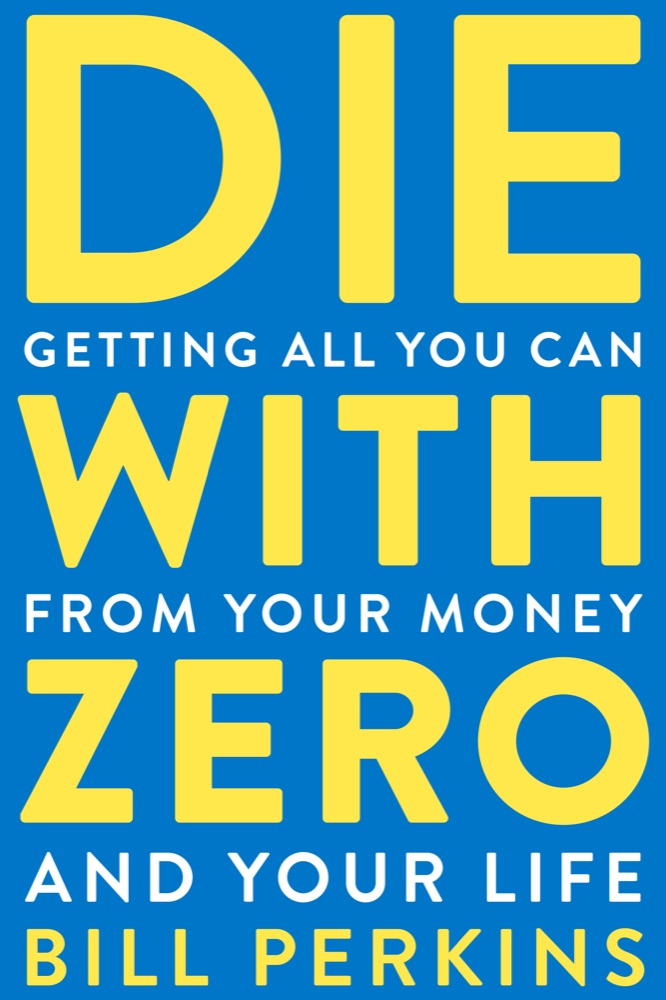
A Common-Sense Guide to Living Rich….Instead of Dying Rich Imagine if by the time you died, you did everything you were told to. You worked hard, saved your money, and looked forward to financial freedom when you retired. The only thing you wasted along the way was…your life. Die with Zero presents a startling new and provocative philosophy as well as practical guide on how to get the most out of your money—and out of your life. It’s intended for those who place lifelong memorable experiences far ahead of simply making and accumulating money for one’s so-called Golden Years. In short, Bill Perkins wants to rescue you from over-saving and under-living. Regardless of your age, Die with Zero will teach you Perkins’ plan for optimizing your life, stage by stage, so you’re fully engaged and enjoying what you’ve worked and saved for. You’ll discover how to maximize your lifetime memorab
Book details
- First published
- 2020
- Author
- Bill Perkins
- Genre
- Nonfiction
- Goodreads rating
- 3.89 (40k ratings)
Keep reading
Smart Women Finish Rich: 9 Steps to Achieving Financial Security and Funding Your Dreams
 The Total Money Makeover: A Proven Plan for Financial Fitness
 The Financial Diet
 The Art of Spending Money: Simple Choices for a Richer Life
 The Millionaire Fastlane: Crack the Code to Wealth and Live Rich for a Lifetime!
 7 Strategies for Wealth & Happiness: Power Ideas from America's Foremost Business Philosopher
 The Algebra of Wealth: A Simple Formula for Financial Security
 Choose Yourself: Be Happy, Make Millions, Live the Dream
 Rich AF: The Winning Money Mindset That Will Change Your Life
 Secrets of Jewish Wealth Revealed!
 How Will You Measure Your Life?
 Early Retirement Extreme: A Philosophical and Practical Guide to Financial Independence
 Four Thousand Weeks: Time Management for Mortals
 Financial Feminist: Overcome the Patriarchy's Bullsh*t to Master Your Money and Build a Life You Love
 You Are a Badass at Making Money: Master the Mindset of Wealth
 Millionaire Success Habits: The Gateway To Wealth & Prosperity
 Women & Money: Owning the Power to Control Your Destiny
 EntreLeadership: 20 Years of Practical Business Wisdom from the Trenches
 The Defining Decade: Why Your Twenties Matter—And How to Make the Most of Them Now
 Rich Dad Poor Dad
 How to Fail at Almost Everything and Still Win Big: Kind of the Story of My Life
 The Algebra of Happiness: Notes on the Pursuit of Success, Love, and Meaning
 Be Useful: Seven Tools for Life
 Rich Dad's Guide to Investing: What the Rich Invest in That the Poor and Middle Class Do Not!
 Secrets of the Millionaire Mind: Mastering the Inner Game of Wealth
 How To Get Rich
 The Snowball: Warren Buffett and the Business of Life
 The Monk and the Riddle: The Education of a Silicon Valley Entrepreneur
 Tribe Of Mentors: Transformative Wisdom From Icons and Innovators to Help You Navigate Life's Challenges
 The Noticer: Sometimes, All a Person Needs Is a Little Perspective
 The Power of Focus
 The Last Lecture
 The Compound Effect: Jumpstart Your Income, Your Life, Your Success
 Principles: Life and Work
 A Woman Makes a Plan: Advice for a Lifetime of Adventure, Beauty, and Success
 Today Matters: 12 Daily Practices to Guarantee Tomorrow's Success
 Be Your Future Self Now: The Science of Intentional Transformation
 Finding Flow: The Psychology of Engagement with Everyday Life
 Capital Gaines: Smart Things I Learned Doing Stupid Stuff
 Same as Ever: A Guide to What Never Changes
 The Happiness Equation: Want Nothing + Do Anything = Have Everything
 A Funny Thing Happened on the Way to the Future...
 The Happiness of Pursuit: Finding the Quest That Will Bring Purpose to Your Life
 Being Mortal: Medicine and What Matters in the End
 The 4-Hour Workweek
 The Swedish Art of Aging Exuberantly: Life Wisdom from Someone Who Will (Probably) Die Before You
 #Girlboss
 Living Forward: A Proven Plan to Stop Drifting and Get the Life You Want
 I Can't Make This Up: Life Lessons
 Essentialism: The Disciplined Pursuit of Less
 Tuesdays with Morrie
 Quitter: Closing the Gap Between Your Day Job and Your Dream Job
 How to Be Here: A Guide to Creating a Life Worth Living
 Necessary Endings: The Employees, Businesses, and Relationships That All of Us Have to Give Up in Order to Move Forward
 No Cure for Being Human: And Other Truths I Need to Hear
 You Learn by Living: Eleven Keys for a More Fulfilling Life