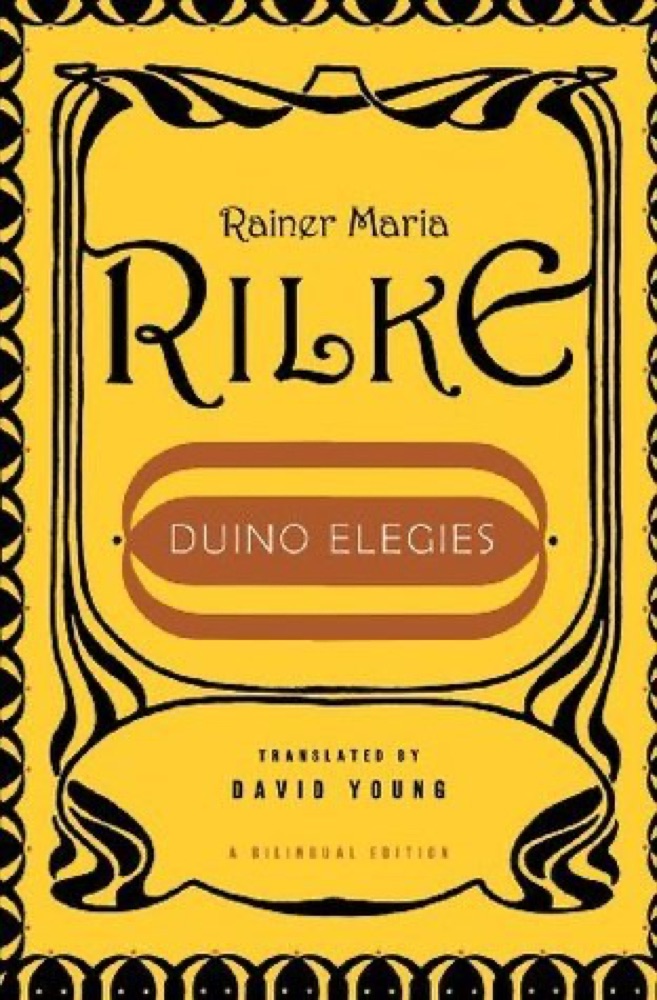

 Letters to a Young Poet
Quotes from the Book
For beauty is nothing but the beginning of terror which we are barely able to endure, and it amazes us so, because it serenely disdains to destroy us. Every angel is terrible.
1.1k
Who, if I cried out, would hear me among the angels' hierarchies? and even if one of them pressed me against his heart: I would be consumed in that overwhelming existence. For beauty is nothing but the beginning of terror, which we still are just able to endure, and we are so awed because it serenely disdains to annihilate us. Every angel is terrifying.
109
Look: the trees exist; the houses we dwell in stand there stalwartly. Only we pass by it all, like a rush of air. And everything conspires to keep quiet about us, half out of shame perhaps, half out of some secret hope.
105
For our part, when we feel, we evaporate; ah, we breathe ourselves out and away; with each new heartfire we give off a fainter scent. True, someone may tell us: you're in my blood, this room, Spring itself is filled with you . . . To what end? He can't hold us, we vanish within him and around him.
62
Look, I am living. On what? Neither childhood nor future lessens . . . . Superabundant existence wells in my heart.
48
A kind of memory that tells us that what we're now striving for was once nearer and truer and attached to us with infinite tenderness. Here all is distance, there it was breath. After the first home the second one seems draughty and strangely sexed.
47
weren’t you always distracted by expectation, as if every event announced a beloved? (Where can you find a place to keep her, with all the huge strange thoughts inside you going and coming and often staying all night.)…
46
And we, spectators always, everywhere, looking at, never out of, everything! It fills us. We arrange it. It collapses. We re-arrange it, and collapse ourselves. Who's turned us round like this, so that we always, do what we may, retain the attitude of someone who's departing? Just as he, on the last hill, that shows him all his valley for the last time, will turn and stop and linger, we live our lives, for ever taking leave.
41
Isn’t it time that these most ancient sorrows of ours grew fruitful? Time that we tenderly loosed ourselves from the loved one, and, unsteadily, survived: the way the arrow, suddenly all vector, survives the string to be more than itself. For abiding is nowhere.
38
How I will cherish you then, you grief-torn nights! Had I only received you, inconsolable sisters, on more abject knees, only buried myself with more abandon in your loosened hair. How we waste our afflictions! We study them, stare out beyond them into bleak continuance, hoping to glimpse some end. Whereas they're really our wintering foliage, our dark greens of meaning, one of the seasons of the clandestine year -- ; not only a season --: they're site, settlement, shelter, soil, abode.
38
But suppose the endlessly dead were to wake in us some emblem: they might point to the catkins hanging from the empty hazel trees, or direct us to the rain descending on black earth in early spring. --- And we, who always think of happiness rising, would feel the emotion that almost baffles us when a happy thing falls.
34
But not you, O girl, nor yet his mother, stretched his eyebrows so fierce with expectation. Not for your mouth, you who hold him now, did his lips ripen into these fervent contours. Do you really think your quiet footsteps could have so convulsed him, you who move like dawn wind? True, you startled his heart; but older terrors rushed into him with that first jolt to his emotions. Call him . . . you'll never quite retrieve him from those dark consorts. Yes, he wants to, he escapes; relieved, he makes a home in your familiar heart, takes root there and begins himself anew. But did he ever begin himself?
31
And these things that keep alive on departure know that you praise them; transient, they look to us, the most transient, to be their rescue. They want us to change them completely, in our invisible hearts, into -- O endlessly -- us! Whoever, finally, we may be.
29
Once for each thing. Just once; no more. And we too, just once. And never again. But to have been this once, completely, even if only once: to have been at one with the earth, seems beyond undoing.
25
For beauty is nothing but the beginning of terror.
17
We only pass everything by like a transposition of air.
16
Isn’t it time that, loving, we freed ourselves from the beloved, and, trembling, endured: as the arrow endures the bow, so as to be, in its flight, something more than itself?
15
And so I check myself and swallow the luring call of dark sobs. Alas, whom can we turn to in our need? Not angels, not humans, and the sly animals see at once how little at home we are in the interpreted world. That leaves us some tree on a hillside, on which our eyes fasten day after day; leaves us yesterday’s street and the coddled loyalty of an old habit that liked it here, stayed on, and never left.
15
Here is the time for the sayable, here is its home. Speak and attest. More than ever the things we can live with are falling away, and ousting them, filling their place, a will with no image. Will beneath crusts which readily crack whenever the act inside swells and seeks new borders.
15
O trees of life, O when are you wintering? We are not unified. We have no instincts like those of migratory birds. Useless, and late, we force ourselves, suddenly, onto the wind, and fall down to an indifferent lake. We realise flowering and fading together. And somewhere lions still roam. Never knowing, as long as they have their splendour, of any weakness.
14
O smile, going where? O upturned look: new, warm, receding surge of the heart--; alas, we are that surge. Does then the cosmic space we dissolve in taste of us? Do the angels reclaim only what is theirs, their own outstreamed existence, or sometimes, by accident, does a bit of us get mixed in? Are we blended in their features like the slight vagueness that complicates the looks of pregnant women? Unnoticed by them in their whirling back into themselves? (How could they notice?)
14
Who, if I cried, would hear me among the angelic orders? And even if one of them suddenly pressed me against his heart, I should fade in the strength of his stronger existence. For beauty's nothing but the beginning of terror we're still just able to bear.
13
How we squander our sorrows, gazing beyond them into the sad wastes of duration, to see if maybe they have a limit.
13
It’s true enough, of course, no longer to live on earth is strange, to abandon customs barely mastered yet, not to interpret roses and other auspicious things, not give them meaning in a human future. No longer to be as we have always been, in those endlessly anxious hands – to leave even our name behind us as a child leaves off playing with a broken toy. Strange, no longer to know desires desired – strange to witness the involvement of all things lost suddenly, each drifting away singly into space. And truly, to be dead is hard, so full of making up lost ground, till little by little we find a trace of eternity. Yet, the living are wrong to draw such distinctions so clearly: angels (it is said) are often never quite sure whether they pass among the living or the dead,
10
Yes, the Springs needed you. Many a star was waiting for your eyes only. A wave swelled toward you out of the past, or as you walked by the open window a violin inside surrendered itself to pure passion. All that was your charge. But were you strong enough? Weren't you always distracted by expectation, as though each such moment presaged a beloved's coming? (But where would you keep her, with all those big strange thoughts in you going and coming and sometimes staying all night?)
8
Lovers, if Angels could understand them, might utter strange things in the midnight air. For it seems that everything's trying to hide us. Look, the trees exist; the houses we live in still stand where they were. We only pass everything by like a transposition of air. And all combines to suppress us, partly as shame, perhaps, and partly as inexpressible hope.
8
In the end, those who were carried off early no longer need us: they are weaned from earth's sorrows and joys, as gently as children outgrow the soft breasts of their mothers. But we, who do need such great mysteries, we for whom grief is so often the source of our spirit's growth––: could we exist without them? Is the legend meaningless that tells how, in the lament for Linus, the daring first notes of song pierced through the barren numbness; and then in the startled space which a youth as lovely as a god had suddenly left forever, the Void felt for the first time that harmony which now enraptures and comforts and helps us.
7
Who shows a child, just as they are? Who sets it in its constellation, and gives the measure of distance into its hand? Who makes a child’s death out of grey bread, that hardens, - or leaves it inside its round mouth like the core of a shining apple? Killers are easy to grasp. But this: death, the whole of death, before life, to hold it so softly, and not live in anger, cannot be expressed.
6
Who has turned us around like this, so that whatever we do, we find ourselves in the attitude of someone going away? Just as that person on the last hill, which shows him his whole valley one last time, turns, stops, lingers - so we live, forever taking our leave.
5
Watch on YouTube
About Rainer Maria Rilke
We have collected 163 quotes from 6 books by Rainer Maria Rilke on BookQuoters.
More about the author →More by Rainer Maria Rilke
Letters to a Young Poet
 The Notebooks of Malte Laurids Brigge
 The Selected Poetry of Rainer Maria Rilke
 Sonnets to Orpheus
About the book
We have a marvelous, almost legendary image of the circumstances in which the composition of this great poem began. Rainer Maria Rilke was staying at Duino Castle, on a rocky headland of the Adriatic Sea near Trieste. One morning he walked out onto the battlements and climbed down to where the cliffs dropped sharply to the sea. From out of the fierce wind, Rilke seemed to hear a voice: Wer, wenn ich schriee, horte mich denn aus der Engel Ordnungen? (If I cried out, who would hear me up there, among the angelic orders?). He wrote these words, the opening of the first Duino Elegy, in his notebook, then went inside to continue what was to be his major opus—completely only after another ten, tormented years of effort—and one of the literary masterpieces of the century. Duino Elegies speaks in a voice that is both intimate and majestic on the mysteries of human life and our attempt, in the wo
Book details
- First published
- 1922
- Author
- Rainer Maria Rilke
- Genre
- Literature
- Goodreads rating
- 4.39 (10k ratings)
Keep reading
Sonnets to Orpheus
The Selected Poetry of Rainer Maria Rilke
 Plainwater: Essays and Poetry
 The Goldfinch
 Dearly
 Narcissus and Goldmund
 Poems, 1962-2012
 New and Selected Poems, Vol. 2
 In Search of Lost Time
 Blue Horses
 Light Years
 Life on Mars: Poems
 The Complete Poems
 Split Tooth
The Notebooks of Malte Laurids Brigge
Split Tooth
The Notebooks of Malte Laurids Brigge
 Identity
 Future Home of the Living God
 Selected Poems
 Collected Poems
 Lincoln in the Bardo
 Hell
Hell
 Phantastes
 Sexing the Cherry
 Selected Poems
 Wandering
 The Island of the Day Before
 You Can't Go Home Again
 Arch of Triumph
 The Dog Stars
 To The Bright Edge of the World
 The Waste Land and Other Poems
 Other Voices, Other Rooms
 Crazy Brave
 The Moor's Last Sigh
 Evidence: Poems
 Swann's Way
 On Earth We're Briefly Gorgeous
 Brideshead Revisited: The Sacred and Profane Memories of Captain Charles Ryder
 Poems New and Collected
 Autumn
 Conflict Resolution for Holy Beings: Poems
 By Grand Central Station I Sat Down and Wept
 Sexus
Sexus
 Good Bones and Simple Murders
 The Soul of Rumi: A New Collection of Ecstatic Poems – Coleman Barks's Sublime Renderings of the 13th-Century Sufi Mystic's Insights into Divine Love and the Human Heart
 Monday or Tuesday
 The Conference of the Birds
 Selected Poems
 The Mountain Shadow
 Spring Snow
 Just Above My Head
 Sword & Citadel
 Housekeeping
 The Complete Poems of Emily Dickinson
 It Lasts Forever and Then It's Over
 M Train
 The Vampire Lestat
 A Soldier of the Great War
 The Ground Beneath Her Feet