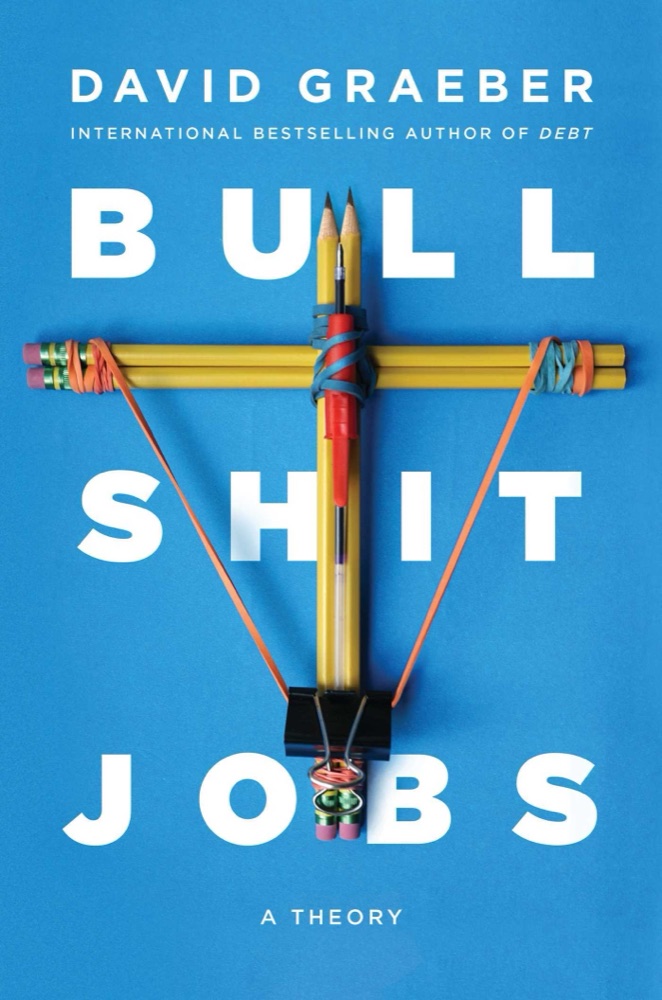

 Debt: The First 5,000 Years
Quotes from the Book
We have become a civilization based on work—not even “productive work” but work as an end and meaning in itself.
102
Shit jobs tend to be blue collar and pay by the hour, whereas bullshit jobs tend to be white collar and salaried.
66
In places without clocks, time is measured by actions rather than action being measured by time.
59
It’s hard to imagine a surer sign that one is dealing with an irrational economic system than the fact that the prospect of eliminating drudgery is considered to be a problem.
57
Hell is a collection of individuals who are spending the bulk of their time working on a task they don’t like and are not especially good at.
49
Since at least the Great Depression, we’ve been hearing warnings that automation was or was about to be throwing millions out of work—Keynes at the time coined the term “technological unemployment,” and many assumed the mass unemployment of the 1930s was just a sign of things to come—and while this might make it seem such claims have always been somewhat alarmist, what this book suggests is that the opposite was the case. They were entirely accurate. Automation did, in fact, lead to mass unemployment. We have simply stopped the gap by adding dummy jobs that are effectively made up. A combination of political pressure from both right and left, a deeply held popular feeling that paid employment alone can make one a full moral person, and finally, a fear on the part of the upper classes, already noted by George Orwell in 1933, of what the laboring masses might get up to if they had too much leisure on their hands, has ensured that whatever the underlying reality, when it comes to official unemployment figures in wealthy countries, the needle should never jump too far from the range of 3 to 8 percent. But if one eliminates bullshit jobs from the picture, and the real jobs that only exist to support them, one could say that the catastrophe predicted in the 1930s really did happen. Upward of 50 percent to 60 percent of the population has, in fact, been thrown out of work.
38
If we let everyone decide for themselves how they were best fit to benefit humanity, with no restrictions at all, how could they possibly end up with a distribution of labor more inefficient than the one we already have? This is a powerful argument for human freedom. Most of us like to talk about freedom in the abstract, even claim that it's the most important thing for anyone to fight or die for, but we don't think a lot about what being free or practicing freedom might actually mean. The main point of this book was not to propose concrete policy prescriptions, but to start us thinking about arguing about what a genuine free society might actually be like.
35
A human being unable to have a meaningful impact on the world ceases to exist.
30
Efficiency' has come to mean vesting more and more power to managers, supervisors, and presumed 'efficiency experts,' so that actual producers have almost zero autonomy.
28
Those who work bullshit jobs are often surrounded by honor and prestige; they are respected as professionals, well paid, and treated as high achievers
27
Everyday we wake up and collectively make a world together; but which one of us, left to our own devices, would ever decide they wanted to make a world like this one?
25
Provisional Definition 2: a bullshit job is a form of employment that is so completely pointless, unnecessary, or pernicious that even the employee cannot justify its existence
25
Yet for some reason, we as a society have collectively decided it’s better to have millions of human beings spending years of their lives pretending to type into spreadsheets or preparing mind maps for PR meetings than freeing them to knit sweaters, play with their dogs, start a garage band, experiment with new recipes, or sit in cafés arguing about politics, and gossiping about their friends’ complex polyamorous love affairs.
24
If the existence of bullshit jobs seems to defy the logic of capitalism, one possible reason for their proliferation might be that the existing system isn't capitalism...In many ways, it resembles classic medieval feudalism, displaying the same tendency to create endless hierarchies of lords, vassals, and retainers.
24
Those who work shit jobs tend to be the object of indignities; they not only work hard but also are held in low esteem for that very reason. But at least they know they’re doing something useful. Those who work bullshit jobs are often surrounded by honor and prestige; they are respected as professionals, well paid, and treated as high achievers—as the sort of people who can be justly proud of what they do. Yet secretly they are aware that they have achieved nothing; they feel they have done nothing to earn the consumer toys with which they fill their lives; they feel it’s all based on a lie—as, indeed, it is.
24
Young people in Europe and North America in particular, but increasingly throughout the world, are being psychologically prepared for useless jobs, trained in how to pretend to work, and then by various means shepherded into jobs that almost nobody really believes serve any meaningful purpose.
21
What we are witnessing is the rise of those forms of popular culture that office workers can produce and consume during the scattered, furtive shards of time they have at their disposal in workplaces where even when there’s nothing for them to do, they still can’t admit it openly.
16
Managerialism has become the pretext for creating a new covert form of feudalism, where wealth and position are allocated not on economic but political grounds
15
Catherine Lutz, an anthropologist who has been carrying out a project studying the archipelago of US overseas military bases. She made the fascinating observation that almost all of these bases organize outreach programs, in which soldiers venture out to repair schoolrooms or to perform free dental checkups in nearby towns and villages. The ostensible reason for the programs was to improve relations with local communities, but they rarely have much impact in that regard; still, even after the military discovered this, they kept the programs up because they had such an enormous psychological impact on the soldiers, many of whom would wax euphoric when describing them: for example, “This is why I joined the army,” “This is what military service is really all about—not just defending your country, it’s about helping people!” Soldiers allowed to perform public service duties, they found, were two or three times more likely to reenlist. I remember thinking, “Wait, so most of these people really want to be in the Peace Corps?” And I duly looked it up and discovered: sure enough, to be accepted into the Peace Corps, you need to already have a college degree. The US military is a haven for frustrated altruists.
14
...most people who do a great deal of harm in the world are protected against the knowledge that they do so.
13
bullshit job into five categories. I will call these: flunkies, goons, duct tapers, box tickers, and taskmasters.
13
If no one had an army, armies would not be needed. But the same can be said of most lobbyists, PR specialists, telemarketers, and corporate lawyers. Also, like literal goons, they have a largely negative impact on society. I think almost anyone would concur that, were all telemarketers to disappear, the world would be a better place.
12
In a sense, those critics who claim we are not working a fifteen-hour week because we have chosen consumerism over leisure are not entirely off the mark. They just got the mechanics wrong. We're not working harder because we're spending all our time manufacturing PlayStations and serving each other sushi. Industry is being increasingly robotized, and the real service sector remains flat at roughly 20 percent of overall employment. Instead, it is because we have invented a bizarre sadomasochistic dialectic whereby we feel that pain in the workplace is the only possible justification for our furtive consumer pleasures, and, at the same time, the fact that our jobs thus come to eat up more and more of our waking existence means that we do not have the luxury of--as Kathi Weeks has so concisely put it--"a life," and that, in turns means that furtive consumer pleasures are the only ones we have time to afford.
11
If 1 percent of the population controls most of the disposable wealth, what we call “the free market” reflects what they think is useful or important.
9
In fact, it often happens that, at the very top of organizations, apparently crucial positions can go unfilled for long periods of time without there being any noticeable effect—even, on the organization itself.
8
If I’m not constantly being met by challenges that I am overcoming, how do I know that I’m capable?
8
This last is important. Even in corporate environments, it is very difficult to remove an underling for incompetence if that underling has seniority and a long history of good performance reviews. As in government bureaucracies, the easiest way to deal with such people is often to “kick them upstairs”: promote them to a higher post, where they become somebody else’s problem.
8
The source of status is no longer the ability to make things but simply the ability to purchase them.
7
Watch on YouTube
About David Graeber
We have collected 116 quotes from 4 books by David Graeber on BookQuoters.
More about the author →More by David Graeber
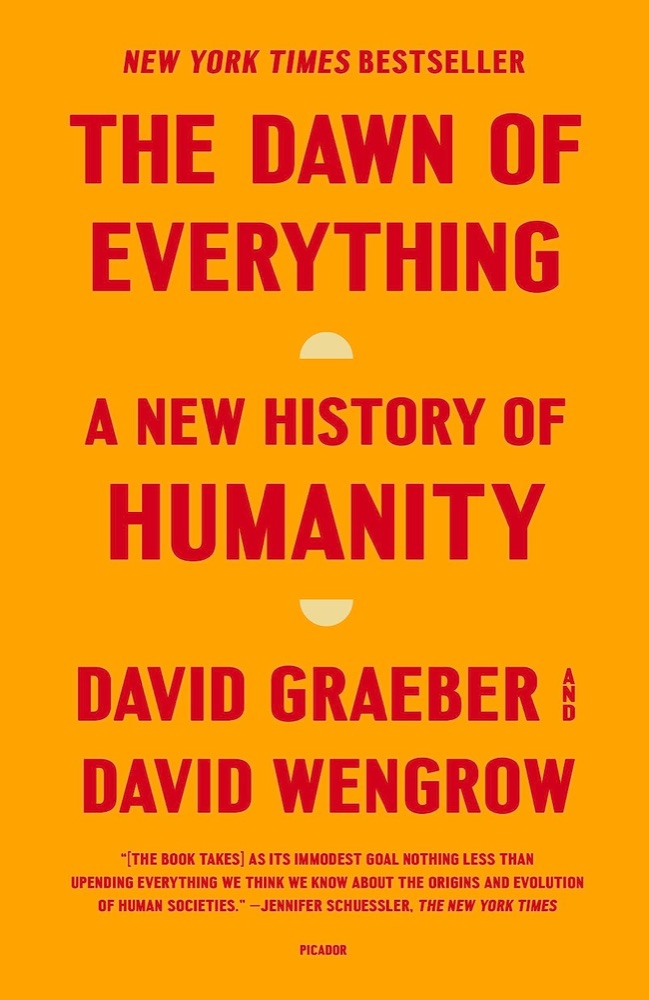
About the book
From bestselling writer David Graeber, a powerful argument against the rise of meaningless, unfulfilling jobs, and their consequences.
Does your job make a meaningful contribution to the world? In the spring of 2013, David Graeber asked this question in a playful, provocative essay titled “On the Phenomenon of Bullshit Jobs.” It went viral. After a million online views in seventeen different languages, people all over the world are still debating the answer.
There are millions of people—HR consultants, communication coordinators, telemarketing researchers, corporate lawyers—whose jobs are useless, and, tragically, they know it. These people are caught in bullshit jobs.
Graeber explores one of society’s most vexing and deeply felt concerns, indicting among other villains a particular strain of finance capitalism that betrays ideals shared by thinkers ranging from Keynes to Lincol
Book details
- First published
- 2018
- Author
- David Graeber
- Genre
- Nonfiction
- Goodreads rating
- 4.02 (36k ratings)
The buzz
- The New York TimesReview in The New York Timesprofessional review (via Book Marks)
- The GuardianReview in The Guardianprofessional review (via Book Marks)
- Kirkus ReviewsReview in Kirkus Reviewsprofessional review (via Book Marks)
- Publishers WeeklyReview in Publishers Weeklyprofessional review (via Book Marks)
- BooklistReview in Booklistprofessional review (via Book Marks)
- ChicagotribuneReview in Chicagotribuneprofessional review (via Book Marks)
Keep reading
 Nickel and Dimed: On (Not) Getting by in America
 In Praise of Idleness and Other Essays
 The Utopia of Rules: On Technology, Stupidity, and the Secret Joys of Bureaucracy
 The World Is Flat: A Brief History of the Twenty-first Century
 Shop Class as Soulcraft: An Inquiry Into the Value of Work
 The View From Flyover Country: Essays by Sarah Kendzior
 The Freedom Manifesto
 Friday
 Unscripted: Life, Liberty, and the Pursuit of Entrepreneurship
 The Pleasures and Sorrows of Work
 Peopleware: Productive Projects and Teams
 Saving Time: Discovering a Life Beyond the Clock
 Player Piano
 Small Is Beautiful: Economics as if People Mattered
 Walkaway
 The Coming Insurrection
 I Survived Capitalism and All I Got Was This Lousy T-Shirt: Everything I Wish I Never Had to Learn About Money
 Do Over: Rescue Monday, Reinvent Your Work, and Never Get Stuck
 Overwhelmed: Work, Love, and Play When No One Has the Time
 Utopia for Realists: How We Can Build the Ideal World
 The Mandibles: A Family, 2029–2047
 Predictably Irrational: The Hidden Forces That Shape Our Decisions
 Coming Apart: The State of White America, 1960-2010
 Talking to My Daughter About the Economy: or, How Capitalism Works—and How It Fails
 The Rational Optimist: How Prosperity Evolves
 Antifragile: Things That Gain from Disorder
 Endgame, Vol. 1: The Problem of Civilization
 Hocus Pocus
 Naked Economics: Undressing the Dismal Science
 Chaos Monkeys: Obscene Fortune and Random Failure in Silicon Valley
 Think Like a Freak
 The Shockwave Rider
 Working: People Talk About What They Do All Day and How They Feel About What They Do
 Human Action: A Treatise on Economics
 Walden Two
 Behold a Pale Horse
 Bleeding Edge
 What's Wrong with the World
 Four Futures: Life After Capitalism
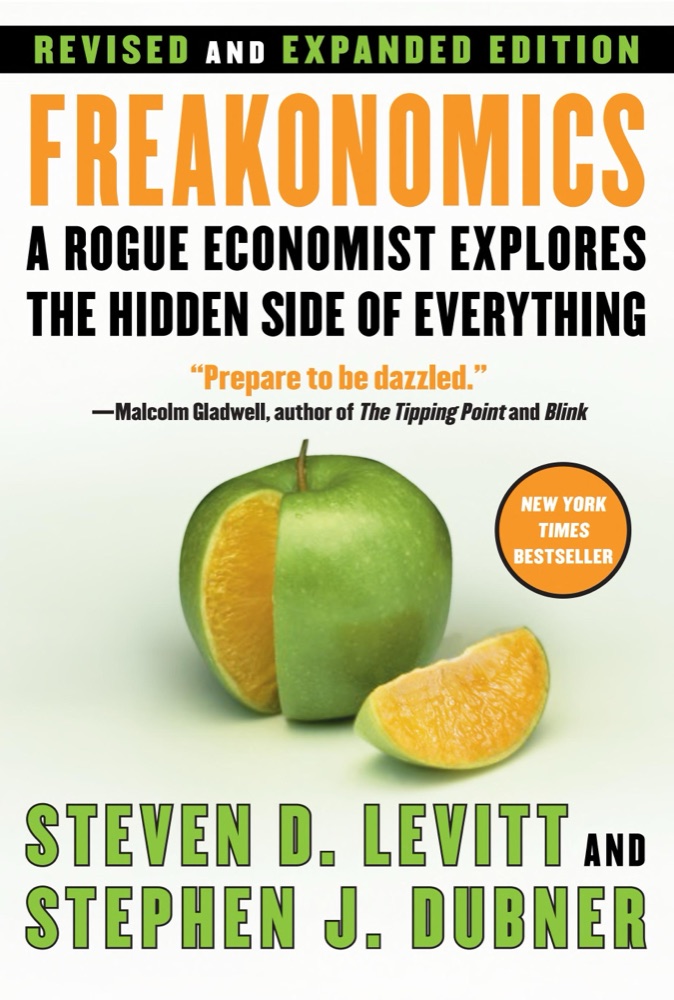 Freakonomics: A Rogue Economist Explores the Hidden Side of Everything
 What the Dog Saw and Other Adventures
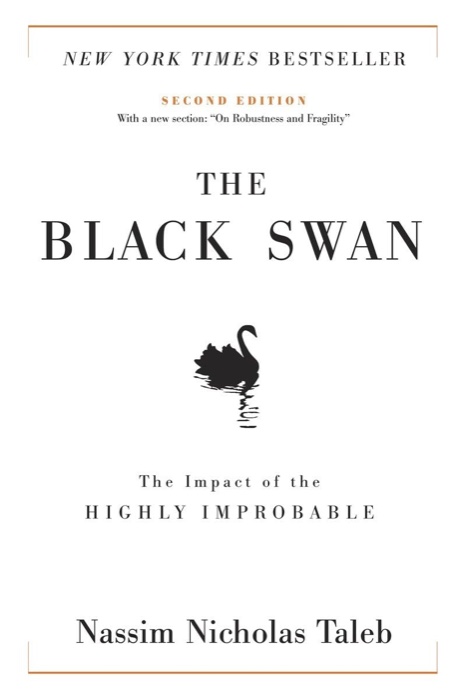 The Black Swan: The Impact of the Highly Improbable
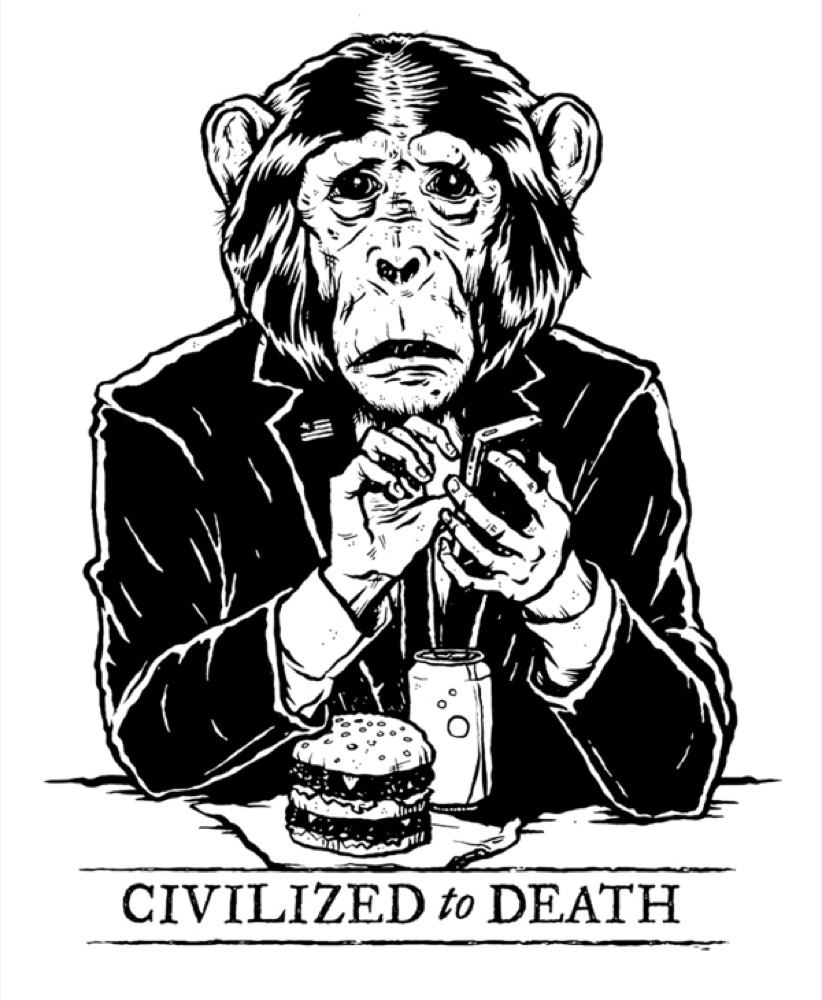 Civilized to Death: What Was Lost on the Way to Modernity
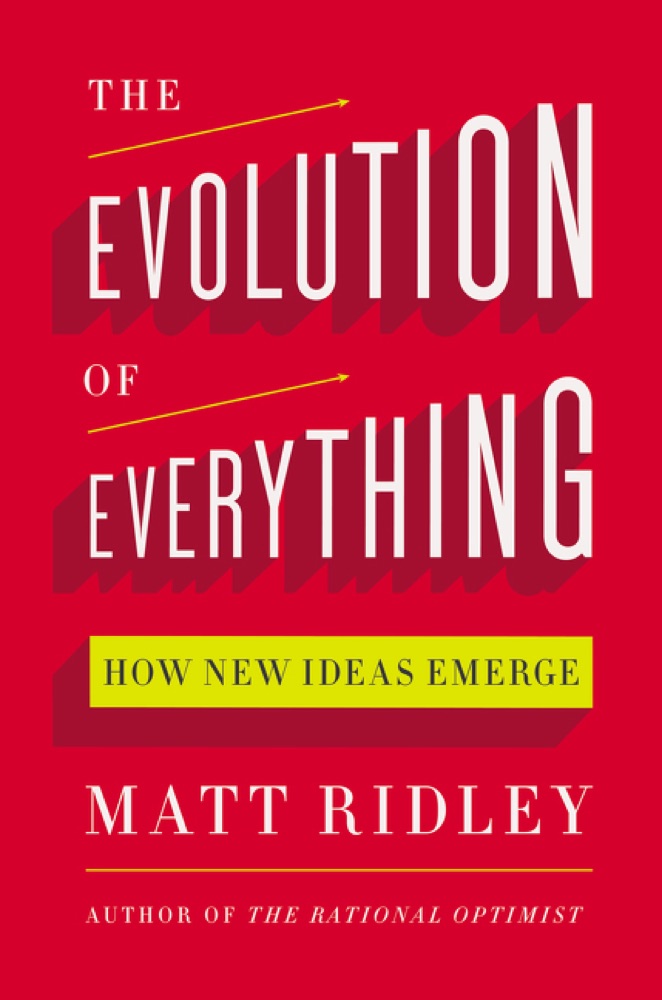 The Evolution of Everything: How New Ideas Emerge
 Coinman: An Untold Conspiracy
 Sapiens: A Brief History of Humankind
 23 Things They Don't Tell You About Capitalism
 The Dosadi Experiment
 Punished by Rewards: The Trouble with Gold Stars, Incentive Plans, A's, Praise and Other Bribes
 Empire of Illusion: The End of Literacy and the Triumph of Spectacle
 First As Tragedy, Then As Farce
 Revolution
 Sleepless
 Poor Economics: A Radical Rethinking of the Way to Fight Global Poverty
 Barking Up the Wrong Tree: The Surprising Science Behind Why Everything You Know About Success Is (Mostly) Wrong
 Rework
 Conscious Capitalism
 The E-myth Revisited
 Drunk on All Your Strange New Words