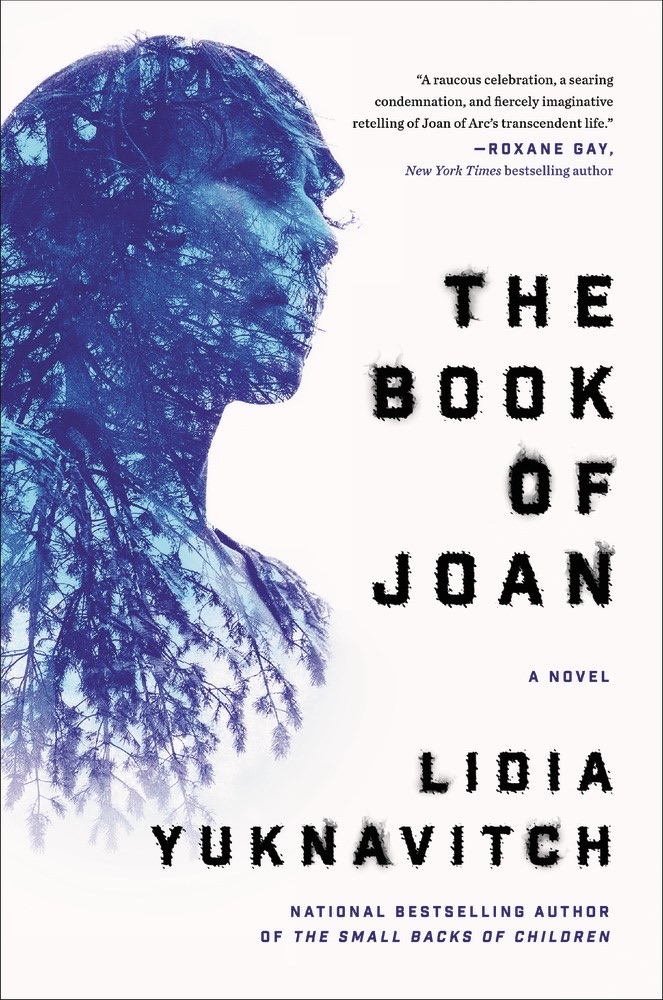
 The Book of Joan
Quotes from the Book
Who are we in moments of crisis or despair? Do we become deeper, truer selves, or lift up and away from a self, untethered from regular meanings like moths suddenly drawn toward heat or light? Are we better people when someone might be dying, and if so, why? Are we weaker, or stronger? Are we beautiful, or abject? Serious, or cartoon? Do we secretly long for death to remind us we are alive?
7
She is at a crossroads: a child’s violent will to survive lodged in her chest where her heart should be, but an utter indifference along with it.
6
One day the girl is taking a bath and calls out. The widow comes into the tiny bathroom and the water surrounding the girl’s legs is clouded with crimson. She slaps the girl in the face and smiles and kisses her on the cheeks. She says, “May you bloom.” The girl doesn’t flinch. The widow tells her, “This is the first language of your body. It is the word ne. When you bleed each month, as when the moon comes and goes in its journey, you leave the world of men. You enter the body of all women, who are connected to all of nature.” The girl asks, “Why is it the word ne?” The widow responds, “When you bleed, this word is more powerful than any word you could ever speak. It is a blood word. It binds you to animals and trees and the moon and the sun. Where men take blood in the world in hunting and war, women give blood. It is the word ne because it closes the room of a woman’s body to men.” The widow places her hands into the water and says, “Good. You are alive. You and I are alive.
5
How did she get here, I mean how did she really get here, what were the choices, what’s a past–she takes a long drink–what is psychological development? Is it as fucking Freudian as it sounds? She sighs the big sigh of twenty-six, wondering if we are all trapped inside identity, genetics, and narrative–some whacked-out Kafka god handwriting our unbearable little life stories. Then she thinks the American-artist thought, the rough-and-tumble kind: how can I use this?
4
see the stories of women, but they are always stuck inside the stories of men. Why is that?
3
When you bleed, this word is more powerful than any word you could ever speak. It is a blood word. It binds you to animals and trees and the moon and the sun. Where men take blood in the world in hunting and war, women give blood. It is the word ne because it closes the room of a woman’s body to men.
3
What she thinks and feels is this: This is a world of men. They come into your country, they invade your home, they kill your family. They turn your body into the battlefield — the territory of all violence — all power — all life and death. And we take it. We do. We keep taking it. We have lost track of the reasons we do not slaughter the world of men, but we do not. Yes, there are good men. She sees the face of her father. She sees how the filmmaker loves the writer. She sees the yet-unwritten life of the writer’s son. She sees her. . brother. Beautiful smear. But it is the world of men that creates pure destruction. And this is a truth we cannot bear: Since we bear them into the world, we cannot kill them. Cannot be done with them. Cannot exile them into oblivion.
1
I’ve come to ask my questions. The ones my dead girl left inside me. Is it my fault. What happened to you. Are you happy. What do you want from me.
1
Love isn't what anyone said. It's worse. You can die from it at any moment.
1
And so, now, she runs. In her running, her mind leaves her. And she can hear nothing but her heart, the blast making her deaf. There is a great white silent empty in her running. She runs.
1
I tell you, it scares me what I have done to her. It terrifies me, even. And yet I am not sorry. I am as deeply unsorry as a person could be. There is nothing that one human will not do to another.
1
It is only inside abstraction and expression and chaos that he is alive.
1
And the world will continue to be melted by a sun we’ve crossed terribly with our progress.
1
Germany will forgive itself so much that it returns to arms.
1
You know, every street in Paris is wet. Every person in Paris has a dog. Every hand in Paris holds a cigarette. Every mouth in Paris is a kiss.
1
It is not a perfect place, America. It’s simply a way out of this story.
1
how to make language go strange and vertical to make a poem. How to trust the moon.
1
This is the first language of your body. It is the word ne. When you bleed each month, as when the moon comes and goes in its journey, you leave the world of men. You enter the body of all women, who are connected to all of nature.
1
Do not listen to what any society tells you about the body—the body is the metaphor for all experience. A woman’s body more than any other. Like language, its beautiful but weaker sister. Look at this poem. This painting. Look at these photographs. The body doesn’t lie.
1
Look at this poem. How it travels down the page in lines, not sentences. How its beauty is vertical, like a body.
1
remember how they tracked down that green-eyed Afghan girl? And she’s now a leather-faced crone? Because her life went from misery and shit to more monotonous and meaningless misery and shit, while her famous photo went ’round and ’round the world making that McCurry guy famous? I say we do it.
1
America, land of coupling, land of sanctioned marriage and two-person twined knots, land of tireless good-citizen living, land of the happy family, land of the free and the brave and the locked imagination, land of ignorant homeowner masses lined up in twos.
1
Aren’t we all just shooting for a life where art matters?
1
And memory has no syntax.
1
Any child is stronger than a mother, since the love we have for our children could kill us.
1
There are many kinds of love, but there is never a love, or a life, without pain.
My country is not in me except in the violence that has crossed my body.
Where do any of us come from? Is it a country? A mother? Or is it perhaps an image, a song, a story inside which we feel .. named?
There is nothing that one human will not do to another.
Watch on YouTube
About Lidia Yuknavitch
We have collected 100 quotes from 4 books by Lidia Yuknavitch on BookQuoters.
More about the author →More by Lidia Yuknavitch
About the book
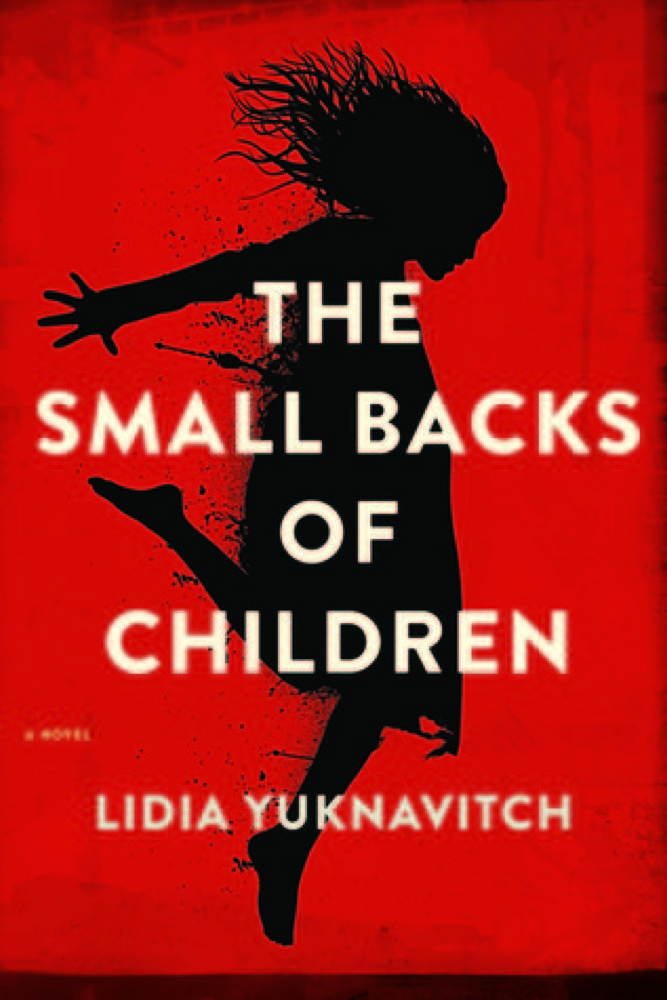
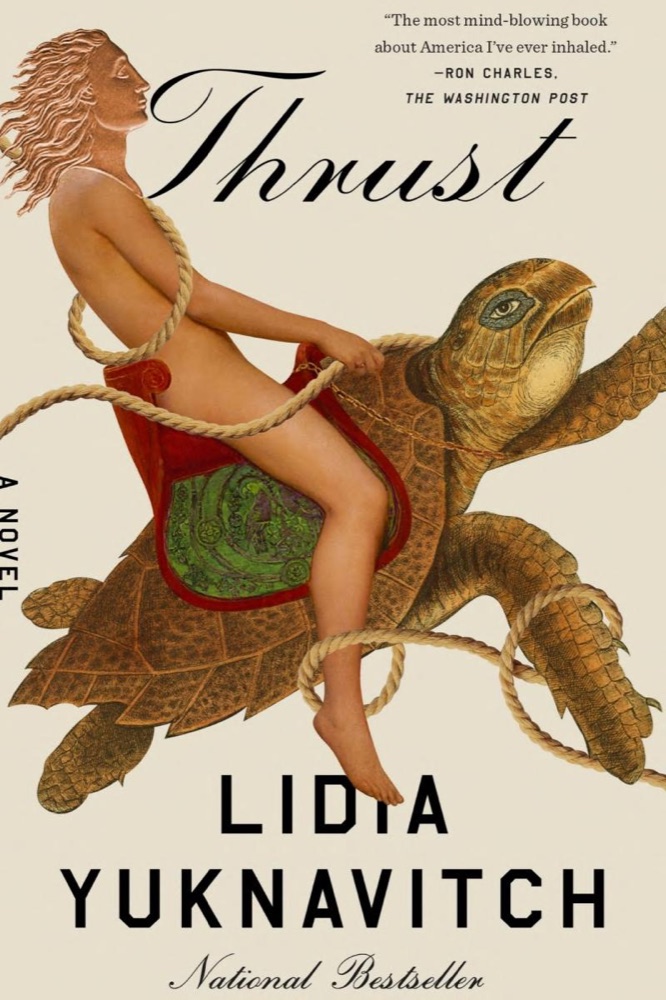
A masterful literary talent explores the treacherous, often violent borders between war and sex, love and art.
With the flash of a camera, one girl’s life is shattered, and a host of others altered forever. . .
In a war-torn village in Eastern Europe, an American photographer captures a heart-stopping a young girl flying toward the lens, fleeing a fiery explosion that has engulfed her home and family. The image wins acclaim and prizes, becoming an icon for millions—and a subject of obsession for one writer, the photographer’s best friend, who has suffered a devastating tragedy of her own.
As the writer plunges into a suicidal depression, her filmmaker husband enlists several friends, including a fearless bisexual poet and an ingenuous performance artist, to save her by rescuing the unknown girl and bringing her to the United States. And yet, as their plot unfolds, everything we
Book details
- First published
- 2015
- Author
- Lidia Yuknavitch
- Genre
- Fiction
- Goodreads rating
- 3.46 (4k ratings)
Keep reading
 Morning in the Burned House: Poems
 Plainwater: Essays and Poetry
 The Mere Wife
 Sexing the Cherry
 The Stone Gods
 The Ground Beneath Her Feet
 Nutshell
 Fragile Things: Short Fictions and Wonders
 The Burning World
 The Story of the Lost Child
 Wake, Siren: Ovid Resung
 The Island of Missing Trees
 Every Heart a Doorway
 Pandemonium
 Art and Lies
 Honor
Honor
 The Blind Assassin
 The Women's Room
 The Emperor of Gladness
 Good Bones and Simple Murders
 Kafka on the Shore
The Book of Joan
Kafka on the Shore
The Book of Joan
 The Hidden Girl and Other Stories
 Fifty Beasts to Break Your Heart: And Other Stories
 This Is Where the World Ends
 Little Bee
 The Tsar of Love and Techno
 Moth Smoke
 Red Sister
 A Tale of Love and Darkness
 A Luminous Republic
 The Names
 Embers
 The Wars
 Warlight
 Cosmopolis
 Haunted
 Q & A
Q & A
 In The Blood
 Dream Count
 Kala
Kala
 Cam Girl
 The Devil Takes You Home
 Tropic of Cancer
 Arch of Triumph
 Fever
Fever
 Drive Your Plow Over the Bones of the Dead
 Requiem
 White Teeth
 Legendborn
 The Grace Year
 When Women Were Dragons
 In the Dream House
 The V Girl
 Future Home of the Living God
 How We Are Hungry
 After the Quake
 Split Tooth
 Notes on an Execution
 The Human Stain