 The Way of the Heart: A Study of Contemplative Prayer and Inner Devotion
Quotes from the Book
Words often bring with them the illusion of transparency, as though they allowed us to understand everything, control everything, put everything in order. Modernity is talkative because it is proud, unless the converse is true. Is our incessant talking perhaps what makes us proud?
21
Sounds and emotions detach us from ourselves, whereas silence always forces man to reflect upon his own life.
18
Christ lived for thirty years in silence. Then, during his public life, he withdrew to the desert to listen to and speak with his Father. The world vitally needs those who go off into the desert. Because God speaks in silence.
13
Our world no longer hears God because it is constantly speaking, at a devastating speed and volume, in order to say nothing. Modern civilization does not know how to be quiet. It holds forth in an unending monologue. Postmodern society rejects the past and looks at the present as a cheap consumer object; it pictures the future in terms of an almost obsessive progress. Its dream, which has become a sad reality, will have been to lock silence away in a damp, dark dungeon. Thus there is a dictatorship of speech, a dictatorship of verbal emphasis. In this theater of shadows, nothing is left but a purulent wound of mechanical words, without perspective, without truth, and without foundation. Quite often “truth” is nothing more than the pure and misleading creation of the media, corroborated by fabricated images and testimonies. When that happens, the word of God fades away, inaccessible and inaudible. Postmodernity is an ongoing offense and aggression against the divine silence. From morning to evening, from evening to morning, silence no longer has any place at all; the noise tries to prevent God himself from speaking. In this hell of noise, man disintegrates and is lost; he is broken up into countless worries, fantasies, and fears. In order to get out of these depressing tunnels, he desperately awaits noise so that it will bring him a few consolations. Noise is a deceptive, addictive, and false tranquilizer. The tragedy of our world is never better summed up than in the fury of senseless noise that stubbornly hates silence. This age detests the things that silence brings us to: encounter, wonder, and kneeling before God. 75. Even in the schools, silence has disappeared. And yet how can anyone study in the midst of noise? How can you read in noise? How can you train your intellect in noise? How can you structure your thought and the contours of your interior being in noise? How can you be open to the mystery of God, to spiritual values, and to our human greatness in continual turmoil? Contemplative silence is a fragile little flame in the middle of a raging ocean. The fire of silence is weak because it is bothersome to a busy world.
10
The real men of God have no fear of death, because they are waiting for heaven.
10
Through silence, we return to our heavenly origin, where there is nothing but calm, peace, repose, silent contemplation, and adoration of the radiant face of God.
8
The greatest things are accomplished in silence—not in the clamor and display of superficial eventfulness, but in the deep clarity of inner vision; in the almost imperceptible start of decision, in quiet overcoming and hidden sacrifice.
7
The word is not just a sound; it is a person and a presence. God is the eternal Word, the Logos.
7
A few sentences are enough to tell the truth.
5
Man controls his hours of activity if he knows how to enter into silence. The life of silence must be able to precede the active life.
4
It is necessary to protect precious silence from all parasitical noise. The noise of our “ego”, which never stops claiming its rights, plunging us into an excessive preoccupation with ourselves. The noise of our memory, which draws us toward the past, that of our recollections or of our sins. The noise of temptations or of acedia, the spirit of gluttony, lust, avarice, anger, sadness, vanity, pride—in short: everything that makes up the spiritual combat that man must wage every day. In order to silence these parasitical noises, in order to consume everything in the sweet flame of the Holy Spirit, silence is the supreme antidote.
4
Without noise, man is feverish, lost. Noise gives him security, like a drug on which he has become dependent. With its festive appearance, noise is a whirlwind that avoids facing itself. Agitation becomes a tranquilizer, a sedative, a morphine pump, a sort of reverie, an incoherent dream-world. But this noise is a dangerous, deceptive medicine, a diabolic lie that helps man avoid confronting himself in his interior emptiness. The awakening will necessarily be brutal.
3
Postmodern man seeks to anesthetize his own atheism. Noises are screens that betray a fear of the divine, a fear of real life and of death. But “what man can live and never see death? Who can deliver his soul from the power of Sheol?” (Ps 89:48). The Western world ends up disguising death so as to make it acceptable and joyful. The moment of demise becomes a noisy moment in which true silence is lost in weak, useless words expressing compassion.
3
The silence of the crib, the silence of Nazareth, the silence of the Cross, and the silence of the sealed tomb are one. The silences of Jesus are silences of poverty, humility, self-sacrifice, and abasement; it is the bottomless abyss of his kenosis, his self-emptying (Phil 2:7).
3
If we want to grow and to be filled with the love of God, it is necessary to plant our life firmly on three great realities: the Cross, the Host, and the Virgin: crux, hostia, et virgo. . . . These are three mysteries that God gave to the world in order to structure, fructify, and sanctify our interior life and to lead us to Jesus. These three mysteries are to be contemplated in silence.
3
Without noise, postmodern man falls into a dull, insistent uneasiness. He is accustomed to permanent background noise, which sickens yet reassures him.
3
Many fervent Christians who are moved by the Passion and death of Christ on the Cross no longer have the strength to weep or to utter a cry of pain to the priests and bishops who make their appearance as entertainers and set themselves up as the main protagonists of the Eucharist. These believers tell us nevertheless: "We do not want to gather with men around a man! We want to see Jesus! Show him to us in the silence and humility of your prayer!
3
Why are men so noisy during the liturgies while Christ's prayer was silent? The words of the Son of God come from the heart, and the heart is silent. Why do we not know how to speak with a silent heart? The heart of Jesus does not speak. It radiates with love because its language comes from the divine depths.
3
God’s only power is to love silently. He is incapable of any oppressive force. God is love, and love cannot compel, force, or oppress in order to be loved in return.
3
Love is always humble, silent, contemplative, and on its knees before the beloved.
2
La tradición del islam místico comparte esta misma convicción. Me gustaría relatarle algo tomado de la leyenda dorada de los santos musulmanes. Un día, Suturá, una buena mujer, fue a visitar a Tierno Bokar, el sabio de Bandiagara: esta aldea de Mali está situada en la meseta del mismo nombre, rodeada de altos acantilados al pie de los cuales viven los dogon, pueblo famoso por su arte austero, su compleja cosmogonía y su hondo sentido de la trascendencia. «Tierno –le dijo Suturá–, estoy muy irritable. Me molesta hasta lo más insignificante. Querría recibir de ti una bendición o una oración que me haga dulce, amable y paciente». No había acabado de hablar cuando su hijo, un niño de tres años que estaba esperándola en el patio, agarró una tabla y le dio un golpe en la espalda. Ella miró al niño, sonrió y, atrayéndolo hacia ella, dijo dándole un cachete cariñoso: «¡Qué niño más malo! Mira cómo trata a su madre…». «Si tan irritable estás, ¿por qué no te enfadas con tu hijo?», le preguntó Tierno Bokar. «Si no es más que un niño –contestó Suturá–. No sabe lo que hace. Con un niño de esta edad no hay quien se enfade». «Vete a casa, querida Suturá –le dijo Tierno– y, cuando alguien te irrite, acuérdate de la tabla y piensa: “Tenga los años que tenga, esta persona está actuando como un niño de tres años”. Sé indulgente: puedes hacerlo, ya que acabas de serlo con tu hijo cuando te ha dado ese golpe. Obra así y no volverás a enfadarte. Vivirás feliz y te sentirás mejor. Las bendiciones que desciendan sobre ti serán mucho mayores que las que puedas recibir de mí: serán las bendiciones de Dios y del propio Profeta. Quien soporta y perdona una ofensa –continuó– se parece a una de esas grandes ceibas que ensucian los buitres al posarse en sus ramas. El aspecto repugnante del árbol solo dura una parte del año. Todos los inviernos Dios envía unos cuantos chaparrones que lo limpian de la copa a las raíces y lo revisten de un nuevo follaje. Procura prodigar el amor que sientes por tu hijo a todas las criaturas de Dios. Porque Dios quiere a sus criaturas como un padre a sus hijos. Entonces llegarás a lo más alto de la escala, allí donde, gracias al amor y la caridad, el alma solo ve y valora la ofensa para perdonarla mejor». Las palabras de Tierno supusieron tanto para Suturá que, a partir de ese día, consideró hijos suyos a todos los que la ofendían y no les respondió más que con dulzura, amor y una paciencia silenciosa y sonriente. Tanto cambió que, al final de su vida, la gente decía: «Paciente como Suturá». Nunca más hubo nada capaz de enfadarla. Cuando murió, se la consideraba prácticamente una santa.
2
The more man advances in the mystery of God, the more he loses speech. Man is enveloped in a power of love, and he becomes mute from astonishment and wonder. Before God, we disappear, snapped up by the greatest silence.
2
here is my hope: God willing, when he wills and as he wills, the reform of the reform will take place in the liturgy. Despite the gnashing of teeth, it will happen, for the future of the Church is at stake.
2
Now, celebrations become tiring because they unfold in noisy chattering. The liturgy is sick. The most striking symptom of this sickness is perhaps the omnipresence of the microphone. It has become so indispensable that one wonders how priests were able to celebrate before it was invented.
2
There is a great risk that Christians may become idolaters if they lose the meaning of silence. Our words inebriate us; they confine us to what is created. Bewitched and imprisoned by the noise of human speech, we run the risk of designing worship to our specifications, a god in our own image. Words bring with them the temptation of the golden calf! Only silence leads man beyond words, to the mystery, to worship in spirit and in truth. Silence is a form of mystagogy; it brings us into the mystery without spoiling it.
2
There are so many priests who enter triumphantly and walk up toward the altar, greeting people left and right, so as to appear sympathetic. Just look at the sad spectacle of some Eucharistic celebrations. ... Why so much frivolousness and worldliness at the moment of the Holy Sacrifice? Why so much profanation and superficiality, given the extraordinary priestly grace that renders us able to make the Body and Blood of Christ substantially present by the invocation of the Spirit? Why do some think that they are obliged to improvise or invent Eucharistic Prayers that conceal the sacred prayers in a wash of petty, human fervor? Are Christ's words insufficient, making it necessary to multiply merely human words? In such a unique and essential sacrifice, is there any need for such a display of imagination and subjective creativity? "In praying do not heap up empty phrases as the Gentiles do; for they think that they will be heard for their many words", Jesus warns us (Mt 6:7).
2
How right Pascal was when he wrote in his Pensées: “All the unhappiness of men arises from one single fact, that they cannot stay quietly in their own chamber.
1
There is no place on earth where God is more present than in the human heart. This heart truly is God’s abode, the temple of silence.
1
Watch on YouTube
About Robert Sarah
We have collected 28 quotes from 1 book by Robert Sarah on BookQuoters.
More about the author →About the book
Now with a new afterword by Pope emeritus Benedict XVI!
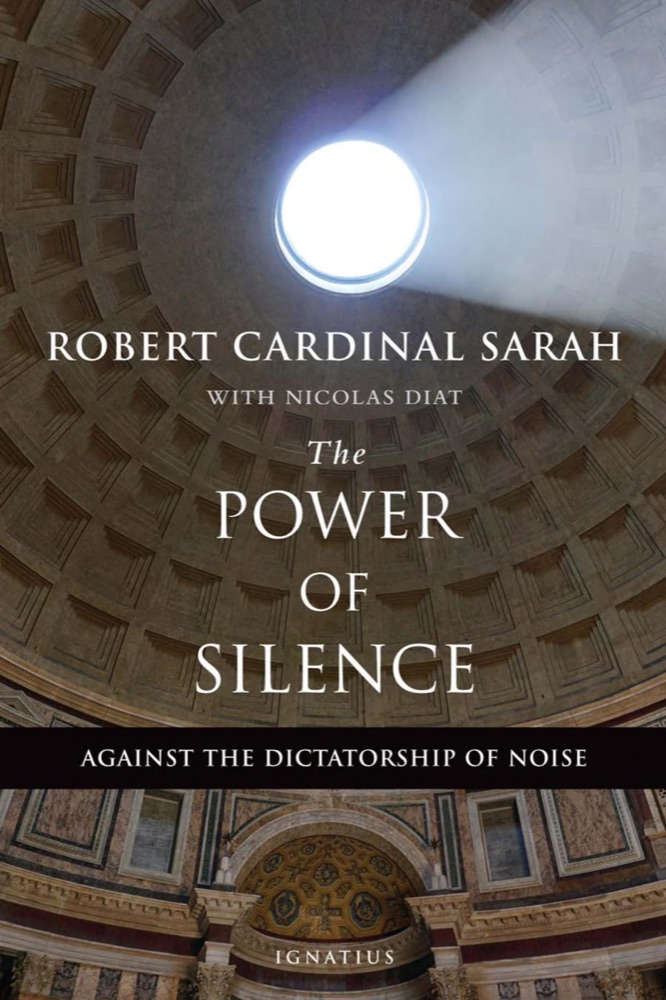
In a time when technology penetrates our lives in so many ways and materialism exerts such a powerful influence over us, Cardinal Robert Sarah presents a bold book about the strength of silence. The modern world generates so much noise, he says, that seeking moments of silence has become both harder and more necessary than ever before.
Silence is the indispensable doorway to the divine, explains the cardinal in this profound conversation with Nicolas Diat. Within the hushed and hallowed walls of the La Grande Chartreux, the famous Carthusian monastery in the French Alps, Cardinal Sarah addresses the following questions: Can those who do not know silence ever attain truth, beauty, or love? Do not wisdom, artistic vision, and devotion spring from silence, where the voice of God is heard in the depths of the human heart?
Afte
Book details
- First published
- 2016
- Author
- Robert Sarah
- Genre
- Nonfiction
- Goodreads rating
- 4.41 (3k ratings)
Keep reading
The Way of the Heart: A Study of Contemplative Prayer and Inner Devotion
 New Seeds of Contemplation
 Contemplative Prayer
 Thoughts in Solitude
 Celebration of Discipline: The Path to Spiritual Growth
 The Divine Conspiracy: Rediscovering Our Hidden Life in God
 Everything Belongs: The Gift of Contemplative Prayer
 Silence
 Studies in the Sermon on the Mount
 My Bright Abyss: Meditation of a Modern Believer
 Silence: In the Age of Noise
 The Reed of God
 The Orthodox Way
 Teaching a Stone to Talk: Expeditions and Encounters
 God in Search of Man: A Philosophy of Judaism
 Prayer in the Night: For Those Who Work or Watch or Weep
 The Pursuit of God: The Human Thirst for the Divine
 The Knowledge of the Holy
 The World's Religions
 What We Talk about When We Talk about God
 Jesus of Nazareth: The Infancy Narratives
 The Cloister Walk
 The Way of a Pilgrim
 Saint Francis
 Life of Christ
 Letters to Malcolm: Chiefly on Prayer
 Silence: The Power of Quiet in a World Full of Noise
 The Divine Dance: The Trinity and Your Transformation
 Tears and Saints
 The Everlasting Man
 The Problem of Pain
 A Pilgrimage to Eternity: From Canterbury to Rome in Search of a Faith
 The Imitation of Christ
 Abandonment to Divine Providence: The Classic Text with a Spiritual Commentary
 The Weight of Glory
 The Gospel According to Jesus Christ
 A Course in Miracles
 Searching for and Maintaining Peace: A Small Treatise on Peace of Heart
 The Perennial Philosophy
 Letters and Papers from Prison
 This Here Flesh: Spirituality, Liberation, and the Stories That Make Us
 The Spiral Staircase: My Climb Out of Darkness
 The Holy Longing: The Search for a Christian Spirituality
 The Varieties of Religious Experience
 Father Joe: The Man Who Saved My Soul
 The Spirit of the Liturgy
 Waking the Dead: The Glory of a Heart Fully Alive
 Children of God
 Laurus
 The Prophetic Imagination
 Moving Mountains: Praying with Passion, Confidence, and Authority
 Autobiography of a Yogi
 Gravity and Grace
 The Last Temptation of Christ
 Walking on Water: Reflections on Faith and Art
 The God Who Weeps: How Mormonism Makes Sense of Life
 Hearing God: Developing a Conversational Relationship with God
 Rediscover Catholicism
 My Utmost for His Highest
 Beautiful Outlaw: Experiencing the Playful, Disruptive, Extravagant Personality of Jesus